 Podit
Podit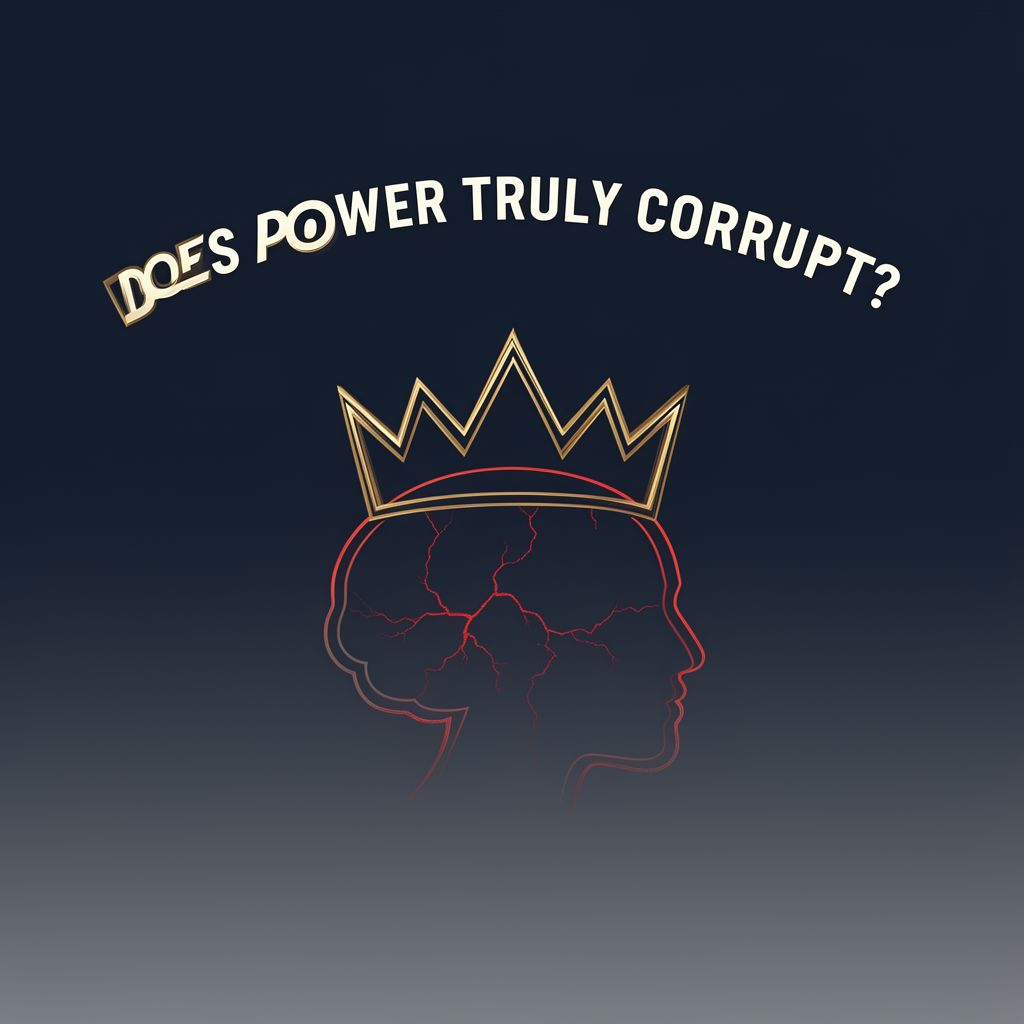
Sesli Özet
3 dakikaKonuyu otobüste, koşarken, yolda dinleyerek öğren.
Sesli Özet
Does Power Truly Corrupt?
Flash Kartlar
24 kartKarta tıklayarak çevir. ← → ile gez, ⎵ ile çevir.
Tüm kartları metin olarak gör
1. Who famously said, 'Power tends to corrupt, and absolute power corrupts absolutely'?
Lord Acton is credited with this famous quote, highlighting the potential dangers of power.
2. What is the central question explored regarding power and corruption?
The central question is whether power truly corrupts, or if the relationship is more complex and nuanced than a simple statement.
3. According to research, what happens to an individual's empathy when they gain power?
Research suggests that powerful individuals tend to exhibit less empathy, becoming less attuned to the feelings and perspectives of others.
4. How does power shift an individual's focus regarding others?
Powerful individuals often focus on goals, decisions, and outcomes, rather than the individual experiences of those below them.
5. What cognitive shift is observed in powerful individuals concerning others' perspectives?
There is a cognitive shift where powerful individuals become less attuned to the feelings and perspectives of others.
6. Besides empathy, what other behavioral changes are associated with gaining power?
Individuals with power may become more impulsive and take greater risks, feeling less constrained by consequences.
7. Which controversial experiment dramatically illustrated how power can alter behavior?
The Stanford Prison Experiment dramatically illustrated how quickly people adapt to powerful roles and how power can alter behavior, sometimes for the worse.
8. What is one key environmental mechanism that allows corruption to flourish when individuals gain power?
A reduced sense of accountability is a key mechanism, as those at the top are less likely to be questioned.
9. What feeling can arise in powerful individuals due to a reduced sense of accountability?
A feeling of entitlement can arise, where powerful individuals believe they deserve more or are above the rules.
10. How might powerful individuals begin to perceive others, leading to exploitation?
They might start to objectify others, seeing them as tools to achieve goals rather than individuals with their own rights and feelings.
11. What term describes the process of seeing others as less than human, making exploitation easier?
Dehumanization is the term for seeing others as tools or less than human, which makes it easier to exploit or disregard them.
12. What social phenomenon often accompanies power, potentially distorting a leader's perception?
Isolation often comes with power, as leaders can become surrounded by 'yes-men' who are afraid to challenge them.
13. How do 'yes-men' contribute to the corrupting influence of power?
'Yes-men' can distort a leader's perception of reality and their own actions by not challenging them, leading to a skewed view.
14. Is corruption an inevitable outcome of gaining power?
No, corruption is not an inevitable fate, as psychological and environmental factors can be counteracted by conscious effort.
15. What personal quality can act as a check against the corrupting influences of power?
Self-awareness can act as a powerful check against the corrupting influences of power, helping individuals recognize their own biases.
16. What structural elements can help prevent corruption in powerful positions?
Strong ethical frameworks and robust systems of accountability can act as powerful checks against corruption.
17. How can leaders actively fight against the natural tendencies of power to corrupt?
Leaders can actively seek diverse opinions, practice empathy, and remain connected to the realities of those they lead.
18. What is the first step in managing the effects of power, according to the text?
Understanding how power changes us is the first step in managing its effects effectively.
19. What is a common focus for individuals in positions of power, often at the expense of others' experiences?
They are often focused on goals, decisions, and outcomes, sometimes overlooking the individual experiences of others.
20. What does the text suggest about the nature of power itself?
Power is described as a potent force that can change us, highlighting its significant impact on individuals.
21. What kind of consequences do powerful individuals feel less constrained by?
They feel less constrained by the consequences of their actions, which can lead to increased risk-taking.
22. What is the role of 'yes-men' in a powerful leader's environment?
'Yes-men' are individuals who are afraid to challenge the leader, contributing to isolation and a distorted perception of reality.
23. What is one way leaders can maintain a balanced perspective despite having power?
By actively seeking diverse opinions and remaining connected to the realities of those they lead, leaders can maintain a balanced perspective.
24. What is the overall message about power and corruption from the text?
While power can corrupt through psychological and environmental shifts, it's not inevitable and can be managed with conscious effort and strong checks.
Bilgini Test Et
10 soruÇoktan seçmeli sorularla öğrendiklerini ölç. Cevap + açıklama.
What famous quote by Lord Acton is mentioned at the beginning of the text regarding power?