Podit
Podit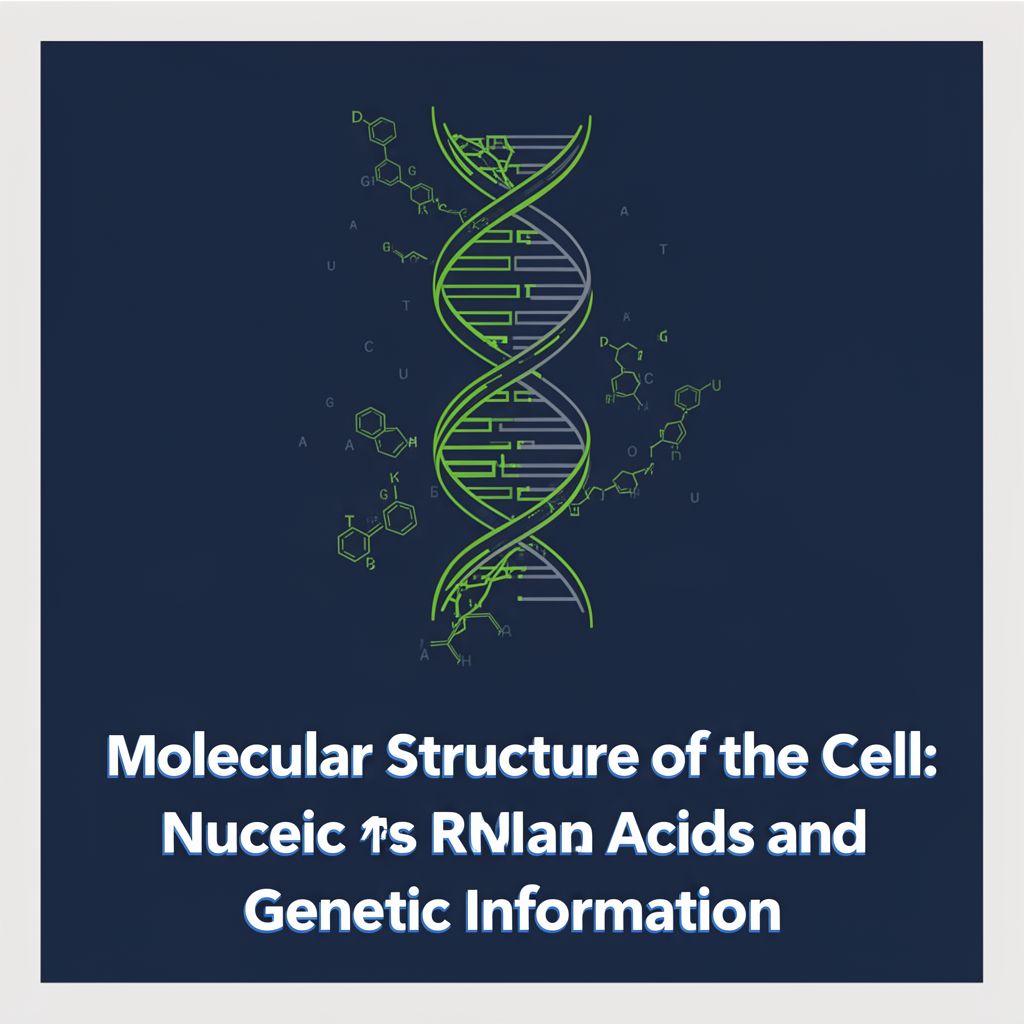
📚 Molecular Structure of the Cell: Nucleic Acids Study Guide
This study material has been compiled from various sources, including copy-pasted text and a lecture audio transcript, to provide a comprehensive overview of the molecular structure of the cell, with a particular focus on nucleic acids.
🔬 Introduction to Cellular Chemical Structure
Cells, the fundamental units of life, are composed of a diverse array of chemical substances essential for their structure and function. These substances are broadly categorized into two main groups: inorganic and organic. Understanding their composition is crucial to comprehending cellular processes.
✅ Chemical Components of the Cell
- Inorganic Substances:
- Water: The most abundant molecule, vital for nearly all cellular activities.
- Electrolytes: Ions (e.g., Na+, K+, Cl-) that maintain osmotic balance and facilitate nerve impulses.
- Organic Substances:
- Carbohydrates: Primary energy source and structural components.
- Lipids: Energy storage, membrane structure, and signaling molecules.
- Proteins: Perform a vast array of functions, including enzymatic catalysis, structural support, transport, and signaling.
- Nucleic Acids: The focus of this guide, responsible for carrying and expressing genetic information.
🧬 Nucleic Acids: The Blueprint of Life
Nucleic acids are the largest and most critical organic molecules within the cell. They are the carriers of genetic information and play a central role in protein synthesis.
💡 Key Characteristics
- Types: Primarily Deoxyribonucleic Acid (DNA) and Ribonucleic Acid (RNA).
- Composition: Made up of Carbon (C), Hydrogen (H), Oxygen (O), Nitrogen (N), and Phosphorus (P).
- Discovery: First identified in the 19th century by Swedish biochemist Friedrich Miescher in the cell nucleus, hence the name "nucleic acids," even though they are found in other cellular compartments.
- Monomers: Nucleic acids are polymers made of repeating units called nucleotides.
📚 Nucleotide Structure
Each nucleotide is a complex molecule formed by the combination of three distinct components:
- Nitrogenous Base: Contains nitrogen atoms and has a ring structure.
- Purine Bases: Double-ring structures.
- ✅ Adenine (A)
- ✅ Guanine (G)
- Pyrimidine Bases: Single-ring structures.
- ✅ Cytosine (C) (found in both DNA and RNA)
- ✅ Thymine (T) (found only in DNA)
- ✅ Uracil (U) (found only in RNA)
- Purine Bases: Double-ring structures.
- Pentose Sugar: A five-carbon sugar.
- ✅ Ribose (C5H10O5): Found exclusively in RNA.
- ✅ Deoxyribose (C5H10O4): Found exclusively in DNA (lacks an oxygen atom at the 2' carbon compared to ribose).
- Phosphoric Acid (H3PO4): Present in both DNA and RNA, forming the phosphate backbone.
📊 DNA: Structure, Replication, and Genetic Blueprint
DNA is the cell's master blueprint, storing all the genetic instructions for an organism's development, functioning, growth, and reproduction.
✅ DNA vs. RNA: A Summary
| Feature | RNA | DNA | | :---------------- | :-------------------------------- | :------------------------------------ | | Sugar | Ribose | Deoxyribose | | Bases | Adenine, Guanine, Cytosine, Uracil | Adenine, Guanine, Cytosine, Thymine | | Structure | Single strand, shorter | Double strand, long | | Primary Location | Generally in ribosomes | Generally in the nucleus | | Main Function | Protein synthesis | Genetic information administration, replication |
🧬 DNA Double Helix Structure
- Double Strand: DNA typically exists as a double helix, resembling a twisted ladder.
- Base Pairing Rules: Nucleotides on opposite strands bind via weak hydrogen bonds. This pairing is highly specific:
- ✅ Adenine (A) always pairs with Thymine (T) (A-T).
- ✅ Guanine (G) always pairs with Cytosine (C) (G-C).
- Structural Integrity: This specific pairing ensures the consistent width of the DNA spiral (approximately 20 Å). A purine (double-ring) always pairs with a pyrimidine (single-ring), maintaining uniform distance between the backbones. Two purines would be too wide, and two pyrimidines too narrow.
🔄 DNA Replication
One of DNA's most critical functions is its ability to accurately replicate itself, ensuring that genetic information is passed faithfully from parent to daughter cells.
- Unwinding: During cell division, the DNA double helix unwinds, and the two strands separate at various points, facilitated by enzymes like helicase.
- Template Strands: Each separated strand serves as a template for the synthesis of a new complementary strand.
- Nucleotide Addition: Free nucleotides (synthesized and stored in the nucleolus) are arranged opposite the template strands.
- ✅ DNA polymerase III enzyme adds new bases according to the Watson-Crick base-pairing rules (A with T, G with C).
- Joining: The newly synthesized DNA stretches (roughly 100,000 nucleotides long) are then joined together by the enzyme ligase.
- Semiconservative Replication: The process is called "semiconservative" because each new DNA molecule consists of one original (parental) strand and one newly synthesized (daughter) strand.
- Timing: DNA replication occurs during the S phase (synthesis phase) of interphase in the cell cycle. A replicated chromosome then consists of two identical sister chromatids, each containing one original and one new DNA strand.
🗣️ RNA and the Central Dogma of Protein Synthesis
While DNA stores the genetic information, RNA plays a crucial role in expressing it, primarily through protein synthesis.
💡 The Genetic Code
- Codons: The genetic information in DNA and RNA is read in units of three bases, called codons. Each codon typically specifies a particular amino acid.
- Code Diversity: With four different bases, 64 unique codons can be formed (4^3).
- Amino Acid Specificity:
- ✅ 61 codons code for the 20 different amino acids.
- ✅ Start Codon: AUG (codes for methionine and initiates protein synthesis).
- ✅ Stop Codons: UAA, UAG, UGA (do not code for amino acids; signal the termination of protein synthesis).
- 💡 Most amino acids are coded by more than one codon, except for tryptophan and methionine.
📊 Types of RNA
Humans have a single type of DNA, but multiple types of RNA, each with specialized functions in gene expression:
- Ribosomal RNA (rRNA):
- ✅ Constitutes about 60% of the ribosome in eukaryotes.
- ✅ Located within ribosomal subunits.
- ✅ Forms the structural and catalytic core of ribosomes, where protein synthesis occurs.
- Transfer RNA (tRNA):
- ✅ Makes up about 10% of total cellular RNA.
- ✅ Found in the cytoplasm.
- ✅ Function: Selects specific amino acids and transfers them to the ribosome, placing them into the correct position on the mRNA molecule during protein synthesis.
- Messenger RNA (mRNA):
- ✅ Acts as an intermediary, carrying genetic information from DNA to the ribosomes.
- ✅ Transcription: The process of transferring genetic information from DNA to an mRNA molecule. RNA polymerase enzyme adds corresponding RNA bases to the DNA template.
- ✅ Translation: The process of synthesizing a protein molecule from the genetic information carried by mRNA.
📜 The Central Dogma of Molecular Biology
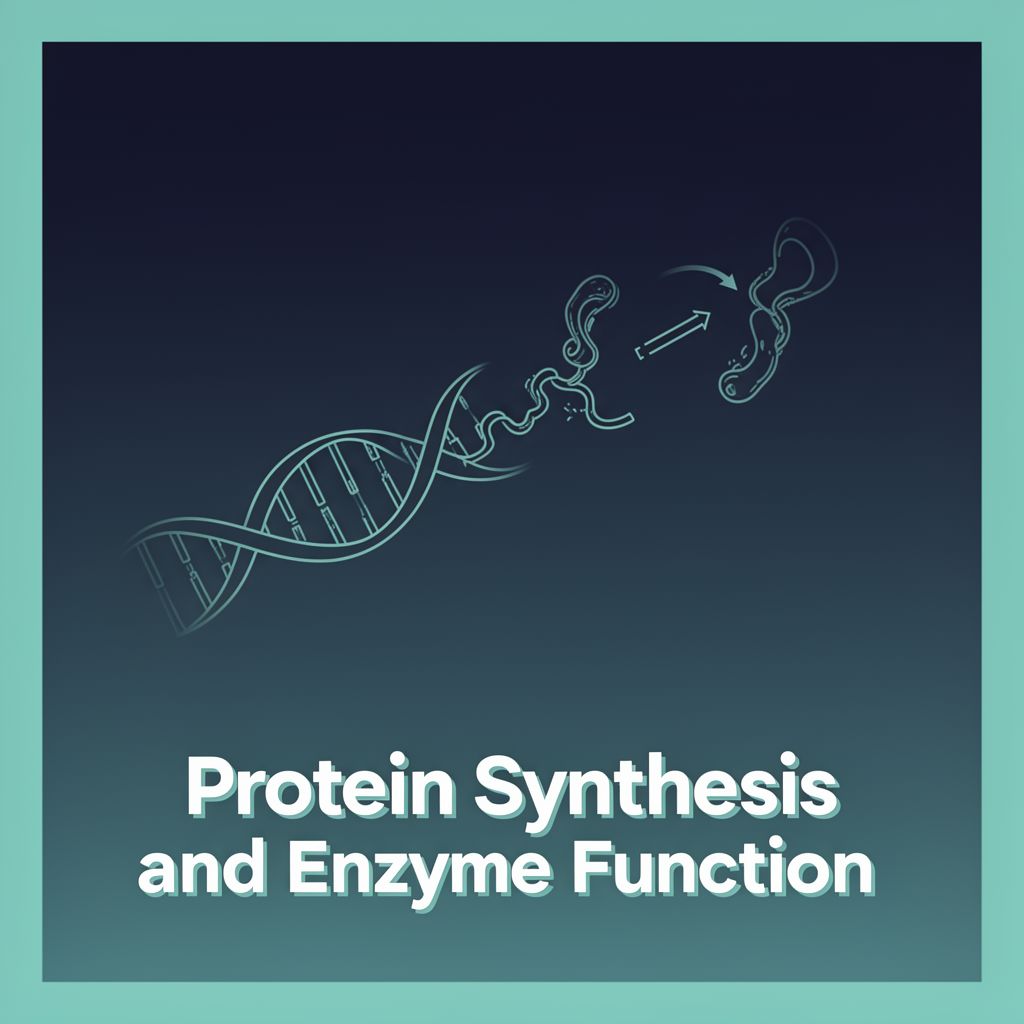
The flow of genetic information in a cell is described by the central dogma: DNA → RNA → Protein.
- DNA: The Master Blueprint: Contains the complete genetic information of an organism. It does not directly code for proteins but provides the instructions.
- Transcription: The genetic information from DNA is copied into an mRNA molecule. This is like creating a temporary working copy of a specific gene.
- RNA: The Temporary Blueprint: mRNA carries the genetic message from the nucleus (where DNA resides) to the ribosomes in the cytoplasm.
- Translation: At the ribosomes, the mRNA sequence is "read," and the corresponding protein is synthesized by assembling amino acids in the correct order, guided by tRNA.
This intricate system ensures that the genetic instructions stored in DNA are accurately translated into the proteins that carry out virtually all cellular functions.