 Podit
Podit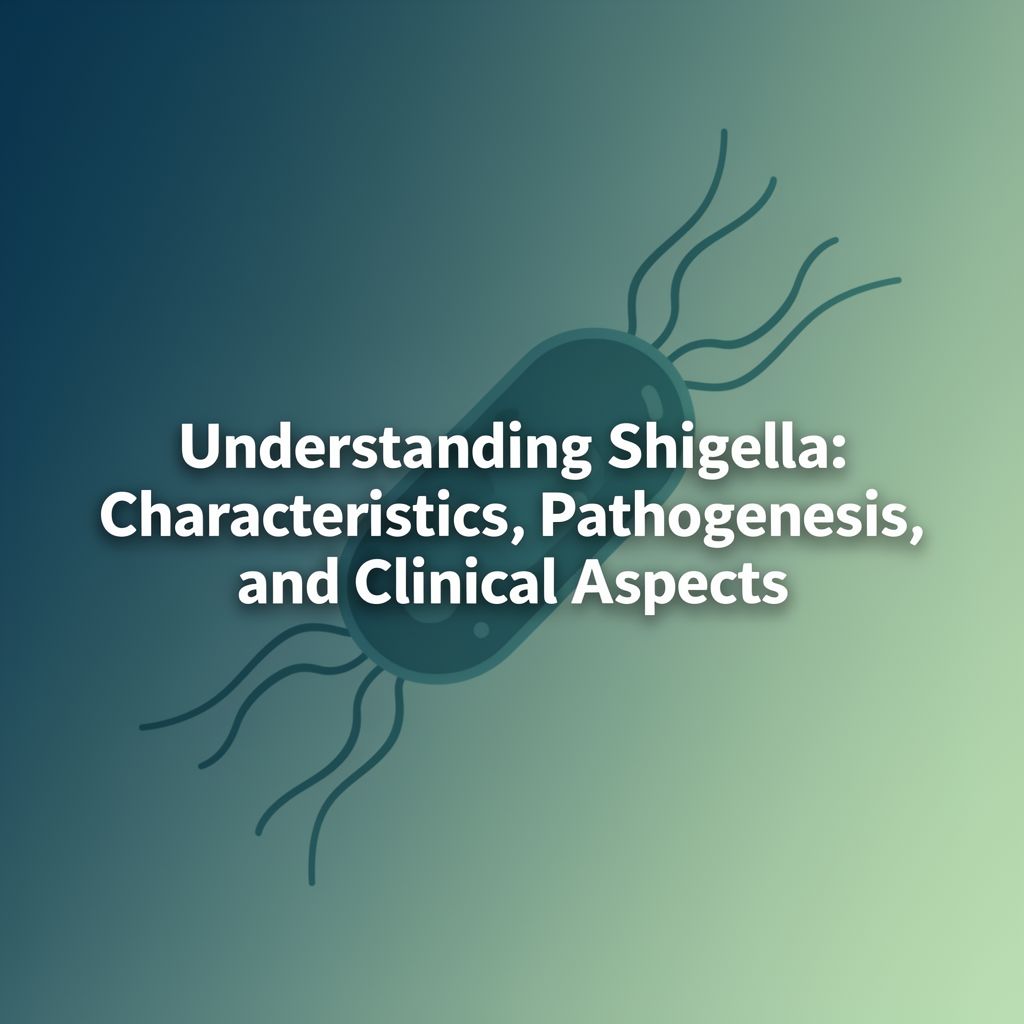
This study material has been compiled from a copy-pasted text and a lecture audio transcript on Shigella.
📚 Shigella: A Comprehensive Study Guide
💡 Introduction to Shigella
Shigella is a genus of bacteria responsible for severe intestinal infections in humans. It is a significant cause of gastroenteritis, commonly known as bacillary dysentery or shigellosis. This guide will cover its characteristics, pathogenesis, clinical manifestations, and management.
🦠 General Characteristics
✅ Species: There are four main species of Shigella: * S. sonnei: Most common in developed countries. * S. flexneri: Prevalent in developing countries. * S. dysenteriae: Causes the most severe infections. * S. boydii: Less commonly isolated. * In Turkey, Shigella sonnei is the predominant species.
✅ Key Features: * Non-motile: Shigella bacteria do not possess flagella and cannot move independently. * Lactose Fermentation: Most strains cannot ferment lactose. However, S. sonnei can slowly ferment lactose. * Glucose Fermentation: Produces acid from glucose but no gas. * Drug Resistance: Easily develops antibiotic resistance. * Bile Resistance: Resistant to bile salts, allowing survival in the gastrointestinal tract. * O Antigen Classification: Classified into four groups based on their O antigens.
📊 Classification
Shigella species are classified into serogroups based on their O antigens:
| Serogroup | Species | Number of Serotypes | | :-------- | :------------------ | :------------------ | | A | S. dysenteriae | 15 | | B | S. flexneri | 6 (with 15 subtypes) | | C | S. boydii | 18 | | D | S. sonnei | 1 |
🛡️ Virulence Factors
The primary virulence factor of Shigella is the Shiga Toxin.
📚 Shiga Toxin Characteristics & Effects
- Enterotoxic Effect:
- Blocks the absorption (uptake) of electrolytes, glucose, and amino acids from the intestinal lumen.
- ⚠️ Contrast with other toxins: This mechanism differs from cholera toxin (Vibrio cholerae) and labile toxin (LT) of enterotoxigenic E. coli (ETEC). These toxins block Na+ absorption but also cause hypersecretion of water, Cl-, K+, and HCO3- ions into the intestinal lumen.
🦠 Pathogenesis of Shigellosis
- Acid Resistance: Shigella is acid-resistant, allowing it to survive passage through the stomach and reach the intestine.
- Colon Invasion: Bacteria invade the colon.
- M Cell Attachment & Invasion: Shigella first attaches to and invades M cells in the intestine. M cells typically transport foreign bacteria to underlying macrophages.
- Escape from Phagosome: Inside macrophages, the organisms escape from the phagosome into the cytoplasm.
- Apoptosis Induction: Shigella activates programmed cell death (apoptosis) in the macrophage.
- 💡 Note: This contrasts with Salmonella, which multiplies within the phagocytic vacuole.
- Intracellular Spread: Within host cells, actin filaments propel the bacteria through the cytoplasm and into adjacent epithelial cells. This cell-to-cell passage, forming pseudopodia, effectively avoids antibody-mediated humoral immunity (similar to Listeria monocytogenes).
- Dissemination: Bacteria-containing pseudopodia are engulfed by neighboring cells via a clathrin-dependent endocytic pathway, leading to the spread of Shigella.
- Inflammatory Response: Shigella's induction of apoptosis leads to the release of IL-1β, which attracts polymorphonuclear leukocytes (PNLs) into the infected tissues. This process destabilizes the integrity of the intestinal wall, allowing bacteria to reach deeper epithelial cells.
🔬 Comparison: Shigella vs. Salmonella Invasion
| Feature | Shigella flexneri …