Podit
Podit
📚 The Social and Cultural Context of Britain: A Study Guide
Source Information: This study material has been compiled and organized from a combination of copy-pasted text and a lecture audio transcript provided by the user.
Introduction: Britain's Evolving Social Landscape 🌍
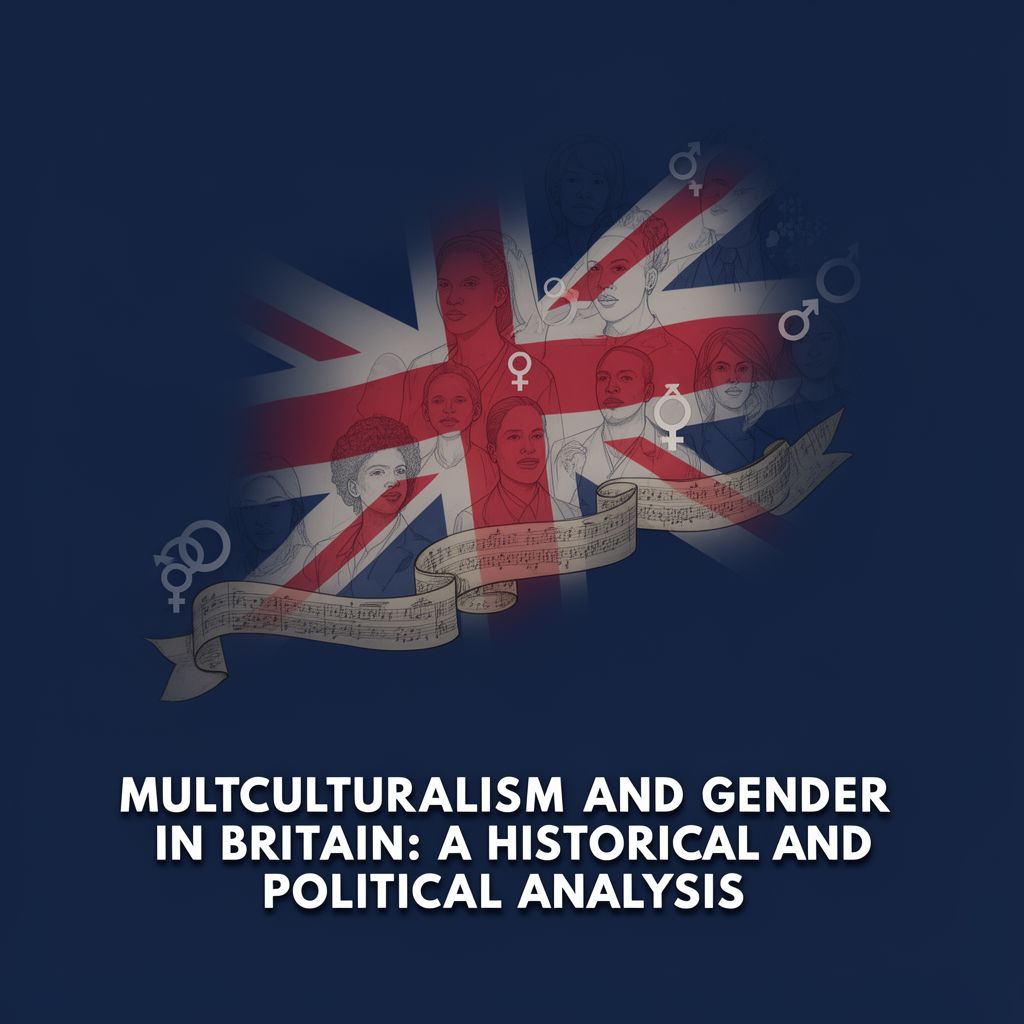
This study guide explores the significant social and cultural transformations within Britain, focusing on demographic shifts driven by immigration, the evolution of gender roles and LGBTQ+ rights, and the changing landscape of the arts and cultural definitions. These interconnected factors have profoundly reshaped national identity and social structures in the 21st century.
1. The Multicultural Society and Immigration Dynamics 📊
Britain's demographic makeup has been significantly influenced by immigration, often linked to the nation's economic strength.
1.1. Immigration Trends and Demographics
- Historical Context: In previous centuries, population movements occurred within Britain (e.g., rural to industrial cities). In the early 2000s, a strong British economy attracted ambitious individuals globally.
- 2011 Census Data (England & Wales):
- Foreign-Born Population: 7.5 million (approximately 14.5% of the population).
- Recent Arrivals: Roughly half arrived between 2001 and 2011.
- Main Countries of Origin: India, Poland, Pakistan, Ireland, and Germany.
- Self-Identification: 80% identified as 'white British', a 5% decrease from 2001.
- London's Diversity:
- The most international city in Britain.
- Of its 7.5 million residents, only about 5 million were born in the UK.
- The remaining 2.5 million constitute almost half of Britain's total minority ethnic population.
- Most Numerous Foreign-Born Groups: Indians (approx. 200,000), Bangladeshis (approx. 115,000), Irish (approx. 113,000), and Jamaicans (approx. 108,000).
1.2. Religious Diversity and Integration Challenges
- Religious Faith (2011 Census):
- Christian: 59.3% (33.2 million).
- Muslim: 4.8% (2.7 million), representing the most significant minority faith.
- Muslim Community Profile:
- Predominantly of Pakistani and Kashmiri descent.
- Concentrated in urban areas like London, Bradford, Birmingham, Leicester, and Oldham.
- Many Kashmiris arrived in the 1960s with intentions to return but stayed due to unstable politics in their home region, forming communities in deprived areas with high unemployment.
- Around 50% of the community is under 25, but achievement levels can be low, with a quarter of families lacking qualifications and a fifth earning a living from taxi driving.
- Post-9/11 Tensions:
- Following the 9/11 attacks in the US and the 7/7 London bombings, fear of terrorism increased, making immigration and asylum controversial issues.
- Perception Gap: Studies (e.g., Essex University, 2012) revealed a mismatch between how Muslims are perceived by non-Muslims and how they perceive themselves.
- Many non-Muslims assumed Muslims struggled with 'Britishness' and loyalty to their homeland.
- However, 83% of Muslims described themselves as 'proud' to be British (compared to 79% of others), and 77% strongly identified with Britain (compared to 50% of the wider population).
- Conversely, 47% of Britons viewed Muslims as a threat, and only 28% believed Muslims wanted to integrate.
- Disaffection among some Muslims was often attributed to being labeled as outsiders.
1.3. Integration, Assimilation, and Political Debate
- Legislative Success: Acts of Parliament and measures promoting equality have largely succeeded in facilitating integration and assimilation.
- Mixed-Race Population Growth:
- The 2012 census showed over one million people of interracial parentage, with estimates suggesting the figure could be closer to two million due to self-identification as 'black' or 'white'.
- This trend indicates increasing mixing and assimilation, leading to a gradual disappearance of pronounced racial boundaries that characterized British society from the 1960s to 1990s.
- Examples: Public figures like athlete Jessica Ennis, racing driver Lewis Hamilton, and singer Leona Lewis are all from mixed-race families.
- Political Controversy:
- During the late 2000s recession, some political parties, such as the UK Independence Party (UKIP), attributed Britain's economic and social problems to immigration.
- UKIP campaigned for Britain's exit from the EU and stricter immigration controls.
- Critics argued that immigration was an "easy target," diverting attention from more complex underlying issues like unemployment, unaffordable housing, and declining public services.
2. Gender Equality and LGBTQ+ Rights Evolution ✅
Significant progress has been made in gender equality and LGBTQ+ rights, though challenges and disparities persist.
2.1. Women's Progress and Persistent Disparities
- Institutional Representation: Despite the women's movement since the 1960s, British institutions, including Parliament, remain largely male-dominated.
- Parliamentary Representation: Female MPs increased from 24 in 1945 to 143 in 2010.
- Labour Party Initiatives: Used "all-women shortlists" to recruit more female candidates, a practice allowed under the Equality Act 2010.
- Church of England: Slower to adapt to social change.
- Women were first ordained in 1994.
- Exclusion from bishoprics was set to change in 2015.
- Career Advancements: Many women, particularly white, middle-class university graduates, have made considerable career advances.
- Wage Gap: In 2013, women earned approximately 20% less than men for similar work.
- "Glass Ceiling": Concerns persist about limited progress for women in top roles (e.g., 20% of company directors in UK's largest companies, 20% of university professors, 2% of judges in 2012).
- Domestic Life and Well-being:
- Rising Divorce Rates: Almost one in two marriages ended in divorce by 2013 (up from one in three in 1994).
- Delayed Parenthood: Women tend to marry and have children later.
- Impact on Happiness: Despite growing equality, an estimated one in four women required treatment for depression at some point in 2012, suggesting an incompatibility between home and working lives, where "having it all" often means "doing it all," frequently alone.
2.2. Advancements in LGBTQ+ Rights 🏳️🌈
- Increased Acceptance: Issues previously ignored or marginalized became increasingly accepted and mainstream by the mid-2000s.
- Key Legislative Changes:
- Age of Consent: Reduced from 18 to 16 in 2000, equalizing it with heterosexual relationships.
- Equal Rights (2004): MPs voted to give same-sex couples the same property, taxation, and pension rights as married couples.
- Civil Partnership Act (2004): Officially recognized gay civil partnerships.
- Marriage (Same Sex Couples) Act (2013): Granted gay and lesbian couples the same rights and responsibilities as married, heterosexual couples in the UK. Approximately 8,000 ceremonies are conducted annually.
- Equality Act (2007): Made it illegal to discriminate against same-sex couples in the provision of goods and services (e.g., hotel rooms, fertility treatment).
- Societal Impact: Greater public tolerance and employment laws against discrimination led more individuals to publicly declare their sexuality, even in traditional fields like Parliament, the armed forces, police, and the Church.
- Church of England Division: While most people welcomed the legislation, the Church of England remained divided over the issue of same-sex marriages in church, with some ministers in favor and others against, citing biblical teachings.
3. The Arts in an Age of Insecurity and Evolving Cultural Definitions 💡
The role and definition of art and culture have undergone significant shifts, adapting to new societal challenges and economic realities.
3.1. Art's Changing Relationship with Politics and Society
- Mid-20th Century (1950s-1990s): The artistic realm was closely connected to political movements, with art often inspiring and forcing social change related to class, ethnicity, gender, and sexuality.
- 21st Century Disconnection: This connection weakened as social progress advanced. Issues that once spurred creativity were seen as having lost their potency or become mainstream.
- New Challenges, Less Artistic Expression: Despite new global challenges (economic recession, climate change, terrorism, political distrust), there were fewer clear lines of creative expression to engage with these complex problems. Optimism about politics, science, and progressive government delivering a better society diminished.
3.2. Evolving Audiences and Economic Realities
- Diverse Audiences: British audiences became more complex and diverse due to:
- Fragmentation of the traditional working class.
- Increased educational opportunities.
- Presence of established ethnic communities and new immigrant groups.
- This diversity creates a challenge for creative industries to find large, profitable audiences.
- Creative Industries' Economic Impact:
- In 2012, the UK's creative industries outperformed all other economic sectors.
- Worth £71.4 billion annually, employing 1.68 million people (5.6% of the workforce).
- Funding and Commercialization:
- Decline in Public Funding: A trend away from publicly funded arts continued, with cuts amid global economic recession.
- Reliance on Private Support: Most professional projects now require support from major organizations or private sponsors/investors.
- Profitability Over Risk: This demand for profitability often leads to less risk-taking and a reluctance to fund critical or experimental new works.
- "Dumbing Down": Accusations of simplifying cultural material to appeal to a mass audience.
- Online Content Impact: The abundance of free or low-cost online content (books, films, music) further intensifies profitability challenges.
- Democratization vs. Profit: While production and distribution are more affordable and democratic, profitability often still requires major financial backing.
3.3. Instrumental Use of the Arts and Cultural Diplomacy
- Corporate Sponsorship: Arts are increasingly used for instrumental purposes, with public and business organizations sponsoring projects, exhibitions, and awards for publicity, cultural capital, and image enhancement.
- Examples: Baileys Irish Cream sponsors the Women's Prize for Fiction; Chevrolet sponsors Manchester United's kit.
- Architecture: Famous architecture (e.g., Richard Rogers' Lloyds building) is used to draw attention to companies or cities.
- Social Cohesion: Smaller-scale sports and community arts projects foster social cohesion by bringing people together around shared interests (e.g., photography, drama, creative writing).
- "Soft Diplomacy": British arts are promoted internationally through exhibitions and festivals curated by the government as part of 'soft diplomacy' to build relationships and enhance cultural credibility.
- Enduring Influence: Despite challenges, subjects like television, drama, and media studies remain among the most popular courses in British higher education, reflecting the arts' power to influence.
3.4. The Evolving Definition of "Culture" 📚
- Traditional "Arnold Position" (c. 1960):
- Defined culture elitistically as the "best" of thought, art, and literature.
- Associated with education and improvement, often state-patronized.
- Contemporary Anthropological View:
- Used more broadly to refer to a diverse range of tastes, entertainments (popular and specialized), and the signifying practices of different communities.
- Defines culture as "everything which isn't nature" – all human-made aspects that define us as humans.
- While critics argue this view is too broad, it prevails in arts education, community arts, and academia.
- Shift in Cultural Discourse:
- Discussions now question how works emerged, whose interests they served, public reactions, and why popular entertainments were marginalized.
- Recognition that traditions are not fixed but evolve.
- Less emphasis on "high" vs. "low" culture debates; greater focus on arts as entertainment and information.
- Academic Growth: Cultural studies, media, and communication are among the most commonly taught subjects in universities and are rapidly growing fields of employment in Britain.
Conclusion: A Dynamic British Society 📈
British society is characterized by profound and continuous transformation. Increasing multiculturalism, driven by diverse immigration, has enriched the nation but also presented integration challenges and fueled political debates. Significant strides have been made in gender and LGBTQ+ equality through legislative changes and increased acceptance, yet disparities persist, and the complexities of modern life impact individual well-being. The arts, once closely tied to political movements, now navigate an age of insecurity, adapting to fragmented audiences and evolving funding models, while simultaneously being leveraged for instrumental purposes. The very definition and study of culture have broadened, reflecting a more inclusive and anthropological understanding. These ongoing shifts underscore a complex and continuously evolving social and cultural fabric in Britain.