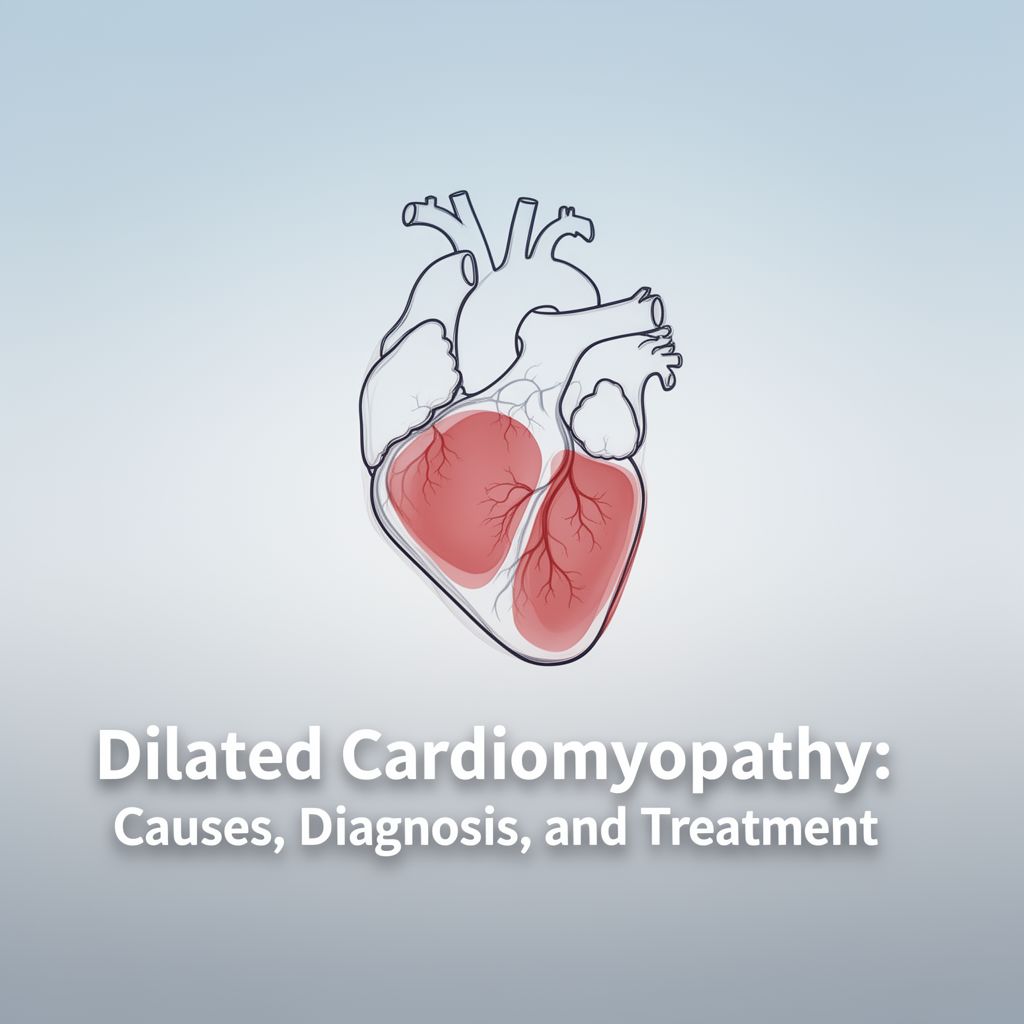
Dilated Cardiomyopathy: Causes, Diagnosis, and Treatment - kapak
Sağlık#cardiomyopathy#dilated cardiomyopathy#heart disease#cardiac health

Dilated Cardiomyopathy: Causes, Diagnosis, and Treatment

An in-depth educational overview of dilated cardiomyopathy, covering its prevalence, diverse etiologies, pathological features, clinical presentation, diagnostic methods, and treatment strategies.

December 29, 2025 ~19 dk toplam
01

Sesli Özet

6 dakika

Konuyu otobüste, koşarken, yolda dinleyerek öğren.

Sesli Özet

Dilated Cardiomyopathy: Causes, Diagnosis, and Treatment

0:005:37
02

Flash Kartlar

25 kart

Karta tıklayarak çevir. ← → ile gez, ⎵ ile çevir.

1 / 25
Tüm kartları metin olarak gör
  1. 1. What is the most frequently encountered form of cardiomyopathy?

    Dilated cardiomyopathy (DCM) stands as the most frequently encountered form of cardiomyopathy.

  2. 2. How does the prevalence of Dilated Cardiomyopathy differ between men and women?

    Dilated cardiomyopathy is observed to occur twice as often in men compared to women.

  3. 3. What is the fundamental characteristic of Dilated Cardiomyopathy?

    This condition is fundamentally characterized by the enlargement and weakening of the heart's main pumping chamber, the left ventricle, leading to impaired systolic function.

  4. 4. What percentage of Dilated Cardiomyopathy cases are idiopathic?

    A significant portion of dilated cardiomyopathy cases are idiopathic, meaning the cause remains unknown.

  5. 5. What role do familial factors play in Dilated Cardiomyopathy?

    Familial, or genetic, factors play a crucial role, with twenty to thirty percent of patients having a first-degree relative also affected by DCM.

  6. 6. Which gene mutation is most commonly identified in genetic Dilated Cardiomyopathy?

    The most common genetic mutation identified is within the TTN gene, which codes for the titin protein.

  7. 7. What percentage of all Dilated Cardiomyopathy cases are attributed to the TTN gene mutation?

    This specific mutation is thought to be responsible for approximately twenty-five percent of all dilated cardiomyopathy cases.

  8. 8. What is considered the most frequent overall cause of Dilated Cardiomyopathy?

    Genetics, particularly mutations like in the TTN gene, are considered the most frequent overall cause of dilated cardiomyopathy.

  9. 9. What is the typical inheritance pattern for most familial dilated cardiomyopathies?

    Most familial dilated cardiomyopathies are inherited in an autosomal dominant pattern.

  10. 10. Name two other genetic disorders that can lead to Dilated Cardiomyopathy.

    Other genetic disorders that can lead to DCM include glycogen storage diseases, mucopolysaccharidoses, and various neuromuscular diseases such as muscular dystrophy.

  11. 11. List two types of infectious agents that can cause Dilated Cardiomyopathy.

    Infectious agents encompass viral infections like Coxsackie B, bacterial infections such as diphtheria, and parasitic infections like Chagas disease.

  12. 12. What are some inflammatory processes that can induce Dilated Cardiomyopathy?

    Inflammatory processes can induce DCM, seen in autoimmune conditions, post-transplantation settings, and peripartum cardiomyopathy.

  13. 13. What is peripartum cardiomyopathy?

    Peripartum cardiomyopathy is an inflammatory process that develops during late pregnancy or shortly after childbirth.

  14. 14. What is the most common reversible toxic cause of Dilated Cardiomyopathy?

    Chronic alcohol consumption is the most common reversible toxic factor leading to dilated cardiomyopathy.

  15. 15. Name a treatment that can cause irreversible cardiomyopathy.

    Certain treatments like doxorubicin, an anthracycline, can cause irreversible cardiomyopathy.

  16. 16. List two endocrinopathies implicated in the development of Dilated Cardiomyopathy.

    Endocrinopathies such as thyrotoxicosis, hypothyroidism, diabetes, obesity, and hemochromatosis can contribute to the development of DCM.

  17. 17. How is Dilated Cardiomyopathy pathologically defined?

    Pathologically, dilated cardiomyopathy is defined as systolic dysfunction not attributable to ischemic heart disease or valvular disease, with characteristic ventricular dilation.

  18. 18. What are the typical clinical symptoms of patients with Dilated Cardiomyopathy?

    Clinically, patients with dilated cardiomyopathy typically present with symptoms of biventricular heart failure, with left heart failure symptoms generally more prominent.

  19. 19. Can familial forms of Dilated Cardiomyopathy be asymptomatic?

    Yes, familial forms of dilated cardiomyopathy can remain asymptomatic for many years, highlighting the insidious nature of the disease.

  20. 20. What is the priority and often initial imaging modality for diagnosing Dilated Cardiomyopathy?

    Echocardiography is the priority and often the initial imaging modality for diagnosing dilated cardiomyopathy.

  21. 21. What are common findings on an echocardiogram for Dilated Cardiomyopathy?

    The most common finding on an echocardiogram is weak ventricular contraction, described as diffuse hypokinesia, along with a low ejection fraction.

  22. 22. What crucial condition must be ruled out when diagnosing Dilated Cardiomyopathy?

    It is imperative to rule out ischemic heart disease, as it is the most common cause of left heart failure.

  23. 23. When should coronary angiography be performed in the context of DCM diagnosis?

    For patients with risk factors for coronary artery disease, coronary angiography should be performed to exclude an ischemic etiology.

  24. 24. What is the definitive method for diagnosing Dilated Cardiomyopathy?

    While imaging techniques are highly informative, the definitive diagnosis of dilated cardiomyopathy is ultimately established through a cardiac biopsy.

  25. 25. What is the ultimate and most definitive treatment option for advanced Dilated Cardiomyopathy?

    For many patients with advanced dilated cardiomyopathy, cardiac transplantation remains the main and most definitive treatment option.

03

Bilgini Test Et

10 soru

Çoktan seçmeli sorularla öğrendiklerini ölç. Cevap + açıklama.

Soru 1 / 10Skor: 0

What is the primary characteristic of dilated cardiomyopathy (DCM) as described in the text?

04

Detaylı Özet

3 dk okuma

Tüm konuyu derinlemesine, başlık başlık.

📚 Dilated Cardiomyopathy (DCM) Study Guide

Source Information: This study material has been compiled from a lecture audio transcript and a copy-pasted text document.


💡 Introduction to Dilated Cardiomyopathy (DCM)

Dilated Cardiomyopathy (DCM) is the most frequently encountered form of cardiomyopathy. It is characterized by the enlargement and weakening of the heart's main pumping chamber, typically the left ventricle, leading to impaired systolic function.

Key Statistics:

  • Most common type of cardiomyopathy.
  • Occurs twice as often in men compared to women.

🔬 Etiology: Causes of Dilated Cardiomyopathy

The causes of DCM are diverse, ranging from genetic predispositions to environmental factors.

  1. Idiopathic: 🤷‍♀️ The cause remains unknown in a significant portion of cases.
  2. Familial (Genetic): 🧬
    • Prevalence: 20-30% of patients have a first-degree relative with DCM.
    • Most Common Genetic Cause: Mutations in the TTN gene, which codes for the titin protein. This mutation is thought to be responsible for approximately 25% of all DCM cases, making genetics the most frequent overall cause.
    • Inheritance Pattern: Most familial DCMs are inherited in an autosomal dominant pattern.
    • Other Genetic Disorders: Glycogen storage diseases, mucopolysaccharidoses, and neuromuscular diseases (e.g., muscular dystrophy).
  3. Infectious: 🦠
    • Viral: Coxsackie B virus.
    • Bacterial: Diphtheria, Tuberculosis.
    • Parasitic: Chagas disease.
  4. Inflammatory: 🔥
    • Autoimmune conditions.
    • Post-transplantation.
    • Peripartum cardiomyopathy (developing during late pregnancy or shortly after childbirth).
  5. Toxic: 🧪
    • Alcohol: Chronic alcohol consumption is the most common cause of reversible cardiomyopathy.
    • Doxorubicin (Anthracyclines): Can cause irreversible cardiomyopathy.
    • Other Toxins: Cobalt, mercury, lead, and high-dose catecholamine exposure.
  6. Endocrinopathies: 🩺
    • Thyrotoxicosis (hyperthyroidism).
    • Hypothyroidism.
    • Diabetes.
    • Obesity.
    • Hemochromatosis.
  7. Other Causes:
    • Sarcoidosis.
    • Polymyositis-dermatomyositis.
    • Pheochromocytoma.

💔 Pathology and Pathophysiology

DCM is fundamentally characterized by:

  • Systolic Dysfunction: The heart's ability to pump blood effectively is impaired.
  • Ventricular Dilation: Enlargement of the heart's ventricles, particularly the left ventricle.
  • Distinction: This condition is not attributable to ischemic heart disease or valvular disease.

🩺 Clinical Presentation and Symptoms

Patients typically present with symptoms of heart failure.

  • Biventricular Heart Failure: Symptoms affecting both sides of the heart.
  • Left Heart Failure: Symptoms related to left heart failure are generally more prominent (e.g., shortness of breath, fatigue).
  • Asymptomatic Period: Familial (genetic) forms of DCM can remain asymptomatic for many years.

🔍 Diagnostic Approaches

A multi-modal approach is used for diagnosing DCM and ruling out other conditions.

  1. Electrocardiogram (ECG): 📈
    • May show left ventricular hypertrophy.
    • Sinus tachycardia.
    • Non-specific ST-T wave abnormalities.
    • Occasionally, pathological Q waves.
  2. Echocardiography (ECHO): 💖
    • Priority Diagnostic Tool: Often the initial imaging modality.
    • Key Findings:
      • Weak ventricular contraction (diffuse hypokinesia).
      • Low ejection fraction (EF).
    • Crucial Step: It is imperative to rule out ischemic heart disease, as it is the most common cause of left heart failure.
    • Coronary Angiography: Should be performed in patients with risk factors for coronary artery disease to exclude an ischemic etiology.
  3. Magnetic Resonance Imaging (MRI): 🧲
    • Assists in diagnosis.
    • Can reveal non-ischemic ventricular dilation.
    • Identifies ventricular fibrosis.
    • Helps diagnose specific conditions (e.g., sarcoidosis).
  4. Cardiac Biopsy: 🔬
    • Definitive Diagnosis: Provides the most conclusive diagnosis.

💊 Treatment Strategies

Treatment focuses on managing symptoms, addressing underlying causes, and improving cardiac function.

  1. Elimination of Etiological Agent: 🚫
    • If an identifiable cause exists (e.g., alcohol, specific toxins, endocrine disorders), its management or removal is the first step.
  2. Congestive Heart Failure Treatment: 💧
    • Medications to alleviate symptoms, reduce fluid retention, improve pumping ability, and control blood pressure.
  3. Cardiac Transplantation: ❤️‍🩹
    • Main Treatment: For many patients with advanced DCM, cardiac transplantation remains the definitive treatment option, offering improved quality of life and survival.

Kendi çalışma materyalini oluştur

PDF, YouTube videosu veya herhangi bir konuyu dakikalar içinde podcast, özet, flash kart ve quiz'e dönüştür. 1.000.000+ kullanıcı tercih ediyor.

Sıradaki Konular

Tümünü keşfet
Clinical Case Study: Decompensated Mitral Stenosis

Clinical Case Study: Decompensated Mitral Stenosis

An in-depth analysis of a clinical case involving a 63-year-old female patient presenting with symptoms of heart failure, stemming from a history of rheumatic fever.

11 dk 22 10
Understanding Rosacea: A Comprehensive Guide

Understanding Rosacea: A Comprehensive Guide

Explore the chronic inflammatory skin condition Rosacea, covering its definition, epidemiology, pathogenesis, clinical subtypes, diagnosis, and various treatment approaches.

Özet 15
Understanding Viral Hepatitis: Types, Diagnosis, and Prevention

Understanding Viral Hepatitis: Types, Diagnosis, and Prevention

Explore the five main hepatitis viruses, their modes of transmission, diagnostic methods, clinical features, and strategies for prevention and treatment.

10 dk Özet 15
Diagnosis and Treatment of Infectious Diarrhea

Diagnosis and Treatment of Infectious Diarrhea

An in-depth look into the diagnostic methods and treatment strategies for infectious diarrhea, covering common pathogens, diagnostic tests, and dietary management.

8 dk Özet 25 15
Understanding Genetic Conditions: Mosaicism and Thalassemias

Understanding Genetic Conditions: Mosaicism and Thalassemias

Explore the definitions, types, inheritance, diagnosis, and treatment of mosaicism and thalassemias, two significant genetic conditions.

4 dk 24 15
Bacterial Pathogens: Characteristics, Diagnosis, and Treatment

Bacterial Pathogens: Characteristics, Diagnosis, and Treatment

Explore key bacterial pathogens, their unique characteristics, disease mechanisms, diagnostic approaches, and effective treatment and prevention strategies based on a comprehensive medical document.

7 dk Özet
Understanding Shigella: Characteristics, Pathogenesis, and Clinical Aspects

Understanding Shigella: Characteristics, Pathogenesis, and Clinical Aspects

This podcast offers a detailed educational overview of Shigella, covering its general characteristics, virulence factors, pathogenesis, clinical significance, epidemiology, and management.

Özet 22 15
Periodontal Diseases: Pathogenesis and Radiographic Assessment

Periodontal Diseases: Pathogenesis and Radiographic Assessment

This summary provides an academic overview of periodontal diseases, covering their pathogenesis, clinical manifestations, radiographic assessment, associated dental and systemic conditions, and differential diagnosis.

7 dk Özet