Podit
Podit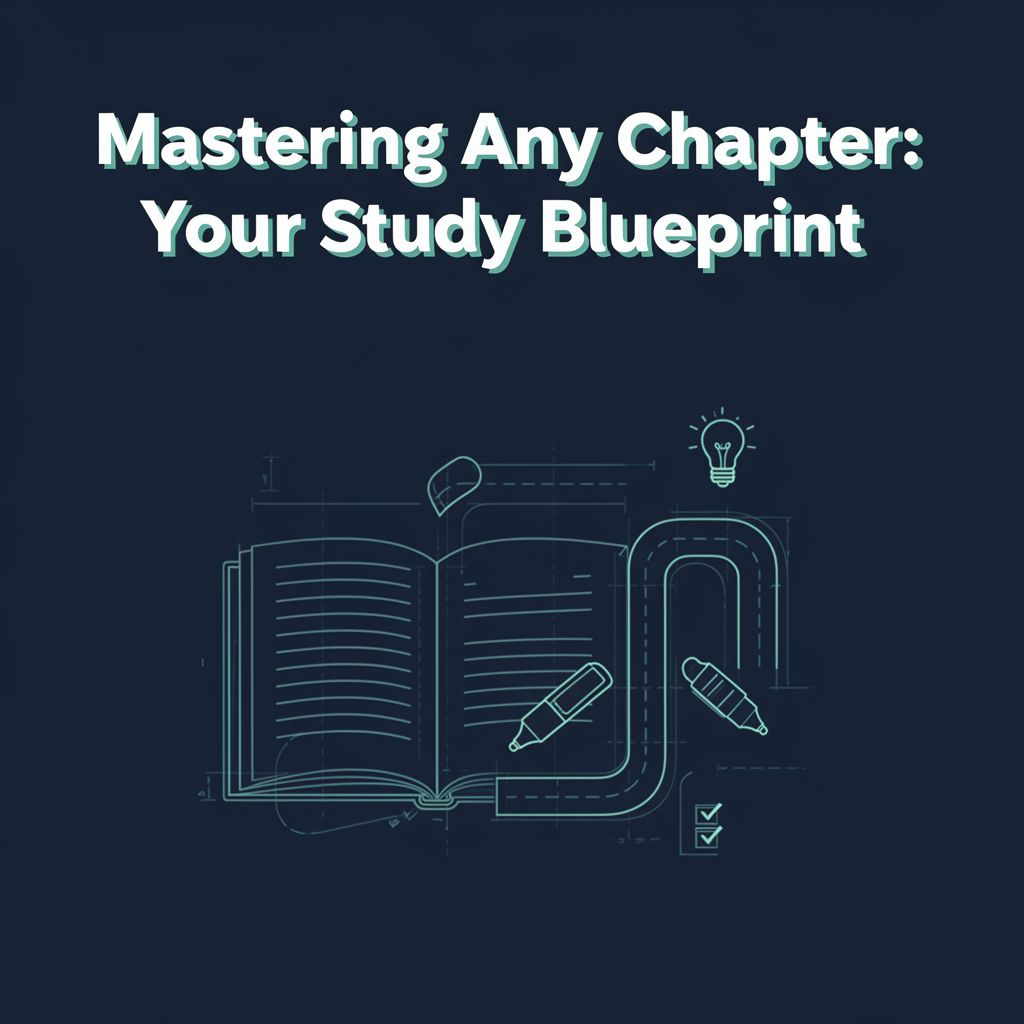
Study Material: Effective Chapter Study Strategies
Source Information: This study material is compiled from a lecture audio transcript on effective chapter study techniques.
📚 Introduction: Mastering Chapter Study
Welcome to this guide on effective chapter study! This material is designed to equip you with proven strategies to approach any textbook chapter, transforming a potentially overwhelming task into a clear, manageable, and highly effective learning process. The goal is not just to read, but to truly understand and retain the information, making your study time more productive.
1️⃣ Phase 1: Pre-Reading – Getting the Big Picture
Before diving into the details, the crucial first step is to get a comprehensive overview of the chapter. Think of pre-reading as reviewing the blueprints before building a house – it provides a mental framework to organize incoming information. This phase should be brief, typically 5-10 minutes, and focuses on understanding the chapter's scope and main themes, not on memorizing specifics.
✅ Purpose:
- To create a mental framework for the chapter.
- To understand the main topics and overall structure.
- To prepare your brain for what information to expect.
💡 Key Actions during Pre-Reading:
- Examine Titles & Headings: Look at the chapter title, main headings, and subheadings. These provide an outline of the chapter's content.
- Read Introduction & Conclusion: These sections often summarize the main ideas and key takeaways.
- Scan Visuals & Bolded Terms: Quickly glance at images, charts, graphs, and any bolded or italicized terms. These highlight important concepts and data.
- Review End-of-Chapter Questions: Read through any review questions or learning objectives at the end of the chapter. This primes your brain to look for answers as you read.
2️⃣ Phase 2: Active Reading & Note-Taking – Engaging with the Text
Once you have the big picture, it's time for active engagement with the material. This phase moves beyond passive scanning to a detective-like approach, where you actively search for understanding and answers.
✅ Purpose:
- To deeply process and comprehend the information.
- To connect new information with existing knowledge.
- To identify and clarify areas of confusion.
💡 Key Actions during Active Reading & Note-Taking:
- Ask Probing Questions: As you read each paragraph or section, actively ask yourself:
- "What is the main point here?"
- "How does this relate to what I already know?"
- "Why is this information important?"
- Strategic Highlighting:
- Highlight sparingly – aim for no more than 10-15% of the text.
- Focus on key phrases, definitions, or sentences that capture the essence of a concept.
- Avoid highlighting entire paragraphs, as this diminishes its effectiveness.
- Take Notes in Your Own Words:
- This is crucial for true understanding, as it forces you to process and rephrase the information.
- Experiment with different note-taking methods:
- Cornell Notes: Divide your page into sections for main notes, cues, and summary.
- Mind Maps: Visually connect ideas around a central theme.
- Bullet Points: Summarize key information concisely.
- Address Areas of Confusion:
- Do not skip over sections you don't understand.
- Make a note of these points and plan to look them up, consult other resources, or ask your instructor.
3️⃣ Phase 3: Review & Consolidation – Making it Stick
The learning process isn't complete after reading and note-taking. The final, critical phase is review and consolidation, which ensures the information is transferred from short-term to long-term memory.
✅ Purpose:
- To solidify understanding and retention.
- To strengthen neural connections related to the material.
- To prepare for assessments and long-term knowledge application.
💡 Key Actions during Review & Consolidation:
- Immediate Review of Notes: Soon after finishing the chapter, go back over your notes.
- Active Recall:
- Try to summarize the main concepts without looking at the chapter or your notes.
- Explain the material out loud to an imaginary friend or yourself. This technique is highly effective for testing your understanding and recall.
- Answer Review Questions:
- Revisit the end-of-chapter questions you scanned during pre-reading.
- Attempt to answer them thoroughly, using your notes and memory.
- Practice Problems: If the chapter includes practice problems or exercises, work through them. Application of knowledge reinforces learning.
- Spaced Repetition:
- Review the material at increasing intervals over time (e.g., 1 day later, 3 days later, 1 week later, 2 weeks later).
- This technique is incredibly powerful for long-term retention.
🎯 Conclusion: Your Path to Chapter Mastery
By consistently applying this three-phase strategy – Pre-Reading for the big picture, Active Reading & Note-Taking for deep engagement, and Review & Consolidation for long-term retention – you will transform your approach to studying. Remember, effective studying is about how you engage with the material, not just the time you spend. Practice these techniques, and you will significantly enhance your understanding and memory of any academic chapter.