 Podit
Podit
This content is based on a YouTube video.
📚 Introduction to Geography: Foundations for Educators
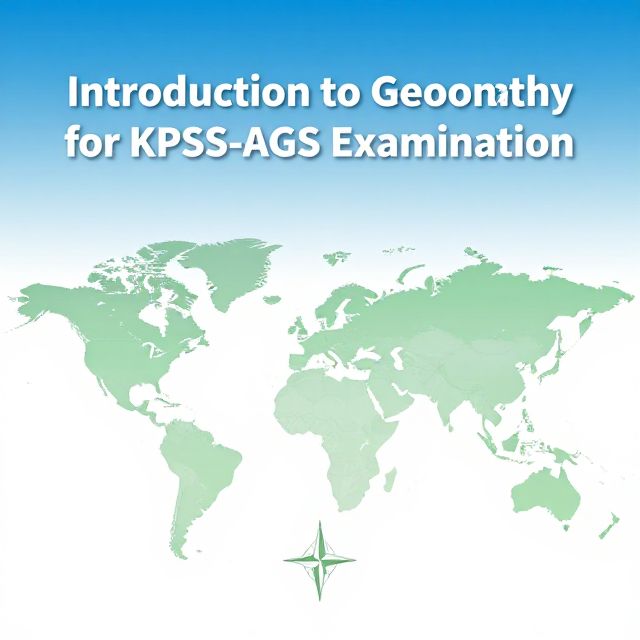
This study material provides a comprehensive overview of introductory geography, specifically tailored for aspiring educators preparing for the KPSS-MEB Field Knowledge Examination (AGS Coğrafya) in 2026. A strong grasp of these foundational concepts is crucial for success in the examination and for effectively teaching geography.
🌍 Defining Geography and its Principal Branches
Geography is an academic discipline dedicated to the study of the Earth's surface. It encompasses its physical features, climate, population distribution, and the intricate interactions between human societies and their natural environments. The core aim of geography is to understand where phenomena are located, why they are there, and how they develop and change over time.
The discipline is broadly divided into two main branches, with an integrative third branch:
1. Physical Geography
This branch investigates the natural processes and features of the Earth.
- Geomorphology: 🏞️ Studies landforms and the processes that create and modify them.
- Climatology: ☁️ Focuses on atmospheric conditions, weather patterns, and climate zones.
- Hydrology: 💧 Examines water resources, their distribution, and movement.
- Biogeography: 🌳 Analyzes the spatial distribution of life forms (plants and animals).
- Soil Geography: 🪨 Concerns the characteristics, formation, and distribution of soils.
2. Human Geography
This branch explores the spatial organization and distribution of human activities and their relationship with the environment.
- Population Geography: 👥 Analyzes demographic patterns, distribution, and migration.
- Economic Geography: 📈 Focuses on the spatial aspects of economic activities, production, and consumption.
- Political Geography: 🗳️ Studies the spatial implications of political processes, boundaries, and power.
- Urban Geography: 🏙️ Investigates cities, urban systems, and urbanization processes.
- Cultural Geography: 🎭 Examines the spatial distribution of cultural phenomena, beliefs, and practices.
3. Regional Geography
This serves as an integrative branch, synthesizing both physical and human aspects within specific geographical areas. It aims to provide a holistic understanding of particular regions by considering all relevant geographical factors.
Key Geographical Concepts
The conceptual bedrock of geographical inquiry includes:
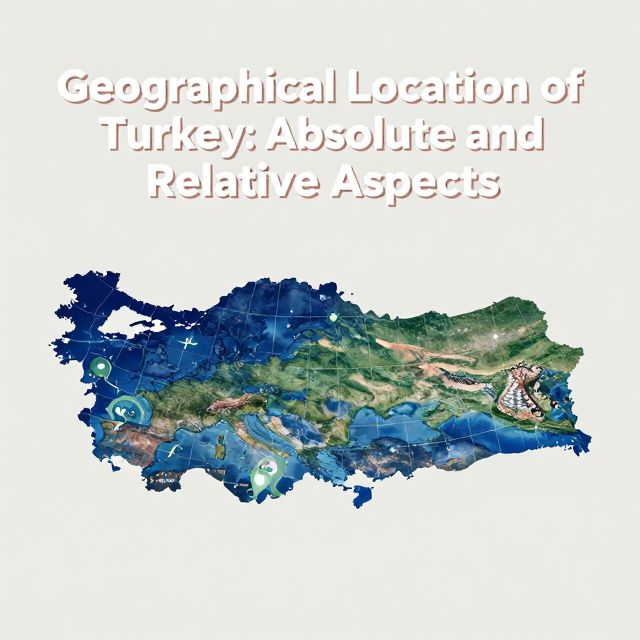
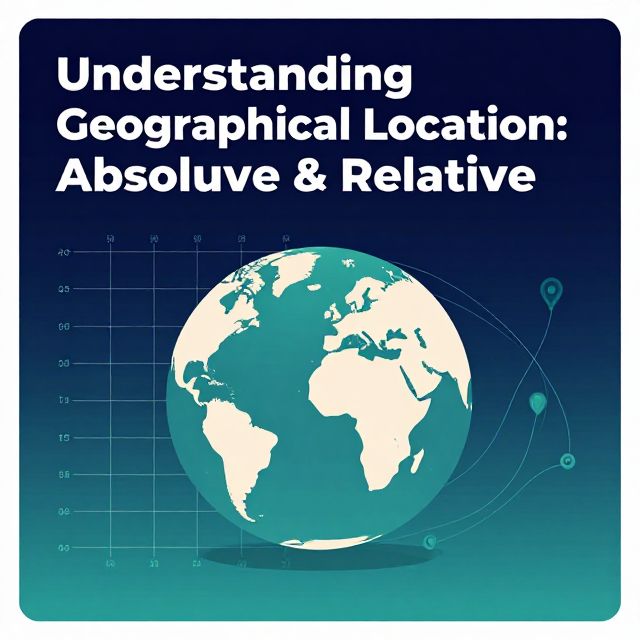
- Absolute Location: Precise position on Earth (e.g., coordinates).
- Relative Location: Position in relation to other places.
- Characteristics of Place: Unique physical and human attributes of a location.
- Human-Environment Interaction: The ways humans adapt to, modify, and depend on the environment.
- Patterns of Movement: The flow of people, goods, and ideas across space.
- Delineation of Regions: Defining areas based on shared characteristics.
🧭 Core Geographical Principles and Methodological Approaches
The study of geography is guided by several fundamental principles that structure its investigative approach:
Fundamental Principles
- ✅ Principle of Distribution (Yayılış): Identifying the spatial arrangement and patterns of phenomena across the Earth's surface.
- ✅ Principle of Causality (Nedensellik): Seeking to explain the underlying reasons and processes that lead to observed distributions and characteristics.
- ✅ Principle of Interaction (Karşılıklı İlgi): Emphasizing the interconnectedness and mutual influence between different geographical elements, whether physical or human.
- ✅ Principle of Comparison (Karşılaştırma): Analyzing similarities and differences between various regions or phenomena to derive broader generalizations and understandings.
Methodological Approaches and Tools
Geographers employ a diverse array of tools and techniques to conduct their research:
- Cartography: 🗺️ The art and science of map-making, central to representing spatial information.
- Remote Sensing: 🛰️ Utilizes satellite imagery and aerial photography to gather data from a distance.
- Geographic Information Systems (GIS): 💻 Powerful computational frameworks for storing, analyzing, and visualizing spatial data.
- Fieldwork and Direct Observation: 🚶 Essential for empirical data collection and firsthand understanding of geographical phenomena.
- Statistical Analysis: 📊 Frequently applied to interpret quantitative geographical information and identify trends.
The evolution of geographical thought has progressed significantly, moving from largely descriptive approaches to more analytical, quantitative, and critical methodologies. This reflects the discipline's ongoing development and its increasing capacity to address complex global challenges.
💡 Conclusion: The Significance of Foundational Geographical Knowledge
A robust understanding of introductory geography is indispensable for aspiring educators preparing for the KPSS-MEB Field Knowledge Examination. This foundational knowledge provides the essential framework for:
- Comprehending the Earth's diverse physical and human landscapes.
- Understanding the intricate processes that shape these landscapes.
- Mastering the methodologies employed to study them.
By mastering these core concepts, future geography teachers will be equipped to:
- Effectively convey complex geographical ideas to their students.
- Foster a deeper appreciation for the world's spatial organization and its dynamic interconnections.
- Critically analyze global challenges such as climate change, resource management, and geopolitical shifts.
This comprehensive grounding enables educators to contribute to informed citizenship and sustainable development. The academic rigor applied to these introductory topics is crucial for developing the pedagogical competence required for excellence in geographical education.