UAE Market Entry Strategy for Macro Group Australia - kapak
İş Dünyası#uae market entry#macro group australia#kangaroo meat#halal certification

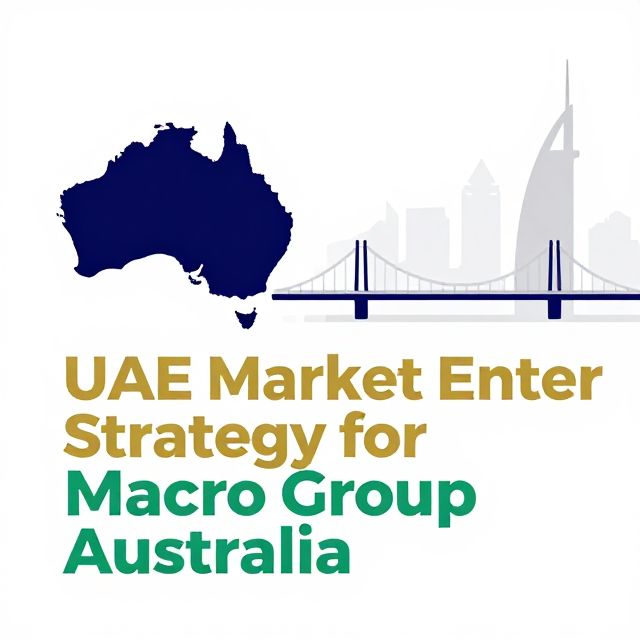
UAE Market Entry Strategy for Macro Group Australia

This summary outlines Macro Group Australia's strategy for entering the UAE market, focusing on market attractiveness, consumer preferences, regulatory requirements, distribution, competition, and financial considerations.

gul11April 9, 2026 ~20 dk toplam
01

Sesli Özet

6 dakika

Konuyu otobüste, koşarken, yolda dinleyerek öğren.

Sesli Özet

UAE Market Entry Strategy for Macro Group Australia

0:005:59
02

Flash Kartlar

25 kart

Karta tıklayarak çevir. ← → ile gez, ⎵ ile çevir.

1 / 25
Tüm kartları metin olarak gör
  1. 1. Why is international market expansion crucial for entities like Macro Group Australia?

    Expanding into international markets represents a crucial growth strategy for companies. It allows them to tap into new consumer bases, diversify revenue streams, and reduce reliance on a single domestic market. For Macro Group Australia, it's a pathway to sustained business development and increased profitability by leveraging global opportunities.

  2. 2. What makes the UAE an attractive market for Macro Group Australia?

    The United Arab Emirates presents a market with significant potential due to several factors. It is characterized by a robust economy, elevated consumer purchasing power, and an increasing demand for premium food products. This combination makes it an appealing destination for businesses looking to introduce high-quality goods.

  3. 3. What was the approximate valuation of the UAE meat market in 2023?

    The UAE meat market demonstrated consistent growth, reaching an approximate valuation of 3.2 billion US dollars in 2023. This figure highlights the substantial size and economic importance of the meat sector within the country. Projections indicate continued expansion, suggesting a promising future for market entrants.

  4. 4. What is a critical factor for the food market in the UAE given regional imperatives?

    The rapid growth of the halal food market is a critical factor in the UAE. Given the regional imperative for halal-certified products, consumers predominantly expect and purchase only halal-certified meat. This makes obtaining halal certification a fundamental prerequisite for market entry and success in the region.

  5. 5. How does the UAE's GCC membership benefit market entry strategies?

    The UAE's membership in the Gulf Cooperation Council (GCC), which includes nations like Saudi Arabia and Qatar, positions it as a strategic gateway for future regional expansion. This dual advantage establishes the UAE as both a strong individual market and a pivotal entry point to the broader GCC region. It allows businesses to leverage their presence in the UAE to access neighboring markets more easily.

  6. 6. What are the typical consumer characteristics in the UAE regarding purchasing power?

    Consumers in the UAE typically possess high disposable incomes. This economic characteristic translates into a willingness to invest in quality products, especially premium food items. Their strong purchasing power makes the market attractive for high-value offerings.

  7. 7. What consumer trends are discernible in the UAE regarding food options?

    There is a discernible trend towards healthy and natural food options among UAE consumers. They show a preference for items that are low in fat, high in protein, and devoid of artificial additives. This indicates a growing health consciousness and a demand for nutritious and clean-label products.

  8. 8. How does kangaroo meat align with UAE consumer trends?

    Kangaroo meat aligns effectively with UAE consumer trends because it is notably lean, rich in protein, and abundant in essential nutrients such as iron and zinc. These characteristics cater to the preference for healthy and natural food options. This allows for its positioning as a premium and healthy alternative to conventional meats.

  9. 9. Which of Porter's strategies does positioning kangaroo meat as premium and healthy reflect?

    Positioning kangaroo meat as a premium and healthy alternative reflects Porter's differentiation strategy. This strategy involves offering a unique product or service to distinguish itself in the market from competitors. By highlighting its health benefits and premium quality, Macro Group Australia aims to stand out.

  10. 10. What is a fundamental prerequisite for market entry into the UAE for food products?

    Halal certification constitutes a fundamental prerequisite for market entry into the UAE for food products, especially meat. The majority of consumers exclusively purchase halal-certified meat and expect comprehensive transparency regarding product production. Without this certification, market access is severely limited.

  11. 11. How can obtaining halal certification be both challenging and an opportunity?

    While obtaining halal certification can present challenges due to strict requirements and processes, it simultaneously offers a significant opportunity. It allows companies to cultivate consumer trust by demonstrating adherence to religious and quality standards. This trust is crucial in a market where halal compliance is paramount.

  12. 12. How are Australian products generally perceived in the UAE market?

    Australian products are generally perceived as high quality and reliable in the UAE market. This positive perception provides a strong foundation for Macro Group Australia. The company can further reinforce this image through its robust supply chain and traceability systems, enhancing consumer confidence in its offerings.

  13. 13. What role do supermarkets and hypermarkets play in UAE food distribution?

    Supermarkets and hypermarkets play a significant role in UAE food distribution, providing extensive consumer access. They form a highly developed retail infrastructure, acting as primary channels for food sales. Major chains like Carrefour and Lulu are key players in this distribution network.

  14. 14. What major supermarket chains are mentioned in the UAE's food distribution network?

    Major supermarket chains mentioned as significant players in the UAE's food distribution network include Carrefour and Lulu. These large retailers provide extensive consumer access and are crucial partners for food product distribution. Their presence highlights the importance of traditional retail channels.

  15. 15. How does the growth of online shopping impact distribution strategy in the UAE?

    The rapid growth of online shopping in the UAE supports an omnichannel strategy for distribution. This means integrating physical retail with digital sales platforms to reach consumers through multiple touchpoints. An omnichannel approach allows businesses to cater to evolving consumer preferences and expand their market reach effectively.

  16. 16. What role does the hospitality sector play in introducing new products like kangaroo meat?

    The hospitality sector, particularly in cities like Dubai, is highly influential in the UAE. Strategic partnerships with restaurants can facilitate the introduction of new products like kangaroo meat. This allows for its positioning as a premium and distinctive offering, reaching consumers through high-end culinary experiences.

  17. 17. Who are some established local competitors in the UAE meat market?

    Some established local competitors in the UAE meat market include Agthia Group and Al Ain Farms. These companies are significant players within the region. They primarily concentrate on traditional meats, such as chicken, beef, and lamb, serving a broad consumer base.

  18. 18. What types of meat do established local competitors primarily focus on?

    Established local competitors in the UAE meat market, such as Agthia Group and Al Ain Farms, primarily concentrate on traditional meats. Their focus is on widely consumed varieties like chicken, beef, and lamb. This leaves a potential niche for alternative meat products.

  19. 19. What unique opportunity exists for Macro Group Australia regarding kangaroo meat?

    Currently, there are no significant competitors offering kangaroo meat in the UAE market. This creates a unique niche opportunity for Macro Group Australia. The product can achieve market distinction through its uniqueness, health benefits, and sustainability, allowing for a less competitive entry.

  20. 20. Which business strategy is aligned with entering a market with minimal direct competition, as described for kangaroo meat?

    Entering a market with minimal direct competition, as described for kangaroo meat, aligns with the principles of the Blue Ocean Strategy. This strategy focuses on creating new market space rather than competing in existing, crowded markets. It allows for differentiation and potentially higher profit margins by avoiding head-to-head competition.

  21. 21. What makes the UAE financially attractive from a consumer perspective?

    From a financial perspective, the UAE is attractive due to its consumers' high purchasing power. This enables them to readily pay for premium products, which is beneficial for companies offering high-quality goods. The willingness of consumers to invest in quality supports a premium pricing strategy.

  22. 22. What does the UAE's reliance on meat imports indicate for international suppliers?

    The UAE's substantial reliance on meat imports indicates an openness to international suppliers. This suggests that the market is accustomed to sourcing products from abroad and is receptive to foreign businesses. It reduces potential barriers for companies like Macro Group Australia looking to export their products.

  23. 23. How does the UAE currency's stability benefit exporters?

    The UAE currency's stability, being pegged to the US dollar, significantly benefits exporters. This stability mitigates exchange rate risks, making financial planning simpler and more predictable for international businesses. It provides a more secure financial environment for trade and investment.

  24. 24. What challenge does the hot climate pose for product freshness in the UAE?

    The hot climate in the UAE necessitates a robust cold chain system to maintain product freshness. This poses a significant logistical challenge for perishable goods like meat. It requires reliable logistics partners and stringent temperature control throughout the supply chain to prevent spoilage and ensure product quality.

  25. 25. What is paramount regarding regulations, especially halal certification and labeling?

    Strict adherence to regulations, particularly concerning halal certification and labeling, is paramount in the UAE. Non-compliance can lead to severe consequences, including product rejection and market exclusion. Businesses must ensure all products meet the specific legal and religious requirements to avoid issues.

03

Bilgini Test Et

15 soru

Çoktan seçmeli sorularla öğrendiklerini ölç. Cevap + açıklama.

Soru 1 / 15Skor: 0

What is the approximate valuation of the UAE meat market in 2023?

04

Detaylı Özet

4 dk okuma

Tüm konuyu derinlemesine, başlık başlık.

Study Material: UAE Market Entry Strategy for Macro Group Australia

Source Information: This study material has been compiled from a copy-pasted text and a lecture audio transcript, both focusing on the UAE Market Entry Strategy for Macro Group Australia.


📚 Introduction to UAE Market Entry Strategy

Expanding into international markets is a crucial growth strategy for companies like Macro Group Australia. The United Arab Emirates (UAE) presents a market with significant potential, characterized by a robust economy, elevated consumer purchasing power, and an increasing demand for premium food products. This guide outlines the suitability of the UAE as a target market and details a strategic approach for Macro Group Australia's successful entry.


📈 Market Attractiveness of the UAE

The UAE offers a compelling environment for market expansion due to several key factors:

  • Growing Meat Market:
    • The UAE meat market was valued at approximately USD 3.2 billion in 2023.
    • It is projected to continue its steady growth.
  • Expanding Halal Food Sector:
    • The halal food market is experiencing rapid expansion, which is critical given the regional imperative for halal-certified products.
  • Strategic Regional Gateway:
    • The UAE's membership in the Gulf Cooperation Council (GCC), which includes nations like Saudi Arabia and Qatar, positions it as a strategic entry point.
    • Successful entry into the UAE can create opportunities for future expansion into these broader regional markets.

🛒 Consumer Preferences and Product Alignment

Consumers in the UAE exhibit distinct preferences that align well with Macro Group Australia's offerings:

  • High Purchasing Power:
    • Consumers generally possess high disposable incomes and are willing to invest in quality products.
  • Demand for Healthy Options:
    • There is a discernible trend towards healthy and natural food options.
    • Preferences include products that are low in fat, high in protein, and free from artificial additives.
  • Kangaroo Meat's Suitability:
    • Kangaroo meat aligns effectively with these trends, being notably lean, rich in protein, and abundant in essential nutrients such as iron and zinc.
    • 💡 Strategic Positioning: It can be positioned as a premium and healthy alternative to conventional meats like beef and lamb. This reflects Porter's differentiation strategy, where a company offers a unique product to distinguish itself in the market.

✅ Regulatory Compliance: Halal Certification

Halal certification is a fundamental prerequisite for market entry into the UAE:

  • Key Requirement: Most consumers exclusively purchase halal-certified meat and expect comprehensive transparency regarding product production.
  • Opportunity for Trust: While obtaining halal certification can present challenges, it simultaneously offers an opportunity to cultivate consumer trust.
  • Australian Product Perception: Australian products are generally perceived as high quality and reliable. Macro Group Australia's robust supply chain and traceability systems can further reinforce this trust.

🚚 Distribution Channels

The UAE possesses a highly developed retail and hospitality infrastructure:

  • Retail Dominance:
    • Supermarkets and hypermarkets play a significant role in food distribution.
    • Large retail chains such as Carrefour and Lulu provide extensive consumer access.
  • Growing Online Presence:
    • The rapid growth of online shopping supports an omnichannel strategy, integrating physical retail with digital sales platforms.
  • Hospitality Sector:
    • The hospitality sector, particularly in cities like Dubai, is highly influential.
    • 💡 Strategy: Strategic partnerships with restaurants can facilitate the introduction of kangaroo meat as a premium and distinctive product.

⚔️ Competitive Landscape

The competitive environment in the UAE presents a unique opportunity for Macro Group Australia:

  • Local Competitors:
    • Established local competitors include Agthia Group and Al Ain Farms.
    • These companies primarily concentrate on traditional meats like chicken, beef, and lamb.
  • Niche Opportunity:
    • Currently, there are no significant competitors offering kangaroo meat.
    • This creates a niche opportunity for Macro Group Australia.
    • 💡 Blue Ocean Strategy: The product can achieve market distinction through its uniqueness, health benefits, and sustainability, aligning with principles of the Blue Ocean Strategy by entering a market with minimal direct competition.

💰 Financial Considerations

The UAE offers several financial advantages for market entry:

  • High Purchasing Power: Consumers' high purchasing power and readiness to pay for premium products make the market financially attractive.
  • Openness to Imports: The nation's substantial reliance on meat imports indicates an openness to international suppliers.
  • Currency Stability: The UAE currency's stability, being pegged to the US dollar, mitigates exchange rate risks and simplifies financial planning for exporters.

⚠️ Risks and Challenges

Despite the opportunities, several challenges and risks must be addressed:

  • Climate and Logistics:
    • The hot climate necessitates a robust cold chain system to maintain product freshness.
    • This requires reliable logistics partners.
  • Strict Regulations:
    • Strict adherence to regulations, particularly concerning halal certification and labeling, is paramount.
    • Non-compliance can lead to product rejection.
  • Limited Consumer Awareness:
    • Consumer awareness of kangaroo meat may be limited, as it is not common in the UAE.
    • 💡 Mitigation: Targeted marketing strategies such as cooking demonstrations and restaurant collaborations are essential to address this issue.

🚀 Recommended Entry Strategy

A phased entry strategy is recommended for Macro Group Australia:

  • 1️⃣ Stage 1 (0–6 months): Foundation Building
    • Prioritize obtaining halal certification.
    • Establish relationships with key retailers.
  • 2️⃣ Stage 2 (6–12 months): Market Launch
    • Launch products in supermarkets and online platforms.
    • Concurrently forge partnerships with restaurants.
  • 3️⃣ Stage 3 (12–24 months): Expansion and Diversification
    • Expand into additional geographic areas within the UAE or GCC.
    • Introduce new product variations.

✅ Conclusion

The United Arab Emirates represents a substantial opportunity for Macro Group Australia. The market is characterized by growth, consumers willing to invest in premium products, and a consistent demand for imported meat. While inherent challenges exist, they are manageable through the implementation of a well-defined strategy. With a clear plan and effective market positioning, Macro Group Australia is well-situated for success within the UAE market.
Kendi çalışma materyalini oluştur

PDF, YouTube videosu veya herhangi bir konuyu dakikalar içinde podcast, özet, flash kart ve quiz'e dönüştür. 1.000.000+ kullanıcı tercih ediyor.

Sıradaki Konular

Tümünü keşfet
Operations Strategy in a Global Environment

Operations Strategy in a Global Environment

Explore the drivers, strategies, and challenges of operations management in a globalized world, covering competitive advantages and the implications of outsourcing.

Özet 25 15
IFS Food Audit: Management and Commitment

IFS Food Audit: Management and Commitment

Explore the critical IFS Food Audit requirements for management and commitment, covering corporate policy, organizational structure, and management review processes essential for food safety and quality.

Özet 25 15
Air Cargo Operations: Logistics, Actors, and Strategies

Air Cargo Operations: Logistics, Actors, and Strategies

This summary provides an academic overview of air cargo, detailing its operational advantages and disadvantages, key stakeholders, Incoterms, airline business models, and revenue management strategies.

14 dk Özet 25 15
Air Cargo Operations: Fees, Methods, and Market Dynamics

Air Cargo Operations: Fees, Methods, and Market Dynamics

An academic overview of air cargo operations, covering overflight and airport fees, chargeable weight, transportation methods, ground handling, and global market trends.

7 dk Özet 25 15
Air Cargo Transportation: Evolution, Regulation, and Future

Air Cargo Transportation: Evolution, Regulation, and Future

This summary explores air cargo transportation, detailing its historical development, regulatory frameworks, operational concepts, economic advantages, and future trends, including the impact of technology and global events.

7 dk Özet 25 15
Human Resource Management: Core Principles and Practices

Human Resource Management: Core Principles and Practices

Explore the fundamental aspects of human resource management, covering workforce planning, recruitment, selection, employee development, and industrial relations.

Özet 25 15
Financial Statements and Core Accounting Principles

Financial Statements and Core Accounting Principles

This audio summary provides an academic overview of financial statements, fundamental accounting principles including debits and credits, the accounting cycle, and key financial performance metrics.

6 dk 25 15
Business Concepts, Management, and Communication

Business Concepts, Management, and Communication

This summary explores essential business concepts, including stress management, corporate socialisation, entrepreneurship, marketing, business planning, human resource management, and conflict resolution.

6 dk Özet 25 15