Podit
Podit
Flash Kartlar
25 kartKarta tıklayarak çevir. ← → ile gez, ⎵ ile çevir.
Tüm kartları metin olarak gör
1. What is the primary purpose of Aggregate Planning?
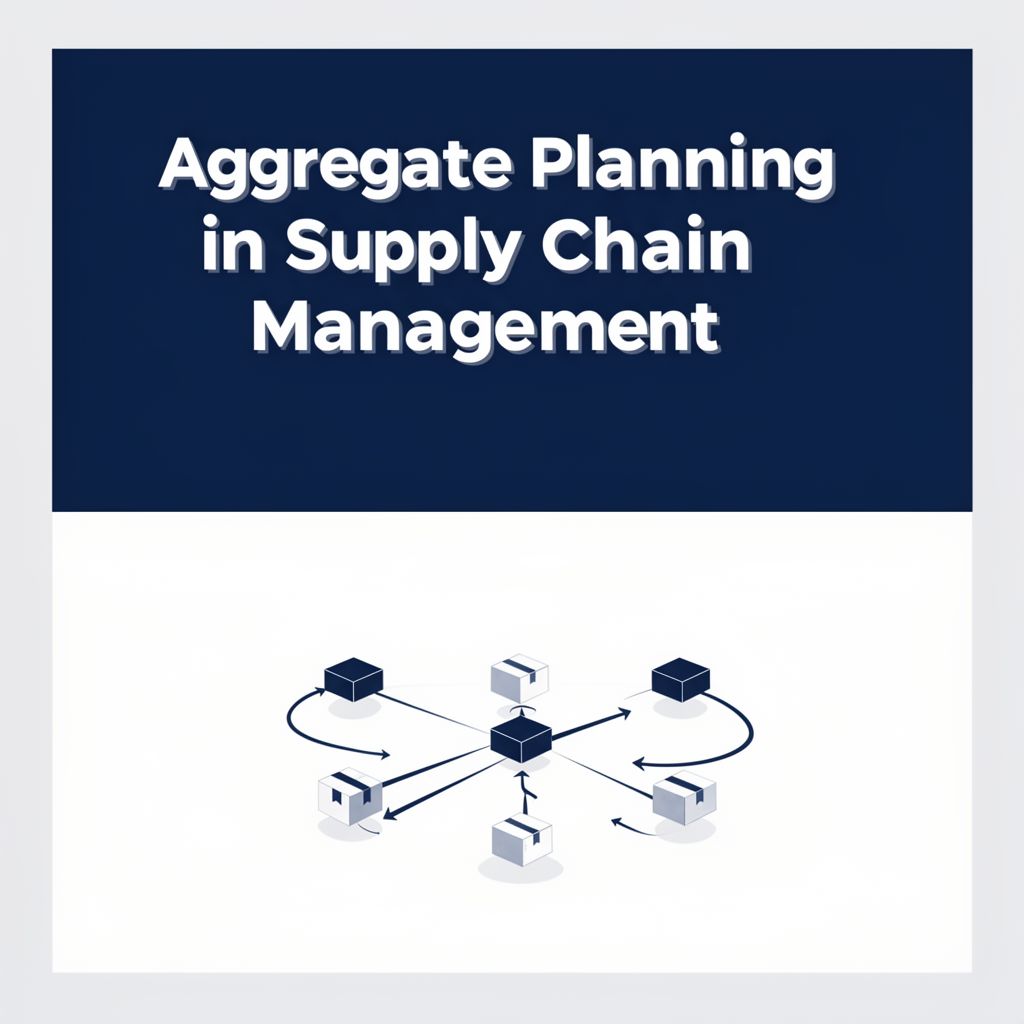
Aggregate Planning aims to set production, workforce, inventory, and capacity levels for product families over a medium-term horizon.
2. What is the time horizon for long-range planning in the planning hierarchy?
Long-range planning spans over one year and is typically handled by top executives for strategic decisions.
3. Which planning level focuses on the Aggregate Plan and covers a horizon of three to eighteen months?
Intermediate-range planning is where operations managers focus on the Aggregate Plan, covering 3 to 18 months.
4. What activities are typically involved in short-range planning?
Short-range planning involves detailed job assignments, ordering, job scheduling, and dispatching, extending up to three months.
5. What is the key focus of Aggregate Planning regarding products?
Aggregate Planning focuses on product families, not individual items, to manage overall production and resources efficiently.
6. What is the first step in the planning sequence that precedes the Aggregate Plan?
The Business or Strategic Plan is the first step, dealing with location and capacity strategies over several years.
7. What is the central problem that aggregate planning addresses?
The central problem is the mismatch between fluctuating demand and often limited, less flexible capacity.
8. Name two primary approaches firms use to address the demand-capacity mismatch.
Firms primarily use demand management options and capacity adjustment (supply) options to balance demand and capacity.
9. How can demand management options help balance demand and capacity?
Demand management options aim to shift demand to better align with existing capacity, often using incentives or pricing strategies.
10. Provide an example of a demand management option that involves offering products with opposite demand patterns.
Counter-seasonal product mixing, such as selling both lawnmowers and snow blowers, is an example of demand management.
11. What is backordering in the context of demand management?
Backordering involves taking orders now with a promise of later delivery, especially useful when capacity is constrained.
12. What is a key trade-off when varying inventory levels as a capacity adjustment strategy?
Varying inventory levels allows stable production but incurs high inventory holding costs and risks lost sales due to shortages.
13. What are the main disadvantages of varying workforce size to adjust capacity?
Varying workforce size leads to high hiring, layoff, and training costs, as well as potential morale issues among employees.
14. How does varying production rates help adjust capacity without changing workforce size?
Varying production rates uses overtime or idle time to adjust working hours, matching seasonal fluctuations without hiring or firing.
15. What are the potential drawbacks of using subcontracting as a capacity adjustment strategy?
Disadvantages of subcontracting include potential loss of quality control, reduced profits, and the risk of losing future business.
16. Describe the core principle of the Level Production Strategy.
The Level Production Strategy maintains a constant production rate and a stable workforce, using inventory and backlogs to absorb demand fluctuations.
17. When is the Level Production Strategy most appropriate to use?
It is most appropriate if inventory is cheap to hold, and labor turnover is expensive or undesirable, especially for skilled teams.
18. What is the primary characteristic of the Chase Strategy in aggregate planning?
The Chase Strategy aims to match production exactly with demand by varying the workforce size through hiring and firing.
19. Under what conditions would a company typically choose the Chase Strategy?
This strategy is suitable if the product is perishable, inventory is expensive or impossible to hold, and unskilled labor is readily available.
20. How does the Time Flexibility Strategy manage production fluctuations?
The Time Flexibility Strategy maintains a stable workforce but varies working hours using overtime or idle time to adjust production.
21. What is the most frequently used aggregate planning strategy by companies and why?
The Mixed (Hybrid) Strategy is most used because it combines elements of other strategies, allowing customization to avoid extreme costs or risks.
22. What is the process of disaggregation in planning?
Disaggregation is the process of breaking down a high-level aggregate plan into specific, actionable details for individual items.
23. What is the typical time horizon for a Master Schedule (MS)?
A Master Schedule typically covers a much shorter horizon, usually 6 to 8 weeks, for specific production quantities.
24. Name two key inputs required for creating a Master Schedule.
Key inputs for a Master Schedule include the demand forecast, actual customer orders, and beginning inventory levels.
25. What is one critical output of the Master Schedule that helps sales and customer service?
The Master Schedule outputs the available or uncommitted inventory, which is crucial for sales and customer service to make reliable delivery promises.
Bilgini Test Et
15 soruÇoktan seçmeli sorularla öğrendiklerini ölç. Cevap + açıklama.
What is the typical time horizon for long-range planning in an organization?