Animal Nutrition and Digestive Systems - kapak
Bilim#animal nutrition#digestive system#vertebrates#nutrients

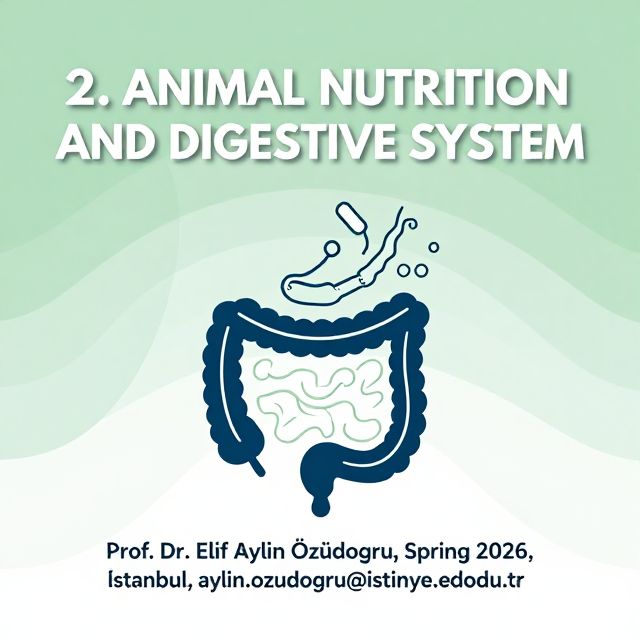
Animal Nutrition and Digestive Systems

Explore the fundamentals of animal nutrition, diverse digestive systems, and the detailed functions of the vertebrate digestive tract and its accessory organs.

izemMarch 10, 2026 ~17 dk toplam
01

Flash Kartlar

25 kart

Karta tıklayarak çevir. ← → ile gez, ⎵ ile çevir.

1 / 25
Tüm kartları metin olarak gör
  1. 1. What is the primary focus of animal nutrition?

    Animal nutrition involves the study of substances called nutrients, which are essential for an animal's metabolism. It encompasses how animals acquire and utilize these nutrients for various bodily functions, including energy production, growth, and tissue repair.

  2. 2. Differentiate between nutrients synthesized internally and essential nutrients.

    Nutrients synthesized internally are compounds that an animal's body can produce on its own to meet its metabolic needs. Essential nutrients, however, cannot be synthesized by the animal and therefore must be obtained directly from its external environment or diet to ensure proper physiological function.

  3. 3. List the six key categories of nutrients vital for animal life.

    The six key categories of nutrients are proteins, carbohydrates, fats, vitamins, minerals, and water. Each category plays a distinct and crucial role in maintaining an animal's health, metabolism, and overall bodily functions.

  4. 4. What are the primary functions of carbohydrates and fats in animal nutrition?

    Carbohydrates primarily serve as the body's immediate source of energy, fueling metabolic processes and physical activities. Fats, on the other hand, are crucial for long-term energy storage, providing a concentrated reserve of fuel, and also play roles in insulation and organ protection.

  5. 5. Explain the role of proteins in animal bodies.

    Proteins are vital for growth and tissue repair in animals. They are the building blocks for muscles, organs, skin, and hair, and also function as enzymes, hormones, and antibodies, playing critical roles in virtually all biological processes and structural integrity.

  6. 6. Why is water considered a crucial nutrient?

    Water is considered a crucial nutrient because it acts as a universal solvent and transport medium within the body. It facilitates nutrient delivery, waste removal, temperature regulation, and is involved in countless biochemical reactions, making it indispensable for life.

  7. 7. What is the function of minerals and vitamins in metabolism?

    Minerals and vitamins are micronutrients that primarily regulate metabolic functions. Minerals are inorganic substances essential for bone structure, nerve function, and fluid balance, while vitamins are organic compounds that act as coenzymes, assisting enzymes in various metabolic pathways.

  8. 8. Describe the importance of fiber, such as cellulose, in digestion.

    Fiber, such as cellulose, comprises indigestible materials that are important for digestive health. Although not absorbed for nutrients, it adds bulk to the stool, aids in the smooth passage of food through the digestive tract, and helps prevent constipation, contributing to a healthy gut environment.

  9. 9. How is the energy content of food quantified?

    The energy content of food is quantified in calories. A calorie is defined as the amount of heat required to raise the temperature of one gram of water by one degree Celsius. This measurement allows for the comparison of the energy yield from different food sources.

  10. 10. Differentiate between intracellular and extracellular digestion.

    Intracellular digestion occurs within the confines of a single cell, where food particles are engulfed and processed internally, typical of single-celled organisms. Extracellular digestion, in contrast, involves the breakdown of food outside of cells, usually within a specialized digestive cavity where enzymes are released.

  11. 11. Describe the digestive system found in primitive forms like coelenterates and flatworms.

    Primitive forms like coelenterates and flatworms possess a gastrovascular cavity. This simple digestive system has a single opening that functions as both a mouth for ingestion and an anus for waste expulsion, lacking specialized regions for different digestive stages.

  12. 12. What evolutionary advantage did the development of separate mouth and anus provide?

    The development of a digestive tract with separate mouth and anus provided a significant evolutionary advantage by enabling one-way food transport. This allowed for more efficient processing, as food could be continuously ingested while waste was simultaneously expelled, leading to greater specialization of digestive regions.

  13. 13. How does the digestive system of nematodes differ from more primitive forms?

    Nematodes feature a basic tubular gut, which represents an advancement over the gastrovascular cavity of more primitive forms. This tubular structure allows for a one-way flow of food, with distinct entry and exit points, although it still lacks the extensive regional specialization seen in higher animals.

  14. 14. Explain the specialization observed in the digestive system of earthworms.

    Earthworms demonstrate a more specialized digestive system compared to nematodes, featuring distinct regions for ingestion, storage, fragmentation (gizzard), digestion, and absorption. This regionalization allows for a more efficient and sequential processing of food, optimizing nutrient extraction.

  15. 15. What general trend is observed in the digestive systems of higher animal groups?

    A general trend of increasing specialization is observed in the digestive systems of higher animal groups, including vertebrates. This involves the development of distinct organs and regions, each adapted for specific digestive functions, leading to highly efficient nutrient acquisition and processing.

  16. 16. What are the main components of the vertebrate digestive system?

    The vertebrate digestive system is composed of a tubular gastrointestinal tract, which includes the mouth, esophagus, stomach, small intestine, and large intestine. It also includes vital accessory organs such as the salivary glands, liver, gallbladder, and pancreas, which contribute enzymes and other substances for digestion.

  17. 17. Describe the initial digestive processes that occur in the mouth.

    In the mouth, mechanical digestion begins with chewing, which breaks down food into smaller pieces. The tongue mixes this food with saliva, which contains amylase, an enzyme that initiates the chemical digestion of carbohydrates. This prepares the food for swallowing.

  18. 18. What is peristalsis and its role in digestion?

    Peristalsis is a series of rhythmic, wave-like muscular contractions that propel food through the digestive tract. In the esophagus, it moves swallowed food from the mouth to the stomach, and it continues throughout the GI tract to mix and move chyme, ensuring efficient digestion and absorption.

  19. 19. Explain the primary functions of the stomach in digestion.

    The stomach primarily functions to churn food, mixing it thoroughly with acidic gastric juice. This gastric juice contains hydrochloric acid, which denatures proteins and kills bacteria, and pepsinogen, which is activated to pepsin to begin protein digestion. The stomach also acts as a temporary storage site for food.

  20. 20. What is chyme and where does it form?

    Chyme is the partially digested, semi-fluid mass of food that leaves the stomach. It is formed in the stomach as food is mixed with gastric juices, including hydrochloric acid and pepsin, which break down proteins and prepare the mixture for further digestion in the small intestine.

  21. 21. What key digestive processes occur in the small intestine, specifically the duodenum?

    In the small intestine, particularly the duodenum, comprehensive digestion of proteins, carbohydrates, and fats occurs. Chyme mixes with pancreatic enzymes and bile from the liver and gallbladder, which further break down food molecules into absorbable units. This is where most chemical digestion takes place.

  22. 22. What is the role of pancreatic enzymes in digestion?

    Pancreatic enzymes, secreted by the pancreas into the small intestine, are crucial for the comprehensive digestion of all major macronutrients. They include amylase for carbohydrates, lipase for fats, and proteases (like trypsin and chymotrypsin) for proteins, ensuring their breakdown into smaller, absorbable molecules.

  23. 23. How does bile contribute to fat digestion?

    Bile, produced by the liver and stored in the gallbladder, contributes to fat digestion by emulsifying fats. It breaks down large fat globules into smaller droplets, increasing their surface area. This allows pancreatic lipase to more efficiently digest the fats into fatty acids and glycerol, which can then be absorbed.

  24. 24. How is the small intestine adapted to maximize nutrient absorption?

    The small intestine is highly adapted to maximize nutrient absorption through its extensive inner surface area. This is achieved by folds, and especially by numerous finger-like projections called villi, which are further covered by microscopic projections called microvilli, creating a vast absorptive surface.

  25. 25. Describe how amino acids and monosaccharides are absorbed into the body.

    Amino acids (from protein digestion) and monosaccharides (from carbohydrate digestion) are absorbed through the cells lining the small intestine. Once absorbed, they typically enter the bloodstream directly, where they are transported to the liver and then distributed to various cells throughout the body for energy or synthesis.

02

Bilgini Test Et

15 soru

Çoktan seçmeli sorularla öğrendiklerini ölç. Cevap + açıklama.

Soru 1 / 15Skor: 0

Which of the following is NOT listed as a key category of nutrients essential for animal nutrition?

03

Detaylı Özet

7 dk okuma

Tüm konuyu derinlemesine, başlık başlık.

Animal Nutrition and Digestive Systems: A Comprehensive Study Guide

Source Information: This study material has been compiled from a lecture audio transcript, personal notes, and copy-pasted text provided for the course "2. Animal Nutrition and Digestive System" by Prof. Dr. Elif Aylin Özüdoğru, Spring 2026, İstanbul.


📚 Introduction to Animal Nutrition and Digestion

Animal nutrition is the fundamental process by which organisms acquire and utilize substances (nutrients) essential for metabolism, growth, maintenance, and reproduction. This guide explores the diverse strategies animals employ to obtain and process food, from single-celled organisms to complex vertebrates, detailing the intricate structure and function of digestive systems.


1. Fundamentals of Animal Nutrition 🌱

Nutrients are substances used in metabolism. They can be simple inorganic compounds or more complex organic compounds. Some nutrients can be synthesized within the organism, while others, known as essential nutrients, must be obtained from the environment.

1.1. Key Nutrient Categories and Functions ✅

  • Carbohydrates:
    • Function: Primary source of energy for body functions.
    • Sources: Sugars (fruit, table sugar, sweets), starch (bread, cereals).
  • Fats (Lipids):
    • Function: Supply concentrated energy; serve as a storage form of fuel in the body.
    • Sources: Fat in meat, cooking oils, nuts.
  • Proteins:
    • Function: Essential for growth and repair of body tissues; can also supply energy.
    • Sources: Meat, milk, fish, eggs, beans, peas.
  • Water:
    • Function: Universal solvent for chemical reactions; transports materials throughout the body.
    • Sources: Drinking water, beverages, most foods, product of metabolism.
  • Minerals:
    • Function: Crucial for body building (e.g., bones) and regulation of metabolism.
    • Sources: Meats, milk, vegetables, fruits.
  • Vitamins:
    • Function: Act as coenzymes in various metabolic reactions.
    • Sources: Varied diet.
  • Fiber:
    • Function: Indigestible materials (e.g., cellulose from plant cell walls) that aid digestive health and waste elimination.
    • Sources: Fruits, vegetables, grains.

1.2. Energy Content of Food 📊

The energy content of food is measured in Calories (kcal). A Calorie is defined as the amount of heat needed to raise the temperature of 1 gram of water by 1°C.

  • Example: A medium apple (150g) provides approximately 70 kcal, while a large egg (50g) provides about 80 kcal.

2. Diversity in Digestive Systems Across the Animal Kingdom 🌍

Digestive systems vary significantly across different animal groups, reflecting evolutionary adaptations to diverse diets and lifestyles.

2.1. Intracellular vs. Extracellular Digestion 🔬

  • Intracellular Digestion: Occurs within individual cells.
    • Example: Single-celled organisms (e.g., amoeba) engulf food particles and digest them inside vacuoles.
  • Extracellular Digestion: Occurs outside cells, within a specialized digestive cavity. Digestive enzymes are released into this cavity.
    • Example: Most multicellular animals.

2.2. Evolution of Digestive Tracts 📈

  1. Gastrovascular Cavity (Single Opening):
    • Description: A simple digestive cavity with only one opening that serves as both mouth and anus. Lacks specialized regions.
    • Animals: Coelenterates (e.g., hydra) and flatworms.
  2. Tubular Gut (Separate Mouth and Anus):
    • Description: A more advanced system with a distinct mouth for ingestion and an anus for waste elimination, allowing for one-way food transport. This enables specialization of different regions.
    • Animals:
      • Nematodes: Possess the most primitive tubular gut, lined by an epithelial membrane.
      • Earthworms: Exhibit specialized regions for ingestion, storage, fragmentation, digestion, and absorption.
  3. Specialized Digestive Systems:
    • Description: All higher animal groups, including vertebrates, show extensive specialization of the digestive tract into various organs, each with specific functions.
    • Animals: Grasshoppers, birds, and all vertebrates.

3. The Vertebrate Digestive System: Structure, Function, and Regulation (Detailed Summary) 💡

The vertebrate digestive system is a sophisticated network comprising a tubular gastrointestinal (GI) tract and several accessory digestive organs.

3.1. The Gastrointestinal (GI) Tract 🚶‍♀️

The GI tract is a continuous tube through which food passes, undergoing mechanical and chemical digestion.

  1. The Mouth and Pharynx:
    • Teeth: Mechanical breakdown (mastication).
      • Carnivores: Pointed teeth for cutting and shearing.
      • Herbivores: Large, flat teeth with ridges for grinding.
      • Humans: Incisors for biting, canines for tearing, premolars and molars for grinding.
    • Tongue: Mixes food with saliva, aids in swallowing.
    • Saliva: Moistens and lubricates food. Contains amylase to initiate carbohydrate digestion.
    • Swallowing: Tongue moves food to the back of the mouth; soft palate elevates to prevent food from entering the nasal cavity.
  2. The Esophagus:
    • Description: A muscular tube (approx. 25 cm in adult humans) connecting the pharynx to the stomach.
    • Peristalsis: Rhythmic waves of muscular contraction that propel food down the esophagus. The upper third is skeletal muscle (voluntary), while the lower two-thirds is smooth muscle (involuntary).
  3. The Stomach:
    • Structure: Highly convoluted inner surface, allowing it to expand from 50 mL to 2-4 L. Has an extra layer of smooth muscle for churning.
    • Gastric Juice: Secreted by gastric glands in the mucosa.
      • Parietal cells: Secrete hydrochloric acid (HCl), which lowers pH (1.5-3.5), denatures proteins, and kills bacteria.
      • Chief cells: Secrete pepsinogen, which is converted to active pepsin by HCl, initiating protein digestion.
    • Digestion: Primarily partial digestion of proteins. No significant digestion of carbohydrates or fats occurs here.
    • Absorption: Only some water and a few substances (e.g., aspirin, alcohol) are absorbed.
    • Chyme: The acidic, semi-digested food mixture that leaves the stomach through the pyloric sphincter.
  4. The Small Intestine:
    • Description: Approximately 4.5-6 meters long, divided into three sections:
      • Duodenum (first 25 cm): Receives acidic chyme from the stomach, digestive enzymes and bicarbonate from the pancreas, and bile from the liver/gallbladder.
      • Jejunum & Ileum: Primary sites for nutrient absorption.
    • Digestion: Terminal digestion of carbohydrates, lipids, and proteins occurs here.
      • Pancreatic enzymes: Digest larger food molecules into smaller fragments.
      • Brush border enzymes: Located on the microvilli, complete the digestive process (e.g., hydrolyze disaccharides).
    • Absorption: The epithelial wall is covered with tiny, finger-like projections called villi, which are further covered by microvilli (forming the "brush border"). This greatly increases surface area for absorption.
      • Amino acids & Monosaccharides: Transported across the brush border into epithelial cells, then into blood capillaries within the villi, and carried to the liver via the hepatic portal vein.
      • Fats (Triglycerides): Hydrolyzed into fatty acids and monoglycerides, absorbed into epithelial cells, reassembled into triglycerides, and then combined with proteins to form chylomicrons. Chylomicrons enter lymphatic capillaries (lacteals) and eventually the bloodstream, bypassing the hepatic portal system initially.
    • Fluid Absorption: Approximately 8.5 L of fluid are absorbed daily in the small intestine.
  5. The Large Intestine:
    • Description: Receives undigested material from the small intestine at the junction of the cecum and appendix.
    • Function: Primarily concentrates waste material.
      • Absorbs water (about 350 mL daily) and minerals (e.g., Na), and some products of bacterial metabolism (e.g., Vitamin K).
      • Houses a large population of bacteria that aid in breaking down indigestible material (like cellulose).
    • No digestion occurs here.

3.2. Accessory Digestive Organs 🛠️

These organs produce and secrete substances vital for digestion but are not part of the GI tract itself.

  1. The Pancreas:
    • Location: Near the junction of the stomach and small intestine.
    • Exocrine Function: Secretes pancreatic fluid into the duodenum.
      • Digestive Enzymes: Trypsin and chymotrypsin (proteins), pancreatic amylase (starch), lipase (fats).
      • Bicarbonate: Neutralizes acidic chyme from the stomach, creating an optimal pH for pancreatic enzymes.
    • Endocrine Function: Secretes hormones like insulin and glucagon to regulate blood glucose.
  2. The Liver:
    • Description: The largest internal organ (approx. 1.5 kg).
    • Main Exocrine Secretion: Bile.
      • Bile Salts: Disperse large fat droplets into smaller ones (emulsification), increasing surface area for lipase action.
      • Bile Pigments: Waste products from red blood cell destruction, eliminated from the body.
  3. The Gallbladder:
    • Function: Stores and concentrates bile produced by the liver.
    • Release: Contracts to inject bile into the duodenum when fatty food is present.

3.3. Variations in Vertebrate Digestive Systems 🐄🐎

  • Ruminants (e.g., cows):
    • Have multi-chambered stomachs (rumen, reticulum, omasum, abomasum).
    • Rumen: A fermentation vat where bacteria and protozoa break down cellulose and other plant materials into simpler compounds.
    • Rumination: "Chewing the cud" – regurgitating and re-chewing partially digested food for more efficient breakdown.
    • This system allows for highly efficient cellulose digestion.
  • Other Herbivores (e.g., rabbits, horses):
    • Digest cellulose with the aid of bacteria in a blind pouch called the cecum, located at the beginning of the large intestine.
  • Carnivores:
    • Protein-rich diets are easier to digest, so they typically have shorter digestive tracts with fewer specialized pouches.

3.4. Neural and Hormonal Regulation of Digestion 🧠🧪

Digestion is precisely controlled by both the nervous system and hormones.

  • Neural Regulation:
    • Sight and smell of food stimulate salivary and gastric secretions.
    • Neural reflexes inhibit stomach contractions when chyme enters the duodenum.
  • Hormonal Regulation:
    • Gastrin: Secreted by the stomach in response to food. Stimulates HCl and pepsinogen secretion. High HCl levels inhibit further gastrin secretion (negative feedback).
    • Enterogastrone: Secreted by the small intestine (duodenum) in response to chyme (especially fat). Inhibits stomach contractions, slowing gastric emptying.
    • Cholecystokinin (CCK): Secreted by the duodenum in response to fat in chyme. Stimulates gallbladder contraction (bile release) and pancreatic enzyme secretion.
    • Secretin: Secreted by the duodenum in response to acidic chyme. Stimulates the pancreas to release bicarbonate, neutralizing acidity. (Historically, the first hormone discovered!)

This complex interplay ensures efficient digestion and nutrient absorption, adapting to the type and quantity of food consumed.
Kendi çalışma materyalini oluştur

PDF, YouTube videosu veya herhangi bir konuyu dakikalar içinde podcast, özet, flash kart ve quiz'e dönüştür. 1.000.000+ kullanıcı tercih ediyor.

Sıradaki Konular

Tümünü keşfet
Unlocking Life's Chemistry: An Intro to Biochemistry

Unlocking Life's Chemistry: An Intro to Biochemistry

Explore the fascinating world of biochemistry, understanding the chemical processes and molecules that make life possible, from DNA to energy production.

Özet 25 15
Biological Compounds: Inorganic and Organic Molecules

Biological Compounds: Inorganic and Organic Molecules

This audio summary explores the fundamental inorganic and organic compounds essential for life, detailing their structures, properties, and critical biological functions.

8 dk Özet 25 15
Cellular Organization and Molecular Foundations

Cellular Organization and Molecular Foundations

Explore the intricate world of eukaryotic cells, from their diverse numbers, shapes, and sizes to the fundamental chemical elements and organic molecules that form the basis of life.

10 dk Özet 25 15
Riboflavin and Niacin: Essential B Vitamins

Riboflavin and Niacin: Essential B Vitamins

Explore the absorption, functions, metabolism, and clinical aspects of Riboflavin (Vitamin B2) and Niacin (Vitamin B3), including their roles as coenzymes and implications of deficiency and toxicity.

Özet 15
Biochemistry and Cellular Structure: Foundations of Life

Biochemistry and Cellular Structure: Foundations of Life

This summary explores biochemistry as the chemical basis of life, detailing metabolic processes, cellular organization, and the specialized functions of prokaryotic and eukaryotic cell components.

7 dk Özet 25 15
Common Characteristics of Living Organisms

Common Characteristics of Living Organisms

An academic summary detailing the fundamental characteristics shared by all living organisms, including cellular organization, metabolism, homeostasis, reproduction, growth, response to stimuli, and adaptation.

5 dk Özet 25 15
Common Characteristics of Living Organisms

Common Characteristics of Living Organisms

An academic summary detailing the fundamental properties that define living organisms, including cellular organization, metabolism, reproduction, growth, and adaptation, for foundational biological understanding.

6 dk Özet 25 15
Cellular Biology: Foundations of Life

Cellular Biology: Foundations of Life

Explore the fundamental principles of cellular biology, from its historical evolution and basic cell types to the molecular components and essential processes that define life.

7 dk Özet 25 15