 Podit
Podit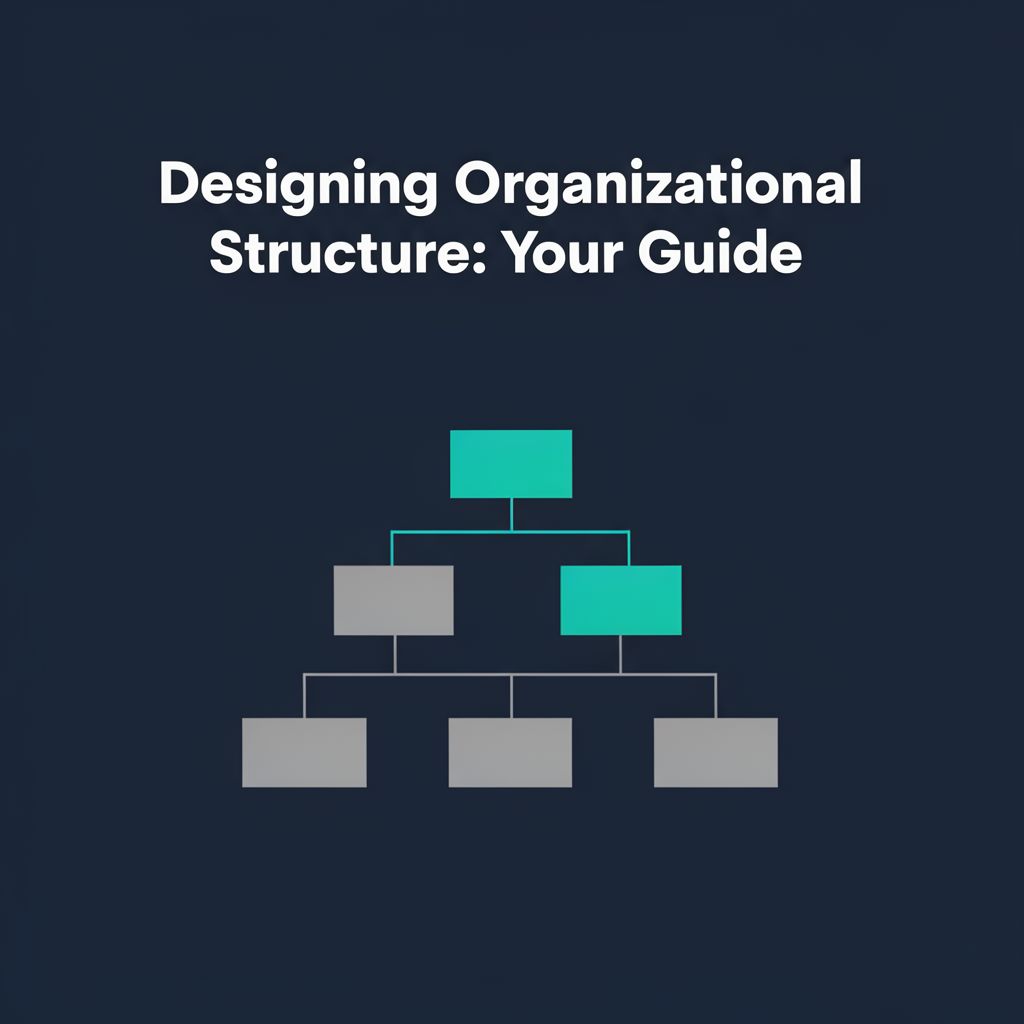
📚 Organizational Design: Building Blocks of Success 📚
Source Information: This study material has been compiled from a lecture audio transcript titled "Organizational Design: Building Blocks of Success."
Overview: What is Organizational Design? 💡
Organizational design is the blueprint for how an organization's work is divided, grouped, and coordinated. It's about creating a framework that ensures everyone understands their role, reporting relationships, and how their efforts contribute to the overall goals. Think of it as structuring a house – you need a clear plan for how all the parts fit together to function effectively.
1. The Six Key Elements of Organizational Structure ✅
These are the fundamental components managers consider when building an organization's structure.
1.1. Work Specialization
- 📚 Definition: The degree to which tasks in an organization are divided into separate jobs; individual employees specialize in doing only part of an activity rather than the entire activity.
- 💡 Example: An assembly line where one person installs wheels and another installs engines.
- 📈 Impact:
- Pros: Increased efficiency and productivity due to repetition and focused skill development.
- Cons: Can lead to boredom, fatigue, stress, lower quality, increased absenteeism, and higher turnover if excessive.
1.2. Departmentalization
- 📚 Definition: The basis by which jobs are grouped together. Once tasks are specialized, similar jobs need to be organized.
- Types of Departmentalization:
- ✅ Functional: Grouping jobs by functions performed (e.g., Marketing, Finance, Operations, Human Resources).
- ✅ Product: Grouping jobs by product line (e.g., different divisions for various electronic products).
- ✅ Geographical: Grouping jobs by territory or geography (e.g., North American Sales, European Operations).
- ✅ Customer: Grouping jobs by common customers or client types (e.g., Retail Accounts, Corporate Accounts).
1.3. Chain of Command
- 📚 Definition: The unbroken line of authority that extends from the top of the organization to the lowest echelon and clarifies who reports to whom.
- 💡 Purpose: Establishes clear reporting relationships and accountability. It answers the question: "Who do I go to if I have a problem?"
1.4. Span of Control
- 📚 Definition: The number of employees a manager can efficiently and effectively supervise.
- Types of Spans:
- ✅ Wide Span: A manager oversees many employees. This typically leads to fewer management layers and a flatter organizational structure.
- ✅ Narrow Span: A manager oversees fewer employees. This results in more management layers and a taller, more hierarchical structure.
1.5. Centralization vs. Decentralization
- 📚 Definition: Refers to where decision-making authority lies within the organization.
- ✅ Centralization: Top managers make most decisions. Decision-making authority is concentrated at a single point in the organization.
- ✅ Decentralization: Decision-making authority is pushed down to lower-level managers or even employees.
- 📈 Impact of Decentralization: Can empower employees, speed up decision-making, and increase responsiveness, but requires trust and competence at all levels.
1.6. Formalization
- 📚 Definition: The degree to which jobs within the organization are standardized and the extent to which employee behavior is guided by rules and procedures.
- Types of Formalization:
- ✅ High Formalization: Jobs have explicit job descriptions, numerous organizational rules, and clearly defined procedures (like a strict recipe).
- ✅ Low Formalization: Jobs are less programmed, and employees have more discretion over their work (like a chef experimenting).
2. Structural Models 📊
These elements combine to form different organizational structures, often categorized into two main types and various designs.
2.1. Mechanistic vs. Organic Structures
-
2.1.1. Mechanistic Organization
- 📚 Characteristics:
- High work specialization
- Rigid departmentalization
- Clear chain of command
- Narrow spans of control
- High centralization
- High formalization
- 💡 Analogy: A rigid, tightly controlled machine or a traditional bureaucracy.
- ✅ Best Suited For: Stable and simple environments.
- Examples: Large manufacturing plants, government agencies.
- 📚 Characteristics:
-
2.1.2. Organic Organization
- 📚 Characteristics:
- Cross-functional teams
- Cross-hierarchical teams
- Free flow of information
- Wide spans of control
- Decentralization
- Low formalization
- 💡 Analogy: Highly adaptive and flexible, like a living organism.
- ✅ Best Suited For: Dynamic and uncertain environments.
- Examples: Startups, creative agencies, tech companies.
- 📚 Characteristics:
2.2. Traditional Designs
These are common structural arrangements.
- ✅ Simple Structure: Low departmentalization, wide spans of control, authority centralized in a single person, little formalization. Common in small businesses.
- ✅ Functional Structure: Groups similar or related occupational specialties together (e.g., all marketing specialists in one department).
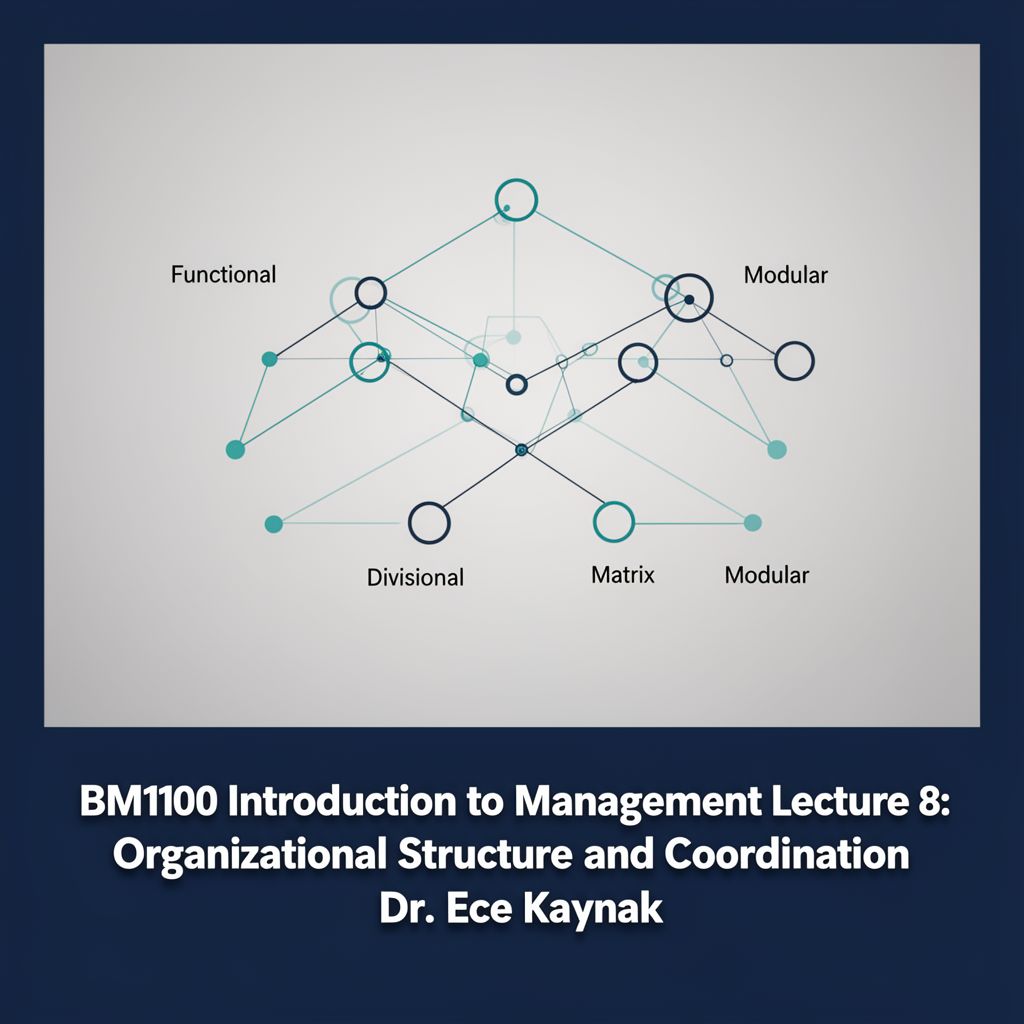
- ✅ Divisional Structure: Made up of separate business units or divisions. Each division has relatively autonomous units, often based on product, geography, or customer.
2.3. Contemporary Designs
These structures are more flexible and responsive to modern business challenges.
- ✅ Team-Based Structure: The entire organization is made up of work teams that perform the organization’s tasks.
- ✅ Matrix Structure: Employees report to two managers – a functional manager and a product/project manager.
- ✅ Project Structure: Employees continuously work on projects, moving from one project to another as each is completed.
- ✅ Boundaryless Organization: Seeks to eliminate the chain of command, have limitless spans of control, and replace departments with empowered teams. Breaks down internal and external barriers.
3. Contingency Factors Affecting Structure ⚠️
There is no "one-size-fits-all" organizational structure. The best design depends on several situational factors.
3.1. Strategy
- 💡 Principle: Structure should follow strategy.
- ✅ Innovation Strategy: Requires flexibility and adaptability, often favoring an organic structure.
- ✅ Cost Leadership Strategy: Focuses on efficiency and control, often favoring a mechanistic structure.
3.2. Organization Size
- 📈 Trend: As organizations grow larger, they tend to become more specialized, departmentalized, centralized, and formalized.
- 💡 Impact: Larger organizations often require more complex structures to manage their scale.
3.3. Technology
- 📚 Definition: The way an organization transforms its inputs into outputs.
- ✅ Routine Technology: Characterized by standardized and predictable operations (e.g., mass production). Often aligns with mechanistic structures.
- ✅ Non-Routine Technology: Involves varied and unpredictable tasks (e.g., research and development). Often aligns with organic structures.
3.4. Environmental Uncertainty
- 📚 Definition: The degree of change and complexity in an organization's external environment.
- ✅ Stable Environment: Predictable and unchanging (e.g., regulated industries). Can effectively use mechanistic structures.
- ✅ Dynamic/Uncertain Environment: Rapidly changing and unpredictable (e.g., high-tech industries). Requires the flexibility of organic structures to adapt quickly.
Conclusion: Your Organizational Design Toolkit 🛠️
Understanding organizational design is crucial for creating effective and efficient organizations. By mastering the six key elements, recognizing different structural models, and considering the contingency factors, you can analyze and design structures that best support an organization's goals and environment. Remember, organizational design is a dynamic process, not a static solution.