 Podit
Podit
📚 Comprehensive Study Guide: Vitamins A & D
This study material has been compiled and organized from a lecture audio transcript and supplementary copy-pasted text to provide a clear and structured overview of Vitamin A and Vitamin D.
🌟 Vitamin A: Retinoids and Carotenoids
Vitamin A is a crucial fat-soluble vitamin essential for various bodily functions, including vision, immune function, and cell growth. It exists in several forms, broadly categorized into retinoids and carotenoids.
1. Forms and Types of Vitamin A
- Retinoids (Preformed Vitamin A) 📚
- A generic term for structurally similar compounds: retinol, retinal, retinoic acid, and retinyl ester.
- Retinol and retinyl esters are often called "preformed vitamin A" and are found in animal products.
- Retinoic acid is known for regulating gene transcription and cell development.
- Carotenoids (Provitamin A) 📚
- These are red, orange, and yellow lipid-soluble pigments primarily found in plants.
- The body can convert provitamin A carotenoids into retinol.
- β-Carotene is the most abundant and exhibits the highest vitamin activity.
- Other common dietary carotenoids include α-carotene, β-cryptoxanthin, lycopene, lutein, and zeaxanthin.
2. Sources of Vitamin A
- Retinoids (Animal Origin) 🥩🥚
- Liver, dairy products, eggs, fish, and fish oils (e.g., cod liver oil).
- Exists in animal foods mainly as retinyl esters (e.g., retinyl palmitate).
- Carotenoids (Plant Origin) 🥕🍅
- Yellow, orange, and red fruits and vegetables: carrots, watermelon, papayas, tomatoes, squash, pink grapefruits, pumpkins.
- Green vegetables also contain carotenoids, but their pigment is masked by chlorophyll.
3. Digestion and Absorption
- Initial Breakdown 🍽️
- Retinyl esters (from food) are bound to fatty acids.
- Carotenoids (from food) are bound to proteins.
- Micelle Formation 💡
- Requires adequate dietary fat (ideally >5-10g daily) and bile salts for efficient solubilization.
- Disease conditions causing steatorrhea can impede absorption.
- Chylomicron Formation ✅
- Retinyl esters, phospholipids, triacylglycerols, cholesterol esters, and unconverted carotenoids are incorporated with apoprotein to form chylomicrons within intestinal cells.
- Transport 🚚
- Chylomicrons are excreted into intestinal lymphatic channels and delivered to the bloodstream.
- Tissues extract most lipids and some carotenoids from circulating chylomicrons.
- Storage 贮
- If not immediately needed, retinol is re-esterified and stored in the fat-storing cells of the liver (most of the body's reserve).
- Carotenoids are also deposited in fatty tissues throughout the body.
4. Metabolism and Transport
- Active Forms 🧬
- In the body, retinol can be oxidized to retinal or retinoic acid.
- Retinal: Central role in the function of the retina.
- Retinoic Acid: Regulates gene expression and cell development.
- Circulation and Cellular Uptake 🔄
- Retinol combines with a plasma-specific transport protein, retinol-binding protein (RBP), and transthyretin (TTR).
- Cells recognize circulating RBP and TTR to take retinol inside.
- Inside cells, retinol binds to cellular RBP and is transported to organelles.
- The form in circulation is all-trans-retinol.
5. Functions of Vitamin A
- Vision 👀
- Retinal plays a central role in the retina, particularly in rods which enable vision in dim light.
- The speed of rhodopsin regeneration (a light-sensitive pigment) relates to retinol availability.
- Night blindness is a common indicator of inadequate retinol.
- Gene Expression & Cell Development 🧬
- Retinoic acid helps regulate gene expression and cell differentiation, influencing cell growth.
- Immune Function 🛡️
- Supports the integrity of epithelial tissues, which act as a barrier against infection.
- Bone Development & Tooth Health 🦴🦷
- Plays a role in the proper development and maintenance of bones and teeth.
6. Requirements and Assessment
- Retinol Activity Equivalents (RAE) 📊
- Vitamin A requirements are expressed as RAE due to varying biological activities of retinoids and carotenoids.
- 1 μg RAE = 1 μg retinol
- 1 μg RAE = 12 μg β-carotene
- 1 μg RAE = 24 μg β-cryptoxanthin
- People relying solely on plant-based foods need more carotenoids to meet RAE.
- Conversion (IU to µg): 1 IU retinol = 0.3 µg retinol; 1 IU β-carotene = 0.6 µg β-carotene.
- Assessment of Nutriture 📈
- Plasma retinol concentrations are frequently measured.
- ⚠️ Caution: Unreliable during infection or inflammation, as these deplete Vitamin A.
- Also depends on dietary energy, protein, and zinc due to their roles in RBP synthesis.
- Deficient/Marginal: <20 μg/dL (0.7 μmol/L)
- Adequate: 30 to 86 μg/dL (1.05–3 μmol/L)
- Excessive (Toxic): >86 μg/dL (3 μmol/L)
7. Excretion
- Vitamin A is excreted both in urine and feces.
8. Deficiency Symptoms ⚠️
- Eye disorders: Night blindness, xerophthalmia (dry eyes).
- Keratinization of epithelial cells: Dry, scaly skin, "goose bumps" appearance.
- Increased infection risk: Due to impaired epithelial tissue integrity.
- Impaired immune function.
- Impaired bone development and tooth health.
- Digestion & absorption problems.
9. Toxicity (Hypervitaminosis A) 🚨
- Tolerable Upper Limit (UL): 3000 μg RAE/day.
- Chronic excessive intake (3-4 times RDA) can lead to hypervitaminosis A.
- Symptoms: Liver damage, bone abnormalities, joint pain, hair loss, headaches, vomiting, skin disorders.
- Mechanism: Appears due to abnormal transport and distribution of vitamin A and retinoids caused by overloading of plasma transport mechanisms.
- Teratogenic effects: Excessive intake is teratogenic for pregnant women, leading to birth defects.
- Carotenoid Toxicity: Not reported from food sources, except for cosmetic yellowing of the skin.
☀️ Vitamin D: The Sunshine Vitamin
Vitamin D is unique as it can be synthesized endogenously with sunlight exposure, acting as both a nutrient and a prohormone.
1. Nature and Forms of Vitamin D
- Steroid-Derived 📚
- Structurally derived from a steroid.
- Can be synthesized by the body with UV light exposure.
- Two Main Forms ✅
- Ergocalciferol (Vitamin D2): Synthesized from ergosterol by UV light in plants (found in plankton, yeast, mushrooms).
- Cholecalciferol (Vitamin D3): Synthesized from 7-dehydrocholesterol by UV-B light in vertebrate animals (including humans).
- Both forms have similar general metabolism despite structural differences in side chains.
2. Sources of Vitamin D
- Sunlight Exposure ☀️
- Primary source for endogenous synthesis of Vitamin D3.
- Dietary Sources 🐟🥚
- Vitamin D3: Primarily from animal origin foods like liver, eggs, and fatty fish (herring, salmon, tuna, sardines). Small amounts in cheese and butter.
- Vitamin D2: Some plant foods like shiitake mushrooms.
3. Absorption (Dietary Vitamin D)
- No Digestion Required ✅
- Dietary Vitamin D (both D2 and D3) requires no digestion.
- Passive Diffusion 💡
- Absorbed from a micelle by passive diffusion in the intestine.
- Requires fat and bile salts.
- Approximately 50% of dietary Vitamin D is absorbed.
- Chylomicron Transport 🚚
- Within intestinal cells, Vitamin D is incorporated into chylomicrons.
- Chylomicrons then enter the lymphatic system and bloodstream.
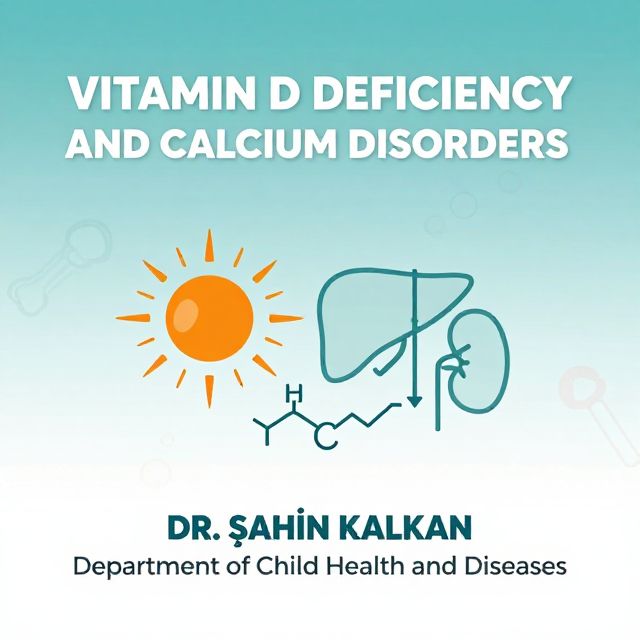
4. Transport, Metabolism & Storage
- Skin Synthesis & Transport ☀️
- Cholecalciferol (D3) made in the skin slowly diffuses into dermal capillaries.
- Picked up by Vitamin D-binding protein (VDBP) for transport in the blood.
- First Hydroxylation (Liver) 肝
- Dietary Vitamin D (via chylomicron remnants) and skin-synthesized D3 reach the liver.
- Hydroxylated by cytochrome P-450 hydroxylases to form 25-hydroxycholecalciferol (25-OH D), also known as calcidiol.
- 25-OH D is the most abundant form in plasma and the primary storage form (85-90% bound to VDBP).
- Second Hydroxylation (Kidneys) 腎
- Most 25-OH D is transported by VDBP to the kidneys.
- Converted to 1,25-dihydroxycholecalciferol (1,25-(OH)2D), known as calcitriol, by a second hydroxylation.
- Calcitriol is the biologically active hormone.
- Circulation & Target Tissues 🔄
- Calcitriol is released into the bloodstream, binds to VDBP, and is transported to target tissues.
- Storage Sites 贮
- The blood is the largest single pool of Vitamin D metabolites.
- Other storage sites include adipose tissue and muscle.
- Excretion 🚽
- Vitamin D metabolites are primarily excreted through bile in the feces. A small amount is excreted in urine.
5. Functions of Vitamin D (Calcitriol)
- Calcium & Phosphorus Homeostasis 🦴
- Maintains normal blood levels of Ca and P, crucial for:
- Normal bone mineralization.
- Muscle contraction.
- Nerve conduction.
- General cellular function.
- Regulates transcription of genes coding for calcium-transporting proteins and bone matrix proteins.
- Maintains normal blood levels of Ca and P, crucial for:
- Cell Differentiation, Proliferation & Growth 🧬
- Promotes normal cell growth, differentiation, and inhibits proliferation in non-calcium-regulating organs (e.g., immune system cells).
- May help protect against cancer by promoting apoptosis and inhibiting angiogenesis.
- Immunomodulation 🛡️
- Alters responses to infections and is involved in macrophage differentiation.
- Vitamin D derivatives are used in treating psoriasis and other skin disorders.
- Mechanism of Action: Vitamin D Receptor (VDR) 💡
- Most actions are mediated through the nuclear transcription factor, VDR.
- Calcitriol binds to VDR, which then recruits retinoid X receptor (RXR).
- The VDR/RXR complex binds to Vitamin D response elements (VDRE) on DNA, modulating gene transcription.
6. Calcitriol Homeostasis 📈
- Regulation ✅
- Production in kidneys is regulated by serum P, Ca, Parathyroid Hormone (PTH), Fibroblast Growth Factor-23 (FGF-23), and calcitriol itself.
- Response to Low Calcium ⬇️
- Parathyroid glands sense low serum Ca and secrete PTH.
- PTH stimulates kidney enzyme (25-hydroxyvitamin D3-1α-hydroxylase) to secrete more calcitriol.
- Calcitriol activates VDR, normalizing serum Ca by:
- Increasing intestinal absorption of dietary calcium.
- Increasing reabsorption of calcium by kidneys.
- Mobilizing calcium from bone.
- Negative Feedback 🔄
- Calcitriol inhibits its own production and PTH synthesis.
- Increased plasma P levels stimulate FGF-23, which inhibits calcitriol production and promotes P excretion.
7. Assessment of Nutriture 📊
- Plasma 25-OH D concentrations are used as a measure of Vitamin D status, reflecting both dietary intake and sunlight exposure.
- Sufficient: 30-40 ng/mL (75-100 nmol/L)
- Insufficiency: 20-29 ng/mL (50-72 nmol/L)
- Deficiency: <20 ng/mL (<50 nmol/L)
- Severe Deficiency: <10-12 ng/mL (<25-30 nmol/L)
8. Deficiency Symptoms ⚠️
- Rickets (Children): Impaired mineralization of bone matrix during growth, leading to soft and flexible bones.
- Osteomalacia (Adults): Impaired mineralization after growth plates have fused, also resulting in soft and flexible bones.
9. Toxicity 🚨
- Rare from diet or sun exposure.
- Occurs with mega doses of Vitamin D supplementation (e.g., >10,000 IU/day for several months).
- Toxicity Threshold: Serum 25-OH D concentrations exceeding ~150 ng/mL.
- Symptoms: Nausea, vomiting, loss of appetite, hypercalciuria (excess calcium in urine), and hypercalcemia (excess calcium in blood).