Podit
Podit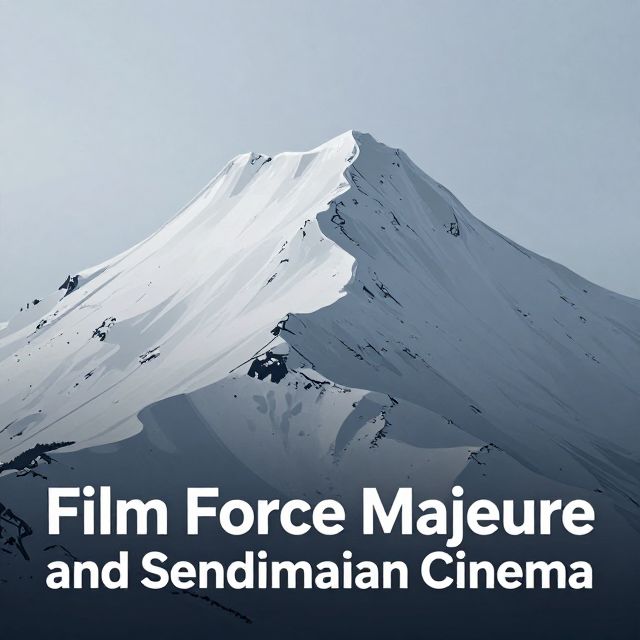
Film Force Majeure and Scandinavian Cinema: A Study Guide
Source Information: This study material is compiled from an audio lecture transcript discussing the concepts of 'force majeure' in film and its particular resonance within Scandinavian cinema, including a case study of Ruben Östlund's film 'Force Majeure'.
📚 Introduction: Unforeseen Events and Nordic Narratives
This study guide explores the compelling intersection of the legal concept of 'force majeure' and its powerful application as a narrative device in cinema, with a specific focus on its manifestation within Scandinavian filmmaking. We will delve into how unexpected, uncontrollable events can profoundly disrupt characters' lives, forcing them to confront their deepest fears and re-evaluate their relationships. By understanding the characteristics of Scandinavian cinema and examining a prime example, Ruben Östlund's 'Force Majeure,' we aim to appreciate how external forces can reveal internal truths on screen, particularly through the lens of Nordic storytelling.
1️⃣ Understanding Force Majeure as a Cinematic Device
The term 'force majeure' originates from legal discourse but has become a potent tool in cinematic storytelling.
📚 Definition and Scope
- Legal Context: In legal terms, 'force majeure' refers to unforeseeable circumstances that prevent someone from fulfilling a contract or obligation.
- ✅ These are events beyond human control, often termed "acts of God."
- Examples include natural disasters (earthquakes, floods, avalanches), wars, or epidemics.
- Cinematic Application: In film, a 'force majeure' event serves as a powerful catalyst.
- ✅ It is an external shock that shatters the ordinary world of the characters.
- ⚠️ It's more than just a plot twist; it's a fundamental disruption that compels characters to react, adapt, and often reveal their true selves under immense pressure.
💡 The Catalyst for Drama
A force majeure event is not caused by any character's action; it is an external, often natural, occurrence. The true drama often unfolds in its aftermath.
- Stripping Away Veneer: These events strip away the superficiality of everyday life, exposing vulnerabilities, moral ambiguities, and the often-fragile foundations of relationships.
- Psychological Impact:
- It acts as a crucible, testing a character's courage, loyalty, and integrity.
- It can highlight societal flaws, expose class differences, or challenge deeply held beliefs.
- It often leads to profound psychological exploration as characters grapple with trauma, guilt, or the sheer randomness of fate.
- Narrative Function: While a shortcut to conflict, it is deeply meaningful. It forces characters into situations where their choices carry extraordinary weight, often without clear-cut right or wrong answers.
- Mirror to Internal Truths: The external, uncontrollable threat becomes a mirror, reflecting the internal landscapes of the protagonists and the society they inhabit. It explores the human response to the uncontrollable.
2️⃣ Scandinavian Cinema: Realism, Psychology, and Social Commentary
Scandinavian cinema, encompassing films from Sweden, Norway, Denmark, Finland, and Iceland, possesses a distinctive style that makes it particularly fertile ground for 'force majeure' narratives.
✅ Defining Characteristics
- Stark Realism: A commitment to portraying life authentically, often without embellishment.
- Deep Psychological Introspection: A focus on the inner lives, motivations, and emotional states of characters.
- Social Commentary: A willingness to tackle complex societal issues, moral dilemmas, and human dysfunction without flinching.
- Minimalist Aesthetic: Often features natural light, long takes, and prioritizes character development and narrative over flashy special effects.
- Exploration of the Human Condition: An unflinching gaze at discomfort, loneliness, and the quiet desperation that can exist beneath a seemingly calm surface.
📈 Historical and Genre Influences
- Pioneering Directors:
- Ingmar Bergman (Sweden): Known for existential dramas exploring faith, morality, and the human psyche.
- Carl Theodor Dreyer (Denmark): Explored profound themes of faith, suffering, and spiritual struggle.
- Dogme 95 Movement: Spearheaded by Danish directors Lars von Trier and Thomas Vinterberg, this movement advocated for extreme realism, stripping away artificiality to focus purely on story and performance.
- Nordic Noir: A popular genre characterized by bleak landscapes, morally ambiguous characters, a pervasive sense of unease, and explorations of darker human nature and societal dysfunction.
💡 Why Scandinavian Cinema Suits Force Majeure
The inherent qualities of Nordic filmmaking align perfectly with the dramatic potential of force majeure events:
- Internal Struggles: These films are already predisposed to examining internal struggles and moral dilemmas.
- Amplification of Tension: When an uncontrollable event strikes, it doesn't just create chaos; it amplifies existing tensions, anxieties, and unspoken truths simmering beneath the surface of characters' lives.
- Landscape as Character: The often-cold, vast, and unforgiving natural landscapes of the Nordic countries frequently serve as powerful backdrops, mirroring internal struggles and the overwhelming nature of the 'force majeure' events.
- Unflinching Look: This cinema thrives on exploring the cracks in the facade, making it ideally suited for stories where life's unexpected blows reveal everything.
3️⃣ Case Study: Ruben Östlund's 'Force Majeure' (2014)
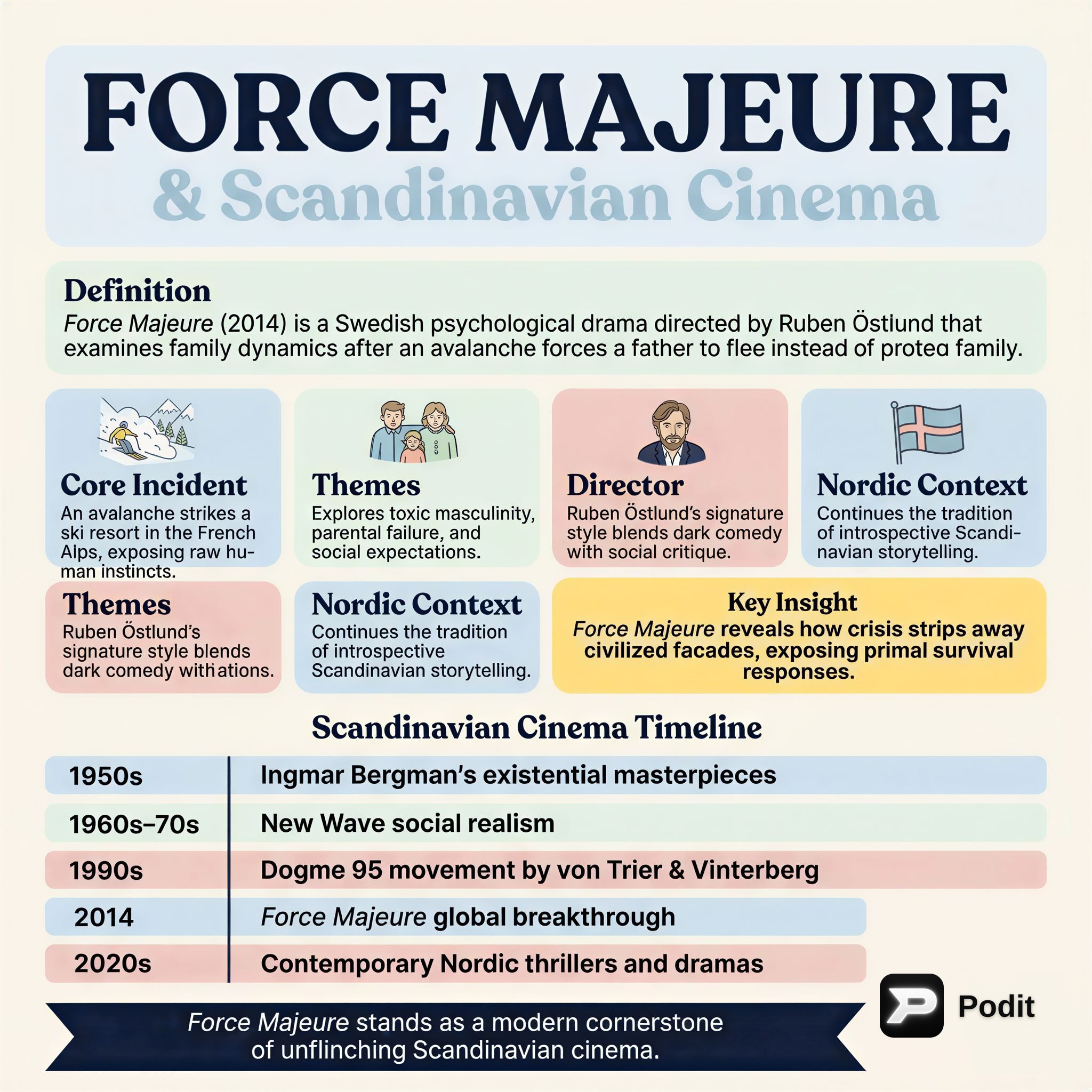
Ruben Östlund's critically acclaimed film, aptly titled 'Force Majeure' (or 'Turist' in some markets), serves as a masterful illustration of these concepts.
🎬 Plot Overview
The film centers on a Swedish family—Tomas, Ebba, and their two children—on a skiing holiday in the French Alps. During an outdoor lunch, a controlled avalanche appears to veer off course and head directly towards them. In a moment of panic, Tomas instinctively grabs his phone and gloves and flees, leaving his wife and children behind. The avalanche stops just short of the terrace, causing only a cloud of snow, but the psychological damage is profound.
⚠️ The Psychological Earthquake
The 'force majeure' event in Östlund's film is unique because it is physically harmless, yet it becomes a devastating psychological earthquake.
- Aftermath, Not Spectacle: The film meticulously dissects the fallout from Tomas's instinctive, self-preserving action.
- Marital Disruption: Ebba is deeply shaken and disgusted by her husband's perceived cowardice and abandonment. Tomas initially denies, then attempts to rationalize his actions, leading to increasingly awkward and tense confrontations.
- Family Dynamics: The children witness their parents' unraveling, and the entire family dynamic is thrown into disarray.
✅ Connections to Scandinavian Cinema Themes
'Force Majeure' perfectly encapsulates the themes discussed earlier:
- Realism: Its portrayal of marital conflict and human interaction is uncomfortably realistic.
- Psychological Depth: We witness Tomas grappling with his masculinity and self-image, and Ebba confronting her disillusionment.
- Social Commentary: The film offers strong commentary on gender expectations, traditional roles, and the fragility of modern relationships.
- Landscape: The pristine, yet imposing, mountain landscape constantly reminds us of the overwhelming forces of nature and the smallness of human concerns.
💡 Broader Implications
The film doesn't offer easy answers. It provokes thought and discussion about:
- Instinct versus responsibility.
- Heroism versus cowardice.
- The unspoken contracts within a marriage.
'Force Majeure' demonstrates how an external, uncontrollable event—even a near-miss—can serve as a powerful narrative device to strip away pretenses and reveal the raw, often uncomfortable, truths about human nature. Other Scandinavian films, such as 'The Wave' (Bølgen) exploring harsh natural realities or many Nordic Noir productions focusing on societal pressures, similarly use external pressures to trigger internal crises.
4️⃣ Conclusion: The Power of the Unforeseen in Nordic Storytelling
Understanding 'force majeure' in film, especially within the context of Scandinavian cinema, significantly enriches the viewing experience.
- Key Takeaways:
- Force Majeure: An uncontrollable, external event that acts as a powerful catalyst, stripping away societal veneers and forcing characters to confront their true selves.
- Scandinavian Cinema: Characterized by stark realism, deep psychological introspection, minimalist aesthetics, and an unflinching willingness to tackle complex social and personal dilemmas.
- Synergy: This cinematic tradition provides an ideal backdrop for exploring the profound impact of 'force majeure' events, as exemplified by Ruben Östlund's 'Force Majeure.'
- Deeper Meaning: Filmmakers use these narrative tools to explore universal themes of survival, responsibility, and the often-unpredictable nature of life.
- Further Exploration: When watching films, consider the external forces at play and how they shape characters' journeys. This perspective can unlock deeper layers of meaning, particularly in the compelling world of Nordic storytelling.