General Characteristics and Mechanisms of Hormone Action - kapak
Bilim#hormones#endocrine system#mechanisms of action#hormone regulation

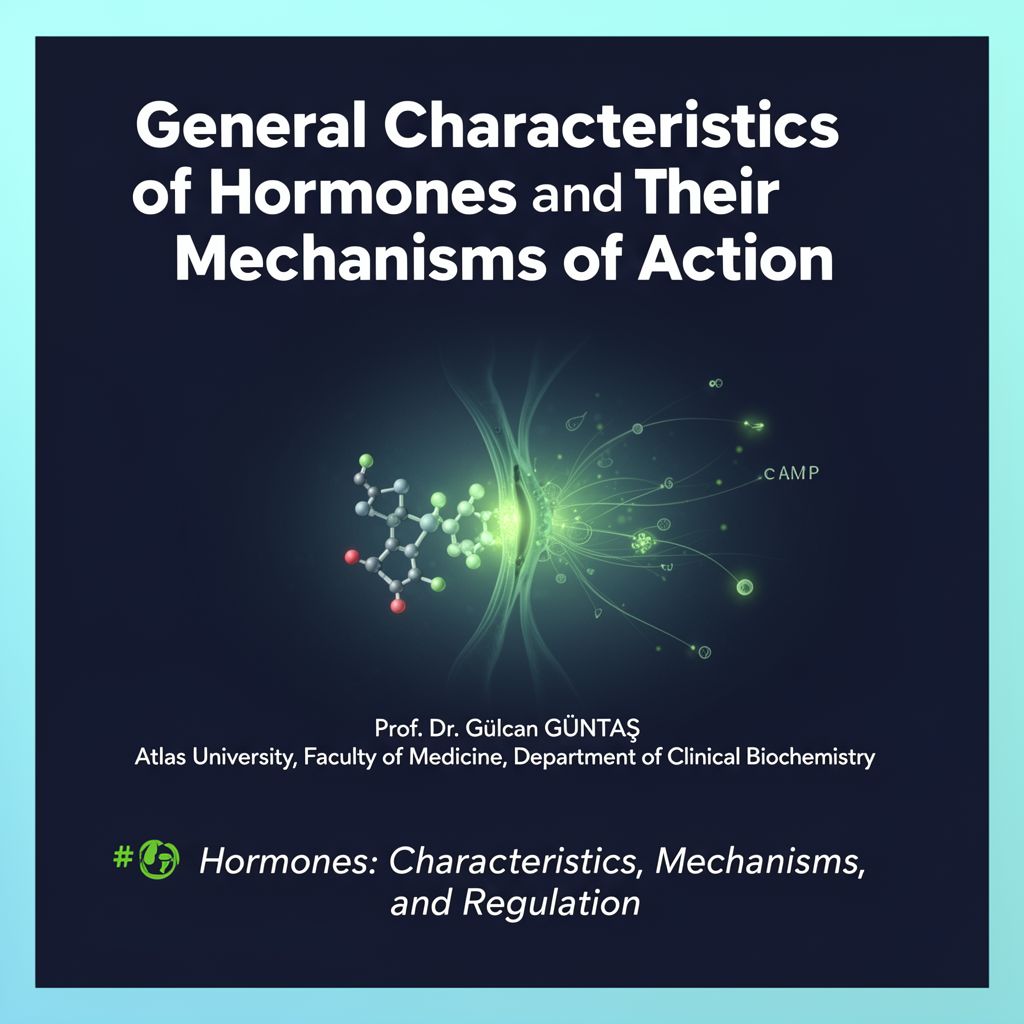
General Characteristics and Mechanisms of Hormone Action

Explore the definition, classification, mechanisms of action, regulation, storage, transport, and degradation of hormones in the human body, providing a comprehensive overview.

beyzakrpeJanuary 26, 2026 ~17 dk toplam
01

Flash Kartlar

25 kart

Karta tıklayarak çevir. ← → ile gez, ⎵ ile çevir.

1 / 25
Tüm kartları metin olarak gör
  1. 1. What is the fundamental definition of hormones and their primary role in the body?

    Hormones are chemical messengers secreted by specialized endocrine glands. They are transported through the bloodstream to stimulate specific functions in distant tissues or organs. Their primary role is in intercellular communication and coordinating various physiological responses throughout the body.

  2. 2. According to the classic definition, how is a hormone characterized regarding its synthesis, transport, and function?

    By classic definition, a hormone is synthesized in one tissue and then secreted into the circulatory system. It is transported as a mobile messenger to control metabolic and biological activities in its target cells. This highlights its systemic action from a specific production site to distant target cells.

  3. 3. Explain what endocrine hormones are and provide examples.

    Endocrine hormones are a category of hormones that are transported in the blood to target cells located far from their site of secretion. They exert their effects systemically throughout the body. Examples include cortisol, insulin, and prolactin, which regulate various distant physiological processes.

  4. 4. Describe the action of paracrine hormones and give examples.

    Paracrine hormones act locally at the site where they are secreted, affecting neighboring cells without entering the general circulation. They are involved in localized communication between cells. Neurotransmitters and growth factors are common examples of paracrine hormones, mediating local tissue responses.

  5. 5. How do autocrine hormones function, and can you provide an example?

    Autocrine hormones act directly on the very cells that produce them, influencing their own hormonogenesis or function. This creates a self-regulatory loop for the cell. An example is the autocrine regulation of lymphocytes by IL2, where the lymphocyte produces IL2 and then responds to it.

  6. 6. What is a "target tissue" in endocrinology, and why is it crucial for hormone action?

    A target tissue is a specific tissue where the physiological and biochemical effects of a given hormone are elicited. It is crucial because these tissues possess specific receptors with which the hormone interacts. This hormone-receptor interaction initiates a cascade of events, ensuring the hormone acts only where needed.

  7. 7. Provide an example of a hormone and its specific target tissue, explaining the resulting action.

    Thyroid-stimulating hormone (TSH) targets the thyroid gland. Upon interaction with its receptors in the thyroid, TSH stimulates the synthesis and secretion of iodothyronines, specifically T3 and T4. This demonstrates how a hormone specifically directs a gland to produce its own hormones.

  8. 8. List at least five categories of hormones based on their origin.

    Hormones can be classified by their origin, including hypothalamus hormones, pituitary hormones (anterior and posterior lobe), thyroid hormones, parathyroid hormones, pancreatic hormones, and adrenal gland hormones (cortex and medulla). This categorization helps in understanding their source and general function.

  9. 9. Describe peptide and protein hormones based on their chemical structure and provide examples.

    Peptide and protein hormones are a major structural category of hormones, composed of amino acid chains. They vary greatly in size, from small peptides to large proteins. Examples include thyrotropin-releasing hormone (TRH) and adrenocorticotropic hormone (ACTH), which are crucial for regulating other endocrine glands.

  10. 10. What is the unique characteristic of steroid hormones regarding their origin and nature, and give examples?

    Steroid hormones are uniquely derived from cholesterol, giving them a characteristic hydrophobic nature. This lipid-soluble property allows them to easily cross cell membranes. Examples include cortisol, testosterone, and estradiol, which play vital roles in metabolism, reproduction, and stress response.

  11. 11. Characterize Group I hormones based on their solubility and where they bind to receptors.

    Group I hormones are lipophilic, meaning they are lipid-soluble. This property allows them to easily pass through the cell membrane. Consequently, they bind to intracellular receptors, which can be located either in the cytosol or within the nucleus of the target cell.

  12. 12. Characterize Group II hormones based on their solubility and where they bind to receptors.

    Group II hormones are hydrophilic, meaning they are water-soluble. Due to their inability to readily cross the lipid bilayer of the cell membrane, they bind to receptors located on the cell surface. This binding then triggers intracellular signaling pathways via second messengers.

  13. 13. Explain the general mechanism of action for Group I hormones once they enter the target cell.

    Group I hormones, being lipophilic, pass through the plasma membrane and bind to intracellular receptors (cytosolic or nuclear). This forms a hormone-receptor complex that translocates to the nucleus, binding to hormone response elements (HREs) on the DNA. This interaction activates RNA synthesis (transcription), leading to the production of specific proteins responsible for the cellular response.

  14. 14. Describe the general mechanism of action for Group II hormones, emphasizing their interaction with the cell.

    Group II hormones, being water-soluble, cannot cross the plasma membrane. Instead, they bind to specific receptors on the cell surface. This binding event stimulates the release of 'second messengers' inside the cell. These second messengers then regulate biochemical functions by modulating enzymes like protein kinases or phosphatases, leading to the cellular response.

  15. 15. List several examples of hormones that function as Group I hormones.

    Group I hormones primarily include steroids such as androgens, estrogens, and glucocorticoids. Additionally, thyroid hormones, calcitriol (vitamin D3), and retinoic acid (a derivative of vitamin A) also function as Group I hormones. These all share the characteristic of being lipophilic and binding to intracellular receptors.

  16. 16. Explain the cAMP pathway as a second messenger system for Group II hormones, including key components and an example.

    In the cAMP pathway, a Group II hormone binds to its cell surface receptor, activating a G-protein, which then activates adenylyl cyclase. Adenylyl cyclase converts ATP into cyclic AMP (cAMP), the second messenger. cAMP then activates Protein Kinase A (PKA), which phosphorylates various enzyme proteins, regulating biochemical processes. ACTH and TSH utilize this pathway.

  17. 17. Describe the PIP2 pathway, identifying its second messengers and key enzymes.

    The PIP2 pathway involves the second messengers calcium, inositol triphosphate (IP3), and diacylglycerol (DAG). Hormone binding activates G-proteins, which activate phospholipase C (PLC). PLC hydrolyzes PIP2 into IP3 and DAG. IP3 releases calcium from the ER, while DAG activates Protein Kinase C, leading to phosphorylation of target proteins and specific cellular responses.

  18. 18. How can calcium itself act as a second messenger in cellular signaling?

    Calcium can act directly as a second messenger, often released from intracellular stores like the endoplasmic reticulum or entering from outside the cell. Once elevated in the cytosol, calcium can bind to regulatory proteins like calmodulin. This binding activates further signaling pathways and enzymes, contributing to various cellular responses.

  19. 19. Explain the cGMP pathway, its second messenger, and an example of a hormone using it.

    The cGMP pathway uses cyclic GMP (cGMP) as its second messenger. Guanylyl cyclase converts GTP to cGMP, which then activates cGMP-dependent Protein Kinase G (PKG). Atriopeptides like ANF activate guanylyl cyclase, increasing cGMP levels and leading to effects such as natriuresis and diuresis, playing a role in smooth muscle contraction and blood volume regulation.

  20. 20. Describe the Tyrosine Kinase pathway and provide a classic example of a hormone that uses it.

    The Tyrosine Kinase pathway involves transmembrane receptor proteins that possess intrinsic tyrosine kinase activity. Upon hormone binding, these receptors phosphorylate themselves and other proteins on tyrosine residues. A classic example is insulin signaling, where insulin binding activates the receptor's tyrosine kinase, leading to autophosphorylation and activation of downstream signaling pathways.

  21. 21. Explain the Jak/STAT pathway, including the role of JAK and STAT proteins.

    The Jak/STAT pathway is utilized by hormones like growth hormone and prolactin. In this pathway, the receptor itself lacks kinase activity. Instead, cytoplasmic tyrosine kinases called Janus kinases (JAKs) associate with the receptor. Upon hormone binding, JAKs phosphorylate STAT proteins, which then dimerize, translocate to the nucleus, and activate gene transcription, leading to cellular responses.

  22. 22. Define negative feedback in the context of hormone regulation and provide an example.

    Negative feedback is the most common form of hormone regulation, where the hormone itself or its action inhibits further hormone production. This mechanism helps maintain hormonal balance. A clear example is the effect of thyroxine hormones (T4 and T3) on the hypothalamus and pituitary gland, suppressing their own release when levels are sufficient.

  23. 23. Define positive feedback in hormone regulation and give a classic example.

    Positive feedback describes the stimulation of hormone production by the hormone itself or its action, leading to an amplification of the response. While rarer than negative feedback, it is crucial in specific physiological events. A classic example is the estrogen-mediated release of luteinizing hormone (LH) during the female menstrual cycle, which causes the LH surge that induces ovulation.

  24. 24. How can chemicals in the blood regulate hormone secretion? Provide two distinct examples.

    Hormone secretion can be directly regulated by the concentration of specific chemicals in the blood. For instance, a raised blood glucose concentration is a potent positive modulator for insulin synthesis and secretion from pancreatic beta-cells. Conversely, decreased serum calcium is a strong stimulus for parathyroid hormone (PTH) release, which then mobilizes calcium from bone.

  25. 25. How are peptide and protein hormones stored within the cell before secretion?

    Peptide and protein hormones are synthesized in the rough endoplasmic reticulum. Following synthesis, they are processed and stored in membrane-bound vesicles within the Golgi system. These vesicles then await a signal for their release via exocytosis, ensuring a ready supply of hormones.

02

Bilgini Test Et

15 soru

Çoktan seçmeli sorularla öğrendiklerini ölç. Cevap + açıklama.

Soru 1 / 15Skor: 0

What is the primary function of hormones as described in the text?

03

Detaylı Özet

7 dk okuma

Tüm konuyu derinlemesine, başlık başlık.

📚 Hormones: Characteristics, Mechanisms, and Regulation

Source Information: This study material is compiled from a lecture audio transcript and accompanying PDF/PowerPoint texts provided by Prof. Dr. Gülcan GÜNTAŞ, Atlas University, Faculty of Medicine, Department of Clinical Biochemistry.


🎯 Introduction to Hormones

Hormones are essential chemical messengers that orchestrate vital physiological processes throughout the body. Secreted by specialized tissues called endocrine glands, they travel via the bloodstream to distant target cells or organs, facilitating intercellular communication and coordinating diverse responses. The classic definition describes a hormone as a substance synthesized in one tissue, secreted into the circulatory system, and transported as a mobile messenger to regulate metabolic and biological activities in target cells.

🔬 Modes of Hormone Action

Hormones exert their effects in various ways, depending on their site of action relative to their secretion:

  • Endocrine Hormones: ✅ Transported in the blood to target cells far from their secretion site.
    • Examples: Cortisol, Insulin, Prolactin.
  • Paracrine Hormones: ✅ Act locally at the site of secretion, affecting neighboring cells.
    • Examples: Neurotransmitters, Growth Factors.
  • Autocrine Hormones: ✅ Act on the very cells that produce them, influencing their own synthesis and secretion (hormonogenesis).
    • Example: Autocrine regulation of lymphocytes by Interleukin-2 (IL-2).

🎯 The Target Tissue Concept

The physiological and biochemical effects of a hormone are specific to its target tissue. This specificity arises because target tissues possess unique receptors that can bind to the hormone. This hormone-receptor interaction initiates a cascade of events within the cell, leading to a specific biological response.

  • Example 1: Thyroid-Stimulating Hormone (TSH) targets the thyroid gland, stimulating the synthesis and secretion of thyroid hormones (T3 and T4).
  • Example 2: Adrenocorticotropic Hormone (ACTH) targets the adrenal cortex, increasing steroidogenesis.

📊 Classification of Hormones

Hormones can be classified based on several criteria:

1. By Origin (Location of Release)

Hormones are released from various glands and tissues throughout the body, including:

  • Hypothalamus
  • Pituitary (Anterior and Posterior lobes)
  • Thyroid
  • Parathyroid
  • Pancreas
  • Adrenal Glands (Cortex and Medulla)
  • Sex Glands (Male and Female)
  • Gastrointestinal tract and other tissues

2. By Chemical Structure

The chemical composition dictates many of a hormone's properties, including its solubility and mechanism of action.

  • Peptides/Proteins: Composed of amino acid chains.
    • Examples: Thyrotropin-Releasing Hormone (TRH), Adrenocorticotropic Hormone (ACTH).
  • Glycoproteins: Proteins with attached carbohydrate chains.
    • Examples: Luteinizing Hormone (LH), Thyroid-Stimulating Hormone (TSH).
  • Modified Amino Acids: Derived from amino acids.
    • Examples: Thyroxine (from tyrosine), Catecholamines (epinephrine, norepinephrine from tyrosine).
  • Steroids: Derived from cholesterol, characterized by a hydrophobic nature.
    • Examples: Cortisol, Testosterone, Estradiol.

3. By Mechanism of Action & Solubility

This classification is crucial for understanding how hormones interact with cells.

  • Group I Hormones (Lipophilic/Lipid-Soluble):
    • Bind to intracellular receptors (cytosolic or nuclear).
    • Can easily pass through the plasma membrane.
    • Examples: Steroid hormones (androgens, estrogens, glucocorticoids), Thyroid hormones (T3, T4), Calcitriol (Vitamin D3), Retinoic acid (Vitamin A).
  • Group II Hormones (Hydrophilic/Water-Soluble):
    • Bind to cell surface receptors on the plasma membrane.
    • Cannot pass through the plasma membrane.
    • Stimulate the release of second messengers inside the cell.
    • Examples: Most peptide/protein hormones, catecholamines.

⚙️ Mechanisms of Hormone Action

1. Group I Hormones (Intracellular Receptors)

These hormones, being lipophilic, readily diffuse across the cell membrane.

  1. Diffusion: 1️⃣ Hormone passes through the plasma membrane.
  2. Receptor Binding: 2️⃣ Binds to an intracellular receptor (in the cytoplasm or nucleus).
    • Cytoplasmic receptors: Glucocorticoid and mineralocorticoid hormones.
    • Nuclear receptors: Thyroid hormones.
  3. Complex Formation: 3️⃣ A hormone-receptor complex is formed.
  4. DNA Interaction: 4️⃣ The complex translocates to the nucleus (if not already there) and binds to specific DNA regions called Hormone Response Elements (HREs).
  5. Gene Regulation: 5️⃣ This interaction activates RNA synthesis (transcription), leading to the production of specific proteins (translation) that mediate the biochemical response.

2. Group II Hormones (Cell Surface Receptors & Second Messengers)

These water-soluble hormones cannot cross the cell membrane. Instead, they bind to receptors on the cell surface, triggering intracellular signaling cascades involving second messengers.

a. cAMP Pathway

Many polypeptide hormones utilize cyclic AMP (cAMP) as a second messenger.

  1. Hormone Binding: Hormone binds to its cell surface receptor.
  2. G-Protein Activation: The hormone-receptor complex activates a G-protein (GTP-binding protein).
  3. Adenylyl Cyclase Activation: The activated G-protein stimulates adenylyl cyclase, an enzyme embedded in the plasma membrane.
  4. cAMP Production: Adenylyl cyclase converts ATP into cAMP (cyclic Adenosine 3',5'-monophosphate).
  5. PKA Activation: cAMP activates Protein Kinase A (PKA) by binding to its regulatory subunits, releasing active catalytic subunits.
  6. Protein Phosphorylation: Activated PKA phosphorylates various enzyme proteins, leading to their activation or inactivation, thereby regulating biochemical processes.
    • 💡 Note: cAMP is inactivated by phosphodiesterase, which hydrolyzes it to 5'-AMP.
    • Examples: ACTH, LH, PTH, Epinephrine, TSH.

b. Phosphatidyl Inositol 4,5-bisphosphate (PIP2) Pathway

This pathway involves multiple second messengers: IP3, DAG, and Calcium.

  1. Hormone Binding & G-Protein Activation: Hormone binds to its receptor, activating a G-protein.
  2. Phospholipase C (PLC) Activation: The activated G-protein stimulates phospholipase C (PLC).
  3. PIP2 Hydrolysis: PLC hydrolyzes PIP2 (Phosphatidyl Inositol 4,5-bisphosphate) in the membrane into two second messengers:
    • Diacylglycerol (DAG): Remains in the plasma membrane.
    • Inositol 1,4,5-trisphosphate (IP3): Enters the cytosol.
  4. DAG Action: DAG activates Protein Kinase C (PKC).
  5. IP3 Action & Calcium Release: IP3 binds to IP3/Ca++ channels on the endoplasmic reticulum, causing the release of stored Ca++ into the cytosol.
  6. Calcium Action: Elevated intracellular Ca++ activates PKC and can also bind to Calmodulin, activating further signaling pathways.
  7. Protein Phosphorylation: Activated PKC phosphorylates target proteins, leading to biochemical responses.
    • Examples: TRH, Antidiuretic Hormone (ADH), Serotonin.

c. cGMP Pathway

Cyclic GMP (cGMP) is another second messenger, important for smooth muscle function and blood volume.

  1. Guanylyl Cyclase Activation: Hormones or other signals (like Nitric Oxide, NO) activate guanylyl cyclase.
  2. cGMP Production: Guanylyl cyclase converts GTP into cGMP.
  3. PKG Activation: cGMP activates cGMP-dependent Protein Kinase G (PKG).
  4. Protein Phosphorylation: PKG phosphorylates effector proteins, leading to cellular responses.
    • Example: Atriopeptides (e.g., Atrial Natriuretic Factor - ANF) activate guanylyl cyclase, increasing cGMP and causing natriuresis and diuresis.
    • 💡 Insight: NO is a potent activator of guanylyl cyclase, diffusing into cells to increase cGMP, which causes vasodilation and lowers blood pressure.

d. Tyrosine Kinase Pathway

These receptors are transmembrane proteins that possess intrinsic tyrosine kinase activity.

  1. Hormone Binding: Hormone binds to the extracellular domain of the receptor.
  2. Autophosphorylation: Binding activates the receptor's intracellular tyrosine kinase domain, leading to autophosphorylation (phosphorylation of tyrosine residues on the receptor itself).
  3. Substrate Phosphorylation: The phosphorylated receptor then phosphorylates other intracellular proteins, such as Insulin Receptor Substrates (IRS).
  4. Signal Transduction: Phosphorylated IRS proteins initiate multiple downstream signaling pathways.
    • Examples: Insulin, Insulin-like Growth Factor-1 (IGF-1), Fibroblast Growth Factor (FGF), Epidermal Growth Factor (EGF), Platelet-Derived Growth Factor (PDGF).

e. Cytoplasmic Tyrosine Kinases (Jak/STAT Pathway)

Some receptors lack intrinsic kinase activity but associate with cytoplasmic tyrosine kinases.

  1. Hormone Binding: Hormone binds to its receptor.
  2. JAK Activation: The hormone-receptor complex activates associated cytoplasmic tyrosine kinases, such as Janus Kinase (JAK).
  3. STAT Phosphorylation: JAK phosphorylates Signal Transducers and Activators of Transcription (STAT) proteins.
  4. STAT Dimerization & Translocation: Phosphorylated STAT proteins dimerize and translocate into the nucleus.
  5. Gene Transcription: In the nucleus, STAT dimers bind to specific DNA elements, activating gene transcription.
    • Examples: Growth Hormone (GH), Prolactin, Erythropoietin, Cytokines.

📈 Regulation of Hormone Production

Hormone systems are tightly controlled to maintain homeostasis.

1. Feedback Mechanisms

  • Negative Feedback: ✅ The most common form. The hormone itself or its action inhibits further hormone production.
    • Example: High levels of thyroid hormones (T3, T4) inhibit the release of TSH from the pituitary and TRH from the hypothalamus.
  • Positive Feedback: ⚠️ A rarer condition. The hormone or its action stimulates further hormone production.
    • Example: Estrogen-mediated release of Luteinizing Hormone (LH) during the female menstrual cycle, leading to the LH surge that triggers ovulation.

2. Regulation by Blood Chemicals

Circulating levels of certain metabolites can directly modulate hormone secretion.

  • Example 1: Increased blood glucose directly stimulates insulin synthesis and secretion from pancreatic β-cells.
  • Example 2: Decreased serum calcium directly stimulates parathyroid hormone (PTH) release, which then mobilizes calcium from bone to restore normal levels.

📦 Storage of Hormones

The storage mechanism varies depending on the hormone's chemical nature:

  • Peptide and Protein Hormones: Synthesized in the rough endoplasmic reticulum and stored in membrane-bound vesicles within the Golgi system.
  • Catecholamines: Stored in granules along with chromogranins and ATP.
  • Thyroid Hormones: Stored within the thyroid follicles as part of thyroglobulin.
  • Steroid Hormones: Not stored; secreted immediately after synthesis.

🚚 Transport of Hormones

Hormones circulate in the blood either freely or bound to transport proteins.

  • Group I Hormones (Lipophilic): Typically bind to transport proteins to travel through the aqueous blood plasma.
  • Group II Hormones (Hydrophilic): Generally found free in the blood as they are water-soluble and do not require transport proteins.

🗑️ Degradation of Hormones

Hormones are eventually inactivated and cleared from the body. Degradation can occur in:

  • Blood: Proteolysis of small peptide hormones (e.g., oxytocin, angiotensin).
  • Organs: Liver and kidneys are major sites of hormone metabolism and excretion.
  • Target Tissue: After receptor-mediated internalization, most peptide/protein hormones are hydrolyzed in lysosomes.
  • Enzymatic Inactivation: Catecholamines, steroids, and thyroid hormones are inactivated by specific enzymatic modifications.

This comprehensive overview highlights the intricate nature of hormones, from their definition and classification to their diverse mechanisms of action, regulation, and ultimate fate within the body, all crucial for maintaining physiological balance.
Kendi çalışma materyalini oluştur

PDF, YouTube videosu veya herhangi bir konuyu dakikalar içinde podcast, özet, flash kart ve quiz'e dönüştür. 1.000.000+ kullanıcı tercih ediyor.

Sıradaki Konular

Tümünü keşfet
The Nervous and Endocrine Systems: Body's Control Centers

The Nervous and Endocrine Systems: Body's Control Centers

Explore the intricate workings of the nervous and endocrine systems, their structures, functions, and how they maintain the body's homeostasis.

Özet 25 15 Görsel
Fundamental Biological Principles and Nutrition

Fundamental Biological Principles and Nutrition

An academic summary covering biological organization from cells to organ systems, key cellular processes, major organ system functions, and essential nutritional components with their identification tests.

5 dk Özet 25 15
The Musculoskeletal System: Structure, Function, and Locomotion

The Musculoskeletal System: Structure, Function, and Locomotion

Explore the intricate musculoskeletal system, its components, functions, and the mechanisms of locomotion in various organisms, with a detailed focus on the human body.

Özet 25 15 Görsel
Cell Structure, Membrane Transport, and Signaling

Cell Structure, Membrane Transport, and Signaling

This summary provides an academic overview of fundamental cell components, including eukaryotic cell structures, the cytoskeleton, cell junctions, and the intricate mechanisms of cell membrane transport and signaling.

7 dk Özet 25 15
Biochemistry and Cellular Structure: Foundations of Life

Biochemistry and Cellular Structure: Foundations of Life

This summary explores biochemistry as the chemical basis of life, detailing metabolic processes, cellular organization, and the specialized functions of prokaryotic and eukaryotic cell components.

7 dk Özet 25 15
Nervous System: Structure, Function, and Signaling

Nervous System: Structure, Function, and Signaling

An academic overview of the nervous system's anatomical and functional divisions, cellular components, electrical signaling mechanisms, and inter-neuronal communication.

5 dk Özet 25 15
The Evolution of Science, Physiology, and Homeostasis

The Evolution of Science, Physiology, and Homeostasis

This summary explores the historical development of scientific thought, the emergence of physiology, and fundamental biological principles such as homeostasis, feedback mechanisms, and bioelectricity.

7 dk Özet 25 15
Skeletal Muscle Structure and Neuromuscular Junction

Skeletal Muscle Structure and Neuromuscular Junction

This audio summary provides an academic overview of skeletal muscle terminology, morphology, filament and sarcomere structure, innervation, and the intricate process of excitation-contraction coupling.

7 dk Özet 18 12