 Podit
Podit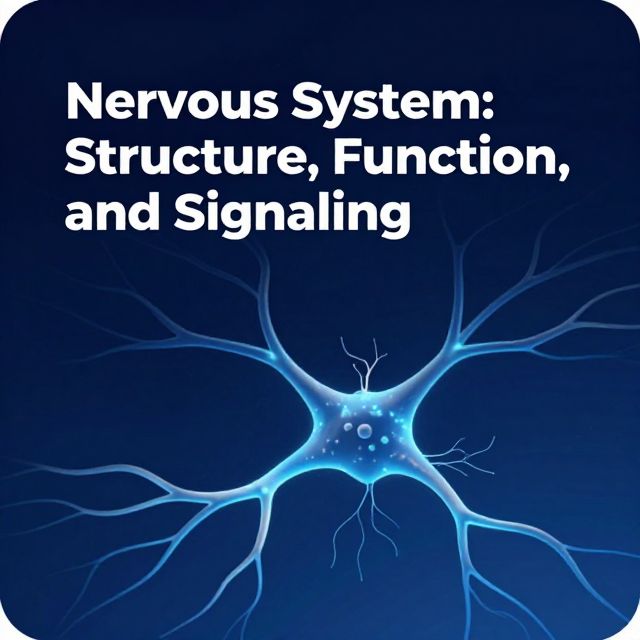
This study material has been compiled from a lecture audio transcript and copy-pasted text sources.
🧠 Basic Structure and Function of the Nervous System
1. Introduction to the Nervous System
The nervous system is the body's primary control and communication center, responsible for coordinating all voluntary and involuntary actions. It enables us to perceive the world, process information, and generate responses. Understanding its fundamental structure and function is crucial for comprehending human physiology.
2. Anatomical and Functional Divisions
The nervous system is organized into distinct anatomical and functional regions.
2.1. Anatomical Divisions ✅
The nervous system is physically divided into two main parts:
- Central Nervous System (CNS): 🧠
- Comprises the brain and spinal cord.
- Acts as the main processing center for all information.
- Peripheral Nervous System (PNS): 🌐
- Includes all other neural elements outside the brain and spinal cord.
- Serves as the communication relay between the CNS and the rest of the body.
2.2. Functional Divisions ✅
Functionally, the nervous system performs three core roles:
- Sensation: Receiving information from the internal and external environment (e.g., touch, sight, temperature).
- Integration: Processing and interpreting sensory information, making decisions, and storing memories.
- Generating Response: Executing appropriate actions based on integrated information (e.g., muscle contraction, gland secretion).
2.3. Structural Components: Gray and White Matter 📚
The CNS and PNS are further characterized by two types of tissue:
- Gray Matter: 🧠
- Composed primarily of neuron cell bodies, dendrites, unmyelinated axons, and glial cells.
- This is where nuclei (in the CNS) and ganglia (in the PNS) are found, which are clusters of neuron cell bodies.
- Responsible for processing information.
- White Matter: 🌐
- Consists mainly of myelinated axons.
- This is where tracts (in the CNS) and nerves (in the PNS) are found, which are bundles of axons.
- Responsible for transmitting information rapidly between different parts of the nervous system.
3. Nervous Tissue: Neurons and Glial Cells
Nervous tissue is composed of two major cell types, each with specialized functions.
3.1. Neurons: The Communicators ⚡
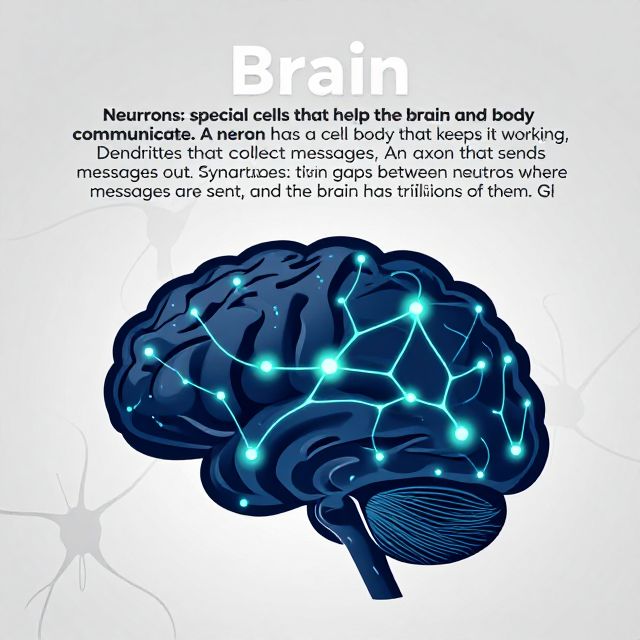
- Definition: Specialized cells responsible for transmitting information throughout the nervous system.
- Function: They communicate through electrical signals (action potentials) and chemical signals (neurotransmitters).
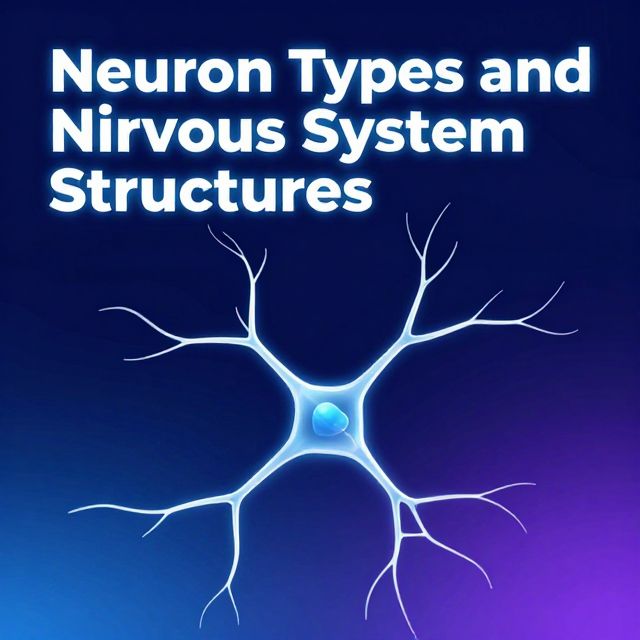
- Structure: Typically consist of a cell body (soma), dendrites (receiving signals), and an axon (transmitting signals).
3.2. Glial Cells: The Supporters 🤝
- Definition: Non-neuronal cells that provide support, nutrition, and protection to neurons.
- Function: They maintain the environment around the neurons, regulate ion concentrations, and participate in signal transmission.
- Types: Include astrocytes, oligodendrocytes, microglia, and ependymal cells in the CNS, and Schwann cells and satellite cells in the PNS.
4. Myelination: Enhancing Signal Speed 🚀
Myelination is a critical process that significantly increases the speed of electrical signal transmission along axons.
- What is Myelin? 📚
- Myelin is a fatty sheath that insulates axons, much like plastic insulation around an electrical wire.
- Myelin-Forming Cells:
- Schwann cells: Form myelin in the Peripheral Nervous System (PNS). Each Schwann cell typically myelinates a single axon.
- Oligodendrocytes: Form myelin in the Central Nervous System (CNS). A single oligodendrocyte can simultaneously myelinate the axons of multiple neurons.
- Process: Glial cells form myelin by extending processes that wrap around an axon, often over 100 times, creating multiple layers of insulation.
- Benefit: This insulation allows for saltatory conduction, where the electrical signal "jumps" between gaps in the myelin sheath (Nodes of Ranvier), dramatically increasing conduction velocity.
5. Electrical Signaling in Neurons
Neuronal communication relies on the generation and propagation of electrical signals, primarily the resting membrane potential and action potential.
5.1. Resting Membrane Potential (RMP) 📊
The RMP is the electrical potential difference across the neuronal cell membrane when the neuron is at rest (not firing an action potential).
- Definition: A distribution of charge across the cell membrane, measured in millivolts (mV). The standard is to compare the inside of the cell relative to the outside, with the outside typically considered zero.
- Mechanism: Maintained by the differential distribution of ions (primarily Na⁺, K⁺, Cl⁻, and large anionic proteins) and the activity of the Na⁺/K⁺ pump, which actively transports 3 Na⁺ ions out for every 2 K⁺ ions pumped in, creating an electrochemical gradient.
- Importance: It's the fundamental state of neuronal excitability, essential for generating signals.
💡 Clinical Relevance of RMP Disruptions:
- Why can severe hyponatremia lead to confusion or coma? ⚠️
- Explanation: Decreased plasma Na⁺ leads to decreased osmolarity in the blood. This causes water to move into brain cells, resulting in brain edema. The swelling impairs neuronal function, leading to confusion or coma.
- Why are patients with hypokalemia at risk for muscle cramps? ⚠️
- Explanation: Decreased extracellular K⁺ causes the neuron's membrane to become hyperpolarized (more negative inside). This makes the neuron less excitable but can also lead to unstable excitability, causing abnormal firing and muscle cramps.
- How does dehydration affect neuronal excitability? ⚠️
- Explanation: Fluid loss leads to electrolyte imbalance, which directly disrupts the delicate ion gradients maintaining the RMP, resulting in unstable neuronal signaling.
5.2. Action Potential (AP): The Nerve Impulse ⚡
The action potential is a rapid, transient, all-or-none electrical signal that propagates along the axon, forming the basis of neuronal communication.
- Definition: A sudden, brief reversal of the membrane potential, demonstrating how changes in the membrane's electrical state constitute a signal.
- Phases:
- Depolarization: A stimulus causes voltage-gated Na⁺ channels to open, and Na⁺ rushes into the cell, making the inside more positive.
- Repolarization: Voltage-gated Na⁺ channels inactivate, and voltage-gated K⁺ channels open, allowing K⁺ to rush out of the cell, restoring the negative charge inside.
- Hyperpolarization (Undershoot): K⁺ channels close slowly, causing a brief period where the membrane potential becomes even more negative than the RMP before returning to rest.
💡 Clinical Relevance of AP Disruptions:
- Why does ATP depletion impair nerve function? ⚠️
- Explanation: ATP is required for the Na⁺/K⁺ pump to maintain ion gradients. Without ATP, the pump fails, ion gradients are lost, the membrane depolarizes, and no action potentials can be generated.
- Why does hypoxia rapidly affect brain cells? ⚠️
- Explanation: Reduced oxygen (hypoxia) leads to decreased ATP production. This causes pump failure, neuronal depolarization, and rapid dysfunction of brain cells.
- Why is glucose essential for neuronal survival? ⚠️
- Explanation: Glucose is the primary fuel for ATP production. Decreased glucose leads to decreased ATP, pump dysfunction, loss of RMP, and ultimately, neuronal damage.
- Why do local anesthetics block pain? ⚠️
- Explanation: Local anesthetics work by blocking voltage-gated Na⁺ channels. This prevents depolarization and the generation/propagation of action potentials, thereby stopping pain transmission.
- Why can hypercalcemia reduce neuromuscular excitability? ⚠️
- Explanation: Increased Ca²⁺ stabilizes voltage-gated Na⁺ channels, making them less likely to open. This increases the threshold required to initiate an action potential, leading to decreased neuronal firing and reduced excitability.
- Why do patients with vitamin B12 deficiency develop neuropathy? ⚠️
- Explanation: Vitamin B12 is crucial for myelin synthesis. Deficiency leads to impaired myelin formation, resulting in slowed nerve conduction and sensory/motor deficits (neuropathy).
- Why is nerve conduction velocity reduced in multiple sclerosis? ⚠️
- Explanation: Multiple sclerosis is characterized by myelin loss (demyelination). This impairs saltatory conduction, causing the electrical signal to travel much slower and less efficiently along the axon.
- Why does chronic malnutrition affect cognitive performance? ⚠️
- Explanation: Nutrient deficiencies can impair neurotransmission and myelin integrity. This leads to impaired synaptic efficiency and overall cognitive dysfunction.
6. Neuronal Communication: Synaptic Transmission 🗣️
For a neuron to generate an action potential, it must receive input from another source, either another neuron or a sensory stimulus. This communication typically occurs at synapses.
- Input and Graded Potentials:
- Input (from another neuron or sensory stimulus) causes ion channels in the neuron's membrane to open.
- This leads to a localized change in membrane potential called a graded potential.
- The strength of the graded potential is directly proportional to the strength of the stimulus. If the graded potential reaches a certain threshold, it can trigger an action potential.
- Synaptic Transmission:
- When an action potential reaches the axon terminal, it triggers the release of neurotransmitters into the synaptic cleft.
- These neurotransmitters bind to receptors on the postsynaptic neuron, causing ion channels to open and generating a new graded potential (either excitatory or inhibitory).
💡 Clinical Relevance of Synaptic Disruptions:
- Why does magnesium deficiency increase neuromuscular irritability? ⚠️
- Explanation: Magnesium ions typically block calcium channels. When Mg²⁺ levels are low, there is an increase in calcium influx into the presynaptic terminal. This enhanced Ca²⁺ influx leads to increased neurotransmitter release, resulting in heightened neuromuscular irritability (e.g., muscle spasms, tremors).