 Podit
Podit
🧠📚 The Nervous and Endocrine Systems: Control and Coordination of the Body
Source Information: This study material has been compiled from a lecture audio transcript and copy-pasted text provided by the user.
🎯 Introduction to Body Control Systems
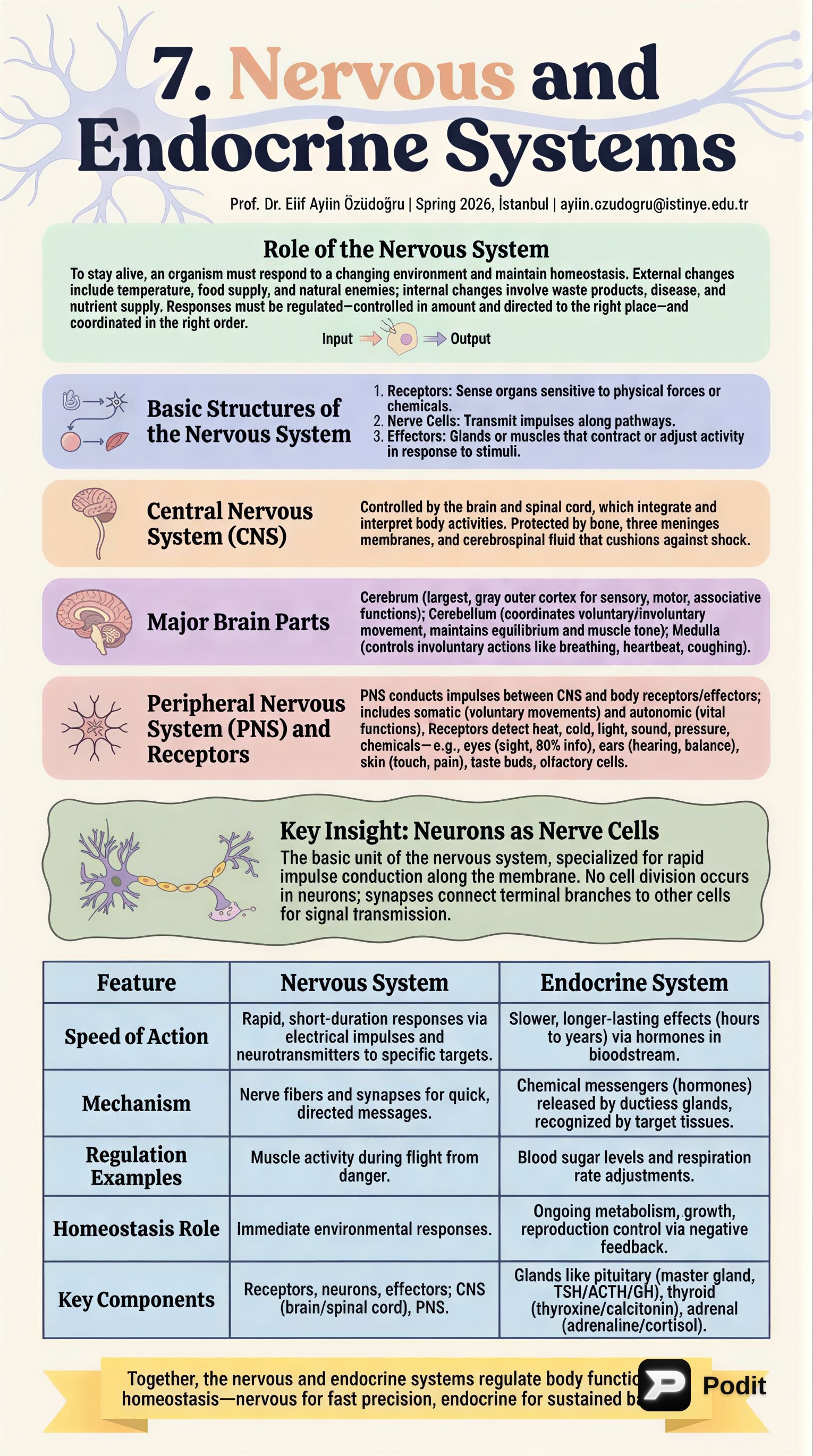
To maintain life, organisms must constantly adapt to their ever-changing environment and diligently preserve internal stability, a state known as homeostasis. This involves responding to both external factors (e.g., temperature, food availability, threats) and internal changes (e.g., waste concentration, pathogens, nutrient supply). These responses require precise regulation (controlled amount and direction) and coordination (correct sequence and relationship). At a cellular level, the capacity of a cell to respond as a whole is termed irritability. The nervous and endocrine systems are the body's primary control mechanisms, working together to achieve this vital balance.
🧠 The Nervous System
The nervous system is specialized for rapid communication and immediate responses.
1. 📚 Basic Structures of the Nervous System
A true nervous system involves three fundamental components:
- Receptors: 👁️ Specialized sense organs sensitive to specific environmental changes, physical forces, or chemicals.
- Nerve Cells (Neurons): ⚡ When a receptor is stimulated, these cells transmit electrical impulses along a pathway.
- Effectors: 💪 Glands or muscles that carry out the response, either by contracting or by increasing/decreasing their activity.
- A stimulus is any factor that causes a receptor to trigger impulses in a nerve pathway.
2. 🌐 Divisions of the Nervous System
The nervous system is broadly divided into two main parts:
2.1. Central Nervous System (CNS)
The CNS is the body's control center, responsible for integration and interpretation of most activities. ✅ Components: Brain and Spinal Cord. ✅ Protection: * Bone: Brain (skull), Spinal Cord (vertebrae). * Meninges: Three tough membranes covering the brain and spinal cord. * Cerebrospinal Fluid: Cushions delicate tissues against shock. ✅ Key Cells: Contains cell bodies of most motor neurons and interneurons.
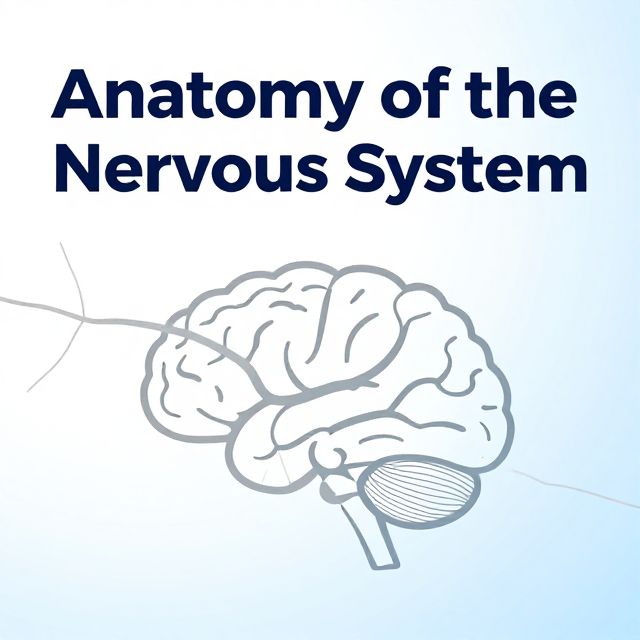
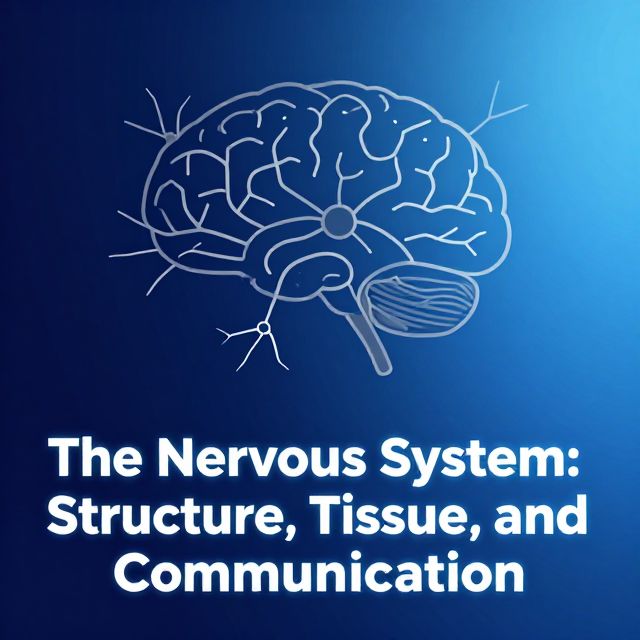
The Brain
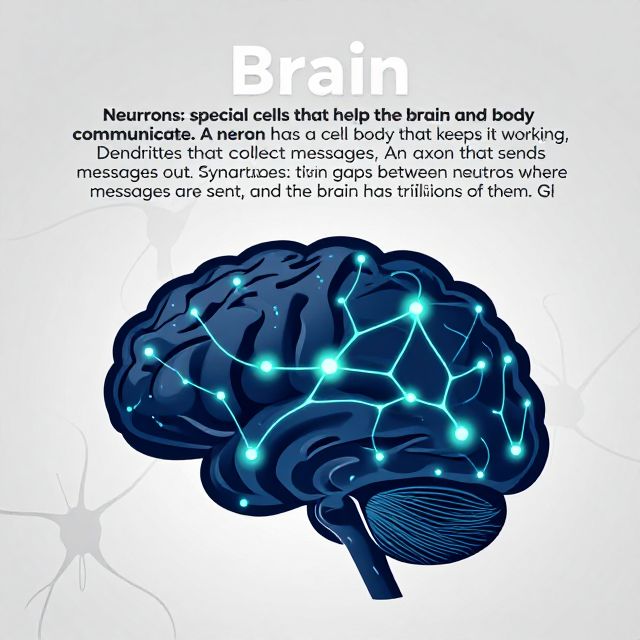
The brain is a specialized group of nerve cells that controls and coordinates nervous system activities. 💡 High Activity: Receives 20% of heart's blood, replaces most proteins every three weeks, and is the major user of glucose. ✅ Major Parts: * Cerebrum: 🧠 Largest part (2/3). * Cerebral Cortex (Gray Matter): Outermost layer, convolutions increase surface area. * White Matter: Inner area beneath gray matter. * Functions: Sensory, motor, and associative functions. * Cerebellum: 🤸♂️ Divided into two hemispheres. * Structure: Outer white matter, inner gray matter. * Functions: Controls voluntary and some involuntary movements, maintains equilibrium (with inner ear), and muscle tone. * Medulla Oblongata: 🌬️ Controls involuntary movements like breathing, heartbeat, and coughing. ✅ Other Important Parts: * Thalamus: 🚦 Relay center between brain and spinal cord. Receives and modifies sensory impulses (except smell), involved in pain perception and consciousness. * Hypothalamus: 🌡️ Controls body temperature, blood pressure, sleep, emotions, and endocrine system function. * Pons: 🔗 Serves as a relay system linking the spinal cord, medulla, cerebellum, and cerebrum.
The Spinal Cord
The spinal cord extends about 45 cm from the base of the brain through the vertebrae. ✅ Structure: Inner H-shaped gray matter surrounded by white matter. ✅ Functions: Connects PNS nerves with the brain and controls certain reflexes (automatic responses not involving the brain).
2.2. Peripheral Nervous System (PNS)
The PNS is a vast network of nerves that conduct impulses between the CNS and the body's receptors and effectors. ✅ Components: Sensory neurons (including cell bodies) and axons/dendrites of motor neurons. ✅ Divisions: * Somatic Nervous System: Controls voluntary body movements. * Autonomic Nervous System: Regulates vital body functions (involuntary).
3. 👂 Sensory Receptors
Different types of receptors are sensitive to specific stimuli:
- Eye: 👁️ Sight is the dominant sense, providing over 80% of information.
- Ear: 👂 Responsible for hearing and maintaining balance/equilibrium.
- Skin Receptors: 👋 Detect touch, pressure, heat, cold, and pain.
- Taste Buds: 👅 Located within papillae on the tongue, sense taste.
- Olfactory Cells: 👃 In the mucous membrane of the nasal cavity, responsible for smell.
4. ⚡ Neurons: The Basic Unit
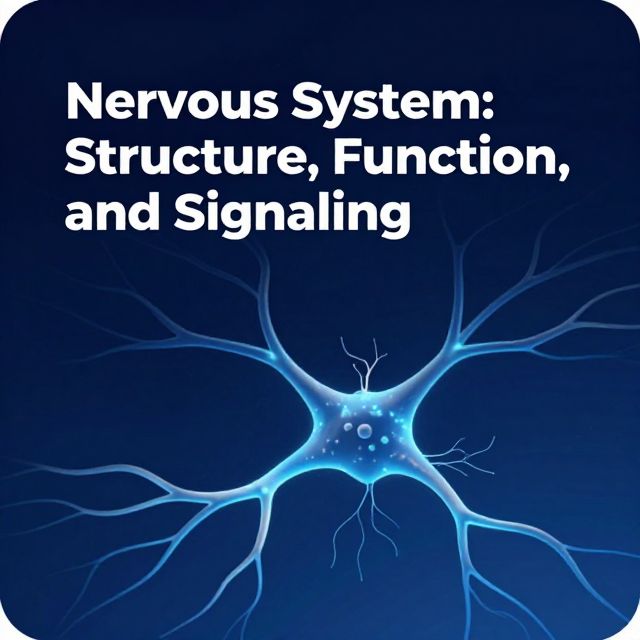
Neurons are the basic structural and functional units of the nervous system. ✅ Specialization: Rapid conduction of impulses along the cell membrane. ⚠️ No Cell Division: Neurons generally do not undergo cell division. ✅ Synapse: The junction where a terminal branch of one neuron makes contact with the membrane of another cell.
⚖️ The Endocrine System
The endocrine system works alongside the nervous system to regulate and coordinate body functions, primarily through chemical messengers.
1. ⚡ vs. 🧪: Nervous vs. Endocrine System
| Feature | Nervous System | Endocrine System | | :-------------- | :---------------------------------------------- | :------------------------------------------------ | | Mechanism | Electrical impulses, neurotransmitters | Chemical messengers (hormones) in bloodstream | | Speed | Rapid | Slower | | Duration | Short-duration responses | Longer-lasting effects (hours, days, years) | | Targeting | Specific body parts | Target organs/tissues via bloodstream | | Example | Muscle activity during danger | Blood sugar levels, respiration rate during danger |
2. 📚 Glands and Hormones
- Glands: Organs made of epithelial cells specialized for secreting substances.
- Exocrine Glands: Discharge secretions into ducts (e.g., digestive glands).
- Endocrine Glands: Release secretions directly into the bloodstream. Also called 'ductless glands.'
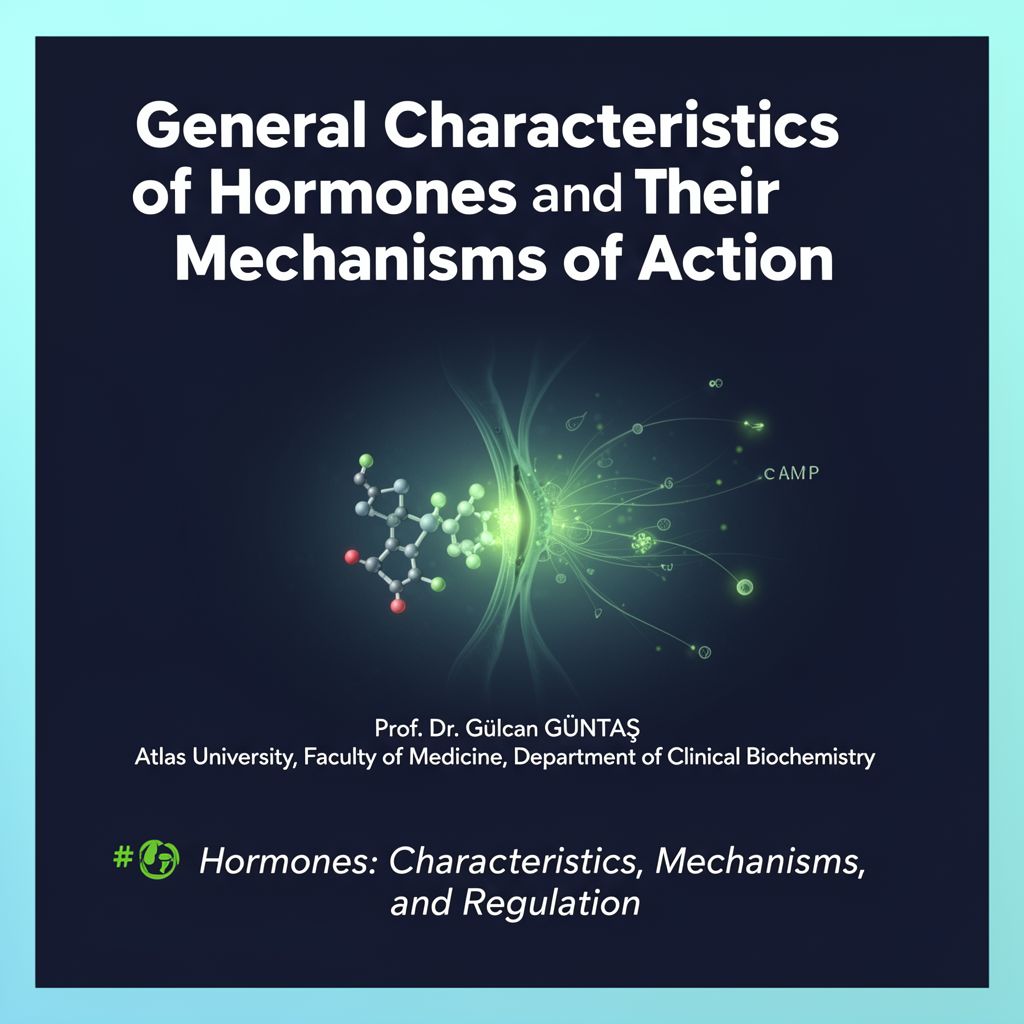
- Hormones: 🧪 Chemical messengers secreted by endocrine glands.
- Released into the bloodstream and exert effects elsewhere in the body.
- Each hormone is recognized only by a specific target tissue.
- Functions: Regulate overall metabolism, maintain homeostasis, control growth, and reproduction.
- Types:
- Protein-type hormones: Chains of amino acids (e.g., insulin, oxytocin).
- Steroid hormones: Lipid-like, carbon-ring compounds similar to cholesterol (e.g., cortisone, testosterone, estrogen).
3. 🔄 Hormone Regulation
Endocrine glands do not secrete hormones at a constant rate; their activity varies with the body's needs. ✅ Trigger Signals: Nerve impulses or, more commonly, chemical stimuli (including other hormones). ✅ Negative Feedback: 📈📉 The primary mechanism that alters gland activity, ensuring hormone levels remain within a narrow range. ✅ Mechanisms of Action: Hormones produce effects within target cells via mechanisms like the one-messenger model and the two-messenger model.
🧍 Human Endocrine System: Key Glands
The human endocrine system consists of numerous glands, and their improper functioning (hypersecretion or hyposecretion) can lead to diseases or disorders.
- Pituitary Gland (Master Gland): 👑 Controls many other glands. Connected to the hypothalamus, forming a major link between nervous and endocrine systems.
- Hormones: TSH, ACTH, GH, Prolactin.
- Thyroid Gland: 🦋 Located in the neck.
- Thyroxine: Increases metabolism (protein, carbohydrate, fat), essential for mental and physical development.
- Calcitonin: Regulates blood calcium levels.
- Parathyroid Glands: ⚪ Four tiny glands behind the thyroid.
- Parathyroid Hormone: Regulates calcium-phosphorus metabolism.
- Adrenal Glands: 🔺 On top of the kidneys, each with two layers.
- Medulla (Inner): Hormones (adrenaline, noradrenaline) deal with sudden stress.
- Cortex (Outer): Hormones (e.g., cortisol, aldosterone) deal with long-term stress.
- Pancreas (Islets of Langerhans): 🌿
- Alpha (α) cells: Secrete glucagon.
- Beta (β) cells: Secrete insulin.
- Both control carbohydrate metabolism.
- Gonads (Sex Glands): ♀️♂️ Ovaries (females) and testes (males).
- Ovaries: Estrogen, Progesterone.
- Testes: Androgens (e.g., Testosterone).
- Control sexual development and reproduction.
- Thymus: 🛡️ In the upper chest, near the heart.
- Involved in lymphocyte processing early in life.
- Produces Thymosin during childhood; no function in adults.
- Pineal Gland: 🌲 Pea-sized structure at the base of the brain.
- Produces Melatonin, which may inhibit sexual development.
- Prostaglandins: 📍 'Local hormones' that act on cells where they are synthesized, without entering the bloodstream.
- Influence heartbeat, blood pressure, urine excretion, and uterine contractions during childbirth.
💡 Other Hormone-Secreting Tissues
Some tissues not organized as separate glands also secrete hormones:
- Stomach Lining: Special cells secrete Gastrin, stimulating gastric juice flow.
- Small Intestine Lining: Cells secrete Secretin, stimulating pancreatic juice flow.