Podit
Podit
Islamism and the Middle East: A World in Disorder
Source Information: This study material is compiled from a copy-pasted text and a lecture audio transcript provided by the user.
📚 Introduction: The Middle East as a Crucible of World Orders
The Middle East has historically been a focal point for the emergence of major religions and empires, a region where various forms of domestic and international order have been established and subsequently challenged. It is characterized by a tension between a dream of past glory and a contemporary struggle to unify around common principles. This has led to a complex challenge for international order, oscillating between integration into the global community and resistance against it.
🌍 Historical Foundations of Islamic World Order
The region's early organization was shaped by a succession of empires, each considering itself the center of civilization.
1. Ancient Empires and Their Influence
- Early Civilizations (3rd Millennium B.C.):
- Egypt: Expanded along the Nile into Sudan.
- Mesopotamia, Sumer, Babylon: Consolidated rule along the Tigris and Euphrates rivers.
- Persian Empire (6th Century B.C.):
- The first deliberate attempt to unite diverse communities (African, Asian, European) into a single international society.
- Rulers were known as "Shahanshah" (King of Kings).
- Dominant Empires (6th Century A.D.):
- Byzantine (Eastern Roman) Empire: Capital in Constantinople, Greek Orthodox Christianity.
- Sassanid Persian Empire: Capital in Ctesiphon, practiced Zoroastrianism.
- A devastating 25-year war (starting 602 A.D.) between these two empires left them exhausted, inadvertently paving the way for Islam's rise.
2. The Rise and Expansion of Islam
- Prophet Muhammad (570-632 A.D.):
- Born in Mecca, received revelations at age 40, compiled as the Quran.
- Unified the Arabian Peninsula and established a new vision of world order.
- Rapid Expansion:
- Within a century of Muhammad's death (632 A.D.), Arab armies spread Islam across North Africa, into Spain, central France, and northern India.
- Later expanded into Central Asia, Russia, China, and the East Indies.
- This expansion was driven by a unique blend of religious conviction and political ambition.
- Nature of Islamic Expansion:
- Egalitarian and Expansionist: Unlike previous tribal societies, Islam emphasized the unity of religious and political power.
- Choices Offered: Conquered peoples were given three options: conversion, protectorate status (paying a poll tax), or conquest.
- Divine Mission: The rapid advance across three continents was seen by the faithful as proof of Islam's divine mission to unite and bring peace to humanity.
🕌 The Islamic World Order: Concepts and Ideology
The early Islamic system established a distinct framework for international relations, based on a universalist vision.
1. Key Concepts
- Dar al-Islam (House of Islam):
- Conceived as a single political unit, the "realm of peace," governed by the caliphate (succession to the Prophet's earthly political authority).
- Dar al-Harb (Realm of War):
- Lands beyond Dar al-Islam, which Islam's mission was to incorporate into its world order to achieve universal peace.
- Theoretically, Dar al-Islam was in a perpetual state of war with Dar al-Harb until the entire world was brought under Pax Islamica.
- Jihad:
- An obligation for believers to expand their faith through struggle.
- Encompassed warfare but also spiritual striving and great deeds glorifying Islam's principles.
- Could be fulfilled "by his heart; his tongue; his hands; or by the sword."
2. Treaties and Legitimacy
- Non-Aggression Treaties: Permissible but pragmatic and of limited duration (up to 10 years, renewable).
- 💡 Insight: These were seen as temporary measures to gather strength, not as recognition of non-Muslim states as equals.
- Illegitimacy of Non-Muslim States: From this perspective, non-Muslim political entities were considered illegitimate, lacking legal competence to interact with Islam on equal terms due to differing ethical and legal standards.
- Unidirectional Expansion: The spread of peace and justice under Islam was viewed as an irreversible process. Loss of territory from Dar al-Islam was never to be accepted as permanent.
⚔️ Evolution and Challenges to the Islamic World Order
Despite its initial success, the universal Islamic order faced internal divisions and external pressures.
1. Internal Fragmentation
- Succession Crisis (632 A.D.): Following Muhammad's death, a dispute over succession led to the fundamental split between:
- Sunnis: Supported Abu Bakr, emphasizing tradition and consensus. Their primary task was to preserve Muhammad's revelations.
- Shias: Supported Ali (Muhammad's cousin), believing governance required spiritually gifted individuals descended from the Prophet. They viewed new authorities as illegitimate after Ali's murder.
- Geopolitical Rivalries: Over time, distinct Arab, Persian, Turkish, and Mughal spheres emerged, acting as rival monarchies with their own interests, despite theoretical adherence to a global Muslim order.
2. External Reversals and Ottoman Resurgence
- European Reversals:
- 732 A.D. (Poitiers/Tours): Halted Muslim advances into central France.
- Crusades (11th-13th Centuries): Christian forays into the Holy Land.
- Reconquista (Spain, ended 1492): Pushed Islam's western boundary back to North Africa.
- Ottoman Empire (13th-20th Centuries):
- Emerged as a new Muslim empire, expanding into the Balkans, conquering Constantinople (1453), and dominating the Eastern Mediterranean.
- Conceived its mission as universal, with sultans proclaiming themselves "Shadow of God on Earth."
- Refusal of Equality: The Ottomans refused to recognize European states as legitimate or equal, viewing their compacts as unilateral grants of privilege.
- Strategic Alliances: Despite doctrinal differences, tactical alliances occurred (e.g., France with Ottomans against Habsburgs in 1526).
📉 The "Sick Man of Europe" and the Westphalian System
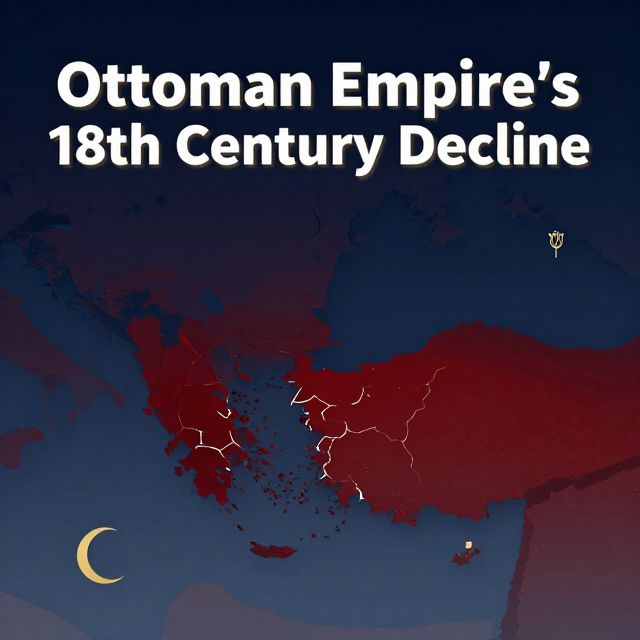
By the 18th and 19th centuries, the Ottoman Empire weakened, becoming entangled in the European balance of power.
- Decline: Internal sclerosis, resistance to modernization, and external pressures from Russia, Austria, France, and Britain.
- "The Eastern Question": European powers sought to divide Ottoman holdings without upsetting the balance of power.
- WWI and Collapse: Allied with Germany, the Ottomans declared jihad but also invoked Westphalian principles. The war's end in 1918 led to the empire's dissolution.
- Treaty of Sèvres (1920): Reconceived the Middle East as a patchwork of states, a concept alien to its historical political vocabulary.
- Mandate System: Sykes-Picot Agreement (1916) divided the region into British and French spheres of influence (e.g., Syria/Lebanon to France, Iraq/Palestine to Britain).
- ⚠️ Consequence: These borders often ignored ethnic and sectarian realities, laying foundations for future conflicts.
- Balfour Declaration (1917): British support for a "national home for the Jewish people" in Palestine, creating ambiguity and future conflict.
- Abolition of Caliphate (1924): Turkey's secular-nationalist leaders abolished the caliphate, leaving the Muslim world between the Westphalian order and the now-unrealizable Dar al-Islam.
💡 Modern Middle East: Nationalism, Islamism, and Cold War Dynamics
The post-WWI era saw the emergence of new political ideologies and alignments.
1. Competing Visions for the State
- Adaptation to Westphalian System: Commercial and political elites sought genuine independence for newly constructed states within the Westphalian framework.
- Pan-Arabism: Advocated for a united Arab nation based on ethnic, linguistic, and cultural unity. (e.g., Nasser in Egypt, Saddam Hussein in Iraq, Hafez al-Assad in Syria).
- Political Islam (Islamism): Insisted on religion as the basis for modern Arab identity, seeking divinely inspired governance.
- Muslim Brotherhood (founded 1928): Sought an Islamic alternative to the secular national state.
- Hassan al-Banna: Argued the Westphalian order was "bankrupt" and called for a new Islamic world order, envisioning overlapping loyalties culminating in a global Islamic empire.
- Sayyid Qutb (Milestones, 1964): A foundational text of modern Islamism, advocating for the overthrow of all man-made systems and a literal, global implementation of the Quran by an ideologically pure vanguard.
- 📚 Key Idea: Rejection of pluralism and secular international order, viewing states as illegitimate.
2. Cold War Alignments
- Exploiting Rivalry: Middle Eastern states manipulated the US-Soviet rivalry to enhance their influence.
- Shifting Alliances: Egypt under Sadat shifted from Soviet to US alignment (1973-74) to recover Sinai from Israel, leading to peace with Israel (1979).
- Palestinian Issue: The emergence of Israel as a sovereign state became a unifying ideological issue for Arab resistance, leading to multiple wars.
💥 The Arab Spring and the Syrian Cataclysm
The early 21st century brought new upheavals, challenging existing orders.
1. Arab Spring (2010 onwards)
- Initial Hopes: Began as youth-led uprisings for liberal democracy (e.g., Tahrir Square in Egypt).
- Failure of Liberal Democracy: Existing political forces (military, religious) proved stronger.
- Egypt's Experience:
- Muslim Brotherhood leader Mohammed Morsi elected (2012), then ousted by military (2013).
- Highlighted the dilemma between security interests and promoting democratic governance.
- Humanitarian Foreign Policy Dilemmas: US support for uprisings raised questions about supporting all popular movements, even those leading to religious domination or instability.
2. Syrian Civil War
- Sectarian Conflict: Unlike Egypt, Syria's uprising quickly devolved into a millennial conflict between Shia and Sunni, drawing in external powers.
- Disintegration of Statehood: The conflict led to the rise of autonomous ethnic/religious enclaves and jihadist groups (e.g., ISIL attempting to build a caliphate).
- Clash of Perceptions: US viewed it as a struggle for democracy; regional actors saw it as a battle for survival and sectarian dominance.
- International Impasse: Lack of international consensus (e.g., Russia/China vetoes) and a fractured opposition led to a humanitarian disaster and regional disorder.
🇮🇱 The Israeli-Palestinian Issue: A Clash of World Orders
This conflict embodies the clash between Westphalian and Islamic concepts of order.
- Arab Rejection: Two generations of Arabs raised on the belief that Israel is an illegitimate usurper of Muslim land.
- Peace Efforts: Leaders like Sadat and Rabin attempted peace based on Westphalian principles (state-to-state negotiations based on national interest), often at great personal cost.
- Radical Islamists: Groups like Hezbollah and Hamas proclaim jihad to end "Zionist occupation," challenging Israel's very existence.
- Arab Viewpoints: Range from accepting coexistence to seeking Israel's destruction, or negotiating as a means to overcome the Jewish state in stages.
- Israel's Concerns: Security paramount, hesitant to cede territory for potentially revocable agreements. Demands recognition as a "Jewish state," a concept difficult for many Muslims to accept formally.
- Regional Context: The Palestinian issue's urgency has been overshadowed by the rise of Iran and Sunni-Shia conflict, affecting the ability of major Arab states to act as guarantors of peace.
- Fundamental Clash: Israel is a Westphalian state; core Middle Eastern factions view order through an Islamic consciousness. The challenge is coexistence between these two concepts in a narrow geographical space.
🇸🇦 Saudi Arabia: Navigating Competing Orders
Saudi Arabia presents a complex case study, balancing traditional Islamic governance with Westphalian statehood.
- Dual Nature: A tribal monarchy and an Islamic theocracy, with power shared between the Al Saud royal family and the Aal al-Shaykh religious hierarchy.
- Wahhabism: Founded on an austere interpretation of Islam, unifying the peninsula through religious absolutism and military daring.
- Modern Challenges: Governing a diverse population, balancing economic and social modernization with conservative traditions, and managing oil wealth.
- Foreign Policy: Historically cautious and indirect, aiming for security through remoteness and manipulating external powers.
- Internal Contradictions:
- Formal allegiance to Westphalian concepts for security.
- Religious purism (Wahhabism) informing its history.
- Appeals of radical Islamism threatening domestic cohesion (e.g., al-Qaeda's insurgency).
- Supporting radical Islamism abroad (e.g., financing madrassas) inadvertently fueled jihadist fervor that later threatened the kingdom itself.
- Confrontation with Iran: Saudi Arabia views Shia Iran as an existential threat, leading to a regional balance-of-power struggle between a Saudi-led Sunni bloc and an Iran-led Shia bloc.
- US Dilemma: Balancing security interests with promoting democratic values in a region where religious struggle is paramount. An upheaval in Saudi Arabia would have profound global repercussions.
⚠️ The Decline of the State and Regional Disorder
The current conflicts in the Middle East signal a potential disintegration of Westphalian statehood in parts of the region.
- State Disintegration: Countries like Syria, Iraq, and Libya are losing their capacity to function as unified Westphalian states.
- Rise of Non-State Actors: Hezbollah, al-Qaeda, ISIL, and the Taliban operate across borders, challenging central authority.
- "State of Nature": Conflicts are driven by tribal and sectarian units, manipulated by outside factions, often disregarding international norms.
- Weaponization of Religion: Political, sectarian, tribal, and ideological disputes merge, with religion used to justify geopolitical objectives and atrocities.
- Regional Blocs: A Sunni bloc (Saudi Arabia, Gulf states, Egypt, Jordan, Turkey) confronts a Shia bloc (Iran, Assad's Syria, Maliki's Iraq, Hezbollah, Hamas).
- Global Threat: The drift toward pan-regional sectarian confrontations and the rise of extremism pose a significant threat to world stability, especially with the risk of terrorism and weapons proliferation.
- Call for Order: The world awaits a new regional order, requiring cooperative efforts from all responsible powers to prevent further anarchy and the spread of extremism.