Podit
Podit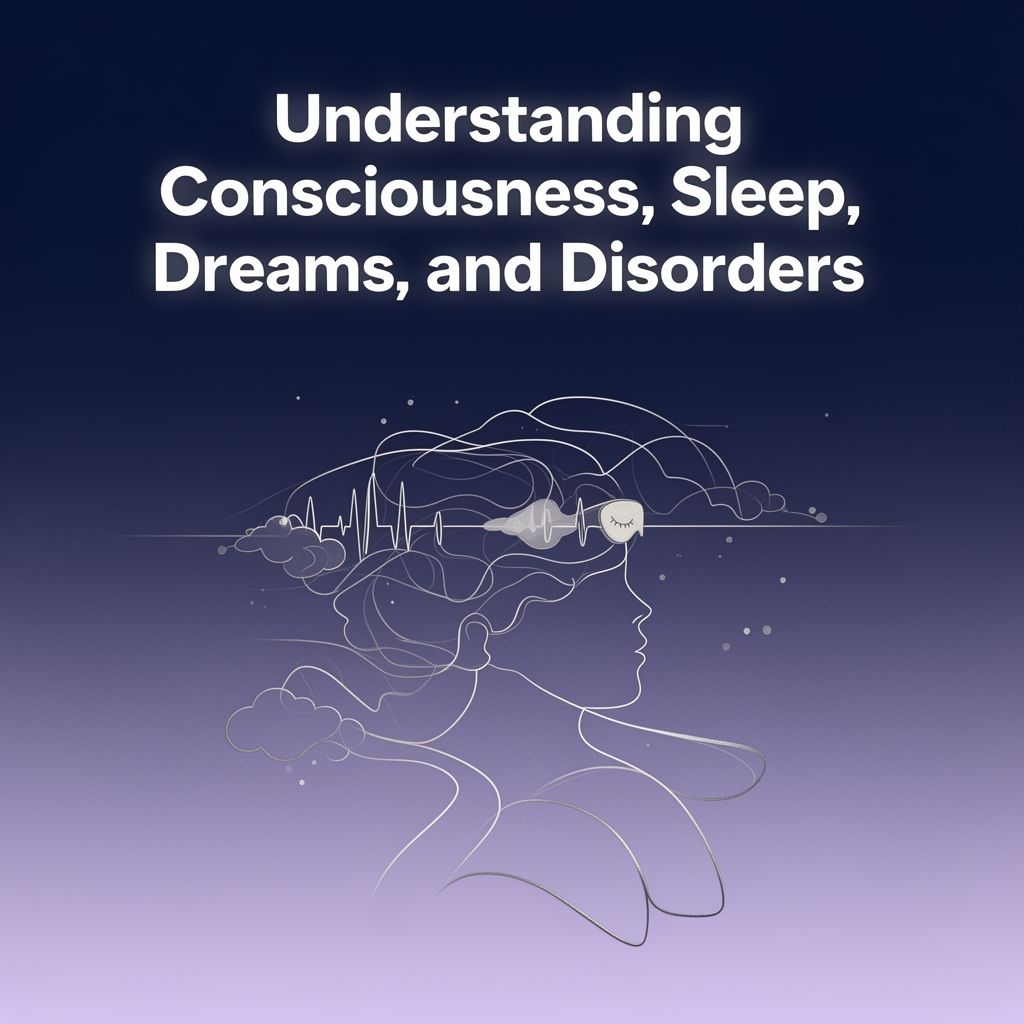
Consciousness: An Overview
Source Information: This study material is compiled from a copy-pasted text and an audio lecture transcript.
📚 Introduction to Consciousness
Consciousness, a fundamental mental concept, gains scientific validity by being linked to observable behaviors. Psychologists employ various definitions and applications for the term "consciousness."
🧠 Consciousness as Awareness
One primary understanding of consciousness is sensory awareness of our environment. ✅ Sensory Awareness: The ability to perceive external stimuli through our senses (e.g., seeing sunlight on snow, hearing a concert).
However, we are not always aware of all sensory stimulation. This leads to another crucial aspect: ✅ Selective Attention: The process of focusing one's consciousness on a particular stimulus while ignoring others.
- Key to Self-Control: Essential for tasks requiring focus, like driving.
- Adaptation: Helps us learn which stimuli to attend to and which to safely ignore.
- Enhanced Senses: Selective attention can sharpen our sensory perception.
- 💡 Cocktail Party Effect: The phenomenon where one can focus on a single conversation in a noisy environment, demonstrating selective attention.
🤯 Levels of Consciousness (Freudian & Non-Freudian Perspectives)
Sigmund Freud, the founder of psychoanalysis, proposed different levels of mental awareness.
1. Conscious
✅ Conscious: Thoughts and feelings of which we are currently aware.
2. Preconscious
✅ Preconscious: Information not currently in awareness but readily accessible.
- Example: Your breakfast details or phone number can be brought to conscious awareness by directing attention to them.
3. Unconscious
✅ Unconscious: Mental events unavailable to awareness under most circumstances.
- Freud's View: Believed painful memories, and unacceptable sexual or aggressive impulses are automatically ejected from awareness (repressed) to avoid anxiety, guilt, or shame.
- 📚 Repression: The automatic, unconscious ejection of unacceptable memories or impulses from awareness.
4. Related Non-Freudian Concepts
- ✅ Suppression: The conscious choice to stop thinking about unacceptable ideas or distractions.
- Example: Trying to avoid thoughts of a party while studying for a test, or vice versa.
- ✅ Nonconscious Processes: Bodily processes that cannot be experienced through sensory or direct inner awareness.
- Examples: Neuron firing, hair growth, oxygen transport in blood. We observe their effects but don't directly sense the processes themselves.
👤 Other Meanings of Consciousness
1. Consciousness as Personal Unity
✅ Personal Unity: The developing sense of self, individuality, and the totality of one's impressions, thoughts, and feelings. It forms intentions and guides behavior, essentially equating consciousness with the "self."
2. Consciousness as the Waking State
✅ Waking State: Consciousness as opposed to states like sleep.
- 💡 Altered States of Consciousness: Sleep, meditation, hypnotic trances, and drug-induced perceptions are considered altered states.
😴 Sleep and Dreams
📊 Sleep Statistics & Evolutionary Perspective
- Adults spend approximately one-third of their lives asleep.
- Recommended sleep: 7-9 hours for adults.
- US Adults: Average 6.8 hours; one-third get 6 hours or less during the work week.
- Impact: One-third report impaired daily functioning due to lack of sleep; nearly one in five admit to falling asleep at the wheel.
- Evolutionary Link: Animals at higher risk of predation tend to sleep less, an adaptive response.
⏰ Biological & Circadian Rhythms
✅ Circadian Rhythm: A natural, internal process that regulates the sleep-wake cycle and repeats roughly every 24 hours, linked to the Earth's rotation.
- Internal Clock: When removed from external cues (day/night), the cycle tends to extend to about 25 hours, with people sleeping nearly 10 of them.
- Morning Adjustment: 1️⃣ Shining sun activates proteins in the retina. 2️⃣ Proteins signal the suprachiasmatic nucleus (SCN) in the hypothalamus. 3️⃣ SCN stimulates the pineal gland to decrease melatonin output (melatonin promotes sleep).
- Individual Differences: "Morning people" vs. "night owls."
💤 The Stages of Sleep
When we sleep, our brain waves change significantly from the waking state. ✅ Electroencephalograph (EEG): A device used to measure brain waves, indicating the frequency and amplitude (strength) of neuronal activity.
Brain Wave Types:
- Alpha Waves: Low-amplitude, 8-13 cycles/second. Occur when eyes are closed, and one is relaxed before sleep.
- Theta Waves: 6-8 cycles/second. Slower than alpha waves.
- Delta Waves: Slowest, highest amplitude waves. 0.5-3 cycles/second. Characteristic of deep sleep.
Sleep Stages Overview:
- NREM (Non-Rapid Eye Movement) Sleep: Comprises the first four stages.
- REM (Rapid Eye Movement) Sleep: The fifth stage, characterized by rapid eye movements.
Detailed Stages:
- Stage 1 (NREM):
- Lightest stage of sleep.
- Brain waves slow from alpha to theta waves.
- Accompanied by slow, rolling eye movements.
- 💡 Hypnagogic State: Transition from alpha to theta may involve brief, vivid, dream-like images.
- If awakened, one might feel they weren't sleeping.
- Stage 2 (NREM):
- Medium amplitude brain waves (4-7 cycles/second).
- ✅ Sleep Spindles: Brief bursts of brain activity (12-16 cycles/second) punctuate the waves.
- Stage 3 (NREM - Deep Sleep):
- Brain produces slower delta waves (1-3 cycles/second) with relatively great amplitude.
- Stage 4 (NREM - Deepest Sleep):
- Delta waves slow further (0.5-2 cycles/second) and have their greatest amplitude.
- Most difficult stage to awaken from.
- REM Sleep:
- Occurs after ascending from deep sleep stages.
- Brain waves are rapid, low-amplitude, resembling light Stage 1 sleep.
- ✅ Paradoxical Sleep: Called this because EEG patterns suggest high arousal, similar to waking, yet it's difficult to awaken someone.
- Eyes dart back and forth beneath eyelids.
- Dreaming: About 80% of awakenings during REM sleep result in dream reports (vs. 20% in NREM).
Sleep Cycles:
- Typically five cycles per night, each including a period of REM sleep.
- First Stage 4 sleep is usually the longest.
- Sleep becomes lighter as the night progresses; REM periods lengthen, and deep sleep stages may be shorter or absent towards morning.
- Last REM period can last about half an hour.
🌟 The Functions of Sleep
While not fully understood, sleep serves several vital purposes:
- ✅ Body Rejuvenation: Helps the body recover from daily wear and tear.
- ✅ Stress Recovery: Aids in coping with and recovering from stress. Lack of sleep can lead to depression.
- ✅ Learning Consolidation: REM and deep sleep are crucial for strengthening learning and memory.
- ✅ Brain Development: REM sleep may foster brain development, especially in infants and even fetuses.
⚠️ Sleep Deprivation:
- Effects: Impaired concentration, reduced performance, deficits in attention, learning, and memory (especially after multiple sleepless nights).
- Dangers: Linked to dangerous driving (estimated 100,000 crashes and 1,500 deaths annually in the US).
- Coping: Many try to "catch up" on sleep during days off.
Individual Sleep Needs:
- Genetics: Amount of sleep needed is partly genetically determined.
- Stress: More sleep is needed during stressful periods (e.g., job changes).
- Age:
- Newborns: Up to 16 hours/day.
- Teenagers: 12+ hours/day.
- Older Adults: Often believed to need less, but sleep is frequently interrupted by discomfort or bathroom needs, leading to daytime napping.
🧠 Sleep, Learning, and Memory
- REM sleep and deep sleep are strongly linked to the consolidation of learning and memory.
- REM Sleep Deprivation: Leads to slower learning and faster forgetting.
- ✅ REM Rebound: After REM sleep deprivation, individuals spend more time in REM sleep during subsequent sleep periods to "catch up."
💭 Dreams
Dream Characteristics & Common Themes
- Dreams produce imagery without external stimulation and can feel very real.
- Most vivid during REM sleep; NREM dreams are vaguer.
- Time Compression: Dreams can compress time (like a movie), but actual events often unfold in "real time" within the dream.
- Flexibility: Dreams can be black and white or full color.
- Nightmares: Unpleasant dreams, often products of REM sleep.
- Common Nightmares: Falling, being chased, trying to run but unable to move.
- Dreamer Demographics:
- Artists: More likely to have nightmares.
- Children: More likely to dream about animals.
- Younger people: More likely to know they are dreaming (lucid dreaming).
- Common Anxiety Dreams (among college students):
- 82% chased
- 74% falling
- 60% too late for something (e.g., train)
- Other Common Dreams:
- 77% sex
- 48% flying (Freud believed this symbolized sexual intercourse)
- 37% being a child again
Theories of Dreaming
1. 💡 Dreams as "The Residue of the Day"
✅ Continuity Hypothesis: Dreams often reflect our daily preoccupations (illness, death, urges, moral dilemmas).
- Characters: More likely to be friends and neighbors than fantastical figures.
- Traumatic Events: Can lead to nightmares.
- Psychological Problems: Frequent nightmares are linked to anxiety, depression, and other psychological issues.
2. 💡 Dreams as the Expression of Unconscious Desires (Freud's View)
- Core Idea: Dreams reflect unconscious wishes and urges, expressing impulses censored during waking hours.
- Symbolism: Believed dream content is symbolic of unconscious fantasized objects (e.g., sexual organs).
- Psychoanalysis: Freud would interpret clients' dreams to uncover unconscious conflicts.
- Research Note: Modern research finds no evidence for Freud's assertion that dreams express censored impulses.
3. 💡 Activation-Synthesis Model of Dreams (Biological View)
- Mechanism: Acetylcholine (a neurotransmitter) and the pons stimulate responses leading to dreaming.
- Process: 1️⃣ Activation of the reticular formation (arouses us, but not to waking). 2️⃣ During REM sleep, neurotransmitters inhibit motor activity, preventing us from acting out dreams. 3️⃣ Eye muscles are stimulated, causing REM activity. 4️⃣ Reticular formation also stimulates cortical areas involved in memory.
- Characteristics: Dreams are often emotionally gripping rather than coherent in plot.
- Content: Recent events are most likely to appear in dreams as the brain, cut off from external input, replays and consolidates learning experiences and memories.
🛌 Sleep Disorders
Sleep disorders are problems that significantly interfere with functioning, distinct from nightmares.
1. Insomnia
✅ Insomnia: Difficulty falling or staying asleep.
- Prevalence: More common in older adults due to poor health and pain.
- Compounding Factors: Trying too hard to sleep can increase autonomic activity and muscle tension, worsening the problem. Relaxation is key.
2. Narcolepsy
✅ Narcolepsy: A condition where a person suddenly falls asleep ("sleep attack").
- Characteristics:
- Sleep attacks last about 15 minutes, followed by feeling refreshed.
- Dangerous (e.g., while driving or using tools).
- May be accompanied by sleep paralysis (collapse of muscle groups or entire body).
- Can involve hallucinations (e.g., feeling a presence on the chest).
- Cause: Thought to be a disorder of REM sleep functioning.
- Treatment: Stimulants and antidepressant drugs can help.
3. Sleep Apnea
✅ Sleep Apnea: A dangerous sleep disorder where air passages are obstructed, causing periodic cessation of breathing.
- Characteristics:
- Breathing stops hundreds of times per night.
- Sleeper may sit up and gasp for air due to carbon dioxide buildup.
- Associated with obesity and chronic snoring.
- Health Risks: Can lead to high blood pressure, heart attacks, and strokes.
- Causes: Anatomical deformities (e.g., thick palate), problems in brain's breathing centers.
- Treatment: Weight loss, surgery, Continuous Positive Airway Pressure (CPAP) mask.
4. Deep Sleep Disorders (NREM Stages 3 & 4)
These are more common in children and may indicate nervous system immaturity.
- ✅ Sleep Terrors:
- More severe than nightmares (which occur in REM).
- Occur during the first two sleep cycles of the night.
- Symptoms: Surge in heart/respiration rates, sudden sitting up, incoherent speech, thrashing.
- Person is never fully awake, returns to sleep, may recall vague images.
- Treatment: Minor tranquilizers at bedtime can reduce Stage 4 sleep.
- ✅ Bedwetting (Nocturnal Enuresis):
- Likely reflects nervous system immaturity.
- Usually resolves by adolescence (often by age eight).
- Treatment: Conditioning methods to awaken children when they need to urinate.
- ✅ Sleepwalking (Somnambulism):
- Occurs during deep sleep.
🍷 Impact of Alcohol
Alcohol is widely used, especially among high school and college students, despite its significant negative impacts.
📊 Prevalence & Societal Perception
- Majority of high school and college students use alcohol occasionally.
- Often perceived as a "social lubricant" or a way to cope with anxiety/stress without stigma.
- Misconception: Media often focuses on illicit drug overdoses, but more college students die annually from alcohol-related causes (accidents, overdoses).
⚠️ Binge Drinking
✅ Binge Drinking: Defined as five or more drinks in a row for males, or four or more for females.
- Consequences: Linked to aggressive behavior, poor grades, sexual promiscuity, and accidents.
Physiological Effects
- Dose-Dependent: Effects vary with dose and duration of use.
- Low Doses: May be stimulating due to blood vessel dilation (carrying sugar).
- Higher Doses: Have a sedative effect.
- ✅ Depressant: Alcohol is classified as a depressant.
- Relaxes people, dulls minor aches.
Cognitive & Behavioral Effects
- Impairment: Impairs cognitive functioning, slurs speech, impairs coordination.
- Lowered Inhibitions: Drinkers may engage in behaviors they wouldn't sober (e.g., unprotected sex).
- Reduced Foresight: Less able to foresee consequences of actions.
- Moral Disengagement: Less likely to recall moral beliefs.
- Euphoria: Induces feelings of elation and euphoria, which can override doubts.
- Social Role: Associated with a "liberated" social role; drinkers may blame alcohol for their actions.
Physiological Dependence & Withdrawal
- Dependence: Regular drinking can lead to physiological dependence.
- Motivation: Individuals drink to avoid withdrawal symptoms.
- Relapse: Even after "drying out" (withdrawal), many alcoholics return to drinking, possibly using it as a coping mechanism for stress or an excuse for failure.