 Podit
Podit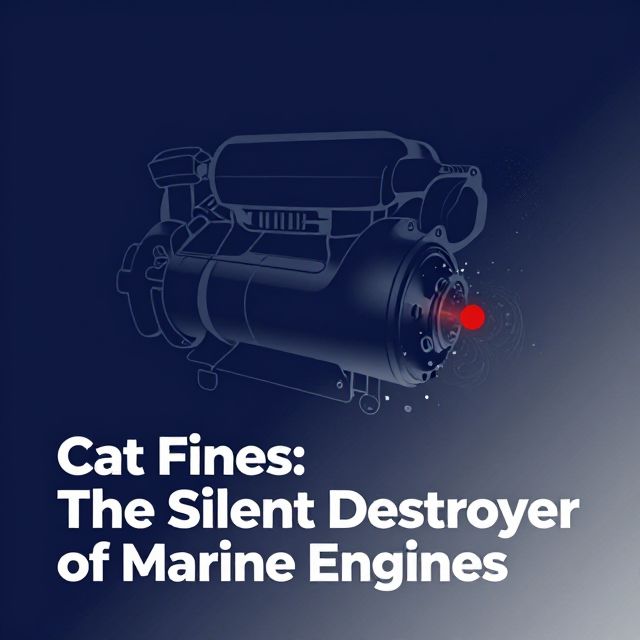
This study material has been compiled from the provided lecture audio transcript and copy-pasted text.
Cat Fines: The Silent Engine Killer 🚢
Introduction
Cat fines, short for catalytic fines, represent a critical yet often underestimated threat to marine engines. Unlike immediate alarms or catastrophic failures, these microscopic particles silently and relentlessly erode engine components from within. Understanding their nature, origin, and the severe damage they inflict is paramount for ensuring the longevity and operational efficiency of valuable marine assets. This guide provides a comprehensive overview of cat fines, their impact, and essential mitigation strategies.
📚 What Are Cat Fines? (Meaning and Importance)
Cat fines are microscopic, extremely hard, and highly abrasive particles found predominantly in marine fuels, particularly in residual fuels like Heavy Fuel Oil (HFO). They are not merely impurities but highly destructive agents due to their physical properties.
- Composition: Primarily composed of:
- Aluminium Oxide (Al₂O₃)
- Silicon Dioxide (SiO₂)
- Identification: On bunker reports, they are listed as "Al + Si content," measured in parts per million (ppm). This seemingly small number on a report, however, conceals a very serious and persistent risk to your engine's internal components.
- Origin: Their origin lies in the Fluid Catalytic Cracking (FCC) process used in oil refineries.
- During refining, heavy crude oil is broken down into lighter products using catalysts.
- These catalysts are themselves extremely hard materials.
- If these catalyst particles are not completely removed during the refining process, they remain suspended in the fuel.
- Eventually, these suspended particles make their way into the bunker fuel and onto your ship.
The significance of cat fines lies in their insidious nature. They are a "silent killer" because they do not trigger immediate alarms or cause sudden breakdowns. Instead, they cause a slow, systematic degradation of engine components, leading to premature wear and costly overhauls. Their presence signifies a fundamental challenge in fuel quality management that demands rigorous onboard control.
⚠️ Why Are Cat Fines Dangerous? (Destructive Nature)
The danger of cat fines stems directly from their physical properties: they are almost as hard as hardened steel. Imagine microscopic sand particles circulating at high pressure within the precision-engineered components of your engine. This is not mere contamination; it is a process of mechanical erosion.
The consequences of such abrasive action are severe and widespread, leading to significant wear and damage to various critical engine parts:
- Injector Nozzle Wear: Leads to poor fuel atomization and inefficient combustion.
- Fuel Pump Plunger Scoring: Compromises the integrity of the fuel delivery system.
- Cylinder Liner Abrasion: Causes increased friction, heat, and reduced sealing efficiency.
- Piston Ring Wear: Results in a loss of compression and increased blow-by.
- Scuffing: Severe adhesive wear that can lead to catastrophic component failure.
- Increased Blow-by: Reduces engine efficiency and increases lubricating oil consumption.
- Shortened Engine Life: What would typically be 15 years of normal wear and tear can, in the presence of high cat fine concentrations, occur in a matter of months.
📊 Regulatory Limits & Engine Manufacturer Recommendations
Understanding the acceptable limits for cat fines is crucial, but it's important to differentiate between delivery standards and operational requirements.
- ISO 8217 Standard: The maximum allowable Al+Si content at bunker delivery is 60 ppm.
- Engine Manufacturer Recommendations: Engine manufacturers typically recommend a much lower threshold: less than 15 ppm at the engine inlet.
This critical difference highlights that the vessel's purification system must be capable of removing at least 75% of the cat fines present in the bunker fuel before it reaches the engine. Many vessels unfortunately fall short of achieving this necessary purification efficiency.
📈 Global Data & The Need for Onboard Control
Statistical averages from global analysis data provide insight into typical cat fine levels:
- Singapore: ~25 ppm
- North America: ~21 ppm
- Europe: ~17 ppm
- Middle East: ~10 ppm
However, these are averages. In some ports, more than 30% of bunkered fuels can exceed 40 ppm. This data underscores a vital point: assuming bunker fuel is inherently "safe" simply because it meets the ISO 8217 delivery standard is a dangerous misconception. The ultimate control and responsibility for ensuring fuel quality at the engine inlet must reside onboard the vessel.
✅ Mitigation Strategies: Your Defense Against Cat Fines
Effective management of cat fines requires a multi-faceted approach, focusing primarily on robust fuel purification and diligent operational practices.
1️⃣ Fuel Purification: The Separator – Your Only Shield
A properly operating fuel purifier (separator) is the primary defense.
- Efficiency Potential: A well-maintained and correctly operated purifier can reduce cat fine levels significantly (e.g., 60 ppm down to 12 ppm, achieving ~80% efficiency).
- Factors Affecting Efficiency:
- Presence of Water: Significantly reduces efficiency.
- Incorrect Gravity Disc Selection: Can dramatically drop efficiency.
- High Flow Rate: Decreases separation ability.
- 💡 Key Insight: Lower throughput generally leads to better separation.
- At 100% rated flow, efficiency might be ~70%.
- At 30% reduced flow, efficiency can reach 86% or higher.
- Principle: Separation is a control process, not merely a transfer process. The purification rate should match the engine's hourly consumption, not rapidly overflow tanks.
2️⃣ Gravity Disc Selection
Incorrect gravity disc selection can reduce purifier efficiency to as low as 20%.
- Selection Criteria: The disc must be chosen meticulously according to the fuel's:
- Density
- Viscosity
- Temperature
- Guidance: Strictly follow manufacturer charts and recommendations; this is not guesswork.
3️⃣ Fuel Procurement & Sampling
Proactive measures before fuel reaches the engine are crucial.
- Supplier Compliance: Source fuel from ISO 8217 compliant suppliers.
- Documentation: For every delivery, require a Certificate of Quality (COQ).
- Sampling: Take MARPOL samples at the manifold during bunkering.
- Laboratory Analysis: Send a representative sample to an independent laboratory for analysis. Never rely solely on the bunker delivery note.
- Trending: Trend your Al+Si values over time to monitor for inconsistencies or upward trends.
4️⃣ Fuel Purification Parameters
Optimal operation of purifiers is key to maximizing their effectiveness.
- Temperature: Operate purifiers at 98–100°C for optimal separation.
- Capacity: Run at a maximum of 75% of their rated capacity to maximize efficiency.
- Gravity Disc: Ensure the correct gravity disc is installed.
- Sludge Discharge: Regular sludge discharge is vital to prevent accumulation.
- Monitoring: Continuously monitor pressure and sludge output.
- Maintenance: Meticulously log separator cleaning and disc inspection. Separation efficiency is heavily dependent on consistent and diligent maintenance.
5️⃣ Engine Protection
Additional measures to safeguard engine components.
- Inline Fuel Filters: Clean 10–25 micron inline fuel filters regularly to catch remaining particles.
- Visual Inspections: Conduct monthly visual inspections of injectors, cylinder liners, and piston rings. Abnormal wear patterns, such as scoring lines on liners, can be early indicators of cat fine damage.
🚨 Emergency Measures
If cat fines exceed 60 ppm or abnormal wear is suspected, immediate action is required to prevent further damage.
- Switch Fuel: Immediately switch to cleaner fuel.
- Notify Office: Inform relevant shore-based personnel without delay.
- Isolate Fuel: Isolate the contaminated fuel to prevent its use.
- Increase Separation: Increase separator efficiency (reduce throughput, increase temperature) for any remaining contaminated fuel.
- Document: Document everything meticulously – photos of damage, additional fuel samples, lab reports. Delay means continued damage.
Final Thoughts 💡
Cat fines do not explode, trigger immediate alarms, or cause instant catastrophic failure. They destroy slowly, relentlessly grinding your engine from the inside. The difference between a healthy engine that serves its full lifespan and one that suffers a premature overhaul is not luck. It is a direct result of diligent operational practices:
- ✅ Correct separation
- ✅ Precise flow control
- ✅ Accurate gravity disc selection
- ✅ Thorough documentation
In marine engineering, protection is often invisible until it fails. Cat fines serve as a silent yet profound test of your technical discipline and commitment to best practices, ensuring the longevity and reliability of your most critical asset.