 Podit
Podit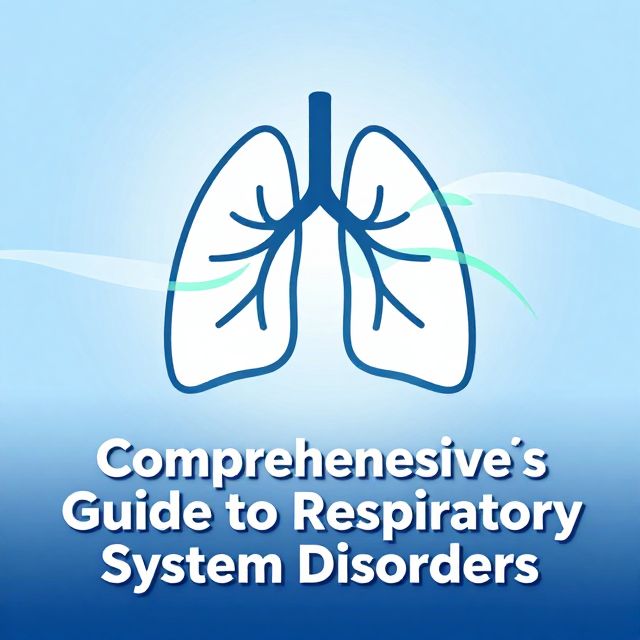
This study material has been compiled from various sources, including copy-pasted text and a lecture audio transcript.
📚 The Respiratory System: Structure, Defenses, and Disorders
1. Introduction to the Respiratory System
The respiratory system is vital for gas exchange and can be functionally divided into two main parts:
- Conducting Airways: These are the passages through which air moves between the atmosphere and the lungs. Their primary role is air transport, not gas exchange.
- Respiratory Tissues of the Lungs: This is the critical site where gas exchange, specifically the exchange of oxygen and carbon dioxide, takes place.
2. Respiratory Defense Mechanisms 🛡️
The body employs several sophisticated mechanisms to protect the respiratory system from pathogens and foreign particles:
- Nasopharyngeal Defenses:
- Remove particles from inhaled air.
- Contact with surface lysosomes and immunoglobulins (IgA) provides protection against infection.
- Glottic and Cough Reflexes:
- Protect against aspiration (entry of foreign material) into the tracheobronchial tree.
- The cough reflex is a powerful expulsion mechanism.
- Mucociliary Blanket:
- Consists of a layer of mucus and cilia.
- Mucus: Secreted to trap pathogens and dirt particles.
- Cilia: Tiny, hair-like projections of the lining epithelium that rhythmically beat to transport trapped mucus towards the mouth, where it is typically swallowed.
- Electrolyte Solution: Secreted to lift sticky mucus from the cilia, allowing it to move more freely on a thin fluid layer.
- Pulmonary Macrophages:
- Remove microorganisms and foreign particles directly from the lung tissue.
3. Obstructive Lung Diseases 🌬️
Obstructive airway disorders are characterized by a limitation in expiratory airflow. The fundamental physiological problem is increased resistance to airflow due to a reduction in the caliber of conducting airways. This increased resistance can be caused by processes:
- Within the lumen of the airway.
- In the airway wall.
- In the supporting structures surrounding the airway.
3.1. Bronchial Asthma
📚 Definition: Airway obstruction that is reversible (though not completely in some patients) either spontaneously or with treatment, accompanied by airway inflammation and hyperresponsiveness to various stimuli.
✅ Key Facts:
- Most common chronic pulmonary disease.
- Prevalence: Up to 15-17% in some populations (e.g., Australia, New Zealand); 3-5% in the USA.
💡 Causes of Asthma:
- Allergens
- Respiratory tract infections
- Hyperventilation, cold air, exercise
- Drugs and chemicals
- Emotional upsets
🔬 Pathogenesis:
- Sensitization: Initial exposure to allergens.
- Allergic Attack: Subsequent exposure triggers a response.
- Early-Phase Reaction: Primarily mediated by mast cells.
- Late-Phase Reaction: Involves Th2 lymphocytes and eosinophils.
- Th2 Lymphocytes: Release cytokines (IL-3, IL-4, IL-5, IL-6, IL-9, IL-10, IL-13) that promote activation of mast cells, eosinophils, and other effector cells, and drive IgE production by B cells, perpetuating inflammation.
⚠️ Symptoms and Signs:
- Cough: Due to airway narrowing, mucus hypersecretion, and neural afferent hyperresponsiveness.
- Wheezing: Caused by smooth muscle contraction, mucus hypersecretion, and retention, leading to turbulent airflow.
- Dyspnea and Chest Tightness: Sensations resulting from physiological changes.
- Tachypnea and Tachycardia: Rapid breathing and increased heart rate, common in acute exacerbations.
- Pulsus Paradoxus: A fall of >10 mmHg in systolic arterial pressure during inspiration.
- Hypoxemia: Low blood oxygen due to V/Q mismatching; shunt is unusual.
- Hypercapnia and Respiratory Acidosis: In severe cases.
3.2. Chronic Obstructive Pulmonary Disease (COPD)
📚 Definition: A group of respiratory disorders characterized by chronic and recurrent obstruction of airflow in the pulmonary airways.
3.2.1. Chronic Bronchitis
📚 Diagnosis: History of a chronic productive cough that has persisted for at least 3 months and for at least 2 consecutive years, in the absence of other diseases.
🚬 Smoking Link: Principal cause in up to 90% of patients, though only 10-15% of smokers develop COPD, suggesting genetic factors.
🔬 Pathological Features:
- Chronic airway injury and narrowing.
- Inflammation of airways (especially small airways).
- Hypertrophy of large airway mucous glands, leading to increased mucus secretion and obstruction.
- Mucus-producing goblet cells hypertrophy, blocking cilia movement.
- Accumulation of mucus and debris in the respiratory tract.
3.2.2. Emphysema (Type A COPD - "Pink Puffers")
📚 Definition: Characterized by a loss of lung elasticity and abnormal, permanent enlargement of air spaces distal to the terminal bronchioles, with destruction of alveolar walls and capillary beds, without obvious fibrosis.
💡 Etiology:
- Smoking:
- Recruits inflammatory cells to alveoli.
- Enhances elastase release from neutrophils.
- Increases elastase activity in macrophages.
- Activates mast cells, releasing mast cell elastases.
- Inherited α1-Antitrypsin Deficiency:
- Accounts for ~1% of COPD cases, more common in younger individuals.
- Determined by codominant PI (protein inhibitor) genes.
- Almost all persons developing emphysema before age 40 have this deficiency (autosomal recessive).
- Cigarette smoking can reduce α1-antitrypsin stores and increase macrophages.
🔬 Pathological Event: Imbalance of local oxidant injury and proteolytic (elastolytic) activity due to a deficiency of protease inhibitors. Oxidants (endogenous or exogenous) inhibit protective protease inhibitors, leading to progressive tissue destruction.
3.2.3. Characteristics of Chronic Bronchitis vs. Emphysema 📊
| Characteristic | Type A - Emphysema ("Pink Puffers") | Type B - Chronic Bronchitis ("Blue Bloaters") | | :-------------------- | :---------------------------------- | :-------------------------------------------- | | Smoking | Usual | Usual | | Age of Onset | 40-50 years | 30-40 years | | Hyperinflation | Often dramatic | May be present | | Weight Loss | Severe in advanced disease | Infrequent | | Shortness of Breath | Absent early in disease | Predominant early symptom | | Wheezing | Usually absent | Variable | | Sputum | Develops late | Early manifestation | | Cyanosis | Often absent | Often dramatic | | Cor Pulmonale | Only in advanced disease | Frequent |
4. Restrictive Lung Diseases 🫁
4.1. Idiopathic Pulmonary Fibrosis (IPF) / Interstitial Lung Diseases
📚 Definition: "Diffuse parenchymal lung disease" refers to a broad collection of pulmonary processes characterized by infiltration of inflammatory cells and fluid, and scarring (fibrosis) of the lung parenchyma. This widespread lung fibrosis produces increased lung elastic recoil and decreased lung compliance, defining restrictive lung disease.
🔬 Lung Interstitium: The anatomical space bounded by the basement membranes of epithelium and endothelium, containing mesenchymal cells (fibroblasts), extracellular matrix molecules (collagen, elastin, proteoglycans), and a few tissue leukocytes (mast cells, lymphocytes).
💡 Causes of Interstitial Lung Diseases:
- Collagen-vascular diseases and pulmonary-renal syndromes
- Granulomatous (e.g., sarcoidosis, hypersensitivity pneumonitis)
- Inherited (e.g., IPF)
- Inhalation causes (occupational/environmental)
- Other specific entities (e.g., BOOP, LAM, eosinophilic pneumonia, iatrogenic)
1️⃣ 2️⃣ 3️⃣ Cellular Events in Lung Injury and Fibrosis:
- Initial tissue injury.
- Vascular injury and activation: increased permeability, plasma protein exudation, thrombosis/thrombolysis.
- Epithelial injury and activation: loss of barrier integrity, release of proinflammatory mediators.
- Increased leukocyte adherence to activated endothelium, with transit into the interstitium.
- Continued injury and repair: alterations in cell populations and increased matrix production.
5. Acute Pulmonary Conditions 🚨
5.1. Pneumothorax
📚 Definition: Occurs when an open connection forms between the pleural space and outside air (thoracic injury) or the alveoli (torn alveolar wall due to overdistension).
⚠️ Mechanism: Air enters the pleural space, leading to collapse of the ipsilateral lung. Breathing is also impaired in the other lung due to mediastinal displacement during inspiration.
5.2. Pulmonary Edema
📚 Definition: Accumulation of excess fluid in the extravascular space of the lungs. Can be slow (e.g., renal failure) or sudden (e.g., acute myocardial infarction).
💡 Etiology (Causes):
- Increased Pulmonary Capillary Transmural Pressure:
- Increased left atrial pressure (left ventricular failure, mitral valve stenosis, pulmonary venous hypertension).
- Increased capillary blood volume (iatrogenic volume expansion, chronic renal failure).
- Reduction of interstitial pressure (rapid reexpansion of collapsed lung).
- Decreased Plasma Colloid Osmotic Pressure:
- Hypoalbuminemia (nephrotic syndrome, hepatic failure).
- Increased Pulmonary Capillary Endothelial Permeability:
- Circulating toxins (bacteremia, acute pancreatitis).
- Infectious pneumonia, disseminated intravascular coagulation.
- Nonthoracic trauma with hypotension ("shock lung").
- High-altitude pulmonary edema, post-cardiopulmonary bypass.
- Increased Alveolar Epithelial Permeability:
- Inhaled toxins (oxygen, phosgene, chlorine, smoke).
- Aspiration of acidic gastric contents, drowning/near-drowning.
- Surfactant depletion (high tidal volume mechanical ventilation).
- Reduced Lymphatic Clearance:
- Lung resection with regional lymph node sampling, lymphangitic spread of carcinoma, post-lung transplant.
- Other: Neurogenic pulmonary edema, narcotic overdose, multiple transfusions.
🔬 Pathogenesis: Involves four factors: capillary endothelial permeability, alveolar epithelial permeability, hydrostatic pressure, and colloid osmotic pressure.
- Cardiogenic Edema: Results from a net increase in transmural pressure (hydrostatic or osmotic).
- Non-Cardiogenic Edema: Results from increased permeability.
5.3. Sleep Apnea
📚 Definition: Absence of spontaneous breathing (apnea). Occasional apneas occur during normal sleep, but in sleep apnea, frequency and duration are greatly increased (10+ seconds, 300-500 times/night).
💡 Causes:
- Blockage of the Upper Airway: Muscles of the pharynx relax during sleep, but the airway usually remains open enough. In sleep apnea, relaxation leads to collapse.
- "Central" Sleep Apnea: Occurs when the neural drive to respiratory muscles is transiently abolished. Caused by damage to central respiratory centers or abnormalities of the respiratory neuromuscular apparatus.
✅ Treatment: Continuous Positive Airway Pressure (CPAP) is a common treatment.
6. Pulmonary Vascular Disorders 🩸
6.1. Pulmonary Embolism
⚠️ Classic Triad of Symptoms:
- Sudden onset of dyspnea (shortness of breath).
- Pleuritic chest pain.
- Hemoptysis (coughing up blood).
6.2. Pulmonary Hypertension
📚 Definition: Elevation of pressure in the pulmonary arterial system. The pulmonary circulation is normally a low-pressure system (mean pulmonary artery pressure ~15 mmHg).
💡 Causes:
- Elevation in left atrial pressure.
- Increased pulmonary blood flow.
- Increased pulmonary vascular resistance.