 Podit
Podit
English Literature: The Victorian Age to the Early Twentieth Century
Source Information:
- Lecture Audio Transcript: "Introduction to English Literary Periods"
- Copy-Pasted Text: Excerpts from a textbook covering Victorian and early 20th-century literature, including passages from Oliver Twist, Great Expectations, Hard Times, The Mill on the Floss, Tess of the D'Urbervilles, The Renaissance, The Importance of Being Earnest, The Picture of Dorian Gray, The Lady of Shalott, Morte D'Arthur, My Last Duchess, Childe Roland to the Dark Tower Came, The Orchard Pit, Near Avalon, Hertha, Pied Beauty, Dulce et Decorum Est, Easter 1916, The Circus Animals' Desertion, The Convergence of the Twain, The Love Song of J. Alfred Prufrock, The Waste Land, Musée des Beaux Arts, and Pygmalion.
📚 Introduction: A Literary Journey Through Transformation
This study material explores the rich tapestry of English literature from the Victorian Age (1837-1901) through the early twentieth century (1901-1945). This period witnessed profound social, historical, and intellectual shifts, which were vividly reflected and critically examined in the literary works of the time. We will delve into the critical realism of Victorian novelists, the emergence of aesthetic movements, and the revolutionary changes in poetry and drama that paved the way for modernism.
🌍 The Victorian Age (1837-1901)
The Victorian era was characterized by rapid industrialization, social reform, and evolving philosophical thought. Literature often served as a mirror and a critique of society.
1. Social Realism and Critique ✅
Victorian novelists frequently used their works to expose societal injustices and the human condition.
- Charles Dickens: A towering figure, Dickens used his novels for incisive social commentary.
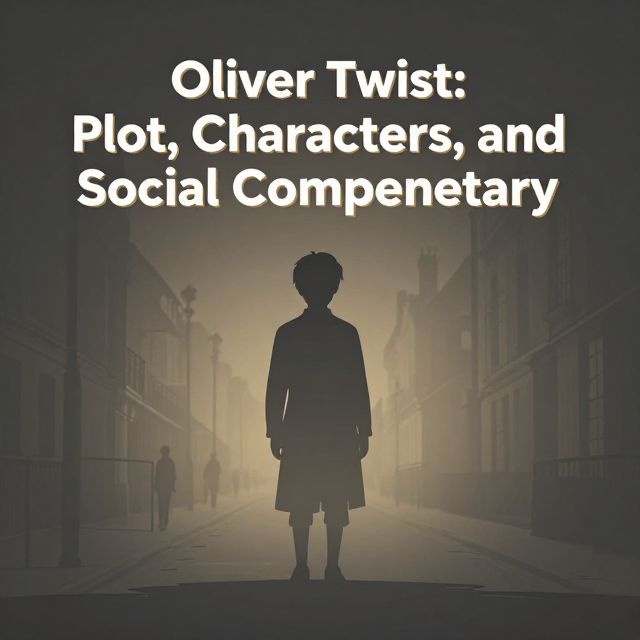
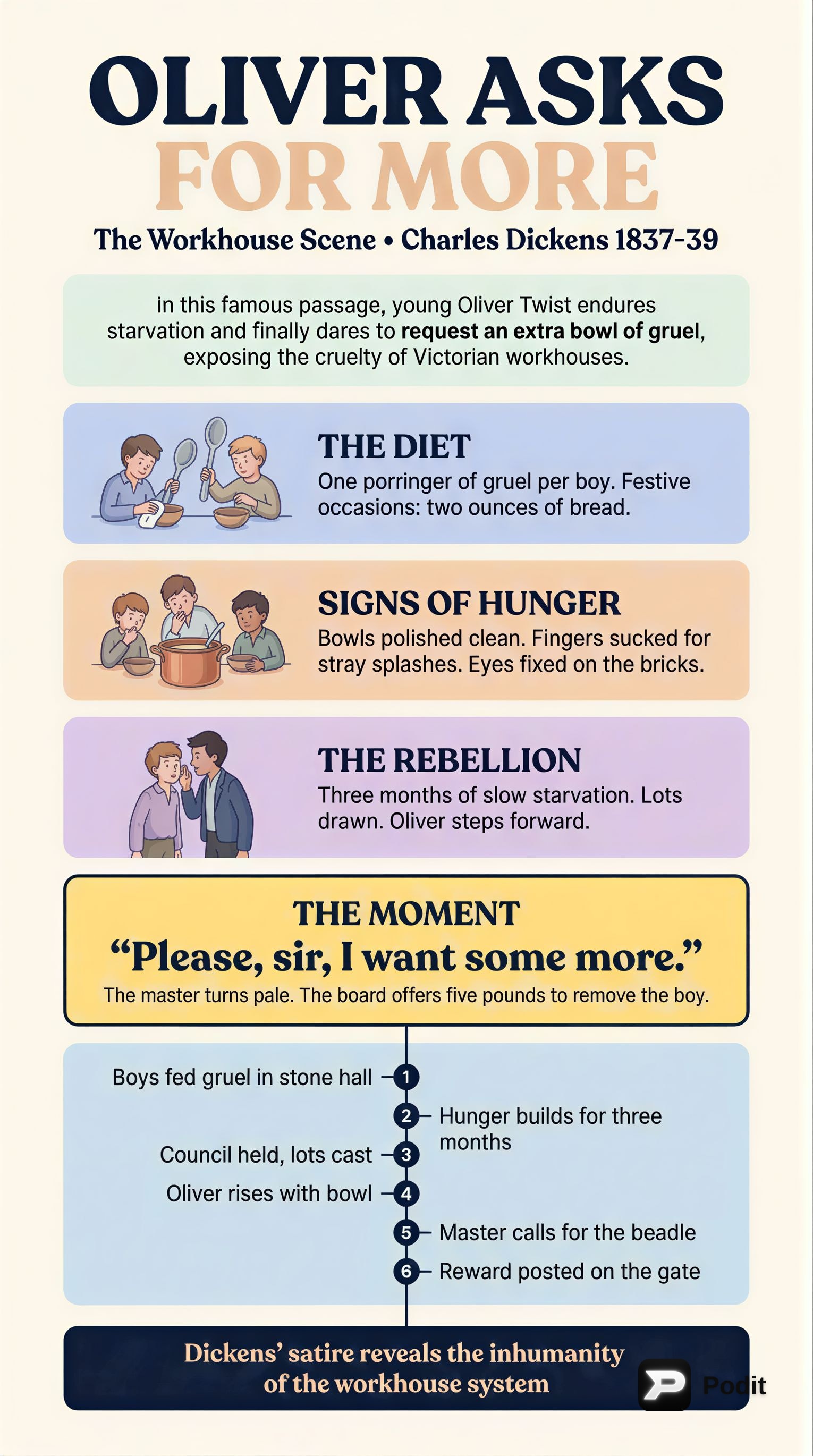
- Oliver Twist: Portrays the dehumanizing conditions of the workhouse under the New Poor Law. Oliver's desperate request for "more" gruel highlights the era's harsh treatment of the poor, leading to his confinement and an offer of five pounds for anyone to take him off the parish's hands.
- Hard Times: Critiques utilitarian philosophy, personified by Mr. Gradgrind, who insists on "Facts" as the sole basis for education. Children are treated as "little vessels" to be filled with empirical data, stifling imagination and emotional development.
- Great Expectations: Features memorable characters like Pip and Miss Havisham, exploring themes of class, ambition, and psychological decay. Pip's early life impressions, shaped by tombstones, reveal a child's imaginative interpretation of a bleak reality.
- George Eliot (Mary Ann Evans): Known for intellectual rigor and deep human empathy.
- The Mill on the Floss: Depicts rural English life with warmth and compassion. Maggie Tulliver's heroic, yet tragic, attempt to save her brother Tom during a flood symbolizes their complex bond and the overwhelming power of fate.
- Thomas Hardy: Explored themes of fatalism, social injustice, and individuals struggling against societal constraints in the fictional region of Wessex.
- Tess of the D'Urbervilles: Chronicles Tess Durbeyfield's tragic life. Her extemporized baptism of her child, Sorrow, and the parson's conflicted response underscore rigid moral codes. Angel Clare's inability to reconcile his idealized image of Tess with her past highlights unforgiving social expectations for women.
2. Aestheticism and Literary Movements 💡
The latter half of the Victorian era saw challenges to prevailing moralistic views.
- Walter Pater: An influential critic advocating "refined hedonism," emphasizing the pursuit of intense, beautiful experiences in a world of fleeting impressions. His work, The Renaissance, suggested focusing on aesthetic appreciation due to life's inherent inconstancy.
- Oscar Wilde: A prominent disciple of Pater, embodying the "art for art's sake" doctrine.
- The Importance of Being Earnest: Satirizes the superficiality and hypocrisy of the upper classes. Lady Bracknell's interrogation of Jack Worthing prioritizes wealth and social standing over genuine affection, revealing the era's rigid social conventions.
- The Picture of Dorian Gray: Its preface articulates that art's sole purpose is to create beauty, independent of moral utility.
3. Victorian Poetry 📜
Victorian poetry, while technically proficient, often grappled with the legacy of Romanticism and explored new forms.
- Alfred Tennyson: Displayed remarkable technical mastery, particularly in Arthurian narratives.
- The Lady of Shalott: A mysterious lady confined to a tower, weaving and observing the world through a mirror, bound by a curse. Her fateful decision to look directly at Sir Lancelot leads to her tragic demise, symbolizing the conflict between artistic isolation and worldly engagement.
- Morte D'Arthur: Recounts the legendary return of Excalibur and King Arthur's final, somber journey.
- Robert Browning: Distinguished himself through innovative dramatic monologues, offering profound psychological insights.
- My Last Duchess: The Duke of Ferrara subtly reveals his possessive and controlling nature through his description of his late wife's portrait, exposing power dynamics and objectification within aristocratic society.
- Pre-Raphaelite Poets: (Dante Gabriel Rossetti, William Morris, Algernon Swinburne) Sought to infuse poetry with a sensual, often mystical quality, drawing inspiration from medieval themes.
- The Orchard Pit (Rossetti): Creates an enigmatic atmosphere blending nature and artifice.
- Near Avalon (Morris): Reimagines Arthurian legends.
- Hertha (Swinburne): Presents a powerful, pantheistic vision of a primordial Earth Goddess.
- Gerald Manley Hopkins: A Jesuit poet who developed "sprung rhythm," a unique alliterative and accentual verse form.
- Pied Beauty: A devotional ode celebrating God's diverse and "dappled things," finding beauty in the "counter, original, spare, strange" aspects of creation.
📈 The Early Twentieth Century (1901-1945)
This period marked a profound shift, driven by significant historical, social, and intellectual upheavals, leading to the rise of Modernism.
1. Historical and Social Context 📊
- Edwardian Age (1901-1910): Characterized by flamboyant hedonism and social reforms (welfare state beginnings, parliamentary reform, rise of Labour Party).
- First World War (1914-1918): Shattered pre-war patriotic ideals, leading to widespread disillusionment due to brutal trench warfare and immense loss of life (750,000 British dead).
- Inter-war Period (1918-1939): Saw the rapid rise of the Labour Party, severe economic depression (over 3 million unemployed in Britain by the early 1930s), and escalating international tensions leading to WWII.
- Social Changes: Women gained unprecedented rights and freedoms (suffragette movement, voting rights for women over thirty in 1918). The Irish question culminated in the independence of Southern Ireland in 1921, though Ulster remained with Britain. The gap between rich and poor persisted, but the war led to increased political awareness among the working classes.
2. Literary Context and Modernism 💡
Scientific discoveries (relativity, quantum theory), Freudian psychology, and Darwinian evolution fundamentally altered perceptions of reality and the human mind. This "age of uncertainty" paved the way for Modernism, an avant-garde movement embracing experimentation and fragmentation to reflect the new era.
3. Poetry of War, Disillusionment, and Identity 💔
- Wilfred Owen: A key WWI poet, offering a stark counter-narrative to jingoistic patriotism.
- Dulce et Decorum Est: Graphically depicts a gas attack and the agonizing death of a soldier, serving as a powerful indictment of war and challenging the classical notion that it is "sweet and fitting to die for one's country."
- William Butler Yeats: Explored themes of national identity, political transformation, and mystical beliefs.
- Easter 1916: Reflects on the Easter Rising, acknowledging how participants were "changed, changed utterly" into symbols of "terrible beauty," while also questioning the cost of fervent sacrifice and the "stone of the heart" that prolonged struggle can create.
- The Circus Animals' Desertion: Introspectively examines his poetic journey, contrasting earlier grand themes with the raw, fundamental "foul rag-and-bone shop of the heart" as the ultimate source of artistic inspiration.
- Thomas Hardy (later poetry): Continued his fatalistic worldview.
- The Convergence of the Twain: Portrays the sinking of the Titanic as an inevitable collision orchestrated by an "Immanent Will," a powerful force beyond human control.
- T.S. Eliot: A pivotal modernist poet, articulating the spiritual barrenness and fragmentation of post-WWI society.
- The Love Song of J. Alfred Prufrock: A dramatic monologue delving into themes of indecision, social anxiety, and spiritual paralysis in modern urban life.
- The Waste Land: A complex, fragmented poem using a collage of allusions and shifting perspectives to depict the cultural and spiritual decay of the modern world, notably in its "Burial of the Dead" section.
- W.H. Auden:
- Musée des Beaux Arts: Offers a poignant observation on human indifference to suffering, using Brueghel's "Fall of Icarus" to illustrate how ordinary life continues, seemingly undisturbed, even amidst profound tragedy.
4. Drama 🎭
- George Bernard Shaw: His "comedy of ideas" satirized social problems and class distinctions.
- Pygmalion: Critiques the superficiality of societal distinctions and the arbitrary nature of class identity through Eliza Doolittle's transformation from a flower-girl to a lady. Lady Bracknell's rigid social expectations exemplify this critique.
✨ Conclusion: Legacy of Literary Evolution
English literature from the Victorian Age through the early twentieth century underwent immense transformations, mirroring profound societal and intellectual shifts. The Victorian era, with its social realism, moral inquiry, and burgeoning aesthetic movements, laid the groundwork for complex explorations of the human condition. The advent of the twentieth century, marked by global conflicts and revolutionary scientific thought, propelled literature into modernism. These literary works collectively form a rich and enduring legacy, offering invaluable insights into the evolution of English society and thought.