 Podit
Podit
📚 Functional Beverages: Trends, Categories, and Science
Source Information: This study material has been compiled from a lecture audio transcript and copy-pasted text, likely from a presentation or PDF document, provided for Week 12 of an "Introduction to Beverages" course at Istanbul Bilgi University, Department of Gastronomy and Culinary Arts.
🎯 Introduction to Functional Beverages
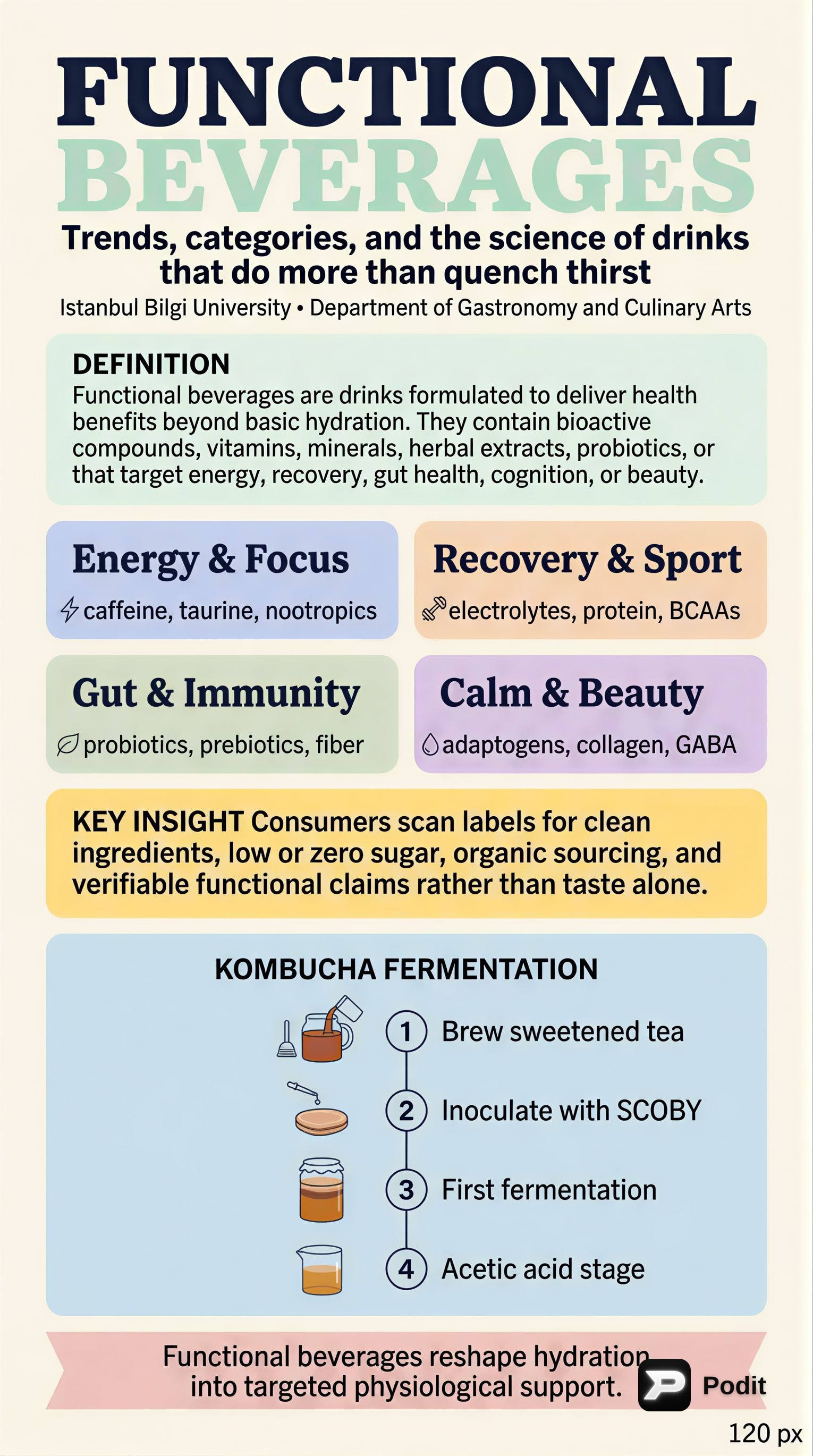
Functional beverages are a rapidly evolving category of drinks designed to offer specific health benefits beyond basic hydration. They are formulated with bioactive compounds, vitamins, minerals, herbal extracts, probiotics, or proteins to target various physiological outcomes such as enhanced energy, improved recovery, better gut health, cognitive support, or beauty benefits. Consumers are increasingly prioritizing factors like clean ingredients, low or zero sugar content, organic sourcing, and verifiable functional claims over taste alone.
📈 Market Landscape
The global functional beverage market is experiencing significant growth, projected to reach approximately $280 billion by 2030. This growth rate is estimated to be 8-9% CAGR, significantly outpacing the overall non-alcoholic beverage category.
Estimated Segment Share (% of category):
- Energy: 30%
- Sports & Hydration: 22%
- Probiotic / Fermented: 18%
- Protein: 14%
- Plant-based Wellness: 10%
- Other: 6%
🗺️ Key Functional Beverage Categories
Functional beverages are typically categorized by the physiological need they address. While boundaries can blur, the primary categories include:
- Energy: Caffeine, taurine, herbal stimulants.
- Sports & Hydration: Electrolytes, carbohydrates, isotonic balance.
- Probiotic & Fermented: Kefir, kombucha, fermented cereals.
- Protein-Based: Whey, plant, collagen-fortified drinks.
- Plant-Based Milks: Oat, almond, soy, pea (often fortified).
- Nootropic & Adaptogenic: Cognition, stress, sleep support.
- Non-Alcoholic Functional: 0.0% spirits, mocktails, sober-curious options.
- Beauty & Hydration+: Collagen, hyaluronic acid, antioxidants.
⚡ Part One: Energy Drinks
Energy drinks constitute the largest segment by volume within functional beverages, engineered for alertness and endurance. They are primarily consumed by young adults seeking an energy boost, cognitive enhancement, fatigue reversal, sustained alertness, and improved physical endurance.
✅ How They Work
- Average Caffeine: ~150 mg per 250 mL can.
- Peak Plasma Caffeine Concentration: Achieved in ~30 minutes.
- Caffeine Half-life: 5-6 hours in healthy adults.
Typical Ingredient Stack:
- Caffeine: (80–300 mg per can) - Stimulates the central nervous system, heart, and muscles.
- Taurine: An amino sulfonic acid important in metabolic processes, thought to have antioxidant properties.
- Glucuronolactone: A carbohydrate derivative.
- Sweeteners: Sugar or non-nutritive sweeteners.
- B-complex Vitamins: Support energy metabolism.
- Herbal Extracts: Ginseng, guarana, yerba mate, green tea.
⚠️ Documented Risks of Habitual Consumption
Concentrated stimulant blends in energy drinks carry significant concerns, especially when combined with alcohol, nicotine, or in caffeine-naive individuals. Public health bodies have issued advisories due to potential risks:
- Caffeine Overdose: Heightened risk for abstainers and heavy consumers.
- Alcohol-related Injury: Mixing masks intoxication, linked to higher rates of injury and risk-taking.
- Substance Dependence: Associations reported with alcohol, nicotine, and other drug dependence in heavy users.
- Cardiovascular Load: Elevated blood pressure, palpitations, and arrhythmia risk, particularly with rapid or high-volume intake.
🌿 Key Ingredients Explained
- Taurine: Amino sulfonic acid, found naturally in meat, fish, dairy. Long-term effects of supplemental intake are still being explored.
- Ginseng (Panax spp. root): A traditional remedy used for centuries, one of the most widely used herbal medicines globally.
- Guarana (Paullinia cupana): Amazonian plant whose seeds contain roughly twice the caffeine of coffee beans. High doses can be unsafe.
- Yerba Mate (Ilex paraguariensis): Herbal tea popular in South America, contains caffeine and acts as a stimulant.
🏃 Part Two: Sports Drinks
Sports drinks are flavored beverages formulated to rehydrate the body during or after exercise, supporting performance and recovery. They replenish fluids, electrolytes, and carbohydrates lost through physical activity, promoting voluntary fluid intake, rapid gastric emptying, and quick intestinal absorption.
🧪 Key Components
- Minerals & Electrolytes: Sodium, potassium, chloride, calcium, phosphate, magnesium – replacing those lost in sweat.
- Carbohydrates: Simple carbs for a fast energy burst; complex carbs to replenish reserves during and after exercise.
- B Vitamins & Amino Acids: B-complex supports energy metabolism; amino acids help slow fatigue and improve muscle function.
📊 Classification by Osmolality
Sports drinks are classified by their osmolality, which is the concentration of dissolved particles relative to blood plasma. Each tonicity targets a different physiological need:
- Hypotonic (1–3% carbs):
- Purpose: Fast fluid replacement with minimal carbohydrates.
- Used by: Gymnasts, jockeys, low-intensity sport (<60 min).
- Isotonic (6–8% carbs):
- Purpose: Rehydrate and provide a carbohydrate boost.
- Used by: Athletes, footballers, middle/long-distance running.
- Hypertonic (10%+ carbs):
- Purpose: Top up muscle glycogen, usually post-workout.
- Used by: Endurance and ultra-distance athletes.
🦠 Part Three: Probiotic & Fermented Drinks
These beverages leverage living cultures to promote gut health and overall wellness. They are rooted in traditions that long predate modern wellness trends.
🥛 Carriers for Live Cultures
- Dairy Carriers: Fresh and fermented milk, kefir, yogurt drinks (e.g., ayran, lassi), probiotic dairy shots.
- Non-Dairy Carriers: Fermented cereal drinks, kombucha (tea-based), water kefir, jun, tepache, fermented plant milks.
🌍 Global Traditional Fermented Cereal Drinks
Many cultures have traditional fermented cereal beverages that offer affordable, nutrient-rich substrates for beneficial microorganisms:
- Boza (Turkey, Bulgaria): Thick, slightly sweet colloidal suspension from wheat, rye, millet, maize. A popular winter drink.
- Bushera (Uganda): Prepared from germinated millet or sorghum, widely consumed as a welcome beverage.
- Pozol (Southeastern Mexico): Refreshing beverage from cocoa and maize, with Pre-Columbian origins.
- Mahewu (Sub-Saharan Africa): Sour beverage made from corn meal, inexpensive and nutritious.
🍵 Kombucha: Tea, Sugar, Yeast, and a Living Culture
Kombucha is a fermented drink produced through the action of acetic acid bacteria. The method still mirrors ancient principles.
1️⃣ Process at a Glance:
- Brew Sweetened Tea: Black or green tea steeped with sugar (substrate for fermentation).
- Inoculate with SCOBY: Symbiotic Culture Of Bacteria and Yeast added to cooled tea.
- First Fermentation: Yeast converts sugar to alcohol; a new SCOBY layer forms.
- Acetic Acid Stage: Acetic acid bacteria oxidize alcohol into organic acids, creating kombucha's signature tang.
📚 SCOBY (Symbiotic Culture of Bacteria and Yeast): A rubbery cellulose mat, often called the 'mother', that floats on the brew. It hosts yeasts (e.g., Saccharomyces, Brettanomyces) and acetic acid bacteria (e.g., Acetobacter, Gluconobacter) working in symbiosis. Each batch grows a new SCOBY layer, which can be split and reused.
🚀 Part Four: New Trends in Functional Beverages
The functional beverage market is dynamic, driven by evolving consumer demands and scientific advancements.
1️⃣ Protein-Based Beverages
Protein has moved beyond gym shakers into mainstream retail. Consumers use protein drinks for satiety, recovery, weight management, and healthy aging.
- Dairy: Whey & Casein (complete amino acid profiles, fast/slow absorption).
- Plant: Soy & Pea (strong amino acid coverage, clean label appeal).
- Animal: Collagen Peptides (marketed for skin, joints, hair; overlaps with beauty drinks).
- Plant Blends: Oat & Rice (allergen-friendly, often combined with pea for higher protein).
2️⃣ Adaptogens & Nootropics
This new class of beverages targets brain function and stress response.
- Adaptogens (Stress Modulation):
- Ashwagandha (cortisol regulation, sleep).
- Rhodiola rosea (endurance under fatigue).
- Reishi & Lion's Mane (immune and cognitive support).
- Holy basil (tulsi) (anti-inflammatory).
- Schisandra (liver support, alertness).
- Nootropics (Cognitive Support):
- L-theanine (calm focus, often with caffeine).
- Bacopa monnieri (memory consolidation).
- Lion's mane extract (nerve growth factor).
- GABA (relaxation, sleep onset).
- Functional mushrooms in coffee and cocoa.
3️⃣ Non-Alcoholic & Sober-Curious
This is the fastest-growing premium beverage segment globally, driven by Gen Z and Millennial consumers seeking sophisticated, non-alcoholic alternatives.
- Growth Drivers: Health and wellness consciousness, mindful drinking, mental health awareness, mocktail culture, new flavor sophistication (bitters, botanicals, fermentation), and premium pricing for craft non-alcoholic spirits.
4️⃣ Other Emerging Directions
- Plant-Based Milks: Increasingly fortified with calcium, B12, D, and protein.
- Beauty Drinks: Collagen peptides, hyaluronic acid, biotin, antioxidants for skin, hair, and nails.
- Hydration+: Electrolyte powders/sticks, coconut water blends, alkaline waters with added minerals.
- CBD & Hemp Beverages: Relaxation drinks with low-dose CBD (where legally permitted), often combined with adaptogens.
- Functional Coffee & Tea: Mushroom coffee, matcha lattes, immune-boosting blends, turning daily rituals into functional moments.
- Sugar-Reduced & Prebiotic Sodas: Reformulated sodas with fiber, botanicals, and gut-health claims (e.g., Olipop, Poppi).
💡 Conclusion: The Evolving Landscape
Functional beverages represent a dynamic and expanding segment, defined by their capacity to deliver targeted health benefits beyond basic hydration. The market is characterized by continuous innovation, driven by evolving consumer demands for wellness, performance, and mindful consumption. From established categories like energy and sports drinks to burgeoning segments of probiotic, adaptogenic, nootropic, and non-alcoholic options, functional beverages are diversifying to offer tailored solutions across a wide spectrum of physiological needs and lifestyle preferences.