Podit
Podit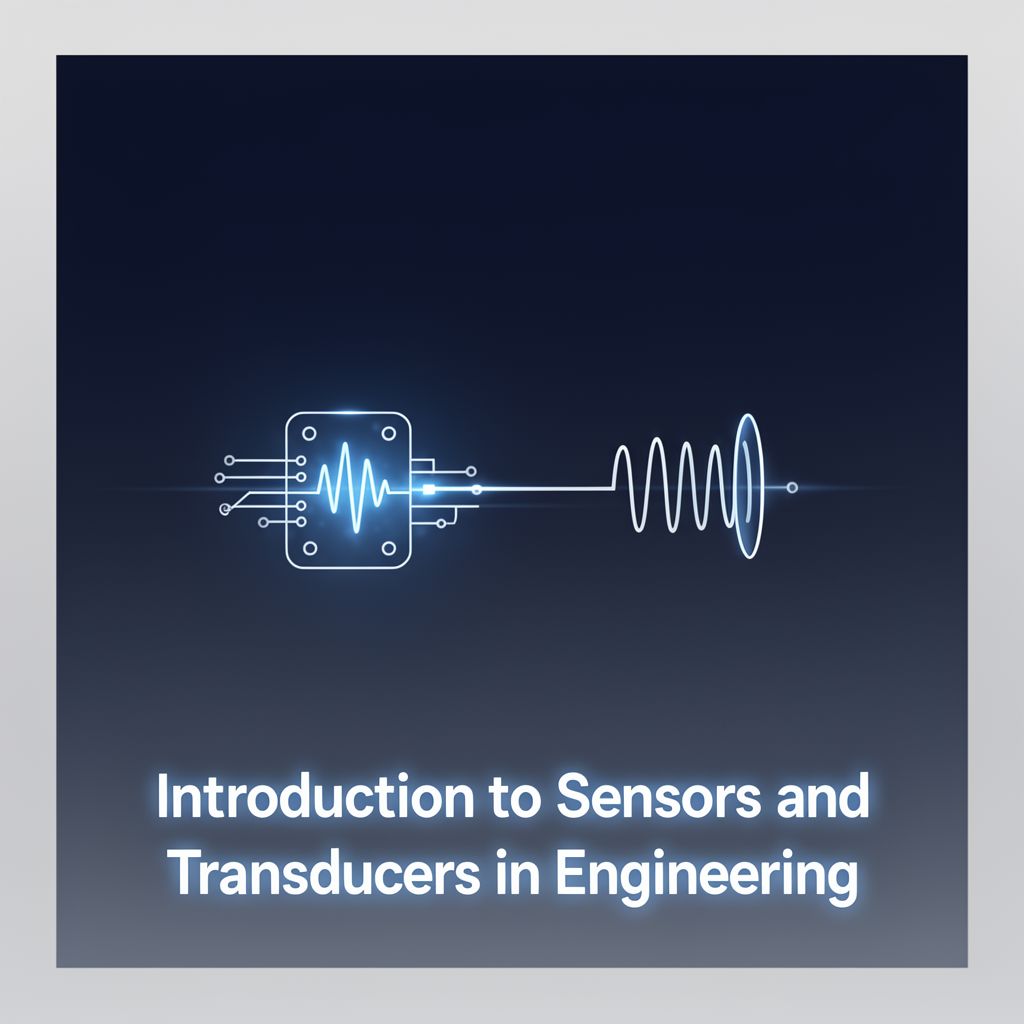
This study material has been compiled from a lecture audio transcript and copy-pasted text provided by the user.
ME 301: Experimental Engineering - Sensors and Transducers
📚 Introduction to Sensors and Transducers
For any electronic circuit or system to perform a useful task or function, it must be able to communicate with the "real world." This communication can involve reading an input signal, such as from an "ON/OFF" switch, or activating an output device, like illuminating a light. In essence, an electronic system or circuit must be capable of "doing" something. Sensors and transducers are the perfect components that enable this interaction, acting as bridges that allow electronic systems to perceive and react to the physical world around us.
💡 Core Concepts: Sensor vs. Transducer
While often used interchangeably, there's a crucial distinction between a sensor and a transducer.
📚 What is a Transducer?
A transducer is a device that converts energy from one form to another. This process of converting one form of energy to another is known as transduction. ✅ Transducers are frequently used at the interfaces of automation, measurement, and control systems. They convert electrical signals to and from other physical quantities such as energy, force, torque, light, motion, or position.
📚 What is a Sensor?
A sensor is a device that detects a physical quantity (e.g., heat, light, sound) and converts this data into an easily readable signal (e.g., voltage, current). ✅ Sensors provide accurate readings after calibration. 💡 Key Insight: All sensors are a type of transducer, but not all transducers are sensors.
⚠️ Main Differences: Sensor vs. Transducer
| Feature | Sensor | Transducer …