 Podit
Podit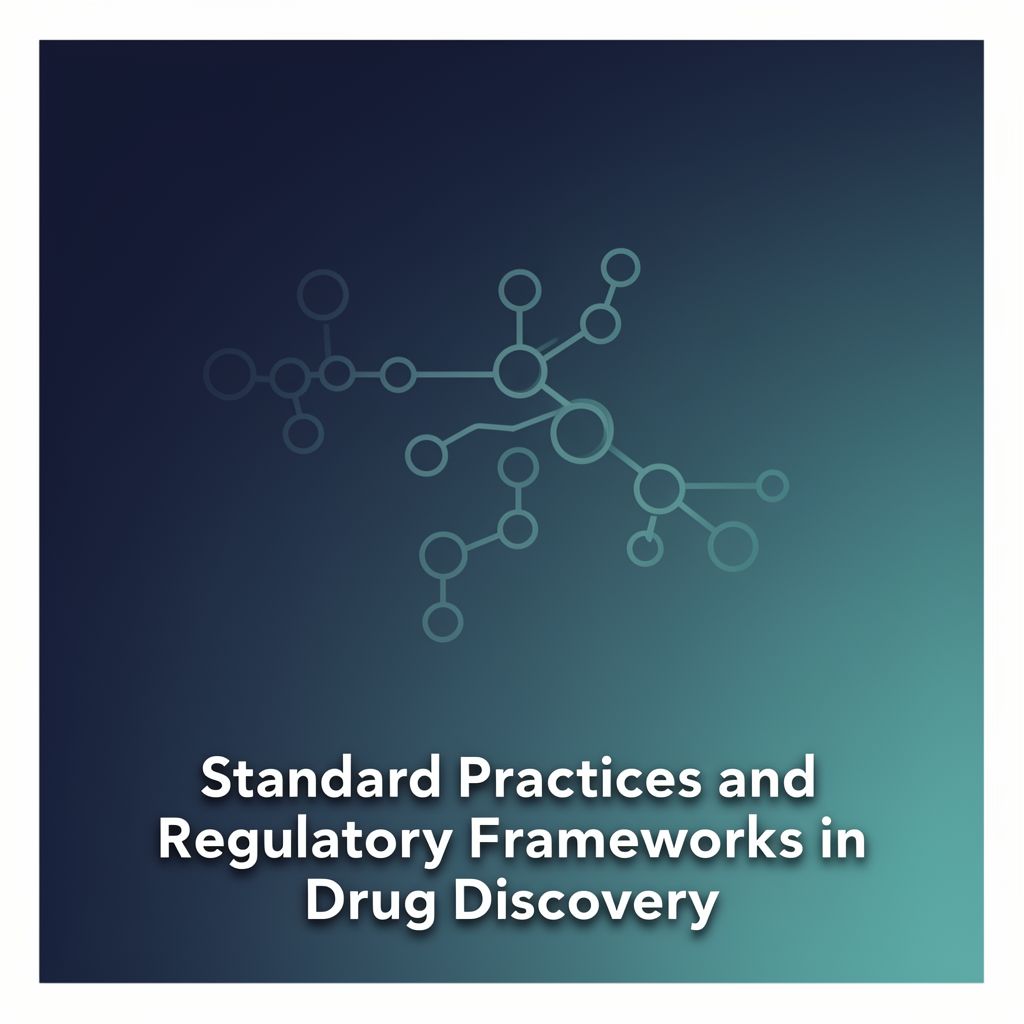
This study material has been compiled from a lecture audio transcript and copy-pasted text provided by the user.
📚 Standard Practices in the Drug Discovery Process
🎯 Introduction
The drug discovery process is a complex, multi-stage journey from initial research to a marketable product. This guide outlines the key stages of drug development, the critical "Good Practice" standards that govern them, and the regulatory framework ensuring product safety, efficacy, and quality. Adherence to these standards is paramount for scientific integrity, patient safety, and global recognition.
🧪 The Drug Discovery Pipeline: Stages & Foundational Standards
The drug discovery process is a systematic approach, beginning with extensive research and culminating in clinical application.
1️⃣ Early Stages: Research & Development
- Target Selection: 🧬
- Identifies disease-related biological targets.
- Based on extensive databases and evidence-based knowledge.
- Lead Discovery: 🔍
- Identifies potential active compounds.
- Utilizes High-Throughput Screening (HTS): A technology for rapid, automated testing of large compound libraries against a specific biological target.
- Goal of HTS: Quickly identify biologically active candidates from thousands/millions of compounds to select lead molecules for further study.
- Medicinal Chemistry: 🔬
- Optimizes the chemical properties of candidate compounds.
- Involves synthesis, purification, characterization, validation, optimization, and standardization to ensure structural accuracy, purity, and suitability for biological testing.
2️⃣ Preclinical Development: In Vitro & In Vivo Studies
- In Vitro Studies: 🧪
- Drug candidates are evaluated for efficacy and safety in cellular models.
- In Vivo Studies: 🐭
- Candidate molecules are tested in living organisms.
- Critical parameters like pharmacokinetics (how the body affects the drug) and toxicity (harmful effects) are evaluated.
- Good Laboratory Practice (GLP): ✅ All preclinical evaluations, including in vitro and in vivo studies, are conducted in accordance with GLP standards to ensure reliability and reproducibility of data.
3️⃣ Clinical Development: Human Trials
- Clinical Trials (Phases 1-4): 👨👩👧👦
- Drug candidates that successfully complete preclinical evaluations advance to human trials.
- Good Clinical Practice (GCP): ✅ Clinical stages are conducted according to GCP standards, ensuring ethical principles, patient safety, and data integrity.
4️⃣ Manufacturing
- Drug Manufacturing Processes: 🏭
- Good Manufacturing Practice (GMP): ✅ Drug manufacturing is subject to GMP guidelines, ensuring consistent quality and safety of products.
✨ Good Practice Standards: A Detailed Overview
Adherence to specific quality standards is mandatory in modern pharmaceutical development, manufacturing, and distribution. These standards ensure processes are safe, traceable, reproducible, and compliant with international norms.
1. 🔬 GLP - Good Laboratory Practice
- Scope: Preclinical research, toxicity studies, in vitro and in vivo safety assessments.
- Definition: A system establishing quality standards for the planning, execution, monitoring, recording, reporting, and archiving of preclinical studies conducted in a laboratory environment.
- Main Goals:
- ✅ Ensuring reliability and reproducibility of preclinical data.
- ✅ Conducting animal experiments ethically and in a controlled manner.
- ✅ Standardization and traceability of laboratory processes.
- ✅ Providing appropriate formats for data evaluation by regulatory bodies.
- 💡 OECD Principles: GLP principles published by the OECD define rules for all non-clinical health and environmental safety studies in labs, ensuring quality, reliability, verifiability, and traceability.
2. 🏭 GMP - Good Manufacturing Practice
- Scope: Production of pharmaceuticals, biological products, medical devices, and food supplements.
- Definition: A system defining requirements for quality assurance, hygiene, validation, facility conditions, equipment, personnel training, production control, and documentation at every stage of production.
- Primary Goals:
- ✅ Ensuring consistent product quality for each batch.
- ✅ Preventing contamination, cross-contamination, and manufacturing errors.
- ✅ Producing products consistent in efficacy and safety.
- ✅ Recording and tracing all processes.
- Key Aspects: Quality Control, Validation, Facilities & Equipment, Maintenance, Work Competency, Contamination Risk Management, Standard Operating Procedures (SOPs), Monitoring & Auditing, Documentation, Independent Audits.
- Importance: Mandatory for regulatory approvals (EMA, FDA); ensures safe, effective, and consistent production.
3. 👨⚕️ GCP - Good Clinical Practice
- Scope: Clinical trials (Phase 1–4).
- Definition: The international standard ensuring clinical trials are conducted in accordance with ethical principles, scientific integrity, patient safety, and data integrity.
- Primary Goals:
- ✅ Protecting the rights, safety, and privacy of participants.
- ✅ Ensuring clinical data are valid, reliable, and comparable.
- ✅ Ensuring compliance with research protocols, informed consent, and ethics committee processes.
- Key Principles: Ethical Principles (Declaration of Helsinki), Benefit/Risk Ratio, Rights/Safety/Welfare, Scientific Protocols, Ethical Approval, Audits, Training, Informed Consent, Data Storage & Protection.
4. 🧼 GHP - Good Hygiene Practice
- Scope: Food, pharmaceutical, cosmetics, and manufacturing facilities.
- Definition: Standards defining cleanliness, hygiene, sanitation, personnel health, and environmental control requirements in production and storage processes.
- Main Goals:
- ✅ Minimize the risk of contamination.
- ✅ Ensure microbiological and chemical safety of products.
- ✅ Establish hygienic facility design, personnel training, and cleaning procedures.
- Note: Considered a cornerstone of GMP.
5. 💊 GPP - Good Pharmacy Practice
- Scope: Community pharmacies, hospital pharmacies, and clinical pharmacy services.
- Definition: The international framework defining quality, safety, ethics, and professionalism standards for services provided by pharmacists in patient care.
- Primary Goals:
- ✅ Provide accurate, safe, and personalized medication services to patients.
- ✅ Support rational pharmacotherapy.
- ✅ Standardize medication counseling, patient education, and monitoring processes.
- ✅ Ensure quality in storage, prescription control, and pharmacovigilance practices.
- Pharmacist Roles: Prepare, store, dispense medicinal products; ensure effective medication therapy management; maintain professional performance; contribute to health system improvement and public health.
📊 Reliable Search Tools & Databases
Modern drug development relies on robust data and evidence. Access to reliable information is crucial.
- Key Databases:
- PubMed®: Over 34 million citations for biomedical literature.
- Scopus: Commercial bibliographic database covering scholarly literature.
- Web of Science (Web of Knowledge): Another major bibliographic database.
- ScienceDirect: Gateway to academic articles published by Elsevier.
- Google Scholar
- Human Protein Atlas
- Protein Data Bank
- SciFinder
- Reaxys
- ⚠️ Avoid: Wikipedia, general Google Search (for academic research).
🏛️ Regulatory Landscape: Organizations & Standards
The development, production, and marketing of pharmaceuticals are overseen by numerous regulatory bodies at national and international levels to protect human health.
Importance of Regulatory Bodies
- ✅ Establish international standards.
- ✅ Ensure safety, quality, and effectiveness of products.
- ✅ Ensure ethical and scientific integrity of research.
- ✅ Establish global control mechanisms for patient health.
- 💡 They are indispensable for public health, scientific credibility, and product quality.
National Regulatory Organizations
- FDA (American Food and Drug Administration, USA):
- One of the world's most influential regulatory agencies.
- Assesses safety and effectiveness of drugs, vaccines, medical devices, food, cosmetics.
- Strict rules for clinical study design, conduct, and reporting.
- FDA approval is a globally accepted reference for new drugs.
- EMA (European Medicines Agency, European Union):
- Central drug evaluation and regulatory authority for EU countries.
- Conducts scientific evaluation of clinical and preclinical data.
- Responsible for pharmacovigilance system related to drug safety.
- Turkish Ministry of Health & TİTCK (Turkish Pharmaceuticals and Medical Devices Agency):
- Performs licensing and inspection of pharmaceuticals, medical devices, biocidal products, and cosmetics in Turkey.
- Monitors ethical and technical compliance of clinical trials.
- Publishes guidelines consistent with European and international standards.
International Regulatory Organizations
- OECD (Organisation for Economic Co-operation and Development):
- Known for establishing GLP guidelines and ensuring harmonization among member countries.
- Provides global guidance on chemicals, toxicity, and environmental safety.
- ICH (International Council for Harmonization of Technical Requirements for Medicinal Products for Human Use):
- Harmonizes drug development standards between the US, Japan, Europe, and other regions.
- ICH guidelines are globally accepted for clinical trials, quality requirements, and safety testing.
- PIC/S (Pharmaceutical Inspection Co-operation Scheme):
- Ensures harmonization of GMP standards across member countries.
- Creates international consistency among inspections of manufacturing facilities.
- WHO (World Health Organization):
- Determines global health policies.
- Publishes guidelines for the safety of medicines, vaccines, and medical devices.
- Conducts programs to strengthen GMP, pharmacovigilance, and quality control capacity.
📜 International Standards: Codex & Pharmacopoeia
📚 Codex
- Definition: A set of official standards, regulations, and product descriptions prepared for a specific country, region, or sector (e.g., food, pharmaceuticals, chemicals).
- Fundamental Features:
- ✅ Specifies minimum requirements for safety, quality, and integrity.
- ✅ Defines production, labeling, transport, and storage conditions.
- ✅ Published by national institutions, may have legally binding validity.
- Example: Codex Alimentarius (International Food Codex by FAO/WHO).
📖 Pharmacopoeia
- Definition: A comprehensive reference source containing official quality standards for active ingredients, excipients, pharmaceutical products, and test methods used in pharmaceuticals. It is published by pharmaceutical authorities of a country or region.
- Contents:
- Identification, purity, and chemical structure tests for drugs.
- Quality requirements for dosage forms (tablets, injections, creams).
- Analytical methods (HPLC, UV, titration).
- Purification and storage conditions.
- Reference standard substances.
- Monographs (Characterizations): Molecular formula, added substances, definition & solubility, identification testing, analysis, impurities, performance testing.
- Tests & Protocols: Safe laboratory practices, automated procedures, reagents, equipment, unit requirements.
- Other Information: Test results, prescriptions, shelf life, packaging, storage, labeling.
- Examples: USP (United States Pharmacopeia), EP (European Pharmacopoeia), BP (British Pharmacopoeia), JP (Japanese Pharmacopoeia), Turkish Pharmacopoeia.
- Importance:
- ✅ Ensures standard quality in pharmaceutical production.
- ✅ Guarantees safety and effectiveness of products in clinical practice.
- ✅ Mandatory reference for GMP and quality control processes.
- ✅ Ensures harmonization and comparability in international pharmaceutical trade.
🤝 Conclusion: The Interconnectedness of Quality Standards
GLP, GMP, GCP, GHP, and GPP are fundamental quality standards that complement each other across the pharmaceutical, biotechnology, cosmetics, and food industries. Compliance with these standards:
- 📈 Increases scientific accuracy.
- 🛡️ Guarantees product safety.
- 🌍 Ensures internationally recognized quality.
- ❤️ Protects consumer and patient health.
Understanding these complex yet vital processes forms the foundation of modern healthcare services.