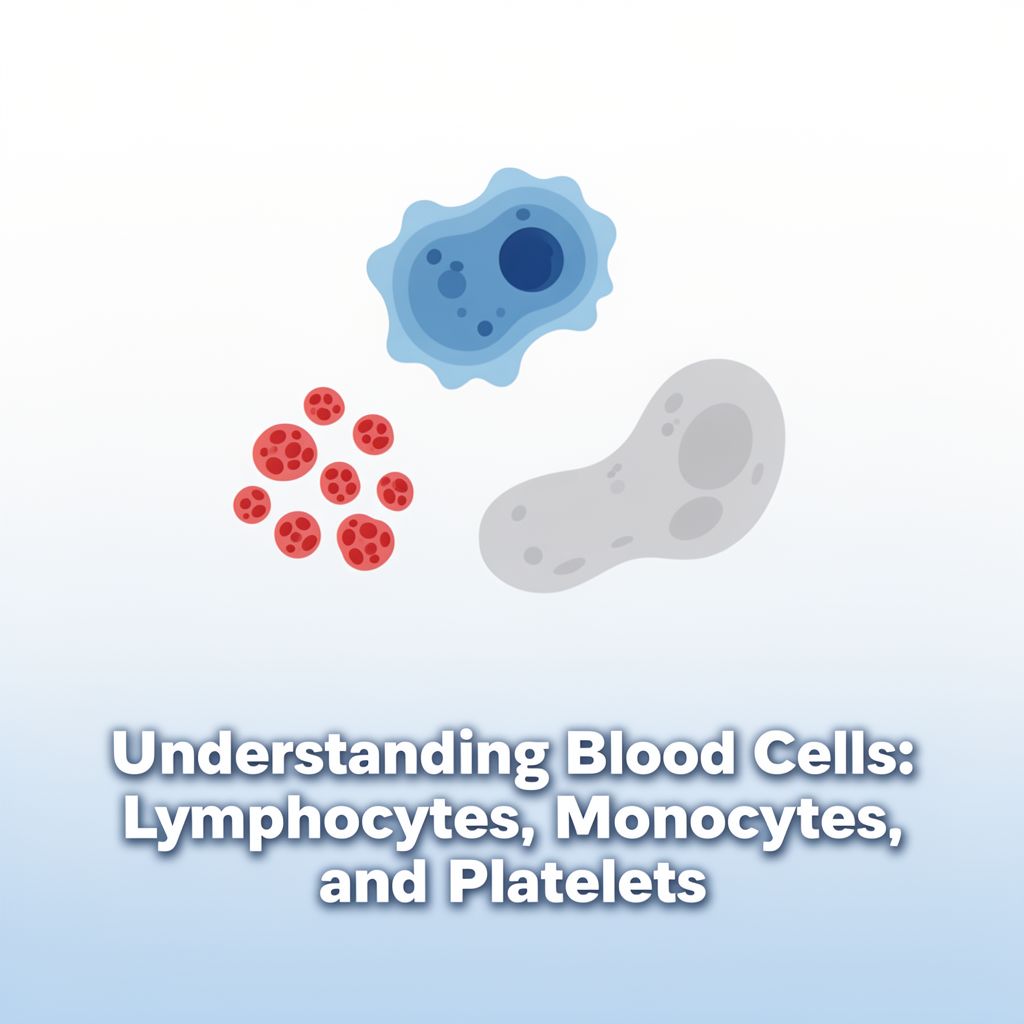
Understanding Blood Cells: Lymphocytes, Monocytes, and Platelets - kapak
Sağlık#blood cells#lymphocytes#monocytes#platelets

Understanding Blood Cells: Lymphocytes, Monocytes, and Platelets

This podcast provides a detailed educational overview of lymphocytes, monocytes, and platelets, covering their structure, functions, and roles in immunity, inflammation, and hemostasis.

January 5, 2026 ~20 dk toplam
01

Sesli Özet

6 dakika

Konuyu otobüste, koşarken, yolda dinleyerek öğren.

Sesli Özet

Understanding Blood Cells: Lymphocytes, Monocytes, and Platelets

0:005:30
02

Flash Kartlar

25 kart

Karta tıklayarak çevir. ← → ile gez, ⎵ ile çevir.

1 / 25
Tüm kartları metin olarak gör
  1. 1. What are the three key blood cell types discussed in this podcast?

    The podcast discusses lymphocytes, monocytes, and platelets as key components of blood cells.

  2. 2. What is the general importance of blood cells in the body?

    Blood cells are vital for various processes, including the immune system, blood clotting, and overall body function.

  3. 3. What are leukocytes commonly known as?

    Leukocytes are commonly known as white blood cells, which are crucial components of the immune system.

  4. 4. What is the central role of lymphocytes in the body?

    Lymphocytes play a central and critical role in the body's immune system, fighting off various diseases.

  5. 5. What are lymphomas characterized by?

    Lymphomas are characterized by the neoplastic proliferation of lymphocytes or their failure to undergo apoptosis.

  6. 6. Are all lymphomas considered malignant?

    Yes, all lymphomas are considered malignant because they can spread very easily throughout the body.

  7. 7. What do monocytes serve as precursors for?

    Monocytes serve as precursors for macrophages, osteoclasts, microglia, and other cells of the mononuclear phagocyte system.

  8. 8. What is the typical size of circulating monocytes?

    Circulating monocytes typically have a diameter ranging from twelve to fifteen micrometers.

  9. 9. Describe the characteristic nucleus of monocytes.

    Monocytes usually have large, distinctly indented or C-shaped nuclei with less dense chromatin than lymphocytes.

  10. 10. Where do the cells of the mononuclear phagocyte system originate?

    These cells originate from monocytes formed in the embryonic yolk sac and are continuously supported by monocytes from the bone marrow.

  11. 11. What is a key function of all monocyte-derived cells?

    All monocyte-derived cells act as antigen-presenting cells, playing important roles in immune defense and tissue repair.

  12. 12. What happens with monocytes during the early phase of inflammation?

    In the early phase of inflammation following tissue damage, migrating monocytes undergo extravasation or accumulation at the site.

  13. 13. How does chronic inflammation differ from acute inflammation regarding monocytes/macrophages?

    Chronic inflammation involves continuous accumulation of monocytes leading to sustained macrophages and potential tissue damage, unlike acute inflammation where macrophages are short-lived.

  14. 14. What is the primary function of platelets?

    Platelets play a critical role in blood clotting (hemostasis) and wound healing by preventing blood loss.

  15. 15. Describe the physical characteristics of platelets.

    Platelets are very small, anucleated, membrane-bound cell fragments, measuring only two to four micrometers in diameter.

  16. 16. How are platelets formed in the body?

    Platelets are formed by budding off the ends of cytoplasmic extensions from giant polyploid bone marrow cells called megakaryocytes.

  17. 17. What is considered a normal range for platelet count per microliter of blood?

    A normal platelet count ranges from one hundred fifty thousand to four hundred thousand per microliter of blood.

  18. 18. What is the approximate lifespan of circulating platelets?

    The approximate lifespan of circulating platelets in the bloodstream is about ten days.

  19. 19. What is the first step in platelet action to control hemorrhage?

    The first step is primary aggregation, where platelet glycocalyx adheres to damaged vascular basal lamina or collagen, forming a platelet plug.

  20. 20. What happens during secondary aggregation of platelets?

    During secondary aggregation, platelets within the plug release adhesive glycoprotein and ADP, which triggers further platelet aggregation and increases the plug's size.

  21. 21. What is the role of fibrinogen and von Willebrand factor in blood coagulation?

    Fibrinogen and von Willebrand factor, along with other proteins, promote a cascade of plasma protein interactions that lead to the formation of a fibrin polymer, creating a blood clot.

  22. 22. What is Platelet Factor Four and what is its function?

    Platelet Factor Four is a chemokine for monocytes, neutrophils, and fibroblasts, and it stimulates fibroblast proliferation through platelet-derived growth factor.

  23. 23. What is clot retraction?

    Clot retraction is the process where the blood clot, initially swelling into the vessel lumen, slightly contracts due to the activity of platelet-derived actin and myosin.

  24. 24. How is a blood clot ultimately removed from the body?

    A blood clot is removed by the proteolytic enzyme plasmin, which is continuously formed by plasminogen activators from the endothelium.

  25. 25. What is the overall importance of the complex processes involving platelets?

    These complex processes are fundamental to the body's ability to stop blood loss and initiate tissue repair after injury.

03

Bilgini Test Et

10 soru

Çoktan seçmeli sorularla öğrendiklerini ölç. Cevap + açıklama.

Soru 1 / 10Skor: 0

Which three main types of blood cells are discussed in the podcast as fundamental components?

04

Detaylı Özet

4 dk okuma

Tüm konuyu derinlemesine, başlık başlık.

📚 Blood Cells: A Comprehensive Study Guide

Source Information: This study material is compiled from copy-pasted text (originally pages 32-40 of an unspecified document) and an audio lecture transcript.


Introduction to Key Blood Cells 🩸

Blood is a vital tissue, and the cells it contains play crucial roles in numerous life-sustaining processes, from immunity to blood clotting. This guide provides an in-depth look at the structure, functions, and critical roles of lymphocytes, monocytes, and platelets within the human body.


I. Leukocytes (White Blood Cells) 🛡️

Leukocytes are essential components of the immune system, acting as the body's primary defense against pathogens and involved in inflammatory responses.

A. Lymphocytes

Lymphocytes are central to immunity and are implicated in many diseases.

  • Role in Immunity: They are key players in the body's adaptive immune response. ✅
  • Associated Disorders:
    • Lymphomas: A group of disorders characterized by the neoplastic (abnormal) proliferation of lymphocytes or their failure to undergo apoptosis (programmed cell death). ⚠️
    • Although often slow-growing, all lymphomas are considered malignant due to their potential for widespread dissemination throughout the body.

B. Monocytes

Monocytes are precursor cells that differentiate into various phagocytic cells throughout the body.

  • Precursor Function: Monocytes are the precursor cells for:
    • Macrophages
    • Osteoclasts
    • Microglia
    • Other cells of the mononuclear phagocyte system found in the connective tissue of nearly all organs.
  • Characteristics:
    • Size: Circulating monocytes have diameters of 12-15 μm. 📏
    • Nucleus: They possess large nuclei, typically distinctly indented or C-shaped.
    • Chromatin: The chromatin is less condensed than in lymphocytes and usually stains lighter than that of large lymphocytes.
  • Origin and Supplementation:
    • Cells of the mononuclear phagocyte system originate in developing organs from monocytes formed in the embryonic yolk sac.
    • They are continuously supplemented throughout life by monocytes derived from the bone marrow.
  • Key Functions:
    • All monocyte-derived cells are antigen-presenting cells (APCs). 💡
    • They play important roles in both immune defense and tissue repair.
  • Role in Inflammation:
    • Extravasation: The accumulation of immigrating monocytes (extravasation) occurs in the early phase of inflammation following tissue injury.
    • Acute Inflammation: This phase is usually short-lived, as macrophages either undergo apoptosis or leave the site.
    • Chronic Inflammation: This typically involves the continuous recruitment of monocytes. The prolonged presence of macrophages can lead to excessive tissue damage, a hallmark of chronic inflammation. 📈

II. Platelets (Thrombocytes)

Platelets are critical for blood clotting and wound healing, preventing blood loss from the microvasculature.

  • Characteristics:
    • Structure: Very small, non-nucleated, membrane-bound cell fragments. 🔬
    • Size: Only 2-4 μm in diameter.
    • Origin: They originate by separating from the ends of cytoplasmic processes extending from giant polyploid bone marrow cells called megakaryocytes.
    • Appearance: In a blood smear, platelets are often found as aggregates.
  • Functions:
    • Promote blood clotting (hemostasis). ✅
    • Help repair minor tears or leaks in the walls of small blood vessels. ✅
    • Prevent blood loss from the microvasculature. ✅
  • Normal Counts & Lifespan:
    • Normal Range: 150,000 to 400,000/μL of blood. 📊
    • Lifespan: Circulating platelets have a life span of approximately 10 days. ⏳

A. Role in Controlling Blood Loss (Hemostasis) and Wound Healing

The process of hemostasis and wound healing involving platelets can be summarized in five key steps:

  1. Primary Aggregation:
    • Disruptions in the microvascular endothelium (which are common) allow the platelet glycocalyx to adhere to collagen in the vascular basal lamina or wall.
    • This forms a platelet plug, serving as the first step to stop bleeding. 1️⃣
  2. Secondary Aggregation:
    • Platelets within the plug release a specific adhesive glycoprotein and ADP (adenosine diphosphate).
    • These substances induce further platelet aggregation, increasing the size of the platelet plug. 2️⃣
  3. Blood Coagulation:
    • During platelet aggregation, a cascade of plasma proteins is initiated.
    • This cascade is promoted by:
      • Fibrinogen from plasma
      • Von Willebrand factor and other proteins released from the damaged endothelium
      • Platelet factor 4 from platelet granules
    • This interaction gives rise to a fibrin polymer, which forms a three-dimensional network of fibers.
    • This network traps red blood cells and more platelets, forming a blood clot (or thrombus). 3️⃣
    • 💡 Insight: Platelet factor 4 acts as a chemokine for monocytes, neutrophils, and fibroblasts. Fibroblast proliferation is stimulated by platelet-derived growth factor, aiding in tissue repair.
  4. Clot Retraction:
    • The clot initially bulges into the blood vessel lumen.
    • However, it soon contracts slightly due to the activity of platelet-derived actin and myosin. 4️⃣
  5. Clot Removal:
    • Protected by the clot, the endothelium and surrounding tunic are restored by new tissue growth.
    • The clot is then removed, primarily dissolved by the proteolytic enzyme plasmin.
    • Plasmin is continuously formed through the local action of plasminogen activators (from the endothelium) on plasminogen (from plasma). 5️⃣

These complex processes are fundamental to the body's ability to stop blood loss and initiate tissue repair.

Kendi çalışma materyalini oluştur

PDF, YouTube videosu veya herhangi bir konuyu dakikalar içinde podcast, özet, flash kart ve quiz'e dönüştür. 1.000.000+ kullanıcı tercih ediyor.

Sıradaki Konular

Tümünü keşfet
Pathological Conditions: Circulatory and Inflammatory Disorders

Pathological Conditions: Circulatory and Inflammatory Disorders

An in-depth look at various pathological conditions, including ischemic renal infarction, chronic liver congestion, lobar fibrinous pneumonia, tuberculous granuloma, and Hashimoto's thyroiditis.

Özet 25
Essential Vitamins: A Deep Dive into Vitamin A and D

Essential Vitamins: A Deep Dive into Vitamin A and D

Explore the forms, sources, metabolism, functions, and health implications of Vitamin A and Vitamin D, crucial for vision, bone health, and immune function.

Özet 15
Vitamin D Deficiency and Calcium Disorders

Vitamin D Deficiency and Calcium Disorders

An in-depth look into Vitamin D metabolism, deficiency, and various calcium disorders including hypoparathyroidism and associated genetic syndromes.

Özet 25 15
The Digestive System: An Academic Overview

The Digestive System: An Academic Overview

An academic summary of the human digestive system, detailing its organs, processes, and functions, from mechanical breakdown to nutrient absorption and waste elimination.

4 dk Özet 25 15
Data Analysis for Mobile Medical Services

Data Analysis for Mobile Medical Services

This audio summary explores data analysis in mobile medical services, covering supply chain optimization, inventory management, scenario planning, and future strategies using analytical tools and technologies.

6 dk Özet 25 15
Gingival Defense Mechanisms and Gingivitis

Gingival Defense Mechanisms and Gingivitis

This summary explores the complex defense mechanisms of gingival tissues against mechanical forces and microbial colonization, detailing Gingival Crevicular Fluid, Junctional Epithelium, Polymorphonuclear Leukocytes, and Saliva, followed by an in-depth analysis of gingivitis, its stages, clinical features, and classification.

11 dk Özet 25 15
The Physiology of Pain: Mechanisms and Modulation

The Physiology of Pain: Mechanisms and Modulation

This summary explores the complex physiology of pain, covering its definition, classification, nociceptive pathways, spinal cord processing, ascending signals, cortical matrix, modulation mechanisms, and various chronic pain states.

8 dk Özet 25 15
Key Concepts in Neuropsychiatry and Clinical Psychology

Key Concepts in Neuropsychiatry and Clinical Psychology

An academic summary covering fundamental neurobiological, psychological, pharmacological, and ethical principles relevant to mental health and neurological disorders.

15 dk 25