 Podit
Podit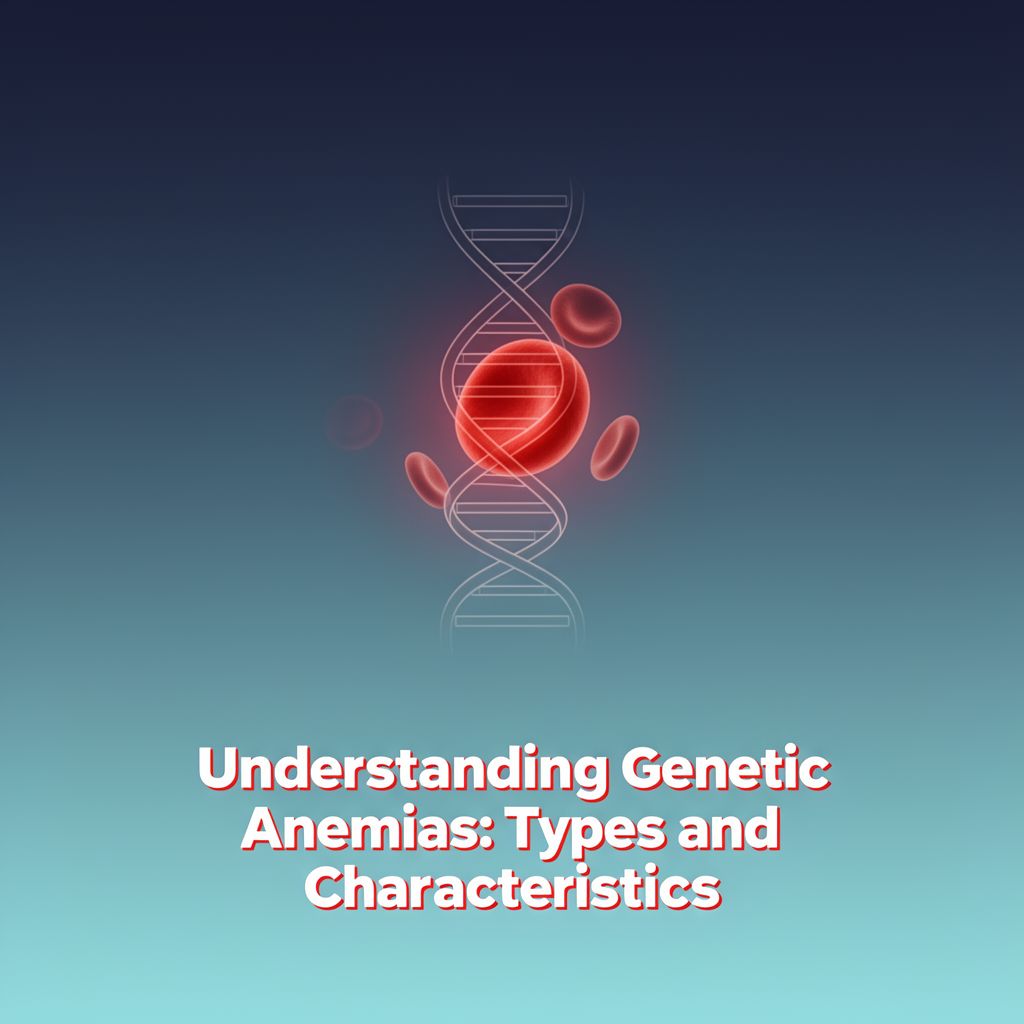
Sesli Özet
7 dakikaKonuyu otobüste, koşarken, yolda dinleyerek öğren.
Sesli Özet
Understanding Genetic Anemias: Types and Characteristics
Flash Kartlar
25 kartKarta tıklayarak çevir. ← → ile gez, ⎵ ile çevir.
Tüm kartları metin olarak gör
1. What are genetic anemias?
Genetic anemias are hereditary disorders primarily affecting red blood cells, caused by specific mutations impacting hemoglobin, RBC membrane, or enzymatic pathways.
2. What are the three main groups of genetic anemias?
The three main groups are hemoglobinopathies, erythrocyte membrane defects, and erythrocyte enzyme defects.
3. What are the ultimate consequences of genetic defects in RBCs?
Consequences include chronic hemolysis, ineffective erythropoiesis, or a general reduction in red blood cell lifespan.
4. What is the key example of a hemoglobinopathy?
The key example of a hemoglobinopathy discussed is Sickle Cell Disease (HbS).
5. What is the genetic basis of Sickle Cell Disease?
It arises from a specific point mutation within the beta-globin gene (HBB) on chromosome 11.
6. What specific mutation causes Sickle Cell Disease?
The mutation involves a change from glutamic acid to valine at position six of the beta-globin chain.
7. What is the inheritance pattern for Sickle Cell Disease?
Sickle Cell Disease has an autosomal recessive inheritance pattern, requiring two copies of the mutated gene.
8. How does HbS polymerization affect red blood cells?
When deoxygenated, HbS polymerizes, causing red blood cells to adopt a characteristic sickle shape.
9. What severe issues result from sickling in Sickle Cell Disease?
Sickling leads to hemolysis, vaso-occlusion where rigid cells block vessels, and subsequent tissue ischemia.
10. Which organs are commonly affected by Sickle Cell Disease?
Organs commonly affected include the blood, spleen (can undergo autosplenectomy), brain, lungs, and bones.
11. What are the clinical manifestations of Sickle Cell Disease?
Clinical manifestations include chronic hemolytic anemia, recurrent painful vaso-occlusive crises, acute chest syndrome, and increased susceptibility to infections.
12. How is Sickle Cell Disease typically diagnosed?
Diagnosis involves hemoglobin electrophoresis, high-performance liquid chromatography (HPLC), and molecular testing for the specific HBB mutation.
13. What is the primary example of an erythrocyte membrane defect?
Hereditary Spherocytosis is the primary example of an erythrocyte membrane defect.
14. What is the characteristic feature of RBCs in Hereditary Spherocytosis?
Red blood cells become spherical rather than their normal biconcave disc shape due to defects in cytoskeleton proteins.
15. What is the inheritance pattern for Hereditary Spherocytosis?
The inheritance pattern for Hereditary Spherocytosis is typically autosomal dominant, meaning one mutated gene copy is sufficient.
16. How does Hereditary Spherocytosis lead to RBC destruction?
Loss of membrane surface area causes spherocytes, which are less deformable and are trapped and destroyed in the spleen.
17. What are the clinical features of Hereditary Spherocytosis?
Clinical features include hemolytic anemia, jaundice due to increased bilirubin, splenomegaly, and pigment gallstones.
18. How is Hereditary Spherocytosis diagnosed?
Diagnosis relies on identifying spherocytes on a peripheral blood smear, an osmotic fragility test, and an EMA binding test.
19. What is G6PD Deficiency?
G6PD Deficiency is an enzymopathy that renders red blood cells susceptible to oxidative damage.
20. What is the inheritance pattern of G6PD Deficiency?
G6PD Deficiency is an X-linked recessive inherited disorder, as the G6PD gene is located on the X chromosome.
21. What is the pathogenesis of G6PD Deficiency?
It stems from reduced NADPH, a molecule vital for neutralizing oxidative stress, leading to episodic hemolysis.
22. What triggers hemolysis in G6PD Deficiency?
Hemolysis is often triggered by infections, consumption of fava beans, or certain drugs like antimalarials and sulfonamides.
23. What is Pyruvate Kinase Deficiency?
Pyruvate Kinase Deficiency is a glycolytic enzyme defect that results in ATP depletion within red blood cells.
24. What is the inheritance pattern of Pyruvate Kinase Deficiency?
Pyruvate Kinase Deficiency is inherited in an autosomal recessive manner, involving the PKLR gene.
25. How is Pyruvate Kinase Deficiency diagnosed?
Diagnosis is established by an enzyme activity assay to measure pyruvate kinase levels and molecular genetic testing to identify specific gene mutations.
Bilgini Test Et
15 soruÇoktan seçmeli sorularla öğrendiklerini ölç. Cevap + açıklama.
Which of the following is NOT listed as a potential consequence of genetic defects in red blood cells?