Podit
Podit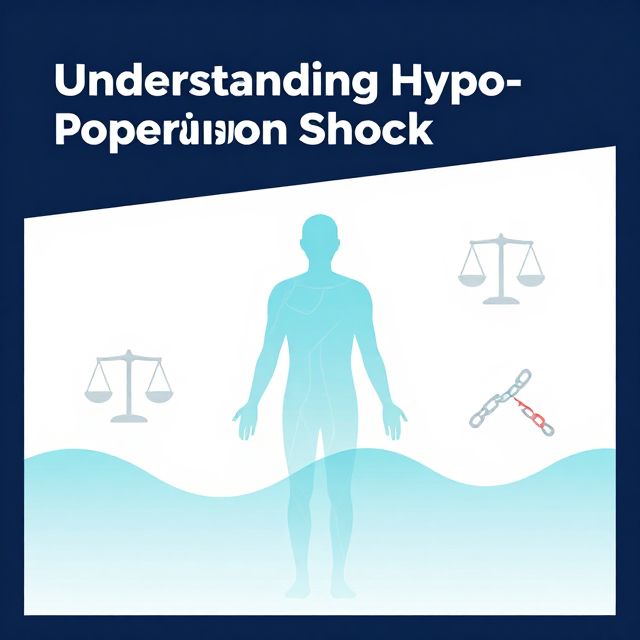
Understanding Hypoperfusion and Shock: A Comprehensive Study Guide
This study material is compiled from lecture notes, PDF/PowerPoint texts, and an audio transcript, providing a consolidated overview of hypoperfusion and shock.
📚 1. Introduction to Hypoperfusion and Shock
Hypoperfusion refers to an inadequate blood flow to organs and tissues, which critically impairs cellular function and can lead to a life-threatening condition known as shock. Shock is a complex physiological state characterized by widespread, severe reduction in tissue perfusion, resulting in cellular hypoxia and metabolic derangements.
Key Organs Susceptible to Hypoperfusion Damage:
- ❤️ Heart
- 🫁 Lungs
- 🧠 Brain and Spinal Cord
- किडनी Kidneys
- 💪 Skeletal Muscle
- 🍽️ Gastrointestinal System
📊 2. Factors Affecting Blood Flow
Blood flow is influenced by several factors, including cardiac output, systemic vascular resistance, and blood volume. Disruptions in any of these can lead to hypoperfusion.
📈 3. The Stages of Shock
Shock progresses through distinct stages, each characterized by specific physiological responses and clinical manifestations.
3.1. Compensated Stage (Reversible)
In this initial stage, the body activates various mechanisms to maintain vital organ perfusion despite reduced blood flow. The primary goal is to preserve blood supply to the heart and brain.
✅ Compensation Mechanisms:
-
Neurogenic Mechanisms:
- Baroreceptor Reflexes: Detect decreased arterial pressure, triggering sympathetic stimulation. This leads to:
- Vasoconstriction (narrowing of blood vessels)
- Tachycardia (increased heart rate)
- Cool, pale skin
- Central Nervous System (CNS) Ischemic Response: Activated when arterial pressure drops below 50 mmHg. It further stimulates the sympathetic system.
- Reverse Stress Relaxation System: Blood vessels constrict in response to decreased blood volume, helping to maintain existing circulation.
- Catecholamine Release: Adrenaline and noradrenaline are released, causing vasoconstriction in non-vital areas (skin, lungs, GI system, kidneys) to redirect blood. This increases venous return and cardiac contractility.
- Thirst & Fluid Absorption: Intestines absorb fluid, and thirst mechanisms encourage oral fluid and salt intake.
- Baroreceptor Reflexes: Detect decreased arterial pressure, triggering sympathetic stimulation. This leads to:
-
Hormonal Mechanisms:
- Renin-Angiotensin-Aldosterone System (RAAS): Reduced renal blood flow triggers the release of renin, leading to the formation of angiotensin II.
- Angiotensin II causes widespread vasoconstriction.
- It stimulates the release of Aldosterone and Antidiuretic Hormone (ADH).
- Aldosterone and ADH promote sodium and water reabsorption by the kidneys, increasing blood volume and venous return to the heart.
- Renin-Angiotensin-Aldosterone System (RAAS): Reduced renal blood flow triggers the release of renin, leading to the formation of angiotensin II.
-
Chemical Mechanisms:
- Chemoreceptor Activation: Decreased pulmonary blood flow and pressure lead to a drop in oxygen (PO2) and an increase in carbon dioxide (PCO2).
- Chemoreceptors in the carotid bodies and aortic arch are activated.
- This increases the rate and depth of respiration, stimulates the CNS, and can lead to respiratory alkalosis and vasoconstriction.
💡 Aim of Neuroendocrine Response: To reduce perfusion to other organ systems while maintaining adequate blood flow to the heart and brain, even with reduced blood volume.
3.2. Decompensated Stage (Progressive)
This stage signifies the failure of compensatory mechanisms, leading to a worsening clinical picture and widespread tissue hypoperfusion.
⚠️ Classic Clinical Presentation:
- Decreased blood pressure and cardiac output
- Tachycardia (rapid heart rate)
- Oliguria (reduced urine output)
- Cold, clammy skin
- Cyanotic (bluish) extremities
Factors Contributing to Deterioration:
- Myocardial Depression: Reduced coronary blood flow and cardiac output, exacerbated by myocardial depressant factors (MDF), lactic acid, and breakdown products from damaged tissues.
- Vasomotor Center Failure: Insufficient blood flow to the brain's vasomotor center reduces its ability to regulate vascular tone.
- Vascular Failure: Capillary dilation occurs, further reducing effective circulating volume.
- Increased Capillary Permeability: Prolonged oxygen deprivation (anoxia) in capillaries causes them to become leaky, leading to significant fluid shifts from blood vessels into tissues, further decreasing cardiac output.
- Release of Toxins: Ischemic tissues release harmful substances like histamine, serotonin, MDF, endotoxins, and various tissue enzymes.
- Cellular Dysfunction: The sodium-potassium active transport pump in cell membranes fails, leading to sodium accumulation inside cells and cellular swelling.
- Acidosis: Insufficient oxygen supply forces cells into anaerobic metabolism, producing lactic acid and resulting in metabolic acidosis.
⚠️ Organ Failure Syndromes: Initially beneficial, prolonged and excessive catecholamine stimulation causes sustained vasoconstriction, leading to persistent organ hypoperfusion and anoxia, ultimately resulting in multi-organ failure.
3.3. Irreversible Stage (Refractory)
In this terminal stage, severe and entrenched cellular and tissue damage has occurred, making recovery impossible even if circulatory disturbances are corrected.
- Severe Damage: Widespread cellular and tissue damage.
- Myocardial Depressant Factor (MDF): Released from the ischemic pancreas, MDF further depresses an already failing heart.
- Acute Tubular Necrosis: Leads to complete kidney failure.
The overall progression of shock involves: 1️⃣ Decreased blood volume 2️⃣ Catecholamine release 3️⃣ Reduced venous return, tachycardia, peripheral vasoconstriction, increased cardiac contractility 4️⃣ Arterial hypotension, decreased tissue perfusion, increased myocardial O2 demand 5️⃣ Myocardial failure 6️⃣ Anaerobic metabolism, acidosis 7️⃣ Multi-Organ Failure
📉 4. Types of Shock
Shock is classified based on its underlying cause, each with distinct pathophysiological mechanisms.
4.1. Hypovolemic Shock
📚 Definition: Results from a significant reduction in intravascular volume.
-
Types:
- Hemorrhagic Shock: Caused by blood loss.
- External: Trauma (e.g., severe injury).
- Internal: Hematoma, hemothorax (blood in the chest cavity).
- Non-Hemorrhagic Hypovolemic Shock:
- Plasma Loss: Severe burns.
- Fluid/Electrolyte Loss: Severe vomiting, diarrhea, excessive urination (e.g., diabetes insipidus).
- Hemorrhagic Shock: Caused by blood loss.
-
Tolerance: The body can typically tolerate up to a 30% loss of total blood volume without a significant drop in blood pressure due to compensatory mechanisms. However, larger or sudden losses, or impaired compensation, lead to hypotension and shock.
-
Chronic Dehydration: A 6-10% loss of extracellular fluid volume can redirect blood to vital organs and cause altered consciousness.
-
Factors Reducing Cardiac Output:
- Heart abnormalities reducing pumping ability (e.g., MI, valve disorders).
- Factors reducing venous return (e.g., decreased blood volume).
4.2. Cardiogenic Shock
📚 Definition: Occurs when the heart's pumping ability is severely impaired, leading to inadequate tissue perfusion despite sufficient blood volume.
- Primary Cause: Frequently associated with acute ischemic myocardial damage.
- Most Common Cause: Myocardial Infarction (MI), especially when more than 40% of the myocardium is affected.
4.3. Distributive Shock
📚 Definition: Characterized by pathological and inappropriate vasodilation, endothelial dysfunction, capillary leakage, or a loss of vascular tone. The problem is not a lack of fluid, but a maldistribution of it due to widespread vasodilation, making the vascular "container" too large for the available blood volume.
- Key Examples: Septic shock, Anaphylactic shock, Neurogenic shock.
a. Anaphylactic Shock
- Mechanism: An acute, severe, and potentially fatal systemic allergic reaction. It occurs when a sensitive individual is exposed to an antigen, triggering an antigen-antibody reaction.
- Histamine Release: Leads to the release of histamine and similar substances from basophils and mast cells.
- Effects:
- Widespread venous dilation, increasing vascular capacity and significantly reducing venous return.
- Arteriolar dilation, drastically lowering arterial blood pressure.
- Increased capillary permeability, causing rapid fluid and protein shifts into tissues.
- Net Result: A severe reduction in venous return and profound shock, potentially leading to rapid death.
- Symptoms: Wheezing, respiratory distress, vomiting, edema (nose, larynx, bronchi), bronchospasm, urticaria (hives), generalized edema.
b. Septic Shock
- Mechanism: A life-threatening organ dysfunction caused by a dysregulated host response to infection. It involves widespread bacterial infection leading to extensive tissue damage.
- Suspicion: Suspected in individuals with:
- Body temperature above 38.3°C (or >38.5°C in children) or below 36°C.
- Evidence of inadequate organ perfusion.
- Systolic blood pressure below 90 mmHg.
- Fluid Response: Hypotension in septic shock typically does not respond to rapid fluid replacement (e.g., 1 liter of crystalloid).
c. Neurogenic Shock
- Mechanism: Occurs rarely without blood volume loss. The primary issue is a sudden, widespread loss of vasomotor tone throughout the body, particularly widespread venous dilation.
- Vascular Capacity: The vascular capacity increases so dramatically that even a normal blood volume cannot adequately fill the circulatory system, leading to "venous pooling."
- Causes: Often due to autonomic dysfunction secondary to spinal cord injury.
- Key Features:
- Loss of peripheral vascular resistance.
- Venous vessels dilate.
- Often unresponsive to fluid therapy alone.
- Absence of Tachycardia: Unlike other forms of shock, neurogenic shock typically does not present with tachycardia because the sympathetic nervous system, a key compensatory mechanism, is disabled.
4.4. Obstructive Shock
📚 Definition: Occurs when there is a physical obstruction to blood flow, either into or out of the heart, leading to reduced cardiac output. (e.g., pulmonary embolism, cardiac tamponade, tension pneumothorax).
✅ Conclusion
Shock is a critical physiological state of inadequate tissue perfusion, progressing through compensated, decompensated, and irreversible stages. Understanding the specific etiologies and pathophysiological mechanisms of hypovolemic, cardiogenic, distributive (anaphylactic, septic, neurogenic), and obstructive shock is fundamental for effective diagnosis and management. The ultimate outcome of untreated or refractory shock is multi-organ failure and mortality.