 Podit
Podit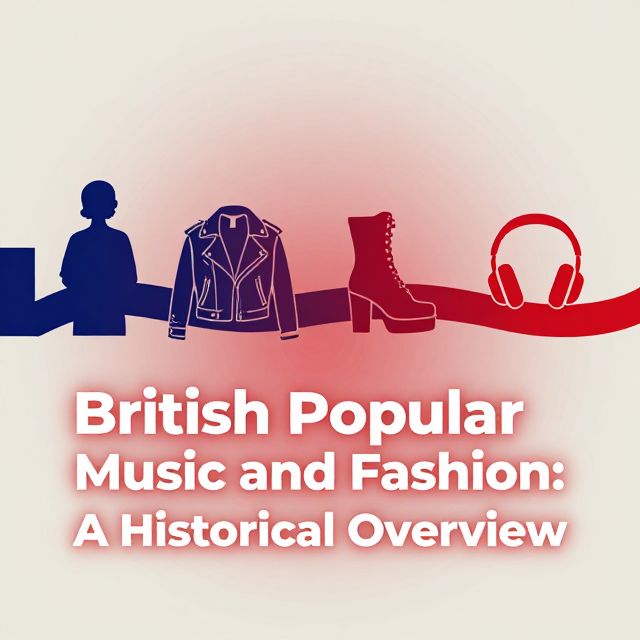
This study material has been compiled from a copy-pasted text and an audio lecture transcript on the subject of Popular Music and Fashion.
🎶 British Popular Music and Fashion: A Cultural Journey 🇬🇧
📚 Introduction: The Enduring Influence of British Pop
British popular music has profoundly shaped global culture, serving as a vital expression of youth identity and a shared communal experience. From its early forms to contemporary digital trends, it has consistently offered a gateway into evolving fashion, imagery, and style, reflecting and influencing societal changes. Major music festivals like Glastonbury and the Notting Hill Carnival highlight its cultural significance. The industry is supported by extensive broadcasting services, including BBC Radio 1 and 2, and numerous independent stations, covering genres from pop to jazz and classical. Formal musical education is available at prestigious institutions like the Royal College of Music, and talent is recognized through awards such as the Brit Awards and Mercury Prize.
1️⃣ Post-War Era: From Crooners to Rock 'n' Roll (1940s-1950s)
1.1. The Rise of the Crooners 🎤
After World War II, there was a strong demand for comforting, romantic music.
- Style: Gentle ballads sung in a "crooning" style, emphasizing intimate emotional expression.
- Key Artists: Frank Sinatra (US), Frankie Vaughan, Dickie Valentine (UK).
- Audience: Primarily an adult pastime due to expensive gramophones and records.
1.2. Technological Shifts & Youth Culture Emergence 💡
Technological advancements democratized music access.
- Innovation: Portable transistor radios in the mid-1950s made music more accessible.
- Radio's Influence: Radio stations, driven by advertising, demanded shorter, catchy songs (under three minutes), leading to the rise of the pop single.
- Youth Demand: A post-war generation sought excitement and consumer goods.
1.3. The Rock 'n' Roll Explosion 🎸
The mid-1950s saw the arrival of American rock 'n' roll, offering a rebellious voice for dissatisfied youth.
- Pioneers: Bill Haley and the Comets' "Rock Around the Clock" (1955) was pivotal, bringing rock 'n' roll to a mainstream, white audience.
- Impact in Britain: Electrifying effect, leading to unprecedented audience reactions (dancing, vandalism) and moral panic.
- Definition: Coined by American DJ Alan Freed, "rock 'n' roll" blended country, blues, jazz, and gospel. Its suggestive name was lost on the innocent British public.
- Social Reaction: Initially met with hostility from the establishment (Parliament, Church, BBC) and music critics, who viewed it as juvenile and a threat to social order.
1.4. The Teddy Boys: Fashioning Rebellion 🕺
Rock 'n' roll significantly impacted British youth culture and fashion.
- Style: Long, elaborate jackets with velvet collars (reviving Edwardian aristocratic style) combined with American country-style elements like "bootlace" ties and "drainpipe" trousers. Bright socks, heavy suede shoes, and heavily greased hair completed the look.
- Significance: Mixed English tradition with American modernity, creating a striking sight in drab post-war Britain.
- Social Impact: Disliked conformity and authority, leading to acts of vandalism and marking the beginning of the "generation gap." The press often exaggerated their criminality.
2️⃣ Skiffle, The Beatles, and British R&B (Late 1950s-1960s)
2.1. Skiffle: The DIY Revolution 🛠️
An acoustic, accessible music style that emerged around 1953.
- Characteristics: Fast, rhythmical, required minimal musical expertise. Instruments included washboards, acoustic guitars, and bass.
- Origins: Black and American, like rock 'n' roll.
- Impact: Fostered a DIY musical revolution, especially popular among art school intellectuals, appealing to youths in a hierarchical Britain.
- Key Artist: Lonnie Donegan ("Rock Island Line," 1956) achieved international success.
2.2. The Beatles: Global Phenomenon 🌟
From Liverpool, The Beatles spearheaded a global pop revolution (1962-1964).
- Formation: John Lennon, Paul McCartney, George Harrison, and Ringo Starr.
- Early Success: "Love Me Do" (1962) and subsequent number-one hits like "She Loves You."
- Style: Distinctive long hair, white shirts, narrow ties, dark suits. Wrote their own short, sentimental songs using everyday slang and folk harmonies with R&B influences.
- Beatlemania: Intense popularity, particularly fanatical in the USA.
- Evolution: Music became more eclectic and sophisticated, exemplified by "Sgt. Pepper's Lonely Hearts Club Band" (1967), which elevated pop to serious critical commentary.
- Breakup: Officially broke up in 1970 after immense success, with members pursuing solo careers.
2.3. British Rhythm and Blues (R&B) 🎷
British musicians were drawn to black American soul and blues.
- Influences: James Brown, Ray Charles, Muddy Waters, John Lee Hooker.
- Pioneer: Alexis Korner and Blues Incorporated (1962-1967) influenced bands like The Rolling Stones, The Animals, and The Yardbirds.
- The Rolling Stones: Formed in 1962, cultivated a wild, sexy, bohemian image. Their music, based on R&B, featured Keith Richards' guitar and Mick Jagger's blues vocals. "(I Can't Get No) Satisfaction" (1965) became their signature tune, expressing dissatisfaction with consumer culture. They continue to break box-office records globally.
2.4. John Barry: The Sound of the Screen 🎬
John Barry revolutionized film music in the 1960s.
- Innovation: Integrated pop and jazz elements into cinematic scores, moving away from traditional classical film music.
- Key Work: Best known for the "James Bond Theme" (Dr. No, 1962) and scoring ten Bond movies, perfecting the "Bond sound" with luxurious melodies and driving brass.
- Awards: Won five Academy Awards and four Grammy Awards.
3️⃣ Subcultures, Glam, and Punk (Late 1960s-1970s)
3.1. Dance Music & Subcultures: Ska, Reggae, Skinheads, Northern Soul 🕺
- Ska & Reggae: Black dance music grew in popularity. Ska, a faster, less vocal version of reggae, mixed reggae rhythms with West African and Caribbean styles.
- Skinheads: A subculture emerging from "hard mod" scene, initially embraced West Indian subculture and ska music. Later associated with racism and soccer hooliganism, characterized by shaven heads, Ben Sherman shirts, braces, tight jeans, and heavy boots.
- Northern Soul: Fans in Northern England collected and danced to obscure black American soul records, valuing their raw authenticity over commercial releases.
3.2. Glam Rock & David Bowie 🌟
The 1970s introduced a theatrical, glamorous style.
- Characteristics: Emphasized style and presentation, strong rhythmic beats, "sing-along" choruses.
- Key Artists: Slade, Elton John, Queen, Roxy Music.
- David Bowie: A highly influential performer, pioneering gender-bending aesthetics and elaborate stage performances.
- Early Career: First major success with "Space Oddity" (1969).
- Ziggy Stardust: Adopted an androgynous identity, culminating in "The Rise and Fall of Ziggy Stardust and the Spiders from Mars" (1972), with elaborate stage shows and provocative looks.
- Reinvention: Known for continuous musical and stylistic reinvention, influencing music, fashion, and social expression for decades.
3.3. Punk Rock: The Anti-Establishment Movement 🤘
By the mid-1970s, frustration with mainstream music and societal issues led to punk.
- Pub Rock: Preceded punk, offering a raw, energetic alternative in small venues (e.g., Dr. Feelgood). Songs reflected London life with local accents.
- The Sex Pistols: Managed by Malcolm McLaren, epitomized punk's anti-establishment ethos.
- Fashion: Provocative "punk look" with bondage, fetish wear, torn clothes, safety pins, spiked hair, and swastika symbols, designed to shock.
- Music: Short, fast, aggressive songs. "God Save the Queen" (1977) was banned but reached number two.
- Impact: Challenged conventions, inspired a DIY ethic, and a wave of new bands (The Clash, The Jam). Its brief but impactful career illuminated white pop and had enduring influence.
4️⃣ Post-Punk, New Romantics, and Dance Music (1980s)
4.1. Post-Punk & Two Tone 🤝
- Political Context: Emergence of new political questions (racism, Thatcher government). Reggae became a symbol of defiance.
- Two Tone Movement: A fusion of pop and reggae, promoting anti-racism and anti-Thatcher messages (e.g., The Specials, The Beat, Madness). Supported the Rock Against Racism movement.
- DIY Ethic Continues: Led to independent record labels (e.g., Factory Records), prioritizing artistic integrity over commercial gain.
- Folk Revival: Renewed interest in folk music, often fused with punk or New Age (e.g., The Pogues, Clannad).
4.2. New Romantics: Glamour and Synthesizers ✨
The late 1970s and early 1980s saw a shift towards electronic music.
- Sound: Utilized synthesizers to create restrained, refined, futuristic pop and dance music (e.g., Visage, Duran Duran, Human League).
- Fashion: Glamorous, androgynous look with heavy make-up, shoulder pads, baggy trousers, quiffs, and mullets, fusing Bowie's influence with 1920s American styles.
- Social Context: Coincided with a conservative political climate, focusing on hedonism, status, and success rather than political messages.
- Counterpoint: Goth bands like The Cure offered a melancholic, alienated counterpoint.
4.3. The Politics of Dancing: House, Acid House, and Raves 🔊
New dance music techniques emerged from America.
- Innovations: "Scratching" (DJs manipulating vinyl) and "sampling" (mixing musical extracts) transferred creative power to DJs.
- House Music: British entrepreneurs repositioned dance music into underground forms, mixing 1970s disco-funk with minimal vocals and heavy bass.
- Acid House & Raves: The "Summer of Love" in Ibiza (1988), fueled by house music and ecstasy, led to the "acid house" movement. Large-scale "raves" in warehouses became a political act of defiance against government restrictions (Criminal Justice Act 1994), uniting youth against the Tory government.
- Sub-genres: Rapid multiplication into techno, hardcore, jungle, drum 'n' bass, garage.
5️⃣ Britpop, Digital Transformation, and Contemporary Trends (1990s-Present)
5.1. Britpop and "Cool Britannia" 🇬🇧
The mid-1990s saw a resurgence of British guitar bands.
- Sound: Distinctively English sound, acknowledging musical roots, lively and catchy (e.g., Oasis, Blur, Supergrass, Pulp).
- Identity: Celebrated British identity, often with satirical depictions of suburban life.
- "Cool Britannia": Coincided with a renewed interest in British popular culture, influencing fashion (RAF target logo, parka coats, Fred Perry, Union Flag designs) and other arts.
5.2. The 2000s: Fragmentation and Digital Age 📱
- Societal Shifts: Rising incomes, easy credit, decline of traditional class divisions, increased individualism, and a service-based economy led to a fragmented cultural landscape.
- Digital Impact: The internet and digital communications transformed the industry, allowing artists to create and distribute music independently, but making it harder for singular movements to emerge.
- Talent Shows: TV talent shows (e.g., The X Factor) became significant, offering instant fame but criticized for stifling creativity and promoting mainstream entertainment.
- Retro Influences: Post-punk revival (Franz Ferdinand, The Libertines) alongside introspective styles (Coldplay).
5.3. Ethnic Diversity and Evolving Genres 🌍
Black and Asian music continued to evolve, reflecting Britain's ethnic diversity.
- New Genres: Hardcore, jungle, drum 'n' bass, garage (e.g., Craig David).
- Asian Dance Music (Bhangra): Fused Asian folk with Western hip-hop, reggae, and techno, reflecting dual identities of British Asians (e.g., Talvin Singh, Asian Dub Foundation).
- Hip-Hop Evolution: Fragmented into trip hop, acid jazz, and grime. BBC Radio 1Xtra (2002) supported new black music. Initially insular, black music gained wider recognition with socially conscious artists (e.g., Dizzee Rascal).
5.4. Fashion in the 2000s 👕
Fashion mirrored musical influences and societal trends.
- Street Style: "Decadent dishevelment" with baggy, low-slung jeans, hoodies, spiky hair, crop tops, and low-rise jeans. Unisex baseball caps and trainers (Nike Air Max).
- Accessories: Ostentatious "bling" (heavy watches, gold chains, tattoos, piercings) became mainstream.
- Designer Labels: Fueled by credit boom, logos and brands became ubiquitous, democratizing luxury consumption and shaping identity through purchases.
5.5. The Business of Music in the Digital Age 📊
The music business adapted to instant, global, and mobile demand.
- Sales Trends: Overall album sales declined, but digital formats (downloads, streaming) rose. Vinyl sales also saw a resurgence.
- Streaming: Shift from downloads (iTunes) to subscription streaming (Spotify), with billions of songs streamed annually.
- Artist Income: Established artists generate income from tours, advertising, and repackaged back catalogs. New bands leverage internet platforms and social media (e.g., Gorillaz, Arctic Monkeys) to build fan bases and distribute music.
- Global Reach: British music increased its popularity in America, with artists like Adele and Coldplay achieving significant international success.
✅ Conclusion
British popular music and fashion have continuously evolved, reflecting and shaping the nation's cultural, social, and political landscape. From the rebellious energy of rock 'n' roll and punk to the diverse sounds of electronic dance and Britpop, and the global reach of digital platforms, British artists have consistently pushed boundaries and maintained a leading role in the global music scene.