 Podit
Podit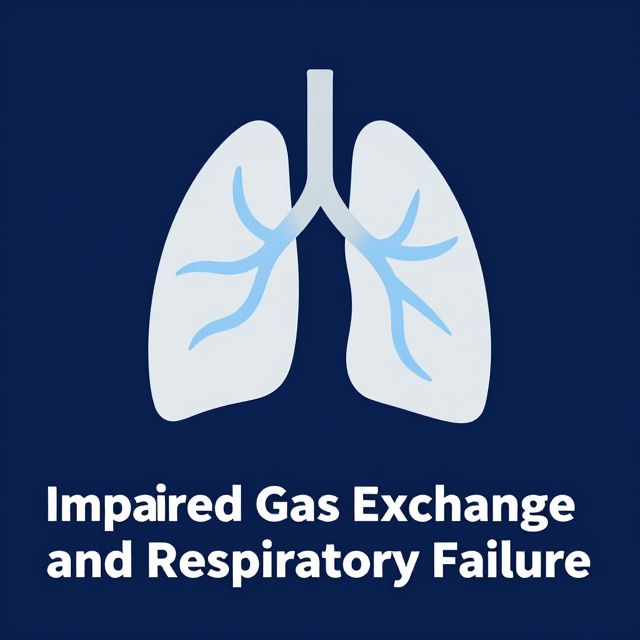
This study material has been compiled from a copy-pasted text and a lecture audio transcript.
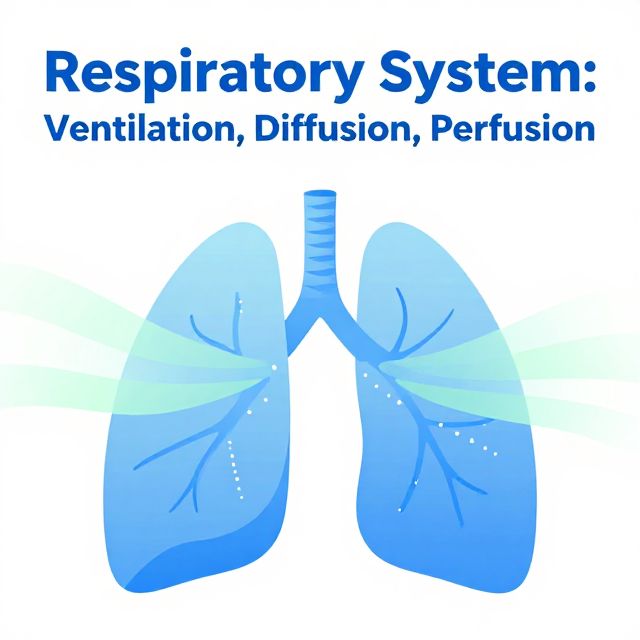
📚 Impaired Gas Exchange and Respiratory Failure: A Comprehensive Study Guide
🎯 Introduction to Gas Exchange Impairment
Impaired gas exchange is a critical physiological condition characterized by two primary issues:
- Inadequate oxygenation of the blood (insufficient oxygen added).
- Deficient carbon dioxide removal from the blood.
This impairment can arise from various factors, including environmental conditions, underlying lung diseases, or neuromuscular problems that affect ventilation or the neural control of respiration.
🔑 Key Definitions & Values
- Hypoxia: A reduction in oxygen supply to the tissues.
- Hypoxemia: A low level of oxygen specifically in the blood.
- Hypercapnia (Hypercarbia): An excess of carbon dioxide in the blood.
Normal Arterial Blood Gas Values:
- PO2 (Partial Pressure of Oxygen): Approximately 100 mm Hg
- PCO2 (Partial Pressure of Carbon Dioxide): Approximately 40 mm Hg
Defining Respiratory Failure: Respiratory failure is clinically diagnosed when:
- PO2 < 60 mm Hg ⚠️
- PCO2 > 50 mm Hg ⚠️
Abbreviations:
- PaO2: Partial pressure of oxygen in arterial blood.
- PAO2: Partial pressure of oxygen in alveolar air.
- PaCO2: Partial pressure of carbon dioxide in arterial blood.
- PACO2: Partial pressure of carbon dioxide in alveolar air.
Hypoxia and hypercapnia can manifest as acute or chronic conditions. They may occur independently or coexist.
📉 Hypoxemia: Mechanisms and Manifestations
Hypoxemia, a low level of oxygen in the blood, results from several mechanisms that reduce the arterial partial pressure of oxygen (PaO2).
⚙️ Mechanisms of Hypoxemia
-
Hypoventilation 🌬️
- Occurs when the volume of "fresh" air moving into and out of the lungs is significantly reduced.
- Causes: Often due to conditions outside the lung:
- Depression of the respiratory center (e.g., drug overdose).
- Diseases affecting nerves supplying respiratory muscles.
- Disorders of respiratory muscles (e.g., muscular dystrophy).
- Thoracic cage disorders (e.g., crushed chest).
-
Impaired Diffusion ↔️
- Oxygen in the alveoli fails to equilibrate with that in the pulmonary capillary blood.
- Causes: Conditions altering the thickness or permeability of the alveolar-capillary membrane, increasing the distance gases must travel:
- Interstitial lung disease.
- Adult Respiratory Distress Syndrome (ARDS).
- Pulmonary edema.
- Pneumonia.
-
Shunt 🩸
- Blood reaches the arterial system without passing through a ventilated portion of the lung.
- Types:
- Extrapulmonary: Most common, such as in congenital heart disease.
- Intrapulmonary: Occurs when a portion of the lung is completely unventilated (e.g., atelectasis).
-
Ventilation-Perfusion (V/Q) Mismatching 📊
- Occurs when areas of the lung are ventilated but not perfused, or perfused but not ventilated.
- Even normal lungs have some mismatching (e.g., top vs. bottom of the lung).
- Disease States: Severely disrupted in conditions like Chronic Obstructive Pulmonary Disease (COPD), leading to hypoxemia.
-
Reduced Partial Pressure of Oxygen in Inspired Air ⛰️
- A less common cause, occurring only under special circumstances, such as at high altitudes.
💡 Often, multiple mechanisms contribute to hypoxemia in individuals with respiratory or cardiac diseases.
🤒 Manifestations of Hypoxemia
Symptoms typically appear when arterial PO2 falls below 50 mm Hg.
- Early Signs: Tachycardia, mild increase in blood pressure, cool and moist skin, confusion, delirium, difficulty in problem-solving, euphoria.
- Late Signs: Stupor, coma, hypotension, bradycardia.
Cyanosis 🔵
- A bluish discoloration of the skin and mucous membranes.
- Results from an excessive concentration of reduced (deoxygenated) hemoglobin in small blood vessels.
- Requires approximately 5 g/dL of deoxygenated hemoglobin to be visible.
- Most marked in lips, nail beds, ears, and cheeks.
- Types:
- Central Cyanosis: Increased deoxygenated or abnormal hemoglobin in arterial blood, affecting mucous membranes and skin.
- Peripheral Cyanosis: Caused by slowed blood flow to an area, leading to increased oxygen extraction from the blood. Results from vasoconstriction and diminished peripheral blood flow (e.g., cold exposure, shock, congestive heart failure, peripheral vascular disease).
📈 Hypercapnia: Mechanisms and Manifestations
Hypercapnia is an increase in the carbon dioxide content of the blood. It is a common consequence of diseases affecting the lungs, neuromuscular system, chest wall, circulatory system, and neural control of respiration.
⚙️ Mechanisms of Hypercapnia
The blood PCO2 is directly proportional to carbon dioxide production and inversely related to alveolar ventilation. Four main factors contribute to hypercapnia:
-
Increased Carbon Dioxide Production 🔥
- Changes in metabolic rate due to increased activity, fever, or disease.
- Example: CO2 production increases by 13% for every 1°C rise in temperature above normal. Hypercapnia occurs if alveolar ventilation does not increase proportionally.
-
Disturbances in the Gas Exchange Function of the Lung 🌬️
- Lung diseases can reduce effective alveolar ventilation, even if total ventilation is maintained, leading to CO2 retention.
-
Abnormalities in the Respiratory Function of the Chest Wall and Respiratory Muscles 💪
- Respiratory Muscle Fatigue: Occurs when energy requirements exceed energy supply.
- Reduced Energy Supply: Low cardiac output, anemia, decreased oxygen saturation.
- Muscle Weakness: Electrolyte imbalances (especially hypokalemia and hypophosphatemia).
- Respiratory Muscle Fatigue: Occurs when energy requirements exceed energy supply.
-
Changes in the Neural Control of Respiration 🧠
- The respiratory center (medulla oblongata and pons) activates respiratory muscles.
- CO2 easily crosses the blood-brain barrier. It stimulates ventilation indirectly by reacting with water to form carbonic acid, which dissociates into hydrogen ions (H+), providing a potent direct stimulatory effect on the respiratory center.
🤒 Manifestations of Hypercapnia
Hypercapnia affects multiple body systems: respiratory, renal, neural, cardiovascular, and acid-base balance.
- Chronic Hypercapnia: The body adapts, and symptoms may not appear until PCO2 is markedly elevated (> 50 mm Hg).
- Acute Effects:
- Vasodilation: CO2 has a direct vasodilatory effect on many blood vessels.
- Cerebral vessel dilation leads to headaches.
- Hyperemic conjunctivae and flushed skin.
- Nervous System Effects (CO2 Narcosis): Similar to an anesthetic.
- Progressive somnolence, disorientation.
- If untreated, can lead to coma.
- Cardiovascular: Mild to moderate increases in blood pressure are common.
- Vasodilation: CO2 has a direct vasodilatory effect on many blood vessels.
PCO2 Levels and Symptoms:
- 60-75 mm Hg: Air hunger, rapid breathing.
- 80-100 mm Hg: Lethargy.
- 100-150 mm Hg: Anesthesia and potential death.
💨 Abnormal Breathing Patterns
Normal respiration in an adult is typically 16-18 breaths per minute. Various conditions can alter this pattern.
🔄 Common Abnormal Patterns
- Tachypnea: Rapid breathing.
- Hyperpnea: Increase in both rate and depth of respiration.
- Bradypnea: Abnormally slow respiratory rate.
- Hyperventilation: Ventilation in excess of that needed for normal CO2 elimination.
- Associated with decreased arterial PCO2 and respiratory alkalosis.
- Hypoventilation: Ventilation inadequate for alveolocapillary gas exchange.
- Causes increased PCO2 (respiratory acidosis) and decreased arterial PO2.
🕰️ Periodic Breathing Patterns
These patterns involve episodes of apnea (absence of breathing).
-
Cheyne-Stokes Breathing 🌊
- Characterized by periods of slowly waxing and waning respirations, separated by periods of apnea lasting up to 30 seconds.
- Cause: Impaired function of central feedback mechanisms that buffer the respiratory center's response to CO2.
- During the hyperpneic phase, CO2 levels fall, reducing ventilatory stimulus and leading to apnea. Apnea then causes CO2 to accumulate, restarting the hyperpneic phase.
- Predisposing Conditions:
- Congestive Heart Failure (CHF): Delayed blood transport from lungs to brain chemoreceptors.
- Impaired brain centers regulating respiratory feedback.
-
Biot's Breathing 📉
- Similar to Cheyne-Stokes with recurring apnea, but during ventilation, tidal volume and frequency remain fixed.
- Mechanism is unclear; may be a variant of Cheyne-Stokes.
- Occurs in patients with Central Nervous System (CNS) diseases, especially meningitis.
-
Apneustic Breathing ⏸️
- Characterized by prolonged inspiratory pauses.
-
Kussmaul Respiration 💨
- A type of hyperventilation seen in diabetes, often associated with diabetic ketoacidosis. It is deep, labored breathing.