 Podit
Podit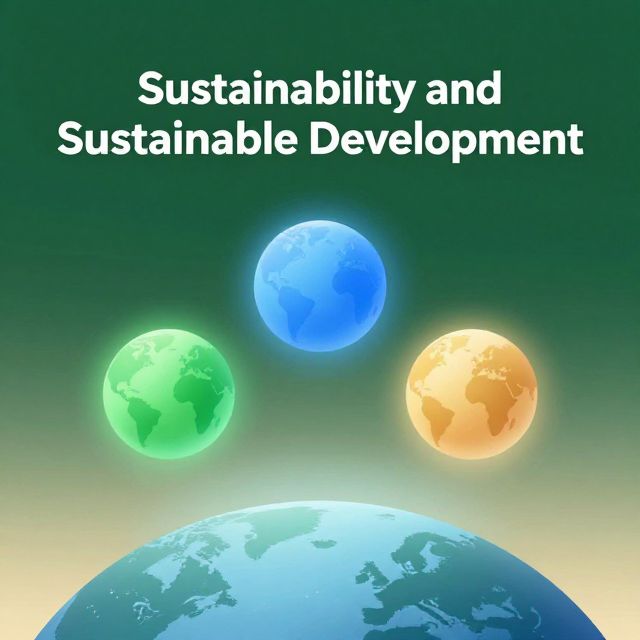
This study material is compiled from a lecture audio transcript and copy-pasted text provided by the user.
🌍 Sustainable Development and Environmental Challenges: A Study Guide
📚 Introduction to Sustainable Development
Sustainable development is a fundamental concept that addresses how we can meet the needs of the present without compromising the ability of future generations to meet their own needs. It is crucial for the health of our planet and the well-being of societies.
✅ Core Principles of Sustainable Development
Sustainable development balances three interconnected pillars:
- Economic Growth: Fostering prosperity and opportunities.
- Social Equality: Ensuring fairness, access to resources, healthcare, and education for all.
- Environmental Protection: Preserving natural resources and ecosystems.
If any of these pillars are neglected, the entire system becomes unstable. For example, rapid economic growth is unsustainable if it leads to widespread poverty or severe environmental degradation.
📜 Historical Context and Global Goals
The concept gained prominence with the 1987 Brundtland Report, titled "Our Common Future," which formally defined sustainable development. Following this, the United Nations 2030 Agenda for Sustainable Development established 17 ambitious Goals and 169 Targets to be achieved by 2030. These goals focus on critical areas such as:
- Ending poverty 🎯
- Reducing inequality ⚖️
- Fostering economic growth 📈
- Promoting sustainable energy use 💡
- Encouraging responsible production and consumption ♻️
- Driving industrial development 🏭
- Combating climate change 🌡️
⚠️ Why Sustainable Development Matters
Much of today's development is unsustainable, leading to significant global challenges:
- Climate change 🌡️
- Pollution 💨💧
- Poverty and hunger 💔
- Inequality ⚖️
Unsustainable practices often prioritize short-term gains over long-term consequences, causing irreversible damage. For instance, clear-cutting a forest for immediate profit can destroy ecosystems, endanger species, and increase flood risks. As the global population grows, so does the demand for resources, intensifying these problems.
🌿 Ecological Sustainability
Ecological sustainability focuses on maintaining nature's balance, allowing ecosystems to heal and regenerate, and safeguarding a clean and healthy environment for future generations. It means using natural resources responsibly without causing pollution or destruction.
🌍 Case Study: Meke Maar Lake
Meke Maar, a crater lake in Turkey, exemplifies the delicate balance of natural ecosystems. Formed by volcanic activity millions of years ago, it's known for its unique "blue eye" appearance. However, in recent years, its water level has significantly dropped due to evaporation, leading to the formation of salt layers in dry areas. This change highlights the vulnerability of natural environments to climatic shifts and human impact, underscoring the importance of protecting such natural monuments. Meke Maar is recognized as an important wetland under the Ramsar List.
🚨 Environmental Threats to Sustainability
Achieving ecological sustainability is challenged by several major environmental threats that disrupt ecosystem balance and endanger both nature and human health.
1️⃣ Habitat Loss and Fragmentation
- Habitat Loss: The complete destruction of a species' natural living environment due to human activities.
- Habitat Fragmentation: The breaking up of large, continuous habitats into smaller, isolated patches. Both are severe threats to biodiversity as species require continuous habitats to thrive.
- Main Causes: Agriculture, urbanization, mining, deforestation, pollution, pesticide use, dam construction, draining wetlands, and altering river flow.
- Consequences: Species extinction, reduced species diversity, decreased population sizes, and difficulties in organism dispersal. For plants, this means reduced adaptability and lower growth success, while for animals, it disrupts essential behaviors like nesting, reproduction, and migration.
2️⃣ Pollution and Environmental Problems
Pollution is the contamination of air, water, and soil by harmful waste that cannot be naturally removed, disrupting ecosystems and harming living organisms.
- Air Pollution:
- Causes: Natural (volcanoes, forest fires) and human-made (industry, traffic, fossil fuel use).
- Effects: Respiratory diseases, ozone layer depletion, and acid rain.
- Ozone Layer Depletion:
- The ozone layer (O₃) protects Earth from harmful ultraviolet (UV) radiation.
- Causes: Chlorofluorocarbons (CFCs) from aerosols, refrigerants, industrial gases, and vehicle exhausts.
- Effects: Increased UV radiation reaching Earth, leading to higher risks of skin cancer, cataracts, and immune system disorders.
- Action: The Montreal Protocol (1987) globally banned CFCs to address this issue.
- Acid Rain:
- Formation: Gases from human activities (CO₂, SO₂, NO₂) react with atmospheric water vapor to form sulfuric and nitric acids.
- Effects: Damages lakes, rivers, soil, and forests; pollutes water sources; harms aquatic life; mobilizes heavy metals in soil.
- Water Pollution:
- Causes: Household and industrial waste, sewage, agricultural fertilizers, and pesticides.
- Eutrophication: Increased nitrogen and phosphorus levels lead to excessive growth of aquatic plants and algae. This blocks sunlight, reduces oxygen, and devastates aquatic ecosystems, causing the death of fish and other organisms.
- Soil Pollution:
- Causes: Household and industrial waste, exhaust gases, pesticides, chemical fertilizers, and heavy metals.
- Effects: Harms soil organisms, enters the food chain, accumulates in humans causing health problems, and contaminates groundwater.
- Solution: Bioremediation uses living organisms (bacteria, plants, fungi) to break down harmful substances in polluted soil.
- Radioactive Pollution:
- Nature: Accumulation of harmful radiation-emitting substances from unstable atomic nuclei.
- Sources: Natural (cosmic rays, uranium) and artificial (X-ray devices, nuclear power plants).
- Effects: Severe damage to living organisms and disruption of ecological balance.
3️⃣ Global Climate Change
- Greenhouse Effect: Naturally warms Earth. However, human activities (fossil fuel use, industrial growth, deforestation, population increase) add excessive greenhouse gases (CO₂, methane, water vapor), leading to an enhanced greenhouse effect and global warming.
- Effects: Higher temperatures, melting glaciers, rising sea levels, and increased natural disasters (droughts, desertification, forest fires, floods, landslides). This harms ecosystems and accelerates species extinction.
4️⃣ Erosion
- Definition: The process where soil is worn away and moved by water or wind, especially in areas lacking vegetation.
- Factors: Climate, land slope, soil type, plants (natural); cutting trees, fires, overgrazing, wrong farming (human activities).
- Effects: Loss of fertile soil, reduced crop production, silting of dams and lakes, droughts, desertification, floods, and landslides.
5️⃣ Forest Fires
- Importance of Forests: Protect biodiversity, clean air and water, regulate the water cycle, and prevent erosion.
- Causes: Natural (lightning) but mostly human-caused (carelessness).
- Results: Destruction of habitats, reduced biodiversity, climate impact, soil damage, increased erosion, floods, and air pollution.
6️⃣ Biodiversity Loss
- Main Reasons: Habitat loss and fragmentation (urbanization, farming, industry), invasive species (disrupt ecosystems), pollution, climate change, and overuse of natural resources.
- Vulnerability: Endemic species (e.g., Türkiye's piyan plant and Kangal dog) are particularly vulnerable to extinction.
💡 Actions for Ecological Sustainability
Achieving ecological sustainability requires collective effort and responsible actions:
- Reduce Pollution: Stop releasing harmful chemicals and industrial waste into nature.
- Waste Management: Reduce plastic waste and increase recycling efforts.
- Energy Transition: Use renewable energy sources (solar, wind) and improve energy efficiency.
- Resource Conservation: Protect biodiversity and natural resources.
- Water Management: Protect water resources, reduce water pollution, and use water efficiently.
- Sustainable Urbanization: Build eco-friendly and sustainable cities.
- Heritage Protection: Protect natural and cultural heritage.
- Climate Action: Fight climate change and prepare for natural disasters.
- Ecosystem Preservation: Protect oceans, seas, wetlands, forests, and other land ecosystems, ensuring their sustainable use.
- Land Management: Prevent desertification and land degradation.