Comprehensive Guide to Beverages: Distillation, Production, and Pairing - kapak
Bilim#distillation#spirits#whiskey#brandy

Comprehensive Guide to Beverages: Distillation, Production, and Pairing

Explore the intricate world of beverages, from the science of distillation and diverse production methods of spirits, coffee, and tea, to the emerging trends in functional drinks and the art of food pairing.

June 19, 2026 ~29 dk toplam
01

Sesli Özet

10 dakika

Konuyu otobüste, koşarken, yolda dinleyerek öğren.

Sesli Özet

Comprehensive Guide to Beverages: Distillation, Production, and Pairing

0:0010:25
02

Flash Kartlar

25 kart

Karta tıklayarak çevir. ← → ile gez, ⎵ ile çevir.

1 / 25
Tüm kartları metin olarak gör
  1. 1. What is distillation in the context of beverages?

    Distillation is a fundamental process used to separate components of a liquid mixture by heating and condensing vapor. In beverage production, its primary use is to create drinks with a higher alcohol content. This method allows for the concentration of ethanol, separating it from water and other compounds present in the initial fermented liquid.

  2. 2. What is the minimum alcohol content by volume for a beverage to be considered a distilled spirit?

    Distilled spirits are characterized by an alcohol content of at least 15% by volume. This higher concentration is achieved through the distillation process, which removes water and other less volatile components from the fermented base liquid. Common examples include whiskey, vodka, and gin, all exceeding this minimum threshold.

  3. 3. Explain the key difference between methanol and ethanol in beverage production.

    Methanol and ethanol are both alcohols, but they differ significantly in their properties and safety. Methanol, boiling at 64°C, is highly toxic and can cause blindness or death, making it extremely dangerous for consumption. Ethanol, on the other hand, boils at 78°C and is the drinkable alcohol found in alcoholic beverages, though still harmful in excessive amounts.

  4. 4. What are 'Foreshots' in the distillation process and why are they discarded?

    Foreshots are the very first vapors collected during distillation. They are rich in highly dangerous compounds like methanol and acetone. Due to their toxicity and undesirable flavor profile, foreshots are always discarded to ensure the safety and quality of the final spirit.

  5. 5. What are the 'Hearts' in distillation and why are they important?

    The 'Hearts' represent the best and cleanest part of the distillation run. This fraction primarily consists of pure ethanol, offering a smooth and pleasant flavor profile. The hearts form the final product of distillation, as they contain the desired alcohol with minimal impurities, making them crucial for the spirit's quality.

  6. 6. Compare Pot Distillation and Column Distillation methods.

    Pot Distillation is the oldest method, using copper stills in a batch process, which typically results in spirits with more character and flavor from the raw materials. Column Distillation, developed in the 19th century, is a continuous process that allows for high-volume and more efficient production. It generally yields purer, lighter spirits due to its greater efficiency in separating components.

  7. 7. Briefly describe the key steps in Brandy production.

    Brandy production begins with white wine fermentation. This is followed by double distillation, typically reaching an alcohol content of 68-72%. The spirit is then aged for a minimum of two years in oak barrels, which imparts characteristic aroma, flavor, and an amber color. Finally, the aged brandy is bottled for consumption.

  8. 8. What is Cognac and what makes it distinct from other brandies?

    Cognac is a specific type of brandy that originates exclusively from the Cognac region of France. Its distinctiveness comes from strict geographical indications and production methods. It is twice distilled and aged in French oak barrels, adhering to specific regulations that ensure its unique quality and regional identity.

  9. 9. Outline the main stages of whiskey production.

    Whiskey production involves several key stages. It starts with malting barley, followed by mashing to create a sugary liquid. This liquid then undergoes fermentation, after which it is typically double distilled in copper stills. The final crucial step is aging in oak barrels, which develops the whiskey's characteristic flavors and colors.

  10. 10. What is the distinguishing process for Tennessee Whiskey compared to Bourbon?

    Tennessee Whiskey is distinguished from Bourbon by the 'Lincoln County Process.' This unique step involves filtering the spirit through sugar-maple charcoal before it undergoes aging. This charcoal filtration imparts a smoother flavor profile to the whiskey, setting it apart from other bourbons.

  11. 11. Where did Rum originate and what is its primary raw material?

    Rum originated in the Caribbean, a region historically associated with sugar cane cultivation. Its primary raw material is sugar cane products, most commonly molasses. The fermentation of these sugar cane derivatives forms the base liquid that is then distilled to produce rum.

  12. 12. What is the most critical production stage for Vodka?

    For Vodka, the most critical production stage is filtration. After distillation, vodka is extensively filtered to remove impurities and achieve its characteristic purity and neutral flavor profile. This rigorous filtration process ensures the spirit is as clean and smooth as possible.

  13. 13. What is the primary botanical used to flavor Gin?

    The primary botanical used to flavor Gin is juniper berries. These berries impart the distinctive piney and slightly citrusy notes that are characteristic of gin. Other botanicals are often added to create complex flavor profiles, but juniper is always the dominant and defining flavor.

  14. 14. What is the characteristic visual effect of Rakı when water is added?

    Rakı is characterized by the 'louche effect' when water is added to it. This effect causes the clear spirit to turn milky white or opaque. This phenomenon occurs due to the anise oil, which is soluble in alcohol but not in water, precipitating out of solution when diluted.

  15. 15. According to popular legends, where are coffee's origins often traced?

    According to popular legends, coffee's origins are often traced to the Ethiopian Highlands. Stories frequently mention figures like Kaldi the goat herder, who supposedly discovered coffee after noticing his goats' increased energy from eating the berries. Another legend involves Omar the exile, who used the berries to survive.

  16. 16. How do Arabica and Robusta coffee beans differ in terms of caffeine content and flavor profile?

    Arabica and Robusta coffee beans have distinct differences. Arabica offers less caffeine, higher sweetness, and notes of fruit and floral flavors, typically grown at high altitudes. Robusta, conversely, has higher caffeine content, earthy flavors, bitterness, and a fuller body, often grown in hotter climates.

  17. 17. Briefly explain the difference between the Dry Natural and Wet (Washed) methods of coffee processing.

    The Dry Natural Method involves sun-drying coffee cherries whole, which can yield fruity flavors but risks inconsistency. In contrast, the Wet (Washed) Method removes the peels and then soaks the beans in water. This process results in a cleaner, brighter coffee profile with more consistent quality.

  18. 18. What is the purpose of roasting green coffee beans?

    The purpose of roasting green coffee beans is to develop their flavors and aromas. Green coffee beans lack strong aromatic compounds, but the roasting process, occurring around 260-270°C, triggers chemical reactions that create the complex flavors and fragrances we associate with coffee. This transformation is crucial for the final taste.

  19. 19. From which plant do all true teas originate?

    All true teas, regardless of their type (green, black, oolong, etc.), originate from a single plant species. This plant is known as 'Camellia Sinensis.' Numerous hybrids and cultivars have been developed from this plant to achieve various desirable traits and flavor profiles.

  20. 20. What is 'Terroir' in the context of tea production?

    'Terroir' in the context of tea production refers to the complete natural environment in which a particular tea is produced. This encompasses various factors such as altitude, soil composition, climate conditions, and the surrounding ecosystem. These environmental elements significantly influence the tea's unique flavor, aroma, and overall quality.

  21. 21. Explain the role of 'Fermentation' (Oxidation) in tea production and its impact.

    'Fermentation,' or more accurately oxidation, is a crucial stage in tea production where enzymes transform compounds within the tea leaves. This process converts catechins into theaflavins, which contribute to taste, and thearubigins, which are responsible for color. The degree of oxidation defines the tea type, categorizing them as non/light, semi, fully, or post-fermented.

  22. 22. What are functional beverages?

    Functional beverages are drinks that offer health benefits beyond basic hydration. They are formulated to provide additional nutritional or physiological advantages. These benefits are typically achieved by incorporating ingredients such as vitamins, minerals, probiotics, proteins, and various herbal extracts into the drink.

  23. 23. What are some potential risks associated with consuming energy drinks?

    While energy drinks are popular for boosting energy and concentration, they carry several potential risks. These include the danger of caffeine overdose due to high stimulant content. Additionally, they can lead to cardiovascular problems and other adverse health effects, especially when consumed excessively or by sensitive individuals.

  24. 24. How are sports drinks categorized based on osmolality?

    Sports drinks are categorized based on their osmolality, which refers to the concentration of solutes. They can be hypotonic, meaning they have a lower concentration of solutes than body fluids, aiding rapid hydration. Isotonic drinks have a similar concentration, balancing hydration and electrolyte replacement. Hypertonic drinks have a higher concentration, primarily for carbohydrate replenishment.

  25. 25. How is Kombucha produced?

    Kombucha is a fermented tea produced using a 'SCOBY,' which stands for Symbiotic Culture Of Bacteria and Yeast. This SCOBY is added to sweetened tea, initiating a fermentation process. During fermentation, the SCOBY metabolizes the sugar and tea compounds, resulting in a slightly effervescent, tangy beverage with probiotic benefits.

03

Bilgini Test Et

15 soru

Çoktan seçmeli sorularla öğrendiklerini ölç. Cevap + açıklama.

Soru 1 / 15Skor: 0

What is the primary purpose of distillation in beverage production?

04

Detaylı Özet

9 dk okuma

Tüm konuyu derinlemesine, başlık başlık.

This study material has been compiled and organized from a combination of copy-pasted text and a lecture audio transcript.


📚 Comprehensive Guide to Beverages: Distillation, Production, and Pairing

Introduction

This guide provides a structured overview of various beverages, covering the fundamental principles of distillation, the intricate production methods of spirits, coffee, and tea, the evolving landscape of functional drinks, and the nuanced art of pairing beverages with food. Our aim is to offer a clear and concise understanding of these diverse and complex subjects.


1. The Science of Distillation and Global Spirits 🥃

1.1. Distillation: Definition & Purpose

📚 Definition: Distillation is a process that separates components of a liquid mixture by heating and condensing vapor. Its primary use in beverages is to produce drinks with a higher alcohol content. ✅ Examples:

  • Cognac is produced by distilling wine.
  • Whiskey is produced by distilling beer. ✅ Distilled Spirits: High-alcohol beverages (at least 15% ABV) like whiskey, cognac, vodka, rum, gin, and rakı.

1.2. Important Alcohols

  • Methanol: Boils at 64°C. ⚠️ Highly toxic; can cause blindness or death.
  • Ethanol: Boils at 78°C. The drinkable alcohol.

1.3. Distillation Cuts: The Art of Separation

Distillers carefully manage different "cuts" during the process:

  1. Foreshots: ⚠️ First 1-2% of the run. Rich in methanol, acetone, and aldehydes. Highly toxic and always discarded. Characterized by a sharp, chemical smell.
  2. Heads: Next 5-10%. Contain ethanol and volatile compounds like acetaldehyde and esters. Have a harsh taste and aroma; often set aside or redistilled ("feints") to recover hidden ethanol.
  3. Hearts: The best and cleanest part, comprising 30-40% of the run. Primarily pure ethanol, offering a smooth and pleasant flavor. This is the "liquid gold" used for the final product.
  4. Tails: Final 20-30%. Contain fusel oils and heavier compounds. Foul-smelling ("wet dog," "cardboard"); often collected as "feints" for redistillation.

1.4. Distillation Methods

  • Pot Distillation: The oldest method, using copper pot stills in a batch process.
  • Column Distillation: Developed in the 19th century, allows for continuous, high-volume, and more efficient production.

1.5. Key Distilled Spirits

Brandy

📚 Definition: A spirit produced by distilling wine (usually twice) and aging it in oak barrels. ✅ Production Stages: White wine production → Double distillation (68-72% alcohol) → Aging (min. 2 years in oak) → Bottling. 📊 Aging Labels:

  • VS (Very Special): Min. 2 years aging.
  • VSOP (Very Superior Old Pale): Min. 4 years aging.
  • XO (Extra Old): Min. 6 years aging.
  • Hors d'Age: More than 10 years old. 💡 Famous Types:
  • Cognac: From Cognac region, France. Twice distilled, aged in French oak.
  • Armagnac: From Armagnac region. Distilled once.
  • Calvados: Made from fermented apples in Calvados region.

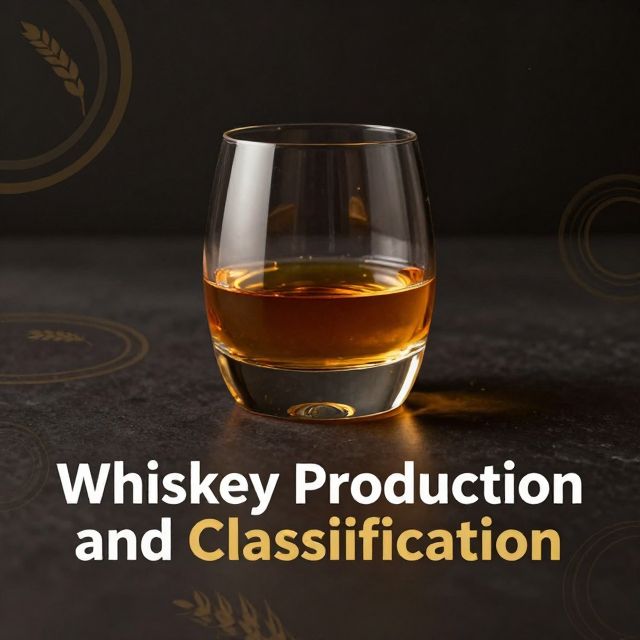
Whiskey

Production Stages: Malting (barley germinates) → Mashing (sugary liquid "mash" formed) → Fermentation (8% alcohol) → Distillation (twice, ~80% alcohol) → Aging (oak barrels). 💡 Malting Insight: In Scotland, peat is used to dry barley, imparting a characteristic smoky flavor. 📚 Types:

  • Single Malt: 100% malted barley, single distillery, copper stills.
  • Single Grain: Single distillery, can use wheat, corn, rye, etc. Softer.
  • Blended: Mixture of malt and grain whiskies. Most consumed. 🌍 Regions:
  • Scotch Whisky: Oldest tradition. (e.g., Highland, Speyside, Islay).
  • Irish Whiskey: Usually triple distilled. Spelled with an "e" to distinguish.
  • American Whiskey: Introduced by Irish immigrants. Corn-based.
    • Tennessee Whiskey: Produced in Tennessee, min. 51% corn, aged in new charred oak. Key feature: Lincoln County Process (filtered through sugar-maple charcoal before aging for smoothness). Famous example: Jack Daniel's.

Rum

📚 Definition: Distilled from sugar cane products (molasses or juice). 🌍 History: First distilled in the Caribbean around 1620. ✅ Production: Molasses/sugar syrup → Fermentation → Distillation (column for light, pot for dark) → Aging/Blending → Bottling. 📚 Types: Light (white/silver), Dark, Gold, Overproof, Flavored, Spiced.

Vodka

📚 Definition: Distilled spirit from potatoes or grains (wheat, barley, rye). Known for purity and neutral flavor. ✅ Production: Mashing → Fermentation → Distillation (usually column) → Filtration (most critical stage, using activated carbon, lava stones, etc., to remove impurities) → Bottling.

Gin

📚 Definition: Colorless, aromatic spirit flavored primarily with juniper berries. 🌍 History: Developed in Netherlands as "Genever," popularized in England. ✅ Key Ingredient: Juniper Berry (gives characteristic aroma). ✅ Production: Mashing → Fermentation → Distillation (botanicals added and redistilled) → Filtering → Bottling.

Rakı

Production: Suma fermentation → First distillation → Anise infusion → Second distillation → Dilution & resting. 💡 Louche Effect: Adding water turns rakı milky white due to anethole emulsification.


2. Global Beverage Traditions: Coffee and Tea ☕🍵

2.1. Coffee

🌍 History & Origin: Traced to Ethiopian Highlands, brought to Yemen around 14th century where brewing emerged. 📚 First Coffee Bean: Arabica (oldest, widely used, over 100 varieties exist). 🌍 Global Spread: European demand led to smuggling and planting in colonial territories, creating the "Coffee Belt" (e.g., Ethiopia, Brazil, Colombia).

Production Methods:

  • Dry Natural Method: Cherries sun-dried, then outer skin removed. Produces fruity flavors (blueberry, strawberry) but can be inconsistent.
  • Wet (Washed) Method: Peels removed, beans soaked in water (12-72 hrs), then dried. Results in a cleaner profile.

🔥 Roasting: Critical for flavor development. Green beans lack aroma. Occurs around 260-270°C, creating most aromas and flavors.

Brewing Methods:

  • Espresso Machine: Pressurized water through fine grounds for intense flavor.
  • Moka Pot: Steam pressure, water moves from lower to upper chamber.
  • Pour Over: Paper filters, lighter taste, medium-fine grind.
  • French Press: Coffee immersed in hot water, coarse grind.
  • Cold Brew: Cold water, extra-coarse grounds, popular for low acidity.

👅 Coffee Tasting (Cupping): Evaluates sweetness, acidity, mouthfeel, balance, and flavor.

📚 Arabica vs. Robusta:

  • Arabica: Less caffeine, high altitude, cleaner finish, more sweetness, fruity/floral notes, medium-high acidity/body.
  • Robusta: Earthy/mushroom/cocoa notes, high bitterness, high acidity/sourness, high body, high caffeine.

2.2. Tea

🌿 Tea Plant: All true teas come from Camellia Sinensis. Cultivars are developed for desirable traits (flavor, resistance). 🌍 Terroir: Environmental conditions (altitude, soil, climate) significantly influence tea's flavor, aroma, and quality.

Production Methods:

  • CTC (Crush, Tear, Curl): Industrial method for small, uniform granules, mainly for black tea (Sri Lanka, Kenya, India).
  • Orthodox (Traditional): Involves specific stages:
    1. Withering: Moisture removed from leaves.
    2. Green Leaf Sifting: Removes impurities.
    3. Rolling: Shapes leaves, breaks cell walls, aids oxidation, releases aromatics.
    4. Fixing: (Green & Yellow Tea only) Quick heating to destroy enzymes and prevent oxidation, preserving aroma.
    5. Fermentation & Oxidation: Enzymes become theaflavins (taste) and thearubigins (color). Controlled by temperature/humidity.
    6. Drying & Sorting: Reduces moisture to ~3%, sorted by hand/machine (whole leaves = higher quality).

📚 Tea Types:

  • Green Tea: Unoxidized, closest to original leaf, rich in nutrients.
  • Matcha: Japanese powdered green tea, bright green, slightly bitter/vegetal.
  • White Tea: Least processed, slight natural oxidation, long withering.
  • Oolong Tea: Semi-oxidized, uses mature leaves, oxidation level controlled.
  • Black Tea: Fully oxidized, strong, malty, full-bodied (e.g., Ceylon, Assam, Darjeeling). Lapsang Souchong is a smoked black tea.
  • Pu'er Tea (Dark Tea): Post-fermented, contains probiotics (Sheng - naturally fermented, Shou - artificially aged).
  • Yellow Tea: Rare, similar to green, delicate flavor, slight yellowing process.
  • Blooming Tea: Fresh flowers wrapped in white tea leaves, "blooms" when steeped.

3. Modern Beverage Trends: Functional Drinks 🚀

3.1. Definition & Market Overview

📚 Definition: Functional beverages provide health benefits beyond basic hydration, containing vitamins, minerals, probiotics, proteins, herbal extracts, etc. 📈 Market Growth: Global market projected to reach ~$280 billion by 2030 (8-9% CAGR). 📊 Largest Segments: Energy Drinks (30%), Sports & Hydration (22%), Probiotic/Fermented (18%), Protein (14%).

3.2. Main Categories

  1. Energy Drinks: Caffeine, taurine, herbal stimulants.
  2. Sports & Hydration Drinks: Electrolytes, carbohydrates.
  3. Probiotic & Fermented Drinks: Kefir, kombucha.
  4. Protein-Based Drinks: Whey, plant proteins.
  5. Plant-Based Milks: Oat, almond, soy.
  6. Nootropic & Adaptogenic Drinks: Stress reduction, cognitive support.
  7. Non-Alcoholic Functional Drinks: Mocktails, 0.0% beverages.
  8. Beauty & Hydration+: Collagen, hyaluronic acid, antioxidants.

3.3. Energy Drinks

Purpose: Energy boost, concentration, reduced fatigue. ✅ Ingredients: Caffeine (80-300mg/can), taurine, glucuronolactone, B vitamins, ginseng, guarana, yerba mate. ⚠️ Risks: Caffeine overdose, alcohol-related injury (masks intoxication), substance dependence, cardiovascular problems.

3.4. Sports Drinks

Purpose: Rehydrate, replace fluids/electrolytes, replenish carbohydrates. ✅ Components: Electrolytes (sodium, potassium), carbohydrates, B vitamins, amino acids. 📚 Types by Osmolality:

  • Hypotonic: Lower concentration than body fluids (1-3% carbs). Fast hydration, low-intensity exercise.
  • Isotonic: Similar concentration (6-8% carbs). Hydration + energy, most common.
  • Hypertonic: Higher concentration (>10% carbs). Used after exercise to replenish glycogen.

3.5. Probiotic & Fermented Beverages

Function: Contain beneficial microorganisms for gut health, digestion, immunity. ✅ Examples: Kefir, yogurt drinks, kombucha, water kefir, boza (cereals), bushera (millet/sorghum). 📚 Kombucha: Fermented tea produced by SCOBY (Symbiotic Culture Of Bacteria and Yeast).

3.6. Adaptogens & Nootropics

  • Adaptogens: Help body manage stress (e.g., Ashwagandha, Rhodiola, Reishi).
  • Nootropics: Support brain function (e.g., L-Theanine, Bacopa Monnieri).

3.7. Emerging Trends

Plant-based milks, beauty drinks (collagen, hyaluronic acid), hydration+ (electrolyte powders), functional coffee/tea (mushroom coffee), sugar-reduced prebiotic sodas.


4. The Art of Food Pairing with Beverages 🍽️🥂

4.1. Challenges with High Alcohol Beverages

⚠️ High ABV (Alcohol by Volume) Problems:

  • Heat & Burn: Alcohol creates a burning sensation, masking delicate flavors.
  • Palate Fatigue: Reduces ability to taste salt, acid, umami.
  • Tannin Clash: Increases bitterness and astringency.
  • Texture Stripping: Removes richness from creamy/fatty foods.

4.2. Main Pairing Principles

  1. Fat Counteracts Heat: Fatty foods reduce alcohol burn (e.g., aged cheese, pork belly).
  2. Sugar Softens Alcohol: Sweet foods decrease alcohol perception (e.g., desserts, fruit).
  3. Salt Amplifies Flavor: Increases saliva, refreshes palate (e.g., oysters, olives).
  4. Complement or Contrast: Match similar flavors (smoke + smoke) or create contrast (peaty whisky + sweet).
  5. Avoid Double Bitterness: Do not combine bitter spirits with bitter foods.
  6. Temperature & Dilution: Ice and water reduce alcohol strength, altering pairing.

4.3. Pairing Specific Spirits & Cocktails

Gin (37-47% ABV)

Flavor: Juniper, citrus, herbal, dry. 🍽️ Pairings: Grilled prawns, goat cheese, cucumber canapés. ⚠️ Challenge: Strong spices and red meat overpower botanicals.

Vodka (37-40% ABV)

Flavor: Neutral, clean, slightly sweet. 🍽️ Pairings: Smoked salmon & blini, caviar, pickled vegetables. 💡 Insight: Food must provide flavor as vodka is neutral.

Aged Rum (40-50% ABV)

Flavor: Caramel, vanilla, oak, dried fruit. 🍽️ Pairings: Dark chocolate (70%), plantain, pork belly, aged cheeses. ⚠️ Challenge: Overproof rum overwhelms delicate foods.

Single Malt Scotch Whisky (43-60%+ ABV)

Flavor: Smoke, peat, vanilla, oak, dried fruit. 🍽️ Pairings: Smoked mackerel pâté, aged cheddar, fruit conserve. ⚠️ Challenge: Most difficult to pair due to high alcohol, smoke, and tannin.

Mezcal (40-55% ABV)

Flavor: Smoky, earthy, vegetal. 🍽️ Pairings: Mole negro, Manchego & honey, grilled fruits. ⚠️ Conflicts: Delicate seafood and cream sauces.

Negroni (24-28% ABV)

Flavor: Bitter, herbal (Gin, Campari, Sweet Vermouth). 🍽️ Pairings: Bresaola, olives, blood orange. ⚠️ Avoid: Artichokes, endive, very dark chocolate.

Old Fashioned (28-35% ABV)

Flavor: Whiskey-forward, vanilla, caramel (Bourbon/Rye, Sugar, Bitters). 🍽️ Pairings: Wagyu beef, salted caramel chocolate, blue cheese.

Margarita (15-22% ABV)

Flavor: Citrusy, acidic, refreshing (Tequila, Triple Sec, Lime Juice). 🍽️ Pairings: Fish tacos, guacamole, ceviche.

Espresso Martini (18-22% ABV)

Flavor: Bitter-sweet, coffee notes (Vodka, Coffee Liqueur, Espresso). 🍽️ Pairings: Tiramisu, chocolate tart, ricotta with honey.

Dry Martini (28-32% ABV)

Flavor: Very dry, botanical (Gin, Dry Vermouth). 🍽️ Pairings: Oysters, olive tapenade, prawn cocktail. ⚠️ Challenge: Very high alcohol; easily overwhelms food.

Rakı

🍽️ Traditional Pairings: Fried anchovies (hamsi), white cheese (beyaz peynir), melon (kavun), olive oil mezes, Arnavut ciğeri, fried squid (kalamar). ⚠️ Avoid: Tomato sauces, vinegar-heavy foods, desserts.
Kendi çalışma materyalini oluştur

PDF, YouTube videosu veya herhangi bir konuyu dakikalar içinde podcast, özet, flash kart ve quiz'e dönüştür. 1.000.000+ kullanıcı tercih ediyor.

Sıradaki Konular

Tümünü keşfet
Sustainability and Environmental Challenges

Sustainability and Environmental Challenges

Explore sustainable development, ecological balance, and major environmental threats like pollution, climate change, and biodiversity loss, along with actions for a sustainable future.

Özet 15
Science: Diet, Chemical Reactions, and Magnetism

Science: Diet, Chemical Reactions, and Magnetism

This summary explores fundamental concepts across science, including the principles of diet and growth, the mechanisms of chemical reactions, and the properties and applications of magnetism.

6 dk Özet 25 15 Görsel
Linguistics: Writing Systems, History, and Sociolinguistics

Linguistics: Writing Systems, History, and Sociolinguistics

An academic overview of linguistics, covering the evolution of writing systems, historical language change, sociolinguistic phenomena, and the interplay between language, culture, and interaction.

11 dk Özet 25 15 Görsel
Understanding the Borehole Environment

Understanding the Borehole Environment

This summary provides an academic overview of the borehole environment, detailing its characteristics, influencing factors, and significance in subsurface investigations and resource extraction.

6 dk Özet 15
Types of Dissolution and Solution Concentration

Types of Dissolution and Solution Concentration

Explore the different ways substances dissolve, including physical and chemical dissolution, and understand key concentration units like molarity and parts per million (ppm).

Özet 15 Görsel
The Musculoskeletal System: Structure, Function, and Locomotion

The Musculoskeletal System: Structure, Function, and Locomotion

Explore the intricate musculoskeletal system, its components, functions, and the mechanisms of locomotion in various organisms, with a detailed focus on the human body.

Özet 25 15 Görsel
The Nervous and Endocrine Systems: Body's Control Centers

The Nervous and Endocrine Systems: Body's Control Centers

Explore the intricate workings of the nervous and endocrine systems, their structures, functions, and how they maintain the body's homeostasis.

Özet 25 15 Görsel
The Reproductive System: Cell Division and Reproduction

The Reproductive System: Cell Division and Reproduction

Explore the fundamental processes of cell division and the diverse strategies of reproduction, including asexual and sexual methods, gametogenesis, fertilization, and the human reproductive systems.

Özet 25 15 Görsel