 Podit
Podit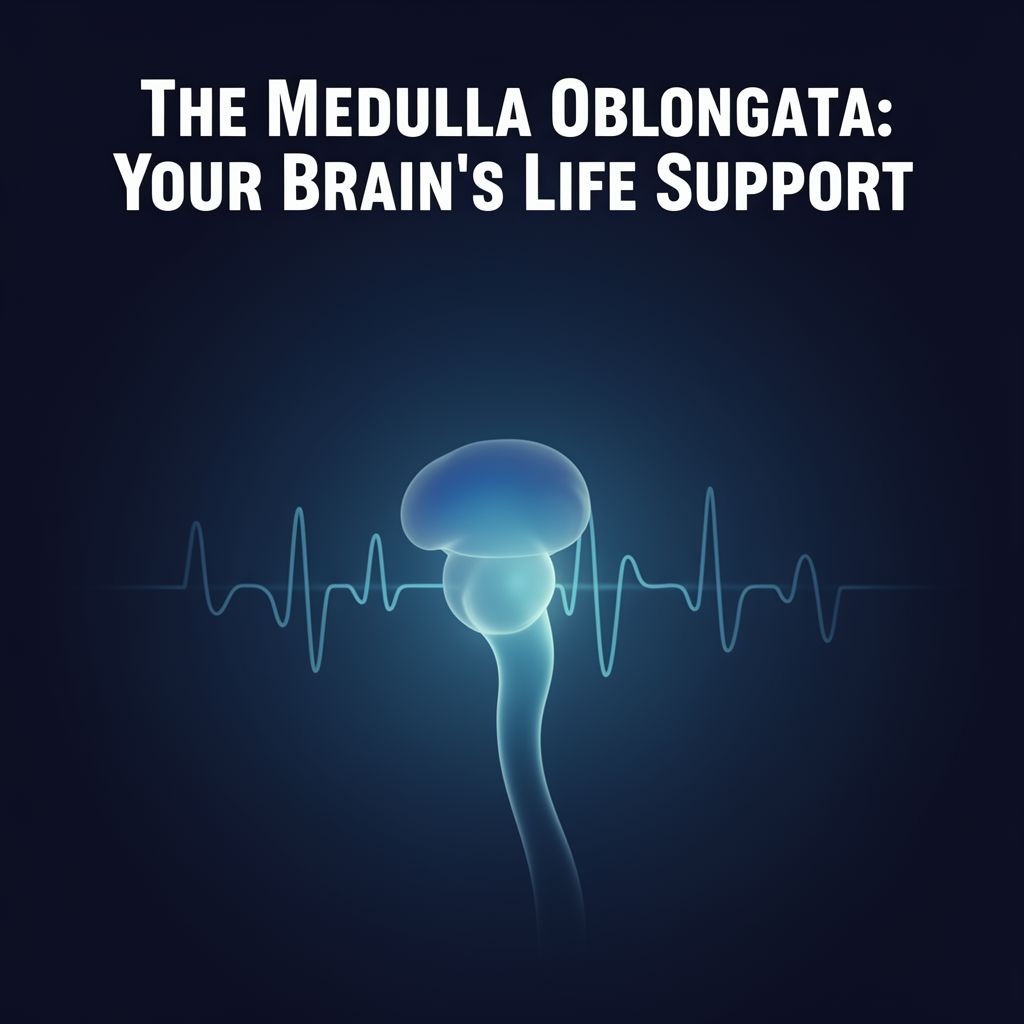
This study material is compiled from a lecture audio transcript and general anatomical knowledge to provide a comprehensive overview of the medulla oblongata.
The Medulla Oblongata: The Brainstem's Vital Control Center
Introduction 📚
The human body performs countless functions every second, many of which occur without conscious thought. Breathing, heartbeat, and blood pressure regulation are just a few examples of these essential, involuntary processes. At the core of managing these critical life-sustaining activities is a small yet incredibly powerful part of the brain called the medulla oblongata. This study guide will explore its location, structure, and the vital roles it plays in ensuring our survival.
1. What is the Medulla Oblongata? 🧠
The medulla oblongata, often simply referred to as the medulla, is the lowest part of the brainstem. It acts as a crucial bridge, connecting the brain to the spinal cord. Despite its relatively small size, it is an indispensable component of the central nervous system, responsible for regulating many fundamental involuntary functions that are absolutely vital for life.
2. Location and Anatomy 📍
The medulla oblongata is strategically positioned at the base of the brain.
- Location:
- It is the most inferior (lowest) part of the brainstem.
- It sits directly above the spinal cord.
- It is located inferior to the pons, another part of the brainstem.
- Think of it as the direct link between the higher brain centers and the spinal cord, which then relays information to the rest of the body.
- Structure:
- Shape and Size: It is a cone-shaped neuronal mass, approximately three centimeters (about 1.2 inches) long.
- Internal Composition: The medulla is a complex structure packed with nerve pathways and nuclei (clusters of neurons).
- Ascending Sensory Tracts: These pathways carry sensory information (like touch, pain, temperature) from the body up to the brain.
- Descending Motor Tracts: These pathways transmit motor commands from the brain down to the spinal cord and then to muscles, controlling movement.
- Strategic Position: Its location makes it a critical relay station for signals traveling both to and from the brain. Any damage to this area can have profound and often life-threatening consequences due to its central role in information flow and vital function control.
3. Key Functions: The Medulla's Life-Sustaining Roles ✅
The medulla oblongata is often called the "silent guardian" because it tirelessly manages many of the body's most fundamental and involuntary functions without requiring conscious effort.
3.1. Respiratory Control Center 🌬️
One of the medulla's most critical roles is regulating breathing.
- Mechanism: It contains specialized groups of neurons that form the respiratory rhythmicity centers. These centers automatically set the basic rhythm and depth of respiration.
- Function: It ensures a continuous supply of oxygen to the body and the efficient removal of carbon dioxide.
- Example: Whether you are awake, asleep, or exercising, the medulla constantly adjusts your breathing rate and depth to meet your body's metabolic demands. You don't have to consciously remember to take each breath; the medulla handles it automatically.
3.2. Cardiovascular Regulation ❤️
The medulla plays a pivotal role in maintaining the health and stability of your circulatory system.
- Cardiac Center: It controls the heart rate and the force of heart contractions.
- Vasomotor Center: It regulates blood pressure by controlling the diameter of blood vessels (vasoconstriction and vasodilation).
- Function: These centers work together to ensure that blood is pumped efficiently throughout the body at an appropriate pressure.
- Example: If you suddenly stand up, the medulla quickly signals blood vessels to constrict and the heart rate to increase slightly to prevent a sudden drop in blood pressure and maintain blood flow to the brain.
3.3. Reflex Centers 💡
The medulla also houses centers for various protective and essential reflexes. These reflexes are rapid, involuntary responses to stimuli.
- Protective Reflexes: These help to safeguard the body from harm.
- Coughing: Expels irritants or foreign particles from the respiratory tract.
- Sneezing: Clears irritants from the nasal passages.
- Vomiting: Ejects harmful or irritating substances from the stomach.
- Other Essential Reflexes:
- Swallowing (Deglutition): Coordinates the complex muscle movements required to move food from the mouth down the esophagus.
- Hiccuping: An involuntary spasm of the diaphragm.
- Salivation: Controls the secretion of saliva.
4. Clinical Significance ⚠️
Given its control over such vital functions, any damage to the medulla oblongata can have severe, often fatal, consequences.
- Vulnerability: Its location at the base of the brainstem makes it susceptible to injury from trauma, stroke, or tumors.
- Consequences of Damage:
- Damage to the respiratory centers can lead to respiratory arrest, where breathing stops.
- Damage to the cardiovascular centers can result in severe fluctuations in heart rate and blood pressure, potentially leading to cardiac arrest.
- Loss of protective reflexes can increase the risk of choking or aspiration.
- Example: A brainstem stroke specifically affecting the medulla can incapacitate a person's ability to breathe independently, requiring life support.
Conclusion ✨
The medulla oblongata is a small but indispensable part of the human brain. Located at the base of the brainstem, it serves as the critical link between the brain and the spinal cord. More importantly, it is the primary control center for essential involuntary functions such as breathing, heart rate, and blood pressure, as well as vital protective reflexes like coughing and swallowing. It truly is the silent guardian of our most basic life processes, working tirelessly to keep us alive and functioning without any conscious effort on our part. Understanding the medulla oblongata highlights the incredible complexity and resilience of the human body.