 Podit
Podit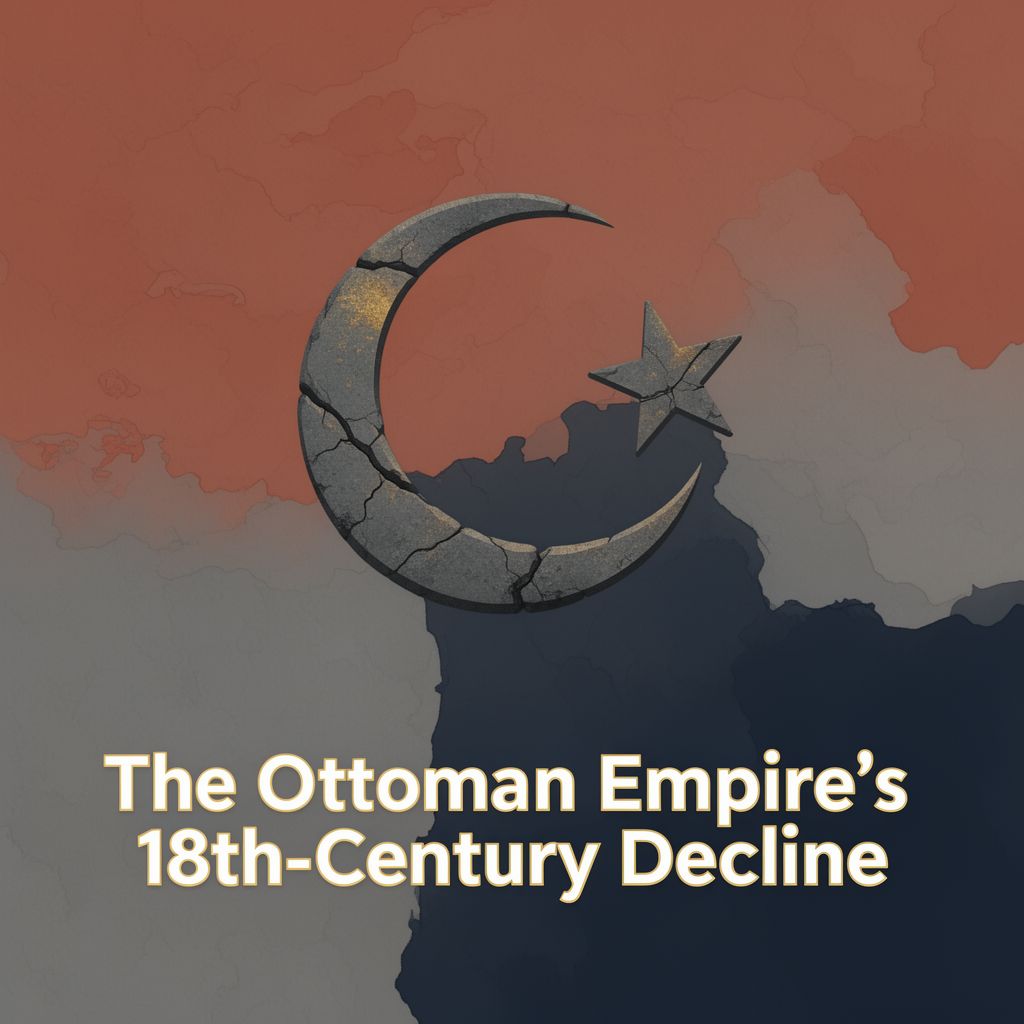
This content is based on a YouTube video.
📚 The Ottoman Empire in the 18th Century: A Period of Decline
The 18th century marks a critical and transformative era in the history of the Ottoman Empire. Far from its previous imperial grandeur, this period witnessed a significant and multifaceted decline, characterized by a gradual weakening of the empire's military prowess, central administrative authority, and economic stability. While challenges had emerged in earlier centuries, the 18th century solidified a trajectory of territorial losses, internal fragmentation, and a growing disparity with the rising powers of Europe. This study material explores the key military, political, and economic factors that contributed to this pivotal phase of Ottoman history, laying the groundwork for subsequent reform efforts and further transformations.
⚔️ Military Reversals and Territorial Losses
A primary indicator of the Ottoman Empire's decline in the 18th century was its diminishing military effectiveness and subsequent territorial concessions. The once formidable Ottoman military machine began to show significant weaknesses compared to the modernized armies of European powers like Austria and Russia.
Key Events and Treaties:
- Second Siege of Vienna (1683) Failure: This unsuccessful siege marked a turning point, signaling the end of Ottoman expansion into Europe and the beginning of a defensive posture.
- Treaty of Karlowitz (1699):
- ✅ Watershed Moment: This was the first time the Ottomans were compelled to cede large territories in Central Europe.
- ✅ Territorial Losses: Hungary and Transylvania were lost to the Habsburg Monarchy.
- ✅ Impact: Effectively ended Ottoman expansion and initiated a period of defensive warfare.
- Treaty of Passarowitz (1718):
- ✅ Further Losses: Additional territories in the Balkans were transferred to Austria.
- Wars with Russia (Latter Half of the Century): A series of costly conflicts that further depleted Ottoman resources.
- Treaty of Küçük Kaynarca (1774):
- ⚠️ Humiliating Terms: This treaty was particularly disastrous for the Ottomans.
- ✅ Russian Gains: Russia acquired significant territorial gains, including parts of the Black Sea coast.
- ✅ Interference Precedent: Russia gained the right to protect Orthodox Christians within the Ottoman Empire, establishing a precedent for future Russian interference in Ottoman internal affairs.
- ✅ Crimean Khanate: The long-standing Ottoman vassal, the Crimean Khanate, gained nominal independence, only to be annexed by Russia shortly thereafter.
Consequences of Military Defeats:
- Eroded Prestige: The empire's standing and reputation suffered significantly.
- Diminished Strategic Depth: Loss of territory reduced the empire's defensive capabilities.
- Financial Strain: Costly wars and territorial losses severely strained the empire's already fragile financial resources.
- Resistance to Modernization: The Janissary corps often resisted urgent military modernization efforts, clinging to outdated methods.
📉 Internal Political and Economic Deterioration
Concurrently with external military pressures, the Ottoman Empire faced profound internal political and economic challenges during the 18th century.
Political Fragmentation and Decentralization:
- Weakening Central Authority: The Sultan's direct control, once absolute, began to fragment.
- Rise of Ayans: Powerful local notables, known as ayans, emerged in various provinces.
- ✅ Wielded Power: These ayans often held significant military and economic power.
- ✅ Challenged Sultan: They frequently challenged the Sultan's direct control.
- ✅ Independent Bases: Some ayans formed independent power bases and collected taxes for themselves.
- Impact: This decentralization undermined the efficiency of imperial administration and contributed to widespread corruption and inefficiency within the bureaucracy.
Economic Stagnation and Decline:
- Shift in Global Trade Routes:
- ✅ Age of Discovery: The shift in global trade routes towards Atlantic maritime routes, bypassing traditional overland routes through Ottoman territories, significantly reduced the empire's revenue from transit trade.
- Capitulations:
- 📚 Definition: These were a series of treaties granting extraterritorial rights and trade privileges to European merchants.
- ⚠️ Detrimental Impact: Capitulations increasingly disadvantaged Ottoman traders and industries.
- ✅ Trade Imbalance: European manufactured goods, produced through early industrialization, flooded Ottoman markets, stifling local production and leading to a severe trade imbalance.
- Fiscal Deterioration:
- 📊 Financial Issues: The empire's fiscal situation worsened, marked by currency debasement, increased reliance on tax farming, and a growing national debt.
Early Reform Efforts and Resistance:
Despite the widespread decline, there were attempts at reform, indicating an awareness of the empire's predicament.
- Tulip Period (1718-1730): An era characterized by a fascination with European culture and some administrative reforms.
- Sultan Selim III (Late 18th Century): Initiated significant reforms aimed at modernizing the military and administration by adopting European models.
- Resistance to Change:
- ⚠️ Conservative Elements: These reform efforts often met with fierce resistance.
- ✅ Key Opponents: Conservative elements included the Janissaries and segments of the ulema (religious scholars).
- 💡 Reason for Resistance: They viewed such changes as a threat to traditional Ottoman institutions and Islamic principles.
💡 Conclusion: Legacy of the 18th-Century Decline
The 18th century represented a critical period of decline for the Ottoman Empire, characterized by a complex interplay of military defeats, territorial losses, and internal political and economic deterioration.
- External Pressures: The empire's inability to match the military and technological advancements of European powers resulted in significant concessions, most notably with the Treaties of Karlowitz, Passarowitz, and Küçük Kaynarca.
- Internal Weaknesses: Internally, the erosion of central authority, the rise of powerful provincial elites (ayans), and systemic corruption hampered effective governance.
- Economic Challenges: Economically, the empire suffered from shifts in global trade, the detrimental impact of capitulations, and chronic fiscal instability.
While these challenges were profound and set the stage for the empire's 'Sick Man of Europe' designation in the 19th century, the 18th century also witnessed the nascent stages of reform efforts. These early attempts, though largely unsuccessful in reversing the overall trend, demonstrated an awareness within the Ottoman leadership of the need for modernization and adaptation. The legacy of this period is one of a once-dominant empire grappling with its changing position in the world, initiating a long and arduous process of transformation that would continue into the modern era.