 Podit
Podit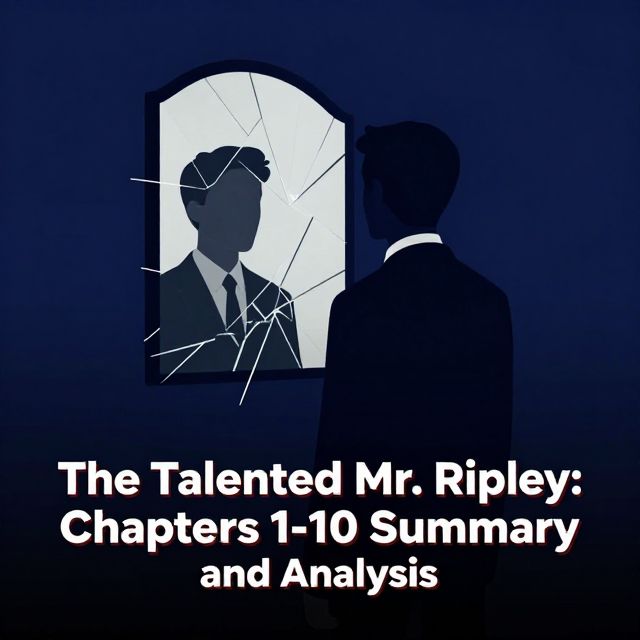
📚 The Talented Mr. Ripley: Chapters 1-10 Study Guide
Source Information: This study material is compiled from a detailed copy-pasted text summary and analysis of Chapters 1-10 of "The Talented Mr. Ripley" and a lecture audio transcript covering the same chapters.
Introduction: The Genesis of a Con Artist 🎭
This study guide explores the initial chapters (1-10) of Patricia Highsmith's "The Talented Mr. Ripley," focusing on Tom Ripley's character development, his journey from New York to Italy, and the escalating psychological complexities of his relationship with Dickie Greenleaf. We will delve into themes of identity, deception, obsession, and social class, examining how Tom's inherent amorality and narcissism drive the narrative.
1. Tom Ripley's Origins and Deception in New York (Chapters 1-2)
The narrative opens by introducing Tom Ripley as a young man living a mundane life in New York City, already engaged in criminal activities.
1.1. The Initial Proposition 📞
- Paranoia & Justification: Tom experiences intense paranoia, believing he is being followed. This fear is justified when Herbert Greenleaf, Dickie Greenleaf's father, approaches him. Tom initially fears his tax-fraud scheme has been uncovered.
- The Offer: Mr. Greenleaf, acting on recommendations, asks Tom to travel to Europe to persuade his son, Dickie, to return home and take over the family business. Dickie has been living in Europe for "a couple of years" on a trust fund, rejecting his father's expectations.
- Tom's Motivation: Initially, Tom declines, but reflecting on his "dull" and "joyless" life in New York, he accepts the offer. His primary motivation is the prospect of a free trip and an escape from his current circumstances, rather than genuine concern for Dickie.
1.2. The Con Artist Revealed 🕵️♂️
- Tax-Fraud Scheme: Tom lives in a "dingy brownstone" and operates a sophisticated tax-fraud scheme using the alias "George McAlpin." He sends fake tax-request letters to carefully chosen "marks" (elderly, artists, freelancers).
- Thrill of Deception: Tom derives immense pleasure and "thrill" from the fraud itself, describing it as "a practical joke... Good clean sport," even though he cannot directly cash the checks made out to the IRS.
- Amorality & Lack of Empathy: This scheme highlights Tom's profound amorality. He shows no sense of right or wrong, nor any empathy for the harm he inflicts on his victims. This foreshadows his future manipulative actions.
- Deception of Mr. Greenleaf: Tom lies to Mr. Greenleaf, fabricating details about his friendship with Dickie (e.g., Dickie showing him boat designs) to appear more influential and secure the trip.
1.3. Psychological Profile: Narcissism & Paranoia 🧠
- Unstable Self-Esteem: Tom is a narcissist with unstable self-esteem, constantly seeking affirmation from others. He feels "hollow inside" and exploits others to feel important and special.
- Reality Distortion: He believes his experiences determine reality, as seen in his thought that New York would "evaporate" once he left.
- Foreshadowing: Tom's criminal background and manipulative tendencies are established early, setting the stage for the darker events to come.
2. The Journey to Europe and Identity Transformation (Chapters 3-6)
Tom's preparations and sea voyage mark a conscious effort to shed his old identity and embrace a new, idealized self.
2.1. Greenleaf Dinner & Preparations 🍽️
- Further Deception: At the Greenleafs' home, Tom lies about attending Princeton to avoid scrutiny. He finds the company "tedious" but is eager to impress.
- Marge Sherwood: He sees photos of Dickie in Mongibello, Italy, and notes Marge Sherwood, an "unsophisticated... good-egg type," living nearby.
- Self-Perception: Seeing himself in a mirror, Tom imagines he looks like an "upright, self-respecting young man again," highlighting his desire for a respectable image.
- Lingering Fear: A moment of fear arises when he recalls a threatening phone call related to his tax fraud, though it turns out to be a misunderstanding.
2.2. Severing Ties & Escaping the Past 🚢
- Rejection of Old Life: Tom deliberately avoids being seen off by acquaintances like Bob Delancey, whom he considers "vulgar." He views his past friends as "riffraff" he endured only out of loneliness.
- Aunt Dottie: He writes to his Aunt Dottie, severing financial ties and expressing deep-seated hatred, fantasizing about "stabbing her a million times in the throat" due to childhood humiliation (being called "Sissy!"). This reveals a chilling capacity for violence.
- Marc Priminger: He briefly visits Marc Priminger, a wealthy man who "helps out young men in temporary financial difficulties," hinting at a complex past relationship.
- Conscious Transformation: On the ship, Tom begins his deliberate transformation. He buys a cap and pipe, envisioning himself as a "country gentleman" or "young man with a private income," symbolizing his "clean slate" and new life. He practices role-playing, even lying to fellow passengers about working for the Associated Press.
2.3. Hints of Sexuality 🏳️🌈
- Appreciation for Dickie: Tom's initial appreciation for Dickie's "long-legged [and] slim" appearance in photos suggests a latent attraction.
- Marc Priminger's Role: Marc's "hobby" of housing young men and his "unsavory appetites" subtly hint at a homosexual subtext.
- Cleo Dobelle: Tom's comfort with Cleo, an artist who makes "no demands" on him, further suggests his disinterest in conventional heterosexual relationships.
- Social Stigma: The narrative acknowledges the negative stigma surrounding homosexuality in the 1950s, positioning Tom as an "other" in the respectable world he craves.
3. Arrival in Mongibello and Initial Encounters (Chapters 7-8)
Tom's arrival in Italy marks the beginning of his direct interaction with Dickie, revealing his insecurities and deepening obsession.
3.1. The Awkward First Meeting 🏖️
- Journey to Mongibello: Tom travels through Paris and Naples to Mongibello, where he finds Dickie and Marge at the beach.
- Insecurity & Vulnerability: Tom's first encounter with Dickie is marked by his own insecurity. He feels physically out of place (pale, clunky shoes) compared to the "suntanned" and "carefree" Dickie.
- Dickie's Disinterest: Dickie initially doesn't remember Tom, only recognizing him after Tom reminds him of his father's letter. Tom feels Dickie's disapproval.
- Observation of Dickie: Tom observes Dickie's "long and slim" hands and rings with a sensual appreciation, hinting at his growing attraction.
- Exclusion: Tom feels "out of his depth" and hurt when Dickie and Marge don't invite him to stay with them, leading him to speculate about their relationship. He concludes Marge loves Dickie, but Dickie doesn't reciprocate.
3.2. Envy, Self-Pity, and Paranoia 😠
- Dickie's Freedom: Tom envies Dickie's independent wealth and freedom, his ability to live "answerable to nobody." This fuels a "heartbreaking surge of envy and self-pity."
- Desire for Emulation: Tom's determination to make Dickie like him is the first step towards his desire to become like Dickie, or even be Dickie.
- Paranoia: Lying in his hotel room, Tom hears laughter and believes the Italians are "ridiculing him," a manifestation of his deep-seated paranoia and self-doubt.
4. Deepening Relationship and Escalating Obsession (Chapters 9-10)
Tom's persistence pays off, leading to a close bond with Dickie, but also to a critical confrontation that reveals the depth of his obsession.
4.1. Building Rapport & Exclusion of Marge 🤝
- Confession & Bonding: Tom confesses Mr. Greenleaf's mission, which paradoxically "breaks the ice" and strengthens his bond with Dickie.
- Impersonation Skills: Tom impresses Dickie with his ability to "forge a signature" and "impersonate practically anybody," performing a "wild impersonation" that delights Dickie.
- Shared Experiences: They embark on trips to Naples and Rome, fostering a close friendship that increasingly excludes Marge. Tom moves into Dickie's house, solidifying his presence in Dickie's life.
- Deception to Mr. Greenleaf: Tom writes a deceptive letter to Mr. Greenleaf, claiming he will dissuade Dickie from staying in Italy, while secretly planning a cruise with Dickie.
4.2. The Climax of Obsession: The Clothes Incident 👕
- Marge's Influence: Tom suspects Marge is "badmouthing" him, fueling his resentment towards her.
- Rage & Impersonation: Seeing Dickie and Marge kiss enrages Tom. In a fit of fury, he goes into Dickie's bedroom, puts on Dickie's clothes, and impersonates him in front of a mirror, imagining himself as Dickie rejecting Marge.
- Confrontation: Dickie discovers Tom, leading to an "outraged" confrontation. Tom's explanation of "just amusing himself" fails to mollify Dickie.
- Sexuality Questioned: Dickie asks Tom if he is gay, citing Marge's suspicions. Tom "vehemently denies it," enraged by Marge's "filthy accusations."
- Relief & Foreshadowing: Dickie admits he is not in love with Marge and they have no sexual relationship, which brings Tom immense relief. This incident is a critical turning point, revealing the intensity of Tom's desire to embody Dickie and foreshadowing the extreme measures he will take.
Conclusion: The Evolving Identity of Tom Ripley 💡
These initial chapters meticulously establish Tom Ripley as a complex, deeply disturbed, and highly manipulative character. His journey is driven by a profound dissatisfaction with his own identity and an intense yearning for the privileged life embodied by Dickie Greenleaf. Tom's narcissism, amorality, and capacity for deception are consistently highlighted through his tax-fraud scheme, fabricated past, and calculated interactions. The narrative subtly introduces themes of identity fluidity, latent homosexuality, and the corrupting influence of envy. His transformation on the ship, his insecurities upon meeting Dickie, and the escalating emotional and psychological investment in their relationship all foreshadow the darker events that will unfold. The confrontation over Dickie's clothes and the discussion of Tom's sexuality mark a critical turning point, revealing the depth of Tom's obsession and his readiness to blur the lines between his own identity and that of Dickie Greenleaf.