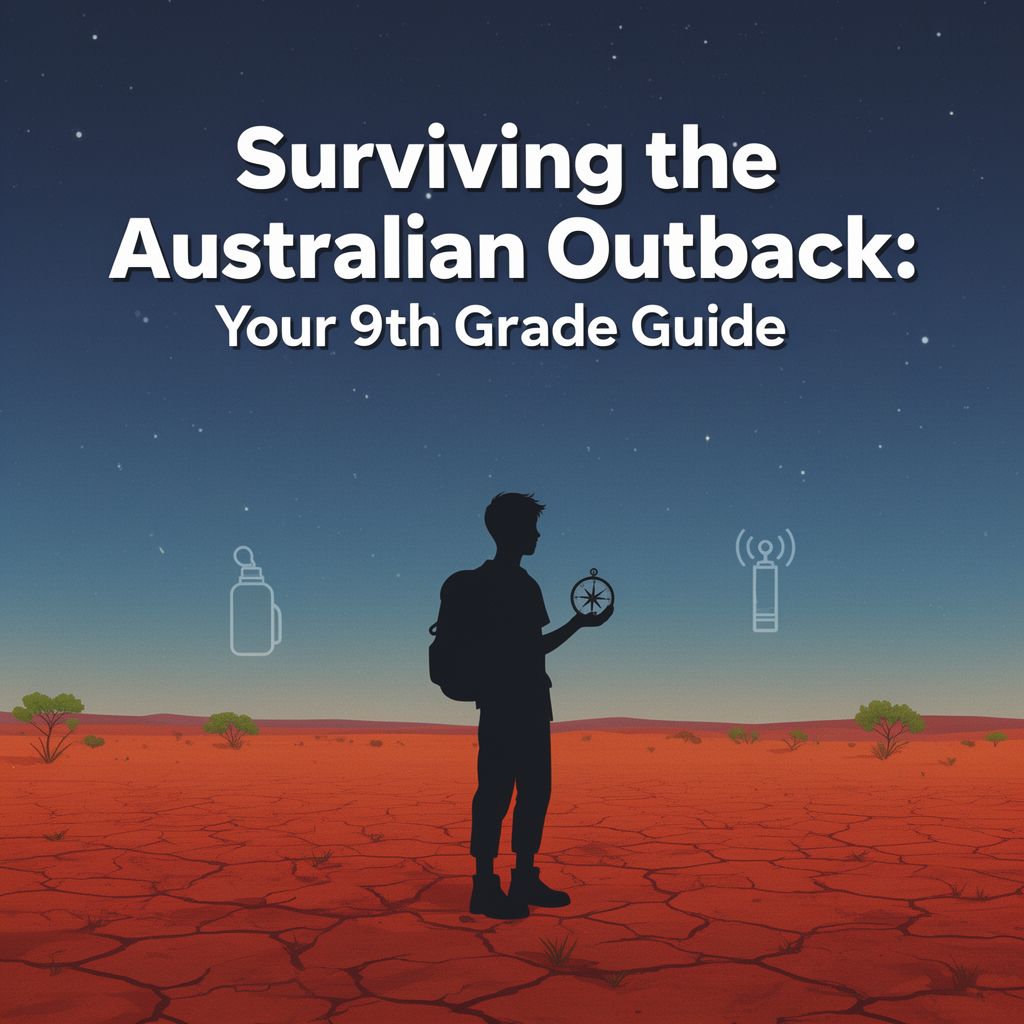
📚 Australian Outback: Geography and 5-Day Survival Guide
This study material is designed to help you prepare for your English oral exam on the Australian Outback. It covers the geographical features of the Outback (based on a lecture transcript) and provides a detailed guide on how to survive for 5 days in this challenging environment (generated content).
Part 1: The Australian Outback - Geographical Overview
The Outback is a vast and unique region in Australia. Understanding its geography is key to appreciating its challenges and beauty.
1. What is the Outback? 🌍
✅ Definition: The Outback is a huge, remote area in Australia, far away from the big cities on the coast. ✅ Location: It covers most of Australia's interior, away from the populated coastal areas. ✅ Size: It's enormous, making up about 70% of the entire Australian continent. It's larger than many countries! ✅ Characteristics: Because of its size and distance from the coast, it's often very dry and has very few people living there. It's known as the "wild heart" of Australia.
2. Key Geographical Features 🏜️
a. Climate
✅ Temperature: Mostly very hot. ✅ Rainfall: Very dry, with deserts like the Great Victoria Desert and the Simpson Desert. Rain is rare, but when it happens, it can be heavy.
b. Landscape
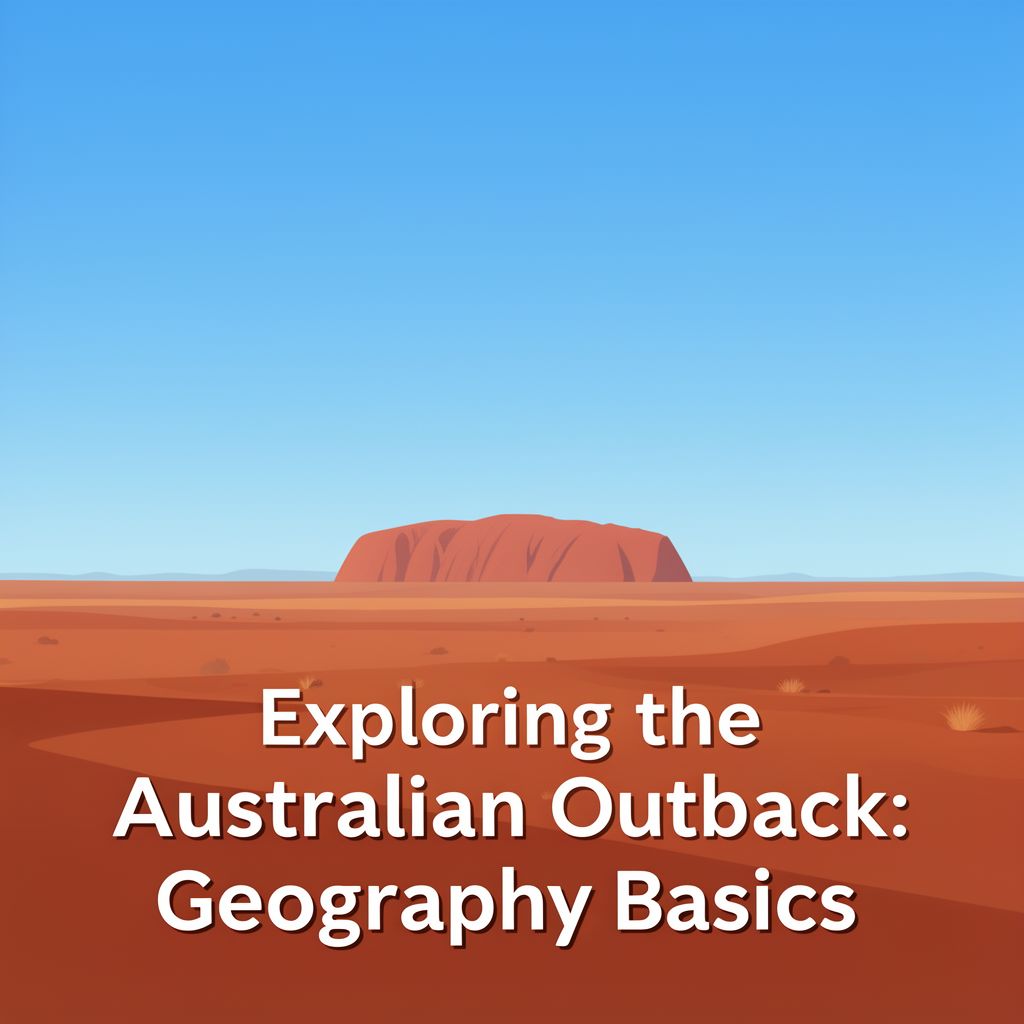
✅ Soil Color: The ground is often a striking red color due to iron in the soil. ✅ Terrain: * Flat Plains: Large areas of flat land. * Rock Formations: Amazing natural rock formations, like the famous Uluru (a giant sandstone rock). * Mountain Ranges: Often old and worn down, not typically tall and sharp.
c. Vegetation (Plants)
✅ Adaptation: Plants are tough and can survive with very little water. ✅ Examples: You'll find hardy grasses, small bushes, and special trees like eucalyptus.
d. Water Sources
✅ Rivers: Many rivers in the Outback are dry for most of the year. ✅ Local Names: When they do have water, they are often called 'creeks' or 'billabongs'. ✅ Importance: These water sources are extremely important for animals and people.
Part 2: How to Survive 5 Days in the Outback 🧭
Surviving in the Outback requires careful planning, knowledge, and a calm mind. Here's a guide focusing on the most important aspects for 5 days.
1. Water: Your Top Priority 💧
In the Outback, water is more important than food. You can survive for days without food, but only a few days without water, especially in the heat.
✅ Conserve Water: * Limit Activity: Move as little as possible during the hottest parts of the day. Rest in the shade. * Avoid Sweating: Don't wear too many clothes. Keep your head covered to prevent sunstroke. * Don't Eat: Eating requires water for digestion. If you have limited water, avoid eating. * Breathe Through Nose: This helps reduce water loss from your breath.
✅ Finding Water: * Rock Holes (Gnamma Holes): Natural depressions in rocks that collect rainwater. Check shaded areas. * Dew: In the early morning, tie cloth around your ankles and walk through grass to collect dew. Wring it out. * Digging: In dry creek beds or at the base of green trees, you might find water by digging. Look for areas where animals might have dug. * Plants: Some plants store water, but be very careful. Many desert plants are poisonous. Only use if you are 100% sure it's safe (e.g., some types of roots or cacti, but these are rare in the Australian Outback). * Follow Animals: Animals often know where water sources are. Look for tracks leading to water.
✅ Purifying Water: * Boiling: If you can make a fire, boil water for at least 1 minute to kill germs. * Filtering (Basic): Use a cloth to remove large particles, then let it settle. This doesn't purify but makes it cleaner. * Solar Still (Advanced): If you have plastic sheeting, you can create a solar still to condense water from the ground or plants.
2. Shelter: Protection from the Elements ⛺
The Outback has extreme temperatures: very hot during the day, and surprisingly cold at night.
✅ Protection from Sun (Day): * Shade: Find or create shade immediately. A large rock, a dense bush, or an improvised lean-to using a tarp or branches. * Elevate: If possible, get off the hot ground. * Ventilation: Ensure air can flow to keep you cool.
✅ Protection from Cold (Night): * Insulation: Use leaves, sand, or clothing to insulate yourself from the cold ground. * Windbreak: Build a small wall or find a natural barrier to block wind. * Huddle: If with others, huddle together for warmth.
3. Food: Less Critical for 5 Days 🍎
For a 5-day survival situation, food is less important than water and shelter. Your body can survive on stored energy for this period.
✅ Prioritize Water: Do not waste energy or water trying to find food if your water supply is not secure. ✅ Foraging (Extreme Caution): * Edible Plants: Only eat plants if you are absolutely certain they are safe. Many desert plants are poisonous. * Insects: As a last resort, some insects (like witchetty grubs) are edible and provide protein, but require knowledge to identify and prepare safely. ✅ Conserve Energy: Avoid strenuous activity.
4. Navigation: Knowing Where You Are 🗺️
Getting lost is a major danger.
✅ Stay Put: If you are lost and have no clear direction or map, it's often safer to stay in one place. This makes it easier for rescuers to find you. ✅ Mark Your Location: Create a large "SOS" or other signal on the ground. ✅ Directional Cues: * Sun: The sun rises in the east and sets in the west. At noon, it's generally in the north (in the Southern Hemisphere). * Stars: The Southern Cross constellation can help you find south at night. * Natural Landmarks: Look for unique rock formations or hills that you can recognize. ✅ If Moving: * Leave a Trail: Break branches, stack rocks, or leave markers to show where you've been. * Travel in Cooler Hours: If you must move, do so in the early morning or late afternoon to avoid the midday heat.
5. Signaling for Help 🆘
Making yourself visible to rescuers is crucial.
✅ Visual Signals: * Fire: Build three fires in a triangle (international distress signal). Keep fuel ready. * Smoke: Add green leaves or damp material to a fire to create thick smoke during the day. * Mirror/Shiny Object: Use a mirror, phone screen, or any shiny object to reflect sunlight towards planes or distant vehicles. * Ground Signals: Create large "SOS" or "HELP" signs on the ground using rocks, branches, or by digging trenches. * Bright Clothing: Lay out bright-colored clothing in an open area.
✅ Auditory Signals: * Whistle: Three short blasts is a universal distress signal. * Shouting: Conserve your voice, but shout if you hear or see potential rescuers.
6. First Aid & Health 🩹
The Outback has unique dangers.
✅ Dehydration & Heatstroke: * Symptoms: Dizziness, headache, nausea, confusion, no sweating (heatstroke). * Treatment: Get to shade, drink water slowly, cool the body with damp cloths. * ⚠️ Prevention is key! Stay hydrated and in the shade.
✅ Snake and Spider Bites: * Stay Calm: Panicking makes venom spread faster. * Pressure Immobilization: Apply a firm bandage over the bite and up the limb to slow venom spread. Keep the limb still. * Seek Medical Help: Get to a hospital as soon as possible. Do NOT try to suck out venom or cut the wound.
✅ Cuts and Scrapes: * Clean: Clean wounds with water to prevent infection. * Cover: Use clean cloth to cover wounds.
7. Mental Preparedness: Stay Calm and Positive 🧠
Your mindset is a powerful survival tool.
✅ Stay Calm: Panicking wastes energy and makes bad decisions. Take deep breaths. ✅ Think Clearly: Make a plan and stick to it. Re-evaluate if necessary. ✅ Stay Positive: Believe you will be found. Focus on small successes. ✅ Conserve Energy: Both physical and mental energy. Don't give up hope.
💡 Key Takeaways for Your Exam
- The Outback is a vast, hot, and dry region covering most of central Australia.
- Water is the absolute most critical element for survival.
- Shelter protects you from extreme temperatures.
- Signaling for help is vital for rescue.
- Staying calm and making smart decisions are crucial for survival.
Good luck with your oral exam! You've got this!