 Podit
Podit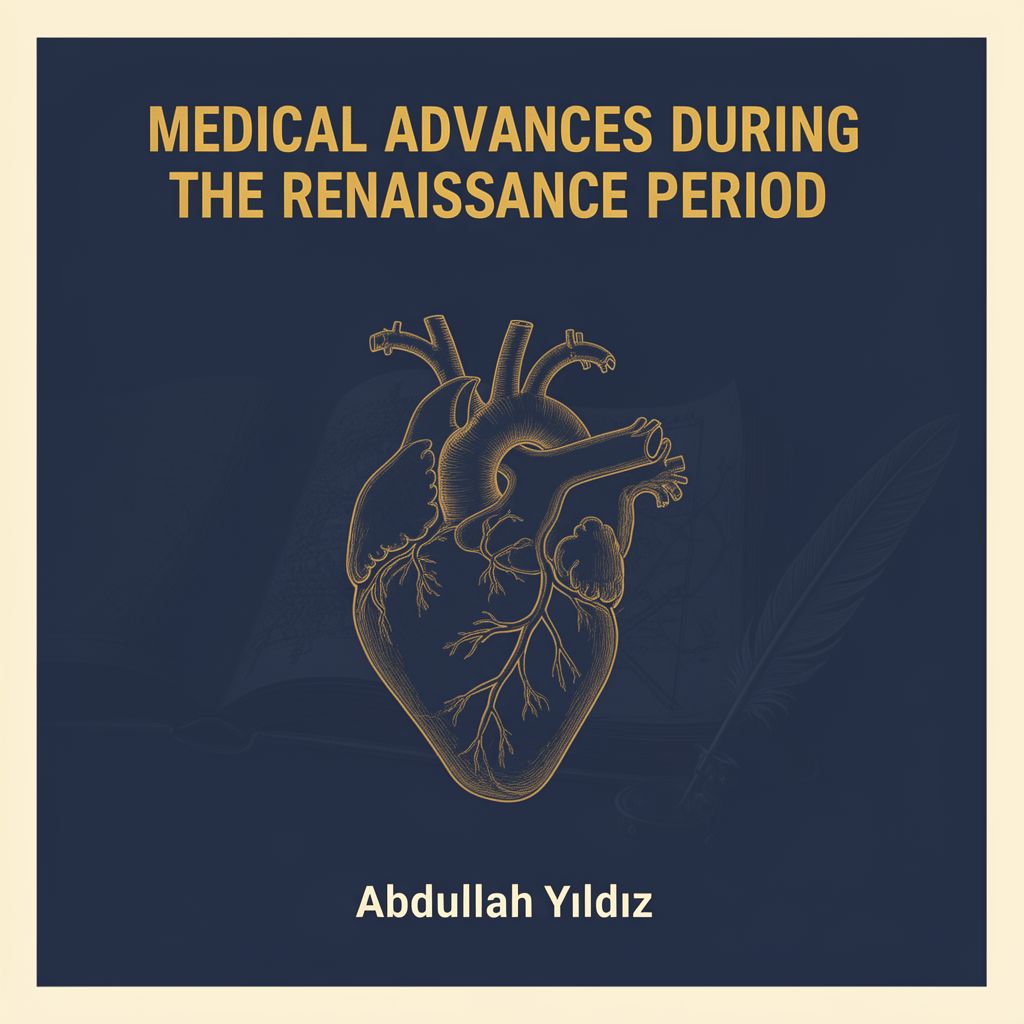
📚 Study Guide: Medical Advances During the Renaissance Period
Source Information: This study material is compiled from a lecture audio transcript and a copy-pasted text document, both focusing on medical advancements during the Renaissance.
1. Introduction to the Renaissance 🌍
The Renaissance was a complex and multi-dimensional period in European history, spanning from the 14th to the 16th centuries. It is often described as a "rebirth" of art and science, characterized by a new outlook on life and a way of living that drew inspiration from classical literature and art.
✅ Key Characteristics:
- Intellectual Resistance: The Renaissance emerged from intellectuals' resistance against the long-standing authority of the Church, rather than solely from the translation of ancient Greek and Roman classics.
- Decline of Dogma: The notion that "there is no salvation outside the Church" (extra ecclesiam nulla salus) began to lose its significance.
- Secularization: The state, previously seen as a representative of divine power, started to free itself from church influence, and the idea that religion belongs to individual conscience became widespread.
- Human Independence: A fundamental characteristic was the attainment of human independence in the face of dogma, leading to the "discovery of the world and humanity."
- Return to Antiquity: It was essentially a return to and reinterpretation of ancient thought and art.
- Geographic and Temporal Spread: Originating in Italy around the 1350s, it spread across Europe and reached its peak in the 16th century.
- Freedom of Thought: The period fostered freedom to think and express thoughts, coupled with a renewed interest in ancient scientific and philosophical works.
- Printing Press: The invention of the printing press significantly facilitated the cheap production and widespread availability of books, accelerating the dissemination of knowledge.
2. The Renaissance Between Two Scientific Periods ⏳
Europe's scientific awakening can be viewed in two stages, with the Renaissance acting as a crucial intermediary period:
1️⃣ First Period (11th-13th Century): * Characterized by establishing connections with ancient science and thought. * Heavily drew upon Islamic sources (often referred to as the 12th-century Renaissance). * Focused on acquiring and absorbing existing knowledge through translated works.
2️⃣ Second Period (17th Century): * Marked a major breakthrough with a genuine, new, and creative approach to nature.
💡 The Renaissance maintained its existence and facilitated the transition between these two distinct periods of scientific development.
3. Shift Towards the Scientific Method 🔬
With the Renaissance, there was a concerted effort to replace the traditional method of knowledge production, which relied on empirical trial and error, with a more structured scientific method.
- Observation: Leonardo da Vinci's meticulous observation of the external world, people, and objects, and his detailed depictions in paintings, exemplified the new emphasis on "seeing with our own eyes."
- Rationality: Copernicus's groundbreaking work in astronomy was a significant step towards establishing a deep-rooted sense of trust in rationality within society.
4. The Pivotal Year: 1543 🗓️
The year 1543 is considered the beginning of an irreversible era in the history of science, marked by the publication of two revolutionary works:
- Copernicus: On the Revolutions of the Celestial Spheres
- Vesalius: On the Fabric of the Human Body
5. Key Figures and Their Contributions to Science and Medicine 🧑🔬
5.1. Nicolaus Copernicus (1473–1543) 🔭
- Challenge to Dogma: Struck the first major blow against dogmatic knowledge.
- Heliocentric Model: In his 1543 work, On the Revolutions of the Celestial Spheres, he proved that the Earth and other planets revolve around the Sun.
- Opposing Ptolemy: This directly contradicted Ptolemy's geocentric theory, which placed Earth at the center of the universe.
- Shift in Human Perspective: His work undermined the anthropocentric view that "man considers himself the center of the universe" and influenced the emergence of the idea that "man is a part of nature."
5.2. Giordano Bruno (1548–1600) 🔥
- Philosopher and Theologian: An Italian philosopher and theologian.
- Support for New Ideas: Supported new ideas, including those of Copernicus.
- Martyrdom: Accused of heresy and burned at the stake 50 years after Copernicus's death for his beliefs, such as "The sun stands at the center, the world revolves around it."
5.3. Galileo Galilei (1564–1642) ⚖️
- Proponent of Copernicus: His work made him a strong advocate for Copernicus's ideas.
- Earth's Motion: Stated, "The Earth revolves both around itself and around the Sun."
- Inquisition Trial: He was famously tried by the Inquisition for his views.
5.4. Andreas Vesalius (1514–1564) 🦴
- Father of Modern Anatomy: Initiated the first method-based studies in medicine, specifically in the field of anatomy.
- Education: Completed medical education at the University of Louvain, furthered studies in Paris and Montpellier, and became a faculty member at the Faculty of Medicine in Padua, Italy.
- Early Work: Published his first anatomy book, Tabulae Anatomicae Sex (Six Anatomical Tables), in 1538, initially based on Galen's knowledge.
- Realization and Principle: He later realized that Galen's anatomical information was primarily based on animal dissections. This led him to the principle: "Observation is superior to authority."
- On the Fabric of the Human Body (1543):
- His revolutionary work, De humani corporis fabrica libri septem (Seven Books on the Structure of the Human Body), was published in 1543.
- Based on detailed anatomical studies conducted on human cadavers, often provided by the criminal court judge in Padua.
- Revolutionized anatomy with its 663 pages and over 300 illustrations, drawn by his friend, artist Johan Stephen von Kalcar.
- Emphasized reading human anatomy from the "book of the human body" itself, rather than solely from Galen's texts.
5.5. Ambroise Paré (1517–1590) 🩹
- Pioneer in Surgery: Transformed surgery from the simple techniques practiced by barbers into a recognized branch of medicine.
- Background: He was a barber-surgeon (chirurgien à robe courte), not a formally trained surgeon (chirurgien à robe longue).
- Skill Development: Developed his surgical skills by attending practical anatomy lectures at the Hôtel-Dieu in Paris.
- Military Experience: Joined the army as a surgeon in 1536 and published his wartime experiences in his native French upon returning to Paris in 1559.
- Key Work: Known for his book, The Method of Treating Wounds Caused by Arquebuses and Other Firearms.
- Royal Surgeon: Appointed court surgeon and served four kings until his death.
✅ Contributions to Medicine:
- Wound Treatment: Instead of washing gunshot wounds with boiling water/oil or cauterizing them with a hot iron, he used an ointment of egg yolk, rose oil, and turpentine.
- Hernia Treatment: For inguinal hernias, he recommended surgery or the use of a hernia belt, instead of castration.
- Surgical Techniques:
- Reintroduced surgical sutures.
- Described numerous surgical techniques.
- Performed autopsies to determine the cause of death.
- Introduced new surgical instruments.
- Demonstrated that ligation of the artery was more appropriate than cauterization in amputations.
- Emphasized the necessity of cutting gangrenous tissue starting from the healthy part.
5.6. Paracelsus (1493–1541) 🧪
- Background: Son of a Swiss physician, he traveled for ten years as an itinerant physician.
- Academic Role: Became a professor in Basel in 1527, controversially teaching in German (his native language) rather than Latin.
- Iatrochemistry: Pioneered the use of chemistry in medicine.
- Macrocosm-Microcosm: Believed humans (microcosm) were part of nature (macrocosm) and composed of the elements air, water, earth, and fire.
- Three Primary Substances: Claimed these elements existed in three forms (materia prima):
- 📚 Salt: Represents the body (does not burn, binding properties).
- 📚 Mercury: Represents the spirit (volatile).
- 📚 Sulphur: Represents the essence/life (flammable).
- Disease and Treatment: Diseases arose from an imbalance (decrease or increase) of these three substances. Treatment involved restoring this chemical balance using minerals like mercury, sulphur, arsenic, copper sulphate, and antimony.
- Experimental Approach: Argued that truths could only be discovered through experimental research.
- Dissection View: Opposed dissection on dead bodies, believing a dead person had lost its living qualities, and that dissection was only valuable on a living being.
- Controversial Beliefs: Despite his revolutionary approach, he believed in the Signaturae Theory ("every plant and mineral in nature bears a sign indicating its use in medicine") and occult sciences.
✅ Key Discoveries/Insights:
- Treated syphilis with mercury (a discovery that later contributed to Salvarsan).
- Identified silicosis (a miner's disease) as caused by inhaling mineral dust.
- Identified the connection between goitre and minerals.
- Legacy: His ideas were not widely accepted during his lifetime but were recognized three hundred years later. He remains a controversial figure.
5.7. William Harvey (1578–1657) ❤️
- Overturning Galen: Overturned Galen's theory of blood circulation, which had been accepted for approximately 1500 years and contained significant errors.
- Building on Predecessors: Built upon Vesalius's demonstration of valves in veins and Servetus's description of pulmonary circulation.
- Education and Career: Completed medical education at Cambridge and Padua. Became a professor of anatomy and surgery at the College of Physicians in England and served as personal physician to King James I.
- De Motu Cordis (1628):
- After twenty years of research, he published his theory on blood circulation in a small 68-page book titled Exercitatio Anatomica de Motu Cordis et Sanguinis in Animalibus (Anatomical Studies on the Movement of the Heart and Blood in Animals), commonly known as De Motu Cordis.
✅ Key Findings on Blood Circulation:
- Valves in the heart and veins ensure blood flows in only one direction.
- Blood is ejected from the heart by the contraction (systole) of the ventricles.
- Blood returns to the heart (refluxes) with relaxation (diastole).
- The pulse felt in arteries is caused by the impact of blood against arterial walls, not by arterial contraction.
- Methodology: His explanation used morphological, experimental, and quantitative methods, distinguishing him from predecessors.
- Acceptance: Though initially sparking debates, his truth was accepted by the entire medical community by 1673.
- Impact: Harvey's explanation of systemic and pulmonary circulation effectively overturned Galen's long-standing understanding of physiology.
5.8. Marcello Malpighi (1628–1694) 🔬
- Completing Harvey's Work: Harvey was unable to explain the passage of blood from arteries to veins because he was unaware of capillaries.
- Discovery of Capillaries: Malpighi discovered the existence of capillaries in 1661 with the aid of a microscope, thus completing the understanding of the circulatory system.
6. Medical Schools and Practices During the Renaissance 🏥
Despite significant individual research and discoveries, their impact on daily medical practice and education was slow.
- Limited Development in Medical Faculties: There was no significant immediate development in the status of medical faculties.
- Example: At the University of Tübingen, in 1548, the sole tool for teaching anatomy was a human skeleton. By 1601, there were three professors, teaching the works of Hippocrates, Galen, and Dioscorides' Materia Medica, indicating a continued reliance on ancient texts.
- Slow Integration of Science: The contribution of scientific developments to daily practice was not immediately apparent.
- Knowing circulation without understanding blood function, or knowing anatomy without connecting it to disease, had limited practical benefit.
- Primary Diagnostic Tools:
- Anamnesis: Information obtained directly from the patient.
- Observation: Observing the patient's body (breathing, pulse, tongue, skin color) and excretions (faeces and urine).
7. Societal Beliefs and Challenges in Renaissance Medicine ⚠️
The scientific advancements of the Renaissance coexisted with widespread traditional and superstitious beliefs, highlighting the slow pace of societal change and the integration of new knowledge.
- Superstition: A large part of society still believed in:
- Healing by the "touch of kings."
- Illnesses caused by witchcraft.
- The effectiveness of astrology in human health.
- Treatment of Mental Illness: The mentally ill were often condemned to death by burning, accused of being possessed by demons or practicing witchcraft.
This period demonstrates that while groundbreaking scientific discoveries were made, their acceptance and integration into daily medical practice and broader societal understanding took considerable time.