Understanding Muscle and Nerve Tissues - kapak
Bilim#muscle tissue#nerve tissue#smooth muscle#skeletal muscle

Understanding Muscle and Nerve Tissues

Explore the intricate world of muscle and nerve tissues, delving into their cellular structures, diverse functions, regeneration capabilities, and associated neurological and muscular conditions.

banoJanuary 22, 2026 ~27 dk toplam
01

Sesli Özet

10 dakika

Konuyu otobüste, koşarken, yolda dinleyerek öğren.

Sesli Özet

Understanding Muscle and Nerve Tissues

0:0010:00
02

Flash Kartlar

25 kart

Karta tıklayarak çevir. ← → ile gez, ⎵ ile çevir.

1 / 25
Tüm kartları metin olarak gör
  1. 1. What is the primary function of muscle tissue and from which embryonic layer does it originate?

    Muscle tissue's primary function is to enable movement. It originates from the mesoderm, one of the three primary germ layers in early embryonic development. Its cells are specialized for contraction, allowing for a wide range of bodily motions, from locomotion to the pumping of blood.

  2. 2. Describe the general characteristics of muscle cells.

    Muscle cells are typically thin and long, often referred to as muscle fibers. Their cytoplasm contains contractor protein structures called myofibrils, which are essential for contraction. These cells are enveloped by connective tissue that is rich in capillaries and nerves, providing necessary nutrients and neural stimulation for their function.

  3. 3. Name the three main types of muscle tissue and briefly state one distinguishing feature for each.

    The three main types of muscle tissue are smooth muscle, skeletal muscle, and cardiac muscle. Smooth muscles are involuntary and found in internal organs. Skeletal muscles are voluntary and attached to bones, allowing conscious movement. Cardiac muscle is involuntary and forms the walls of the heart, exhibiting striations like skeletal muscle.

  4. 4. Where are smooth muscles found, and what are their key characteristics regarding control and regeneration?

    Smooth muscles are found in the walls of internal organs and blood vessels. They are spindle-shaped, possess a single nucleus, and operate involuntarily, meaning they are not under conscious control. Their regeneration capability is weak, with damage typically repaired by connective tissue rather than new muscle cells.

  5. 5. How do skeletal muscles attach to bones, and what is their functional unit?

    Skeletal muscles attach to bones via tendons. They are thicker and longer than smooth muscles and feature multiple nuclei. The smallest functional unit of skeletal muscle is called a fiber. These muscles function voluntarily, allowing for conscious control of movement and posture.

  6. 6. Explain the regeneration capacity of skeletal muscle tissue.

    Skeletal muscles have a limited regeneration capacity. Any thickening of a skeletal muscle is due to an increase in the volume of individual fibers, not an increase in their number. When damaged, they are typically repaired by surrounding connective tissue rather than regenerating new muscle fibers, which can lead to scar tissue formation.

  7. 7. What makes cardiac muscle unique, and where is it located?

    Cardiac muscle is unique because it forms the walls of the heart. Structurally, it resembles skeletal muscle due to its striations, yet functionally, it is similar to smooth muscle as it works involuntarily. Cardiac muscle cells are branched, typically have a single, centrally located nucleus, and begin contracting even in the embryonic state.

  8. 8. What is cardiac infarction, and how does the heart repair damaged cardiac muscle tissue?

    Cardiac infarction, commonly known as a heart attack, occurs due to the blockage of vessels, leading to undernourishment of the cardiac muscle. Since cardiac muscle lacks regeneration capability, damaged tissue is repaired with connective tissue, not new muscle fibers. This repair process can result in scar tissue that does not contract, impairing heart function.

  9. 9. List the essential elements required for muscle contraction.

    For a muscle to contract, several elements are essential: ATP for energy, calcium ions, oxygen, and nervous stimuli. These components work together in a complex biochemical and physiological process to facilitate the shortening of muscle fibers, leading to mechanical movement.

  10. 10. What are the primary energy sources for muscle contraction?

    The primary energy source for muscle contraction comes from organic phosphate compounds, formed through carbohydrate and lipid metabolism. ATP is crucial, and when used, it's converted to ADP and must acquire a phosphate group to be reused. Creatine phosphate and muscle glycogen also supply muscle energy, with ATP obtained through lipid oxidation for sustained activity.

  11. 11. Describe "Broken Heart Syndrome" (Takotsubo Cardiomyopathy).

    Broken Heart Syndrome, or stress cardiomyopathy, is a non-ischemic cardiomyopathy often seen in women, especially post-menopause, following significant emotional or physical stress. It's characterized by left ventricle dysfunction, thought to involve an excessive influx of calcium into cardiac cells due to adrenaline, leading to a shock-like state that mimics an infarction. It is observed in women at a ratio of approximately 80%.

  12. 12. What is the main role of nerve tissue in the body?

    Nerve tissue is fundamental for the organism's interaction with both its internal and external environments. It is also crucial for maintaining functional unity among organs, allowing for rapid communication and coordination throughout the body. This intricate system processes information and relays commands to enable all bodily functions.

  13. 13. What are the two main cell types that compose nerve tissue?

    Nerve tissue is composed of two main cell types: neurons and neuroglia. Neurons, or nerve cells, are specialized for transmitting electrical signals and information. Neuroglia, or glia cells, provide crucial support, nourishment, and maintenance for the neurons, ensuring their proper function and survival.

  14. 14. What is the primary function of neurons?

    Neurons, or nerve cells, are specialized to transmit various types of changes—physical, chemical, optical, or psychological—either directly or indirectly, to the central nervous system. They also relay reactions from the CNS back to the organs, forming the fundamental basis of communication and information processing in the nervous system.

  15. 15. What is the role of neuroglia cells?

    Neuroglia, or glia cells, provide crucial support, nourishment, and maintenance for neurons. They proliferate at sites of nerve tissue damage, acting like a 'Band-Aid,' remove waste products, separate neurons, aid in regular impulse transmission, provide structural support, and protect neurons from microorganisms and toxins. They are essential for the overall health and function of the nervous system.

  16. 16. Explain the regeneration capacity of nerve cells in adults.

    Differentiated neurons largely lose their ability to divide in adults, meaning damaged or dead nerve cells generally cannot regenerate. However, the discovery of neural stem cells in parts of the adult brain in the 1990s showed that adult neurogenesis is a normal process, allowing for some new neuron formation. Additionally, damage to an axon can sometimes be repaired, particularly in the peripheral nervous system.

  17. 17. What is "adult neurogenesis" and what is the potential of neural stem cells?

    Adult neurogenesis is the process of new neuron formation in the adult brain, a concept discovered in the 1990s that challenged previous beliefs. Neural stem cells, found in parts of the adult brain, have the potential to generate all neural cell types, including new neurons and various glial cells. This discovery has significant implications for understanding brain plasticity and potential therapies for neurological disorders.

  18. 18. What unique property does nerve tissue exhibit, distinguishing it from muscle tissue?

    Nerve tissue exhibits irritability, meaning it can be stimulated and respond to changes in its environment. This contrasts with muscle tissue's primary property of contraction-relaxation. Irritability in nerve tissue involves receiving a stimulus, converting it into electrical energy, transmitting this energy, and subsequently activating various organs or other neurons.

  19. 19. Describe the main components of a neuron.

    A neuron typically consists of a perikaryon, which is the cell body containing the nucleus, and two or more extensions. These extensions are dendrites, which are short and branched, receiving stimuli, and axons, which are long and straight, transmitting impulses away from the cell body. Neurons vary greatly in length, from a few millimeters to over a meter.

  20. 20. What are dendrites and axons, and what are their respective functions?

    Dendrites are short, branched extensions of a neuron that receive stimuli from other neurons and transmit them towards the cell body. Axons, on the other hand, are long, straight extensions, typically one per neuron, that transmit impulses away from the cell body to other neurons, muscles, or glands. They are crucial for the directional flow of information in the nervous system.

  21. 21. Define a synapse and explain its role in nerve impulse transmission.

    A synapse is the connection point between the axon of one neuron and the dendrite of another neuron. It is a functional connection, always separated by a tiny gap, across which impulses must pass. This synaptic gap ensures unidirectional transmission of nerve signals and allows for modulation and integration of information within neural networks.

  22. 22. What are Schwann cells and what is their primary function?

    Schwann cells are specialized glial cells found around nerve fibers, primarily in the peripheral nervous system, where they form the Schwann sheath. They play a vital role in the regeneration of nerve fibers after injury. Additionally, Schwann cells are responsible for producing myelin, which insulates many nerve fibers and enhances the speed of impulse transmission.

  23. 23. What is myelin, and how does it affect nerve impulse transmission speed?

    Myelin is an internal layer around some nerves, composed of lipoproteins, giving it a white appearance. It is interrupted at regular intervals called Ranvier nodes. Myelinated nerves transmit impulses much faster (about 100 meters per second) than unmyelinated nerves (8-25 meters per second) because myelin prevents stimulus scattering and Ranvier nodes allow for efficient ion exchange, enabling saltatory conduction.

  24. 24. Name and describe the three functional classifications of neurons.

    Neurons are functionally classified into three types: motor neurons, which stimulate glands and muscles to produce a response; sensory neurons, which receive environmental stimuli and transmit them to the central nervous system; and interneurons, which facilitate communication and integration between other neurons within the central nervous system, forming complex neural circuits.

  25. 25. What is Multiple Sclerosis (MS) and how does it affect the nervous system?

    Multiple Sclerosis (MS) is a potentially disabling disease of the central nervous system, affecting the brain and spinal cord. In MS, the immune system mistakenly attacks myelin, the protective sheath covering nerve fibers. This demyelination disrupts communication between the brain and the rest of the body, leading to nerve damage and a wide range of symptoms depending on the extent and location of the damage.

03

Bilgini Test Et

15 soru

Çoktan seçmeli sorularla öğrendiklerini ölç. Cevap + açıklama.

Soru 1 / 15Skor: 0

What is the primary function of muscle tissue as described in the text?

04

Detaylı Özet

7 dk okuma

Tüm konuyu derinlemesine, başlık başlık.

Human Tissues: Muscle and Nerve Systems

Source Information: This study material has been compiled from a combination of copy-pasted text and a lecture audio transcript.


📚 Introduction to Muscle and Nerve Tissues

Muscle and nerve tissues are fundamental components of the human body, orchestrating virtually all bodily functions from movement and internal organ operation to sensory perception and thought. This guide explores their unique structures, diverse functions, and the remarkable ways they enable life, alongside some conditions that can affect their performance.


💪 Muscle Tissue: Movement and Internal Function

Muscle tissue originates from the mesoderm and is primarily responsible for enabling movement. Its cells are characteristically thin and long, often referred to as muscle fibers, and contain contractile protein structures called myofibrils within their cytoplasm. These cells are enveloped by connective tissue rich in capillaries and nerves.

1️⃣ Types of Muscle Tissue

Muscle cells are categorized into three main types based on their structure and function:

a) Smooth Muscles

  • Location: Not bound to the skeleton in vertebrates; found in the walls of internal organs (e.g., digestive tract, bladder) and blood vessels. Nearly all muscles of invertebrates are smooth muscles.
  • Structure: Spindle-shaped cells with a wide middle and tapering ends.
  • Nucleus: Single nucleus.
  • Control: Involuntary (not consciously controlled).
  • Function: Work slowly but continuously, capable of maintaining a contracted state for extended periods.
  • Regeneration: Weak regeneration capability; damage is typically repaired by connective tissue.

b) Skeletal Muscles

  • Location: Attached to bones via tendons.
  • Structure: Thicker and longer than smooth muscles, with a striated (striped) appearance.
  • Nucleus: Multiple nuclei.
  • Control: Voluntary (consciously controlled).
  • Function: Enable conscious movement. The smallest functional unit is called a fiber.
  • Growth: Thickening of a skeletal muscle is due to an increase in the volume of individual fibers, not an increase in their number.
  • Regeneration: Limited regeneration capacity; repaired by surrounding connective tissue.

c) Cardiac Muscle

  • Location: Forms the walls of the heart.
  • Structure: Resembles skeletal muscle due to its striations, but cells are branched.
  • Nucleus: Typically a single, centrally located nucleus (resembling smooth muscle in this aspect).
  • Control: Involuntary (works continuously without conscious control), starting contraction even in the embryonic state.
  • Requirements: Requires a significant amount of oxygen and is supplied by a vast network of capillaries.
  • Regeneration: Lacks regeneration capability; damaged tissue is repaired with connective tissue, not new muscle fibers.
  • Growth: Heart enlargement (cardiomegaly) is due to increased fiber volume, not fiber number.

2️⃣ Muscle Contraction Requirements

For a muscle to contract, several elements are essential:

  • Energy: ATP (Adenosine Triphosphate)
  • Ions: Calcium ions (Ca²⁺)
  • Oxygen: O₂
  • Stimuli: Nervous stimuli

💡 Energy Sources: The primary energy source comes from organic phosphate compounds formed through carbohydrate and lipid metabolism. When ATP is used and converted to ADP, it must acquire a phosphate group to be reused. Muscle energy is also supplied by creatine phosphate and muscle glycogen, with ATP obtained through the oxidation of lipids.

3️⃣ Muscle-Related Conditions

  • Infarction: Occurs due to the blockage of vessels and subsequent undernourishment of the muscle, particularly critical in cardiac muscle.
  • Broken Heart Syndrome (Stress Cardiomyopathy / Takotsubo Cardiomyopathy):
    • A non-ischemic cardiomyopathy often seen in women after menopause, triggered by significant emotional or physical stress.
    • Characterized by left ventricle dysfunction.
    • Thought to involve an excessive influx of calcium into cardiac cells due to adrenaline, leading to a shock-like state that mimics an infarction.
    • Observed in women at a ratio of approximately 80%.

🧠 Nerve Tissue: Communication and Control

Nerve tissue is an intricate system fundamental for an organism's interaction with both its internal and external environments, and for maintaining functional unity among organs. It originates from the ectoderm layer and spreads throughout the body like a net.

1️⃣ Components of Nerve Tissue

Nerve tissue is composed of two main cell types:

  • Neurons (Nerve Cells): Specialized to transmit physical, chemical, optical, or psychological changes as electrical impulses.
  • Neuroglia (Glia Cells): Provide crucial support, nourishment, and maintenance for neurons.

2️⃣ Nerve Cell Regeneration & Neurogenesis

  • Embryonic Stage: Nerve cells proliferate and differentiate during the embryonal stage.
  • Adult Stage: Differentiated neurons largely lose their ability to divide. Historically, it was believed the adult central nervous system was incapable of neurogenesis (new neuron formation).
  • Modern Understanding: The discovery of neural stem cells in parts of the adult brain in the 1990s confirmed that adult neurogenesis is a normal process. Neural stem cells can generate all neural cell types, including neurons and glial cells.
  • Damage Repair: Damaged or dead nerve cells in adults generally cannot regenerate, though damage to an axon can sometimes be repaired.

3️⃣ Properties of Nerve Tissue

Unlike the contraction-relaxation property of muscle tissue, nerve tissue exhibits irritability (stimulation). This involves:

  1. ✅ Receiving a stimulus.
  2. ✅ Converting this stimulation into electrical energy and transmitting it.
  3. ✅ Activating various organs.

4️⃣ Neuron Structure and Impulse Transmission

A neuron typically consists of a perikaryon (cell body) containing the nucleus, and two or more extensions. Neurons vary greatly in length, from a few millimeters to over a meter.

  • Dendrites:

    • Short, branched extensions.
    • Receive stimuli from other neurons and transmit them towards the cell body.
    • Usually multiple per neuron, but can be one.
  • Axons:

    • Long, straight extension, typically only one per neuron.
    • Transmits impulses away from the cell body.
    • The end branches and usually terminates near a dendrite of another neuron or another body cell.
  • Synapse:

    • The connection point between the axon of one neuron and the dendrite of the next neuron.
    • A functional connection, always separated by a tiny gap (approx. 200 Å), across which impulses must pass.
  • Myelin Sheath & Schwann Cells:

    • Dendrites and axons are surrounded by connective tissue, forming nerves.
    • Schwann cells form the Schwann sheath around nerve fibers.
    • Some nerves also have an internal layer called myelin, composed of lipoprotein, which gives it a white color.
    • Myelin Sheath: Interrupted at regular intervals called Ranvier nodes.
    • Impulse Speed: Myelinated nerves transmit impulses much faster (approx. 100 m/sec) than unmyelinated nerves (8-25 m/sec). Myelin prevents stimuli from scattering, and Ranvier nodes allow for efficient ion exchange.
    • Schwann Cells Role: Play a vital role in the regeneration of nerve fibers.

5️⃣ Neuroglia (Glia) Cells

Neuroglia cells resemble neurons but have different functions:

  • ✅ Proliferate at sites of nerve tissue damage, acting like a "Band-Aid."
  • ✅ Involved in nourishing neurons and removing waste products.
  • ✅ Separate neurons from neighboring ones and aid in regular impulse transmission.
  • ✅ Provide structural support and protect neurons from microorganisms and toxins.

6️⃣ Functional Classification of Neurons

Neurons can be classified according to their functions:

  • Motor Neurons: Stimulate endocrine and exocrine glands and muscles.
  • Sensory Neurons: Receive stimuli coming from the environment.
  • Interneurons: Work along with other neurons, facilitating communication.

7️⃣ Neurological Diseases

The nervous system is susceptible to over 600 neurological diseases and disorders. These include:

  • Genetic Disorders: E.g., Huntington's disease, muscular dystrophy.
  • Developmental Issues: E.g., spina bifida.
  • Degenerative Diseases: Nerve cells are damaged or die, e.g., Parkinson's Disease, Alzheimer's Disease.
  • Vascular Diseases: Affect blood vessels supplying the brain, e.g., stroke.
  • Injuries: Spinal cord and brain injuries.
  • Convulsive Diseases: E.g., epilepsy.
  • Cancers: E.g., brain tumors.
  • Infections: E.g., meningitis.

Specific Neurological Conditions:

  • Multiple Sclerosis (MS):

    • A potentially disabling disease of the central nervous system (brain and spinal cord).
    • The immune system attacks myelin, the protective sheath covering nerve fibers, disrupting communication between the brain and body.
    • Leads to permanent nerve damage.
    • Symptoms vary widely depending on nerve damage location and extent.
    • No cure, but treatments help manage symptoms, modify disease course, and aid recovery from attacks.
  • Adrenoleukodystrophy (ALD):

    • A hereditary metabolic disease.
    • Involves the loss of the myelin sheath around nerve fibers and degeneration of the adrenal glands.
    • Leads to progressive neurological weakness and death.
    • In ALD patients, Very Long Chained Fatty Acids (VLCFAs) accumulate in the brain and adrenal cortex due to deficient enzymes.
    • Lorenzo's Oil: A mixture of oleic acid (from olive oil) and erucic acid (from rape oil) designed to prevent VLCFA accumulation and halt ALD progression. It competitively inhibits the enzyme responsible for VLCFA formation.
    • ⚠️ Important Note: Lorenzo's Oil is specific to ALD and does not repair myelin in other demyelinating diseases.
Kendi çalışma materyalini oluştur

PDF, YouTube videosu veya herhangi bir konuyu dakikalar içinde podcast, özet, flash kart ve quiz'e dönüştür. 1.000.000+ kullanıcı tercih ediyor.

Sıradaki Konular

Tümünü keşfet
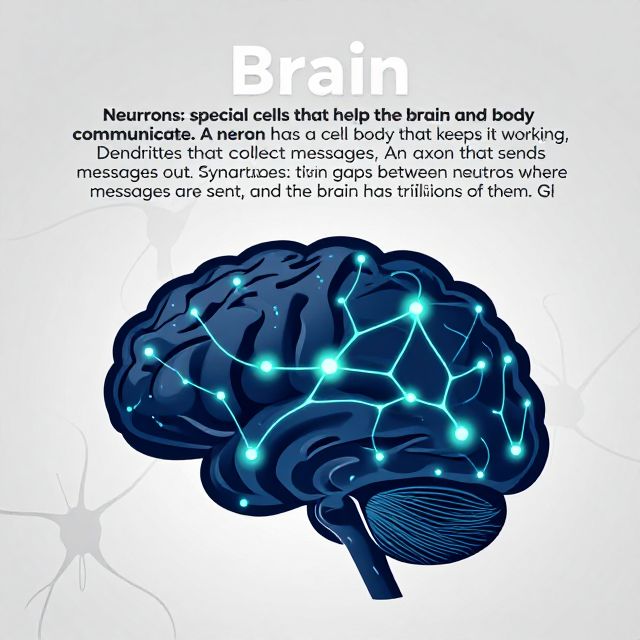
Neuron Types and Nervous System Structures

Neuron Types and Nervous System Structures

This summary explores the diverse morphology and classification of neurons, their fundamental components, synaptic connections, and the crucial role of glial cells and peripheral nervous system structures.

6 dk Özet 25 15
The Nervous and Endocrine Systems: Body's Control Centers

The Nervous and Endocrine Systems: Body's Control Centers

Explore the intricate workings of the nervous and endocrine systems, their structures, functions, and how they maintain the body's homeostasis.

Özet 25 15 Görsel
The Reproductive System: Cell Division and Reproduction

The Reproductive System: Cell Division and Reproduction

Explore the fundamental processes of cell division and the diverse strategies of reproduction, including asexual and sexual methods, gametogenesis, fertilization, and the human reproductive systems.

Özet 25 15 Görsel
The Developing Brain: Structure, Function, and Growth

The Developing Brain: Structure, Function, and Growth

Explore the intricate structure of the brain, its cellular components, major regions, and the complex processes of brain development and physical growth from conception to adulthood.

Özet 25 15
Skeletal Muscle Physiology: Structure, Function, and Regulation

Skeletal Muscle Physiology: Structure, Function, and Regulation

This summary explores the molecular structure of skeletal muscle, neuromuscular transmission, excitation-contraction coupling, ATP-dependent contraction, and mechanisms of force regulation and fiber type classification.

6 dk Özet 25 15
Anatomy of the Nervous System

Anatomy of the Nervous System

An academic overview of the nervous system, detailing the Central Nervous System (CNS) and Peripheral Nervous System (PNS), their components, functions, and associated disorders.

8 dk Özet 25 15
The Nervous System: Structure, Tissue, and Communication

The Nervous System: Structure, Tissue, and Communication

An academic overview of the nervous system's anatomical and functional divisions, its cellular components, the role of myelination, and the electrical and chemical mechanisms of neuronal communication.

7 dk Özet 25 15
Nervous System: Structure, Function, and Signaling

Nervous System: Structure, Function, and Signaling

An academic overview of the nervous system's anatomical and functional divisions, cellular components, electrical signaling mechanisms, and inter-neuronal communication.

5 dk Özet 25 15