Podit
Podit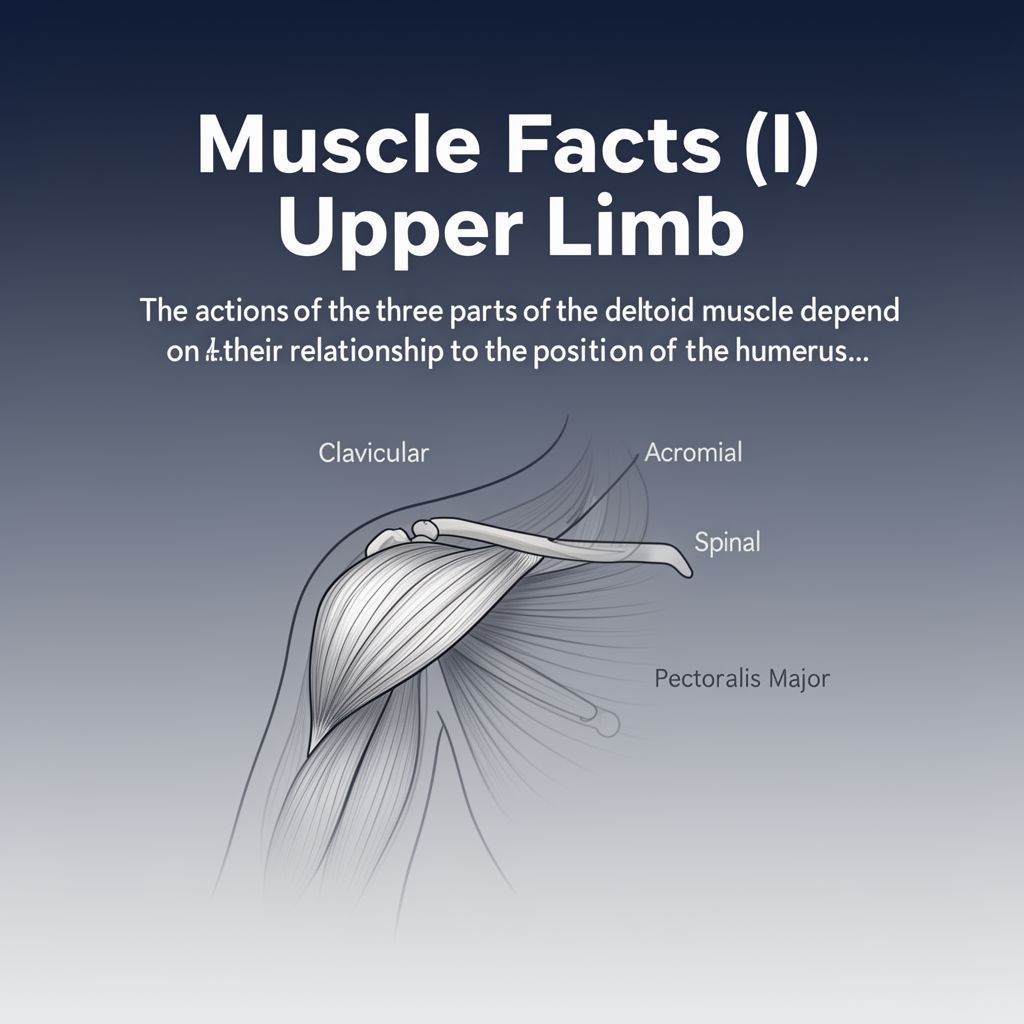
📚 Upper Limb Muscles: A Comprehensive Study Guide
Source Information: This study material has been compiled from a lecture audio transcript and supplementary anatomical text, including diagrams and tables.
🎯 Introduction to Upper Limb Muscles
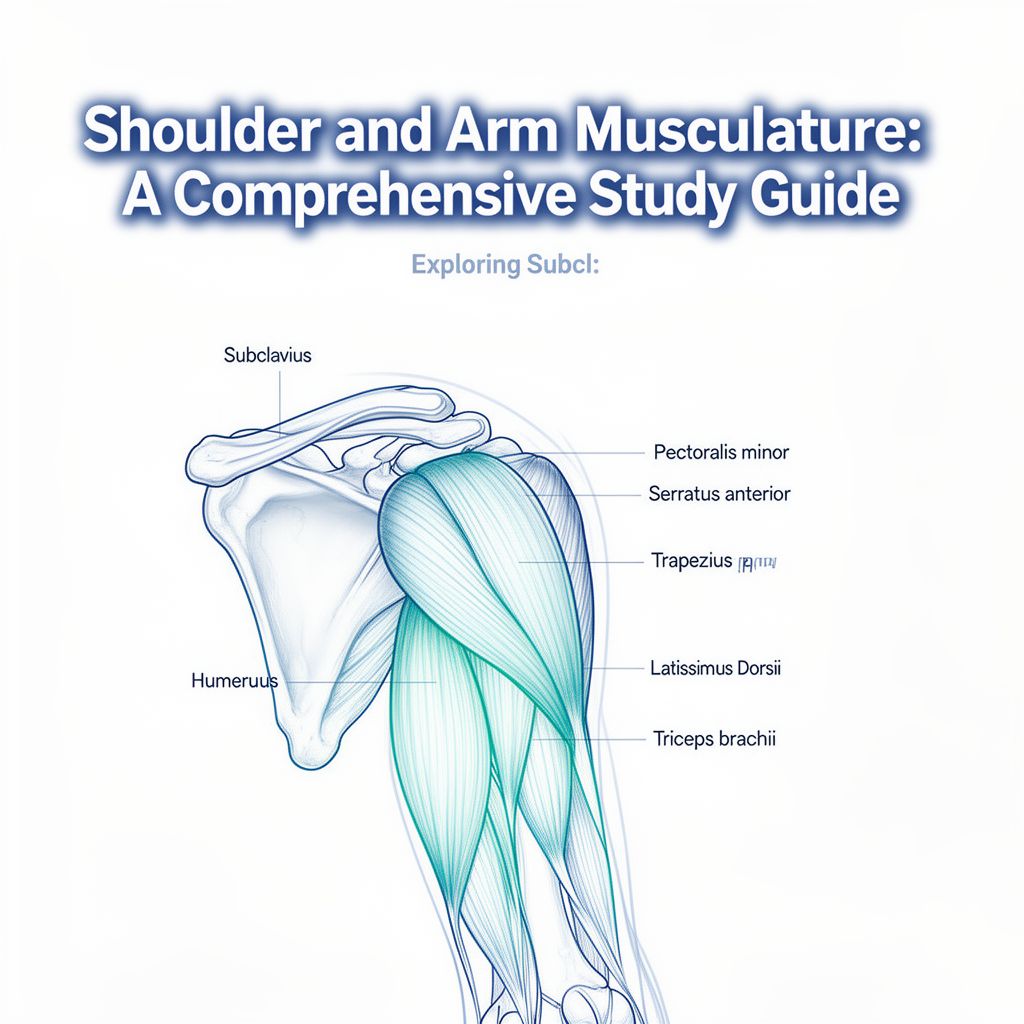
The upper limb, particularly the shoulder and arm regions, relies on a complex interplay of muscles for its extensive range of motion and stability. This guide provides an in-depth look at key muscle groups: the Deltoid, the Rotator Cuff, and the Pectoralis Major and Coracobrachialis. We will meticulously examine their anatomical structure, origin and insertion points, neural innervation, and crucial roles in upper limb movements.
1️⃣ The Deltoid Muscle: Structure and Function
The deltoid muscle is a large, triangular muscle that forms the prominent rounded contour of the shoulder. Its actions are highly dependent on the position of the humerus relative to the shoulder joint.
💡 Key Characteristics:
- Variable Action: Acts as an adductor when the humerus is less than 60 degrees abducted, but as an abductor when greater than 60 degrees.
- Synergistic & Antagonistic Roles: Its different parts can act together (synergistically) or in opposition (antagonistically) depending on the movement.
- Innervation: Axillary nerve (C5, C6)
📚 Parts of the Deltoid Muscle:
The deltoid is composed of three distinct parts, each with specific origins and primary actions:
- Clavicular (Anterior) Part
- Origin: Lateral one-third of the clavicle
- Insertion: Deltoid tuberosity of the humerus
- Actions: Flexion, internal rotation, adduction of the arm.
- Acromial (Lateral) Part
- Origin: Acromion of the scapula
- Insertion: Deltoid tuberosity of the humerus
- Actions: Primary abductor of the arm.
- Spinal (Posterior) Part
- Origin: Scapular spine
- Insertion: Deltoid tuberosity of the humerus
- Actions: Extension, external rotation, adduction of the arm.
⚠️ Important Note on Abduction:
Between 60 and 90 degrees of abduction, both the clavicular (anterior) and spinal (posterior) parts assist the acromial (lateral) part in elevating the arm.
2️⃣ The Rotator Cuff Muscles: Stability and Movement
The rotator cuff is a group of four muscles and their tendons that surround the shoulder joint, providing crucial stability and enabling a wide range of rotational movements. They collectively hold the head of the humerus securely within the glenoid cavity of the scapula.
📚 The Four Rotator Cuff Muscles:
- Supraspinatus
- Origin: Supraspinous fossa of the scapula
- Insertion: Greater tubercle of the humerus
- Innervation: Suprascapular nerve (C4-C6)
- Action: Initiates abduction of the arm (first 15-20 degrees).
- Infraspinatus
- Origin: Infraspinous fossa of the scapula
- Insertion: Greater tubercle of the humerus
- Innervation: Suprascapular nerve (C4-C6)
- Action: External rotation of the arm.
- Teres Minor
- Origin: Lateral border of the scapula
- Insertion: Greater tubercle of the humerus
- Innervation: Axillary nerve (C5, C6)
- Action: External rotation and weak adduction of the arm.
- Subscapularis
- Origin: Subscapular fossa of the scapula
- Insertion: Lesser tubercle of the humerus
- Innervation: Upper and lower subscapular nerves (C5, C6)
- Action: Internal rotation of the arm.
3️⃣ Pectoralis Major and Coracobrachialis: Chest and Arm Movers
These muscles are significant for powerful movements of the upper extremity, particularly involving the chest and arm.
3.1 Pectoralis Major
The pectoralis major is a large, fan-shaped muscle covering the upper part of the chest. It is a powerful adductor and internal rotator of the arm.
📚 Parts of the Pectoralis Major:
- Clavicular Part
- Origin: Medial half of the clavicle
- Sternocostal Part
- Origin: Sternum and costal cartilages 1-6
- Abdominal Part
- Origin: Anterior layer of the rectus sheath
✅ Common Features:
- Insertion: All three parts insert onto the crest of the greater tubercle of the humerus.
- Innervation: Medial and lateral pectoral nerves (C5-T1)
- Overall Actions:
- Entire Muscle: Adduction and internal rotation of the arm.
- Clavicular & Sternocostal Parts: Assist in flexion of the arm.
- Assistance: Aids in respiration when the shoulder is fixed.
3.2 Coracobrachialis
The coracobrachialis is a smaller muscle located in the upper arm, deep to the pectoralis major.
📚 Key Features:
- Origin: Coracoid process of the scapula
- Insertion: Humerus, in line with the crest of the lesser tubercle
- Innervation: Musculocutaneous nerve (C5-C7)
- Actions: Flexion, adduction, and internal rotation of the arm.
📝 Conclusion
This study guide has provided a comprehensive overview of the Deltoid, Rotator Cuff, Pectoralis Major, and Coracobrachialis muscles. Understanding their specific origins, insertions, innervations, and actions is fundamental to comprehending the complex and versatile movements of the human shoulder and arm.