Turkey's Landforms: Internal & External Forces - kapak
Eğitim#turkey geography#landforms#geology#internal forces

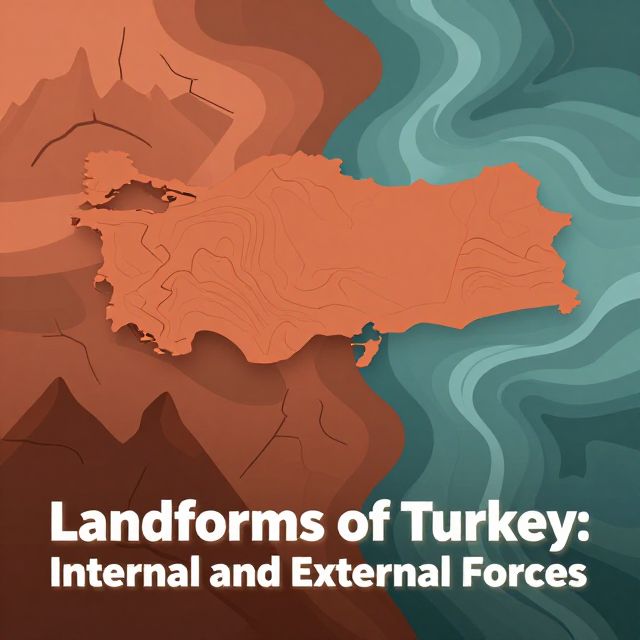
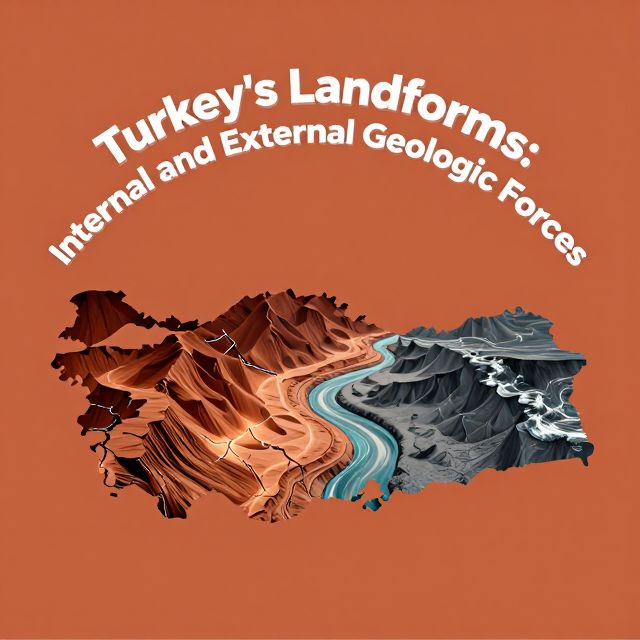
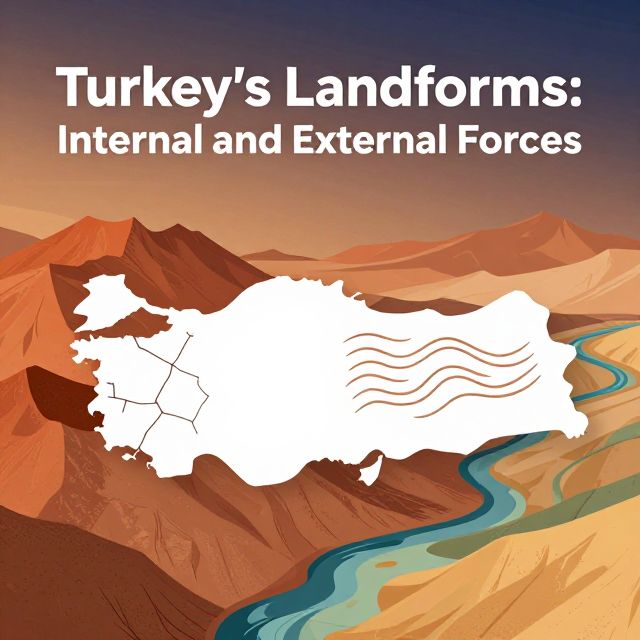
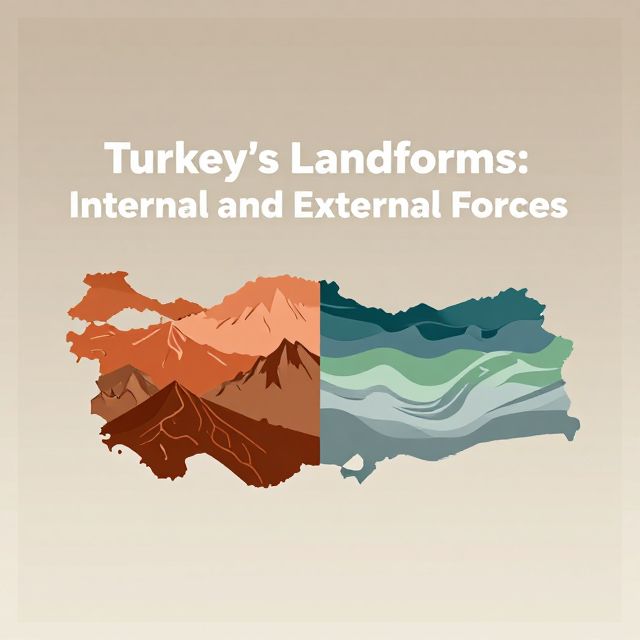
Turkey's Landforms: Internal & External Forces

Explore how internal and external geological forces have shaped Turkey's diverse landforms. Understand plate tectonics, volcanism, earthquakes, and the impact of erosion for your KPSS exam.

iremsemanurFebruary 12, 2026 ~14 dk toplam
01

Flash Kartlar

25 kart

Karta tıklayarak çevir. ← → ile gez, ⎵ ile çevir.

1 / 25
Tüm kartları metin olarak gör
  1. 1. What are the two main categories of geological forces that have sculpted Turkey's landscape?

    The two main categories are internal forces (endogenic) and external forces (exogenic). Internal forces originate from within the Earth and build up major features, while external forces operate on the surface, wearing down and reshaping them.

  2. 2. What is the primary characteristic of internal forces (endogenic forces)?

    Internal forces are powerful processes driven by the Earth's internal heat and pressure, originating from deep within its core and mantle. They are responsible for building up and shaping the major features of the Earth's crust.

  3. 3. What is the primary characteristic of external forces (exogenic forces)?

    External forces operate on the Earth's surface, constantly wearing down, transporting, and depositing material. They refine and modify the landscape that was initially uplifted by internal forces.

  4. 4. Why is understanding internal and external forces crucial for studying Turkey's physical geography?

    Understanding these concepts is crucial because Turkey's remarkable landforms are a result of the continuous and dynamic interplay between these forces. They explain the formation of mountains, valleys, and other unique features across the country.

  5. 5. What is another name for internal forces?

    Internal forces are also known as endogenic forces. This term emphasizes their origin from within the Earth.

  6. 6. What is the most significant internal force affecting Turkey's geology?

    The most significant internal force affecting Turkey is plate tectonics. Turkey is located on an active orogenic belt where several major tectonic plates interact.

  7. 7. On which major geological belt is Turkey situated, and what does this imply?

    Turkey sits on the active Alpine-Himalayan orogenic belt. This implies that the region is tectonically very active, experiencing significant pressure and movement due to colliding plates.

  8. 8. Which tectonic plates are primarily involved in the squeezing of the Anatolian Plate?

    The Anatolian Plate is constantly being squeezed between the Eurasian Plate and the African-Arabian plates. This immense pressure drives many of the geological phenomena observed in Turkey.

  9. 9. Define orogeny and provide examples of mountain ranges in Turkey formed by this process.

    Orogeny is the process of mountain building, resulting from the collision and deformation of tectonic plates. Examples in Turkey include the North Anatolian Mountains and the Taurus Mountains.

  10. 10. What is epeirogeny, and how does it differ from orogeny?

    Epeirogeny refers to broad, regional uplift or subsidence of landmasses without significant folding or faulting. Unlike orogeny, which creates mountain ranges through intense deformation, epeirogeny involves more gentle, large-scale vertical movements of the crust.

  11. 11. How does volcanism relate to plate tectonics in Turkey?

    In Turkey, the collision of tectonic plates creates zones where magma can rise to the surface, leading to volcanism. This process forms volcanoes, which are evident in Turkey's landscape through numerous extinct volcanic peaks.

  12. 12. Name two prominent extinct volcanoes in Turkey.

    Two prominent extinct volcanoes in Turkey are Mount Ararat and Mount Erciyes. These mountains serve as testaments to past volcanic activity in the region.

  13. 13. Explain the cause of frequent earthquakes in Turkey.

    Earthquakes in Turkey are caused by the constant movement and friction along fault lines, such as the infamous North Anatolian Fault. The immense pressure from colliding tectonic plates leads to sudden releases of energy along these faults.

  14. 14. What is the name of a significant fault line mentioned in Turkey?

    The infamous North Anatolian Fault is a significant fault line mentioned, known for causing frequent and often devastating earthquakes in Turkey.

  15. 15. How do internal forces generally affect Turkey's terrain?

    Internal forces are responsible for Turkey's rugged and elevated terrain. They build up the land through processes like mountain building, volcanism, and seismic activity, creating the initial high relief.

  16. 16. What is another name for external forces?

    External forces are also known as exogenic forces. This term highlights their origin and operation on the Earth's surface.

  17. 17. What is the primary role of external forces in shaping the Earth's surface?

    External forces act as "sculptors," constantly wearing down, transporting, and depositing material that was uplifted by internal forces. They refine and modify the landscape, creating features like valleys and plains.

  18. 18. List the three main processes involved in external forces.

    The three main processes involved in external forces are weathering, erosion, and deposition. These processes work together to break down, transport, and settle Earth materials.

  19. 19. Define weathering in the context of external forces.

    Weathering is the process of breaking down rocks, either physically (mechanical weathering) or chemically (chemical weathering), into smaller fragments or dissolved substances. It's the initial step in the degradation of landforms.

  20. 20. Define erosion in the context of external forces.

    Erosion is the process of transporting these broken-down materials (sediments) from one location to another. It involves agents like water, wind, and ice moving rock fragments, soil, and dissolved substances.

  21. 21. What are the primary agents of erosion in Turkey?

    The primary agents of erosion in Turkey are water (fluvial erosion), wind (aeolian erosion), and glaciers (glacial erosion). Each agent plays a significant role in different regions.

  22. 22. Explain fluvial erosion and provide an example of a river in Turkey known for it.

    Fluvial erosion is erosion caused by rivers and streams, which carve out valleys, canyons, and transport sediments. Rivers like the Kızılırmak and Euphrates are powerful agents of fluvial erosion in Turkey, shaping significant parts of the landscape.

  23. 23. Where is wind erosion particularly prominent in Turkey, and what features does it create?

    Wind erosion is prominent in arid and semi-arid regions, particularly in Central Anatolia. It shapes unique rock formations and transports fine sediments, contributing to the distinctive landscapes of these areas.

  24. 24. What evidence of glacial erosion can be found in Turkey, and where?

    Glacial erosion, though less widespread today, has left its mark on the high peaks of the Taurus and North Anatolian mountains during past ice ages. It created characteristic U-shaped valleys and cirques in these elevated regions.

  25. 25. What is karst topography, and in which region of Turkey is it significant?

    Karst topography is a landscape formed from the dissolution of soluble rocks such as limestone, dolomite, and gypsum. It is significant in Turkey's Mediterranean region, where it forms caves, sinkholes, and underground rivers due to chemical weathering.

02

Bilgini Test Et

15 soru

Çoktan seçmeli sorularla öğrendiklerini ölç. Cevap + açıklama.

Soru 1 / 15Skor: 0

What are internal forces primarily driven by, according to the text?

03

Detaylı Özet

4 dk okuma

Tüm konuyu derinlemesine, başlık başlık.

This content is based on a YouTube video.

🇹🇷 Turkey's Landforms: Internal and External Forces

📚 Introduction to Turkey's Dynamic Landscape

Turkey boasts a remarkably diverse and dramatic landscape, characterized by towering mountains, expansive plains, and deep valleys. This rich topography is a result of millions of years of geological activity, shaped by two primary categories of forces: internal (endogenic) forces originating from within the Earth, and external (exogenic) forces acting on its surface. Understanding these fundamental concepts is crucial for comprehending Turkey's physical geography, especially for those preparing for the KPSS exam.


🌍 Internal Forces: The Earth's Architects

Internal forces, also known as endogenic forces, are powerful geological processes driven by the Earth's immense internal heat and pressure, stemming from its core and mantle. These forces are responsible for building up and shaping the major structural features of the Earth's crust.

1️⃣ Plate Tectonics: The Primary Driver

The most significant internal force influencing Turkey is plate tectonics. Turkey is situated on the active Alpine-Himalayan orogenic belt, a region where the Anatolian Plate is constantly being compressed between the larger Eurasian and African-Arabian plates. This immense pressure and movement lead to several key geological phenomena:

  • 📚 Orogeny (Mountain Building): This process creates large mountain ranges through the folding and faulting of the Earth's crust.
    • Examples in Turkey: The formation of the North Anatolian Mountains and the Taurus Mountains are prime examples of orogeny. These mountain systems are vital geographical features for the KPSS exam.
  • 📚 Epeirogeny (Broad Uplift/Subsidence): This refers to the large-scale, regional uplift or subsidence of landmasses without significant folding or faulting. It causes broad, gentle changes in elevation over vast areas.
  • 🌋 Volcanism: The collision of tectonic plates can create zones where molten rock (magma) rises to the surface, leading to volcanic activity.
    • Examples in Turkey: Turkey has numerous extinct volcanoes, testaments to past volcanic activity. Notable examples include Mount Ararat and Mount Erciyes, which are important landmarks and frequently referenced in geographical studies.
  • ⚠️ Earthquakes: The constant movement and friction along fault lines, which are fractures in the Earth's crust, cause frequent and often devastating earthquakes.
    • Examples in Turkey: The infamous North Anatolian Fault is a major seismic zone, responsible for many significant earthquakes in the region. Understanding the location and impact of such fault lines is critical for KPSS.

💡 These powerful internal forces are directly responsible for Turkey's rugged and elevated terrain, laying the foundational structure upon which external forces act.


🌬️ External Forces: The Earth's Sculptors

External forces, also known as exogenic forces, operate on the Earth's surface. They relentlessly wear down, transport, and deposit materials that have been uplifted and shaped by internal forces. If internal forces build, external forces refine and modify the landscape.

2️⃣ Key Processes of External Forces

The main processes involved in external forces are:

  • 📚 Weathering: The breaking down of rocks, either physically (e.g., by temperature changes, frost wedging) or chemically (e.g., by dissolution, oxidation).
  • 📚 Erosion: The process of transporting these broken-down materials from one location to another.
  • 📚 Deposition: The process by which eroded materials are laid down or settled in new locations.

3️⃣ Primary Agents of Erosion in Turkey

Various agents contribute to erosion, each leaving distinct marks on Turkey's landscape:

  • 🌊 Water (Fluvial Erosion): Rivers are incredibly powerful agents of erosion, carving out valleys and canyons.
    • Examples in Turkey: Rivers like the Kızılırmak and the Euphrates significantly shape the landscape by carving deep valleys and canyons. Their courses and the landforms they create are important geographical features.
  • 💨 Wind Erosion: Prominent in arid and semi-arid regions, wind erosion shapes unique rock formations and transports fine sediments.
    • Examples in Turkey: Central Anatolia, with its dry climate, is a region where wind erosion is particularly active, contributing to distinctive landforms.
  • ❄️ Glacial Erosion: Although less widespread today, glaciers have left their mark on Turkey's high peaks during past ice ages.
    • Examples in Turkey: The high peaks of the Taurus and North Anatolian Mountains show evidence of past glacial activity, such as U-shaped valleys and cirques.
  • 🧪 Chemical Weathering and Karst Topography: This is particularly significant in regions with soluble rocks.
    • Examples in Turkey: The Mediterranean region is famous for its karst topography, where soluble rocks like limestone are dissolved by water, forming distinctive features such as caves, sinkholes (dolines), and underground rivers. This is a key geographical characteristic for the KPSS exam.

🤝 The Interplay of Forces: A Dynamic Balance

Turkey's remarkable landforms are a result of a continuous and dynamic interplay between these internal and external forces.

  • Internal forces (plate tectonics, orogeny, epeirogeny, volcanism, earthquakes) build up the land, creating the initial relief and elevated areas.
  • External forces (water, wind, ice, chemical weathering) then work tirelessly to wear down, transport, and reshape these elevated areas, creating valleys, plains, and unique erosional features.

It's a constant cycle of creation and destruction, a dynamic balance that shapes the very ground beneath our feet. Understanding this fundamental relationship between the Earth's internal energy and surface processes is key to comprehending Turkey's diverse and incredible natural heritage. ✅
Kendi çalışma materyalini oluştur

PDF, YouTube videosu veya herhangi bir konuyu dakikalar içinde podcast, özet, flash kart ve quiz'e dönüştür. 1.000.000+ kullanıcı tercih ediyor.

Sıradaki Konular

Tümünü keşfet
Earth Systems and Resources Overview

Earth Systems and Resources Overview

An academic summary of Earth's physical systems, including plate tectonics, soil dynamics, atmospheric composition, global climate drivers, and oceanic phenomena like ENSO.

8 dk 15 Görsel
Introduction to Geography for KPSS Examination

Introduction to Geography for KPSS Examination

This summary provides a formal academic overview of introductory geography, covering its fundamental concepts, branches, and key principles relevant for the KPSS examination.

5 dk Özet 25 15 Görsel
Introduction to Geography for KPSS-MEB AGS 2026

Introduction to Geography for KPSS-MEB AGS 2026

This audio summary provides an academic overview of foundational geographical concepts relevant to the KPSS-MEB Field Knowledge Examination, specifically focusing on introductory geography principles.

5 dk Özet 25 15 Görsel
Introduction to Geography for KPSS-AGS Examination

Introduction to Geography for KPSS-AGS Examination

This summary provides an academic overview of foundational geographical concepts relevant to the KPSS-AGS examination for prospective geography teachers in Turkey, emphasizing key principles and their educational significance.

6 dk Özet 25 15
IELTS Academic Writing Task 1: A Beginner's Guide for 2026

IELTS Academic Writing Task 1: A Beginner's Guide for 2026

This summary provides a comprehensive guide for beginners approaching IELTS Academic Writing Task 1 in 2026, covering requirements, assessment criteria, and strategic preparation methods.

5 dk Özet 25 15 Görsel
Mastering Past Tenses: Simple Past and Present Perfect

Mastering Past Tenses: Simple Past and Present Perfect

Explore the nuances of English past tenses, including irregular verbs, and learn to discuss life events and experiences effectively.

25 15
5 ASO Strategies to Boost App Store Ranking in 2025

5 ASO Strategies to Boost App Store Ranking in 2025

Unlock top app store rankings with these 5 essential App Store Optimization (ASO) strategies for 2025. Learn how to optimize keywords, visuals, ratings, and more to boost your app's visibility and downloads.

Özet Görsel
Values and Moral Development in Education

Values and Moral Development in Education

This podcast explores the hidden curriculum, the definition and importance of values and morality, their integration into educational programs, and key psychological theories of moral development.

Özet 25 15